 Anacortes Roofing
 Living on Guemes Island Means Building for the Water
Guemes Island sits just across the channel from Anacortes, and that short stretch of water changes everything about how a house should be built and maintained. Homes here face a different combination of stresses than a house a few miles inland in town: near-constant exposure to salt-laden air, wind that comes straight off Rosario Strait and the channel with nothing to slow it down, and a wet season that settles in for months at a time. Add in the reality that many Guemes Island properties are wooded, shaded, or set back from the road, and you get roofs, siding, and decks that stay damp longer and collect more moss and organic debris than similar homes elsewhere in Skagit County.
None of this means island homes need exotic materials or constant repair. It means the work has to be done with the local conditions in mind from the start — correct flashing details, the right fastener and material choices, and a maintenance rhythm that actually matches what the site throws at the house. That's the approach we bring to every Guemes Island project.
What Salt Air and Wind Actually Do to a House
Salt air is corrosive to exposed metal — nails, flashing, gutter hardware, hinges, and fasteners all wear faster near the water than they do a few miles inland. On a roof, that shows up first at the small metal details: valley flashing, drip edge, pipe boots, and exposed screws on metal panels. On siding and trim, it shows up as premature rust bleed on fasteners and faster breakdown of lower-grade hardware.
Wind adds a second layer of stress. Waterfront and elevated lots on Guemes Island can see gusts that pull at loose shingles, lift poorly sealed ridge caps, and drive rain sideways under trim and flashing that would stay dry in a calmer location. Wind-driven rain is often the real culprit behind leaks that seem to appear out of nowhere — the water isn't coming through the field of the roof or wall, it's finding a gap at a transition point and working its way in from an angle standard installation didn't account for.
Moss, Shade, and Slow-Drying Surfaces
Many homes on the island sit under tree cover or in the shade of neighboring vegetation for a good part of the day. Combined with our long Pacific Northwest wet season, that means roofs and north-facing siding can stay damp for extended stretches. Moss and algae take hold in exactly those conditions, and once established they hold moisture against the roofing material, work into shingle laps, and accelerate wear well beyond what the material's rated lifespan assumes. The same shaded, slow-drying dynamic affects siding and decking, which is why material choice and detailing on this island often differ from what we'd recommend on a dry, sun-exposed in-town lot.
Roofing Built for the Island
For most Guemes Island homes, we're weighing durability and moisture resistance against upfront cost and maintenance commitment. There isn't one right answer for every roof — it depends on the home's exposure, roof pitch, shade cover, and how the owner wants to handle upkeep.
| Roofing Option | How It Handles Salt Air & Moisture | Maintenance Expectations |
|---|---|---|
| Architectural asphalt shingle | Good performance with proper flashing and ventilation; standard fasteners should be corrosion-resistant near the water | Periodic moss removal and gutter clearing, especially on shaded roofs |
| Standing seam metal | Sheds water and moss well due to steep, smooth profile; requires marine-grade or coated fasteners and flashing near saltwater exposure | Low; occasional inspection of seams and fastener condition |
| Metal panel (exposed fastener) | Cost-effective, but exposed screws are the first thing to show wear in salt air | Fastener and washer inspection on a regular cycle |
| Cedar shake | Can perform well but needs consistent airflow and drying time; shaded, damp lots accelerate decay | Higher; regular treatment and moss control needed on shaded roofs |
Whatever material a homeowner chooses, the details matter more on this island than the material itself. Proper underlayment, sealed and lapped flashing at every valley and penetration, and ventilation that actually moves air through the attic space are what keep a roof dry through a wet Skagit County winter. We also pay close attention to gutter and downspout sizing — undersized gutters on a shaded, tree-lined lot fill with debris fast and send water exactly where you don't want it, against the fascia and siding.
Roof Maintenance Checklist for Island Homes
- Check for moss buildup at least once a year, more often on shaded north- or east-facing slopes
- Clear gutters and downspouts before the fall rains set in, and again mid-winter if the lot has heavy tree cover
- Inspect exposed fasteners and metal flashing for early rust or corrosion, particularly on waterfront-facing roof sections
- Look for lifted or curling shingle edges after high-wind events
- Keep overhanging branches trimmed back to reduce shade, debris, and abrasion on the roof surface
Siding That Holds Up to Salt and Moisture
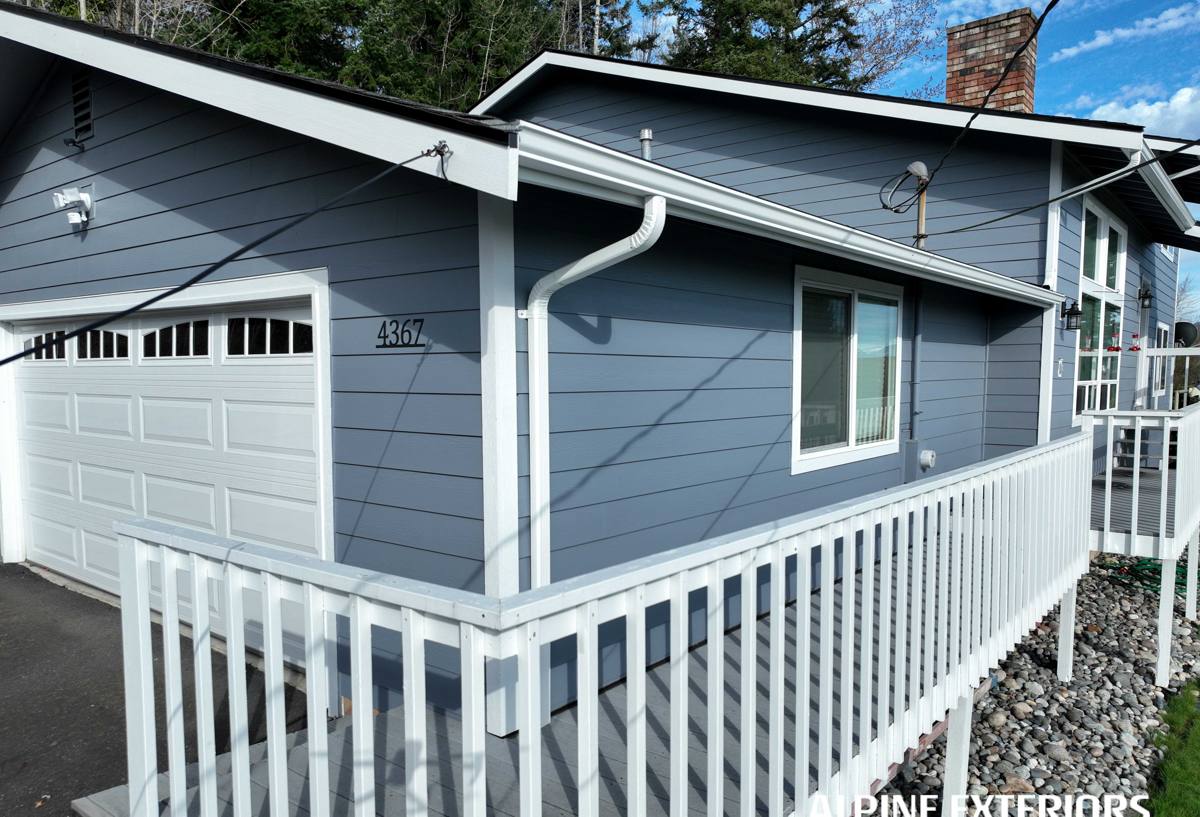
Siding on Guemes Island takes a similar beating to roofing — salt air breaks down lower-grade fasteners and finishes faster, and shaded or north-facing walls stay damp longer after a storm rolls through. Fiber cement siding is a common choice for island homes because it resists moisture-driven rot and holds paint well over time, but the installation details are what determine whether it performs. Proper flashing at windows, doors, and butt joints, correct fastener spacing, and adequate clearance from grade and decking all matter more here than they would on a dry, in-town lot.
We generally steer away from products that depend on tight seams or unventilated cavities to stay dry in a marine climate — not because the materials themselves are bad, but because our professional standard is to install systems that forgive the occasional missed maintenance cycle rather than ones that fail quietly behind the wall. On an island where a homeowner might not visit the property every week, that margin matters.
Windows That Seal Against Wind-Driven Rain
Wind-driven rain finds weak points at window openings faster than almost anywhere else on a house. On Guemes Island, we pay particular attention to flashing sequencing around window units — making sure water that gets behind the trim has a clear path back out rather than a place to collect. Modern dual-pane windows with proper low-E glazing also help control condensation on the interior side during our long, damp winters, which matters in homes that sit closed up for stretches at a time, whether they're full-time residences or seasonal.
Decks Facing Wind, Rain, and Salt Spray
Outdoor living space is a big part of why people choose to live on the water, and Guemes Island decks see some of the harshest exposure of any building element on the house — direct sun in summer, driving rain and wind most of the year, and salt spray on waterfront lots. Composite decking has become popular here because it resists the cupping, splintering, and fastener staining that untreated or lower-grade wood decking is prone to in this environment. That said, a well-built and properly maintained wood deck can still perform well; the key is realistic expectations about the sealing and refinishing schedule required to keep it that way.
Whatever the decking material, substructure durability matters just as much as the surface. Ledger board flashing, joist protection, and fastener selection all need to account for the same salt air and moisture exposure driving our roofing and siding recommendations.
Deck Material Trade-Offs at a Glance
| Factor | Wood Decking | Composite Decking |
|---|---|---|
| Upfront cost | Lower | Higher |
| Maintenance | Regular sealing/staining, especially in shaded or waterfront spots | Periodic cleaning; no sealing required |
| Moisture behavior | Prone to cupping or splintering if maintenance lapses | More stable in consistently damp conditions |
| Long-term appearance | Requires upkeep to hold color and finish | Color and texture more consistent over time |
Working Around Ferry Access and Island Logistics
Any contractor working on Guemes Island has to plan around ferry access, which affects scheduling, material delivery, and crew logistics in ways that don't apply to a project inside Anacortes city limits. We build that into our estimates and timelines from the start rather than treating it as a surprise mid-project. Materials get staged and ordered with enough lead time to avoid multiple trips, and crew scheduling accounts for ferry timing so a job isn't stretched out by avoidable delays. This is one of the clearest advantages of hiring a crew based right in Anacortes rather than a contractor traveling from further away — we already know how to plan around the island's access, and we're close enough to respond quickly if something needs a follow-up visit.
Why a Local Crew Matters Here
A roof, siding job, or deck built without accounting for salt air, wind exposure, and Skagit County's wet season will show problems faster than the same work done with those conditions in mind — even if the workmanship looks fine on installation day. Choosing a contractor who works in this specific environment regularly, understands how Guemes Island's exposure differs from an inland Anacortes lot, and plans realistically around ferry logistics reduces the chance of callbacks, premature wear, and surprises down the road.
We're not asking homeowners to take our word for it on any single point — we're happy to walk through the specific exposure on your lot, what we're seeing on similar island homes, and why we'd recommend one material or detail over another for your situation.
Getting Started
If you own a home on Guemes Island and have questions about your roof, siding, windows, or deck — whether it's a repair, a full replacement, or just an honest assessment of what condition things are in — we're glad to take a look. Reach out for a free, no-pressure estimate using the form below, and we'll work with you to schedule a visit that accounts for ferry timing and gets you a clear, straightforward plan.