 Anacortes Roofing
 Exterior Contracting for Burlington Homes
Burlington sits in the Skagit Valley, close enough to Anacortes and the saltwater shoreline that homes here deal with a lot of the same weather our coastal customers do, plus some of their own. You get moisture rolling in off Padilla Bay and the Sound, long stretches of gray drizzle through fall and winter, and enough still, damp air to keep moss and algae happy on any roof or siding surface that doesn't get much sun. We work Burlington regularly as part of our normal service area out of Anacortes, so this isn't a market we're guessing at.
Whether you're dealing with a roof that's shedding granules, siding that's gone soft at the bottom courses, windows that fog up between the panes, or a deck that's turned gray and slick, the same regional conditions are usually behind it. Understanding what's actually happening to the material is the first step to fixing it right instead of just patching the symptom.
What the Skagit Valley Climate Does to Exteriors
Moss and Organic Growth
Burlington gets plenty of the driving rain and long overcast stretches that define this part of Washington. Roof sections that face north or sit under tree cover stay damp for days at a time, which is exactly what moss, lichen, and algae need to take hold. Left alone, moss doesn't just look bad — it lifts shingle edges, holds water against the roof deck, and accelerates wear well beyond what the shingles were rated for.
Salt Air and Moisture
Burlington is far enough inland that salt exposure is lighter than it is right on the Anacortes waterfront, but the proximity to Padilla Bay and the greater Puget Sound still means moisture-laden air moves through the valley regularly. Combined with our rainfall totals, that adds up to more time spent wet than a lot of homeowners realize — which matters for anything with exposed fasteners, flashing, or untreated wood.
Freeze-Thaw and Wind
Winters here aren't brutal, but we do get cold snaps that follow wet stretches. Water that's worked into a crack, a nail hole, or a seam can freeze, expand, and widen the damage before a spring thaw lets it start over again. Add in occasional windstorms that come through the valley, and you've got a slow, cumulative wear pattern rather than one dramatic event — which is why so many exterior problems in this area show up gradually instead of all at once.
Roofing Services in Burlington
Most of the roofing work we do in Burlington falls into a few categories: moss and debris removal with treatment to slow regrowth, targeted repairs to flashing and boots that have started leaking, and full replacements on roofs that are simply past their service life. We install and repair asphalt composition shingle roofing most often, along with metal roofing for homeowners who want a longer-term, lower-maintenance option.
- Roof inspections that check flashing, valleys, vents, and moss accumulation, not just the shingle field
- Moss and algae removal using methods that don't blast off granules or strip the shingle surface
- Leak diagnosis and repair, including tracing water that's traveled from where it entered to where it's showing up inside
- Gutter and downspout checks, since clogged gutters are one of the most common causes of fascia and roof-edge rot we see
- Full roof replacement with attention to proper underlayment and ventilation for our wet climate
Siding and Moisture Protection
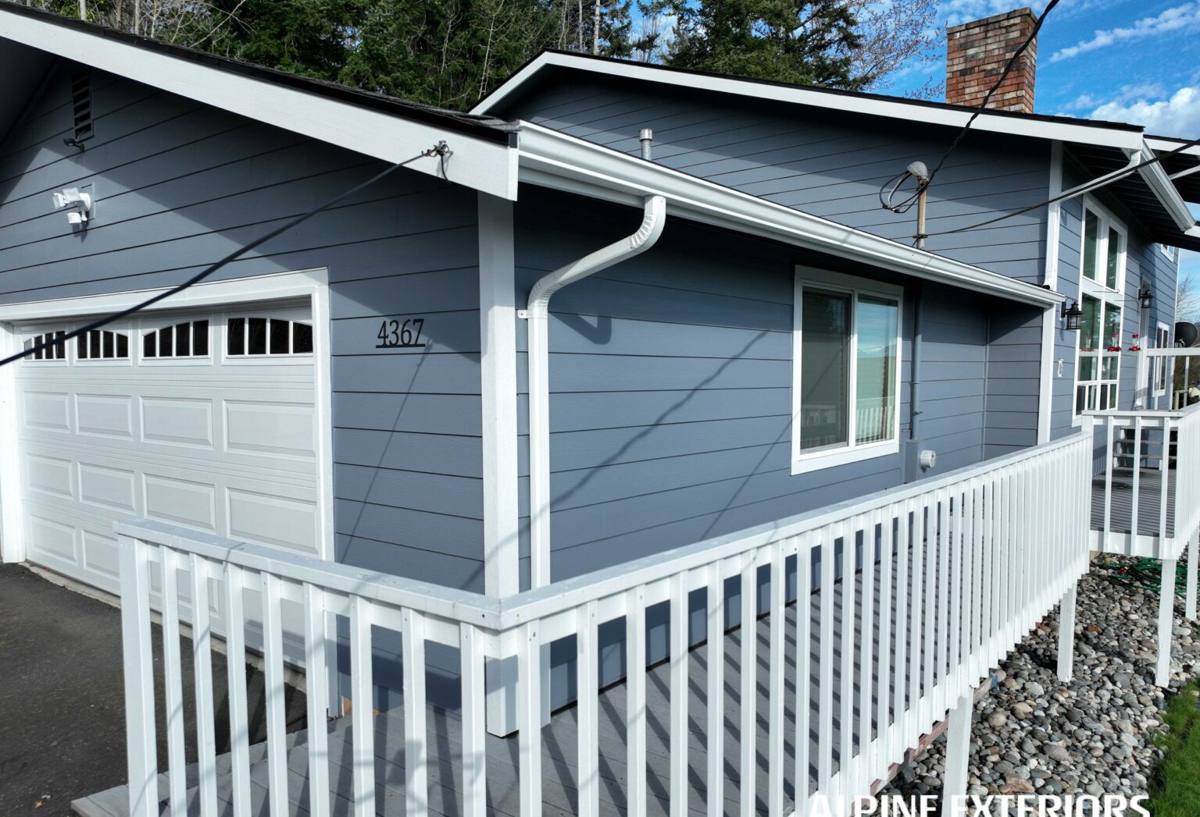
Siding in Burlington takes a steady beating from wind-driven rain, especially on walls that face the weather without much roof overhang to shield them. We see the most damage at the bottom few courses, around window trim, and anywhere caulking has failed and let water track behind the siding instead of shedding off of it.
Material Trade-Offs
Fiber cement siding has become our default recommendation for most Burlington homes because it holds paint well, resists moisture-driven rot, and doesn't require the ongoing upkeep that wood siding does. Vinyl is a lower-cost option that performs fine when installed correctly, though it can become brittle over time and shows impact damage more readily. Wood siding can look great and suits certain older or period homes, but it demands real commitment to painting, caulking, and inspection on a climate like ours — we'll always tell you that upfront rather than let a callback surprise you later.
Repair vs. Replace
Not every siding problem means a full re-side. If damage is localized — a few rotted boards, a section behind a downspout that's failed, trim that's pulled away — targeted repair is usually the right call. Full replacement makes sense when moisture has gotten behind the siding broadly, when the existing material is failing across multiple elevations, or when you're already planning other exterior work and want to handle it all at once.
Windows That Actually Perform in This Climate
Older single-pane and early double-pane windows struggle with the temperature swings and constant humidity in the Skagit Valley — condensation between panes, fogging, and drafts around aging seals are the most common complaints we hear from Burlington homeowners. Replacement windows with modern insulated glass units and properly installed flashing solve most of that, and they cut down on the energy loss that comes with failing seals. We pay particular attention to flashing and sealing at the window opening itself, since a good window installed with a bad seal will leak just as much as an old one.
Decks: Built and Maintained for Wet Weather
A deck in Burlington spends a lot of the year wet, shaded, or both, depending on its orientation and the tree cover around the house. That combination is hard on wood — it's what drives the gray, slick surface and soft spots homeowners notice a few years in. We build and repair decks with attention to drainage, board spacing, and ledger flashing, since a deck that traps water against the house structure causes problems well beyond the deck itself.
- Composite decking for homeowners who want to minimize sanding, staining, and moss cleanup
- Pressure-treated wood decking for a lower upfront cost, with a clear conversation about the maintenance it needs
- Ledger board and flashing inspection, since this is the single most common failure point we find on older decks
- Railing, stair, and structural repairs done to current code, not just cosmetic patching
Cost Factors to Expect
Every project is different, but these are the main variables that move the price on roofing, siding, window, and deck work in this area:
| Project Type | Main Cost Drivers | General Range |
|---|---|---|
| Roof replacement | Roof size, pitch, layers to remove, material choice | Varies widely by square footage and complexity |
| Roof repair | Extent of damage, accessibility, matching existing material | Lower cost, often a few hundred to low thousands |
| Siding replacement | Material (vinyl, fiber cement, wood), square footage, trim detail | Mid to higher range depending on material |
| Window replacement | Number of windows, size, frame material, flashing complexity | Per-window pricing, adds up with quantity |
| Deck build or repair | Size, decking material, structural condition, railing style | Composite costs more upfront than pressure-treated wood |
We give firm numbers only after we've actually looked at the project. Anyone quoting a full price over the phone is guessing, and that guess usually shows up as a change order later.
Maintenance That Extends the Life of Your Exterior
A lot of the damage we repair could have been slowed or avoided with basic upkeep. Here's what we recommend homeowners in this area stay on top of:
- Clean gutters at least twice a year, more often if you're under conifers
- Have moss removed from the roof before it spreads past a small patch
- Check caulking around windows and trim annually, especially after a hard winter
- Look under the deck at the ledger board and support posts once a year for soft or discolored wood
- Trim back vegetation that's keeping siding or roof sections shaded and damp
- Address small leaks and stains immediately — they rarely stay small
Why a Local Crew Makes a Difference
We're based out of Anacortes and work this part of Skagit County on a regular basis, which means we're familiar with how homes in Burlington are built, what materials tend to hold up here, and which parts of a house typically show wear first in this climate. We're also close enough to respond quickly if a repair turns urgent, rather than scheduling around a long drive. Local permitting, inspection expectations, and typical construction in this area are things we deal with routinely, not something we're learning on your project.
If you're dealing with a roof, siding, window, or deck issue in Burlington, we're happy to come take a look and give you a straightforward, no-pressure estimate. Use the form below to get started.