 Anacortes Roofing
 Why Decks in the Burlington Area Wear Out Faster Than People Expect
Homeowners in Burlington are often surprised by how much sooner their deck starts failing compared to what the lumber yard promised when it was built. It's not bad luck — it's the environment. This part of Skagit County sits close enough to the water that salt-laden air reaches inland further than most people assume, and it combines with a long, wet season that keeps wood and hardware damp for months at a stretch. Add in the moss and algae growth that comes with mild, shaded, moisture-heavy winters, and you have a climate that is genuinely harder on exterior wood structures than a drier inland region would be.
Salt air accelerates corrosion in fasteners, joist hangers, and any exposed metal connectors. Driving rain finds its way into end grain, screw holes, and any spot where old caulk or sealant has failed. And moss doesn't just look bad — it holds moisture against the decking surface long after the rain has stopped, which is exactly the condition wood rot and mildew need to take hold. A deck that might last two or three decades in a dry climate can start showing structural problems in half that time here if it wasn't built or maintained with this climate in mind.
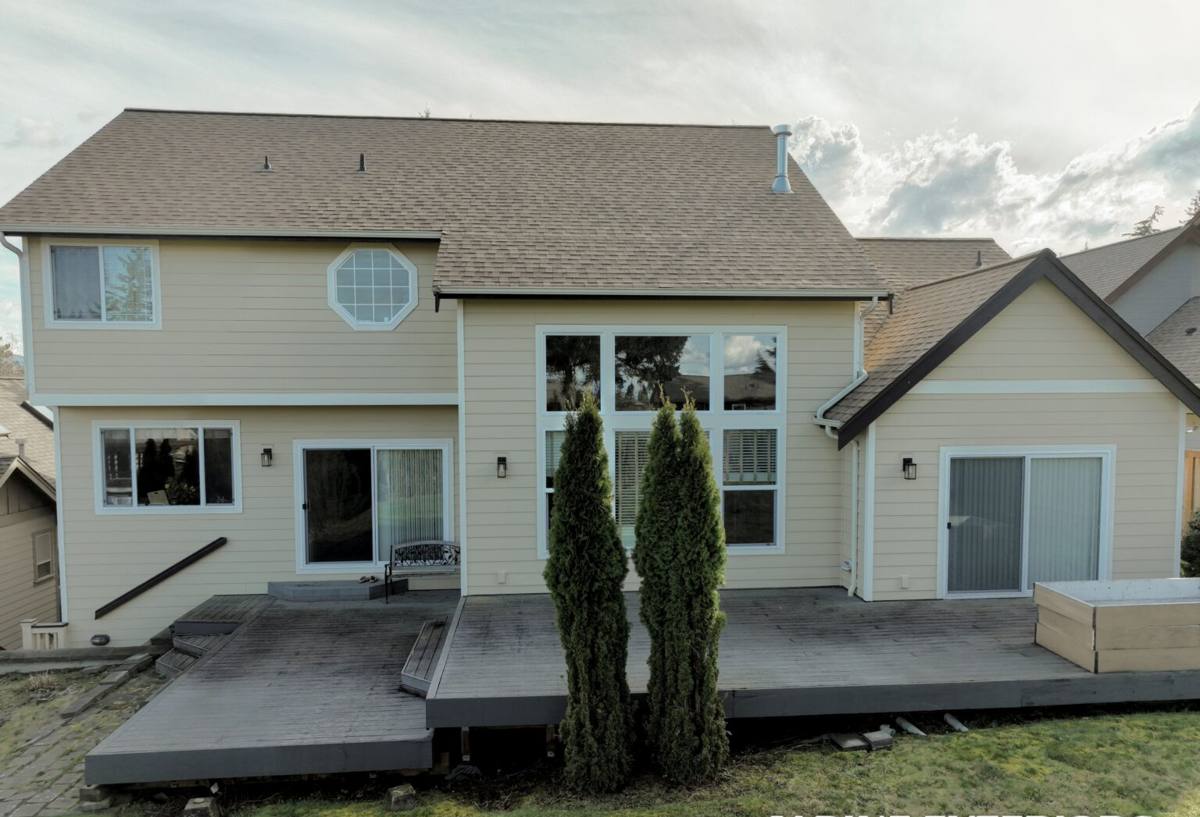
Repair, Resurface, or Full Replacement — How to Tell Which One You Need
Not every tired-looking deck needs a full tear-out. But a lot of decks that look "just cosmetically worn" are hiding problems underneath that make repair a short-term patch at best. Before recommending replacement, we look past the surface boards to the structure holding them up.
Signs that point to replacement rather than repair
- Soft, spongy, or spring-loaded feeling anywhere on the deck surface, especially near the house or stairs
- Visible rot, dark staining, or crumbling wood at the ledger board where the deck attaches to the house
- Rust streaks bleeding out from joist hangers, bolts, or screws
- Posts or footings that have shifted, settled unevenly, or show rot at the base
- Railings that flex or wiggle under normal pressure — a code and safety issue, not just cosmetic
- A ledger board attached with nails instead of proper lag bolts or structural screws, common on older builds
- Moss or algae that keeps returning within weeks of cleaning, which usually means moisture is trapped underneath, not just sitting on top
If the framing and ledger are sound and it's really just the decking boards that have worn out, resurfacing can make sense. But if the substructure has moisture damage, replacing only the top boards just buries the real problem under new material for a year or two.
What a Correct Deck Replacement Actually Involves
A deck replacement done right isn't just pulling up old boards and screwing down new ones. In a climate like this, the parts you don't see matter more than the parts you do.
Ledger board and house connection
The ledger board — where the deck ties into the house — is the single most important connection on the entire structure, and it's also the place most prone to hidden water damage. A correct replacement includes proper flashing between the ledger and the siding or sheathing, so water is directed away from the house rather than trapped behind the board. This is one of the most commonly skipped steps on older or lower-budget deck builds, and it's usually the first place we find rot when we open up an old deck.
Framing and structural hardware
Joists, beams, and posts should be sized correctly for the deck's span and load, not just matched to whatever was there before. In a coastal-influenced climate, we use corrosion-resistant, code-rated hardware — hangers, bolts, and fasteners rated for treated lumber and exterior exposure — rather than standard interior-grade hardware that will rust prematurely.
Footings and posts
Footings need to be set at proper depth and bear on solid, undisturbed soil. Undersized or shallow footings are a common shortcut on older decks and one of the reasons decks develop that slight bounce or lean over time.
Drainage and airflow underneath
Standing water and stagnant air under a deck is a major contributor to rot and moss growth. Proper grading beneath the deck, and enough clearance for airflow, helps the structure dry out between rain events instead of staying damp for weeks on end.
Choosing Decking Material for This Climate
There's no single "best" decking material — there are trade-offs, and the right choice depends on your budget, how much upkeep you want to do, and how the deck will be used. Here's how the common options compare for a wet, coastal-influenced climate like Burlington's.
| Material | Upfront Cost | Maintenance | How It Handles This Climate |
|---|---|---|---|
| Pressure-treated wood | Lowest | Highest — annual cleaning, periodic sealing/staining | Good if maintained consistently; rot and splintering set in quickly if sealing is skipped |
| Cedar | Moderate to high | High — regular sealing to preserve color and resist moisture | Naturally more rot-resistant than treated pine, but still needs upkeep in a wet climate |
| Composite decking | Higher | Low — occasional washing, no staining or sealing | Resists moisture and moss buildup well; quality varies significantly by brand and product line |
| PVC/capped polymer | Highest | Lowest | Fully moisture-resistant surface; best long-term option for minimal upkeep, at a higher upfront cost |
We don't push one material on every homeowner. Wood has a real place for budget-conscious projects or homeowners who don't mind the upkeep and like the natural look. Composite and PVC cost more upfront but make sense for anyone who wants to stop re-sealing a deck every year or two, especially given how quickly moss and mildew can take hold here. We'll walk through the honest trade-offs for your specific deck and budget rather than defaulting to whatever has the best markup.
Our Deck Replacement Process
- On-site assessment. We inspect the existing deck, ledger, framing, and footings to determine the real scope — not just what's visible on the surface.
- Honest scope and estimate. You get a clear breakdown of what needs to be replaced structurally versus cosmetically, and material options with real trade-offs explained.
- Permitting. Deck replacements often require a permit depending on size, height, and scope of work. We handle the permitting conversation with the local building department so you're not left guessing.
- Demolition and disposal. Old decking, framing, and debris are removed and hauled off the property.
- Structural rebuild. Footings, posts, framing, and ledger flashing are installed to current code, sized for your deck's actual load and span.
- Decking, railing, and finish work. Your chosen decking material and railing system are installed, with attention to fastener placement and spacing that allows for proper drainage and airflow.
- Final walkthrough. We go over the finished deck with you, including basic care guidance specific to the material you chose.
Permits and Code in Skagit County
Deck replacement projects in and around Burlington frequently fall under local building permit requirements, particularly when the deck is attached to the house, elevated, or being rebuilt to a different size or footprint than the original. Requirements can vary depending on your specific jurisdiction within Skagit County, and whether the property falls under city or county permitting authority. Rather than guessing or skipping this step, we handle the permit process as part of the job so the finished deck is documented and built to code — which also matters if you sell the home down the road and it comes up in an inspection.
Cost Factors to Understand Before You Get Quotes
Deck replacement costs vary widely based on size, material, and how much structural work is needed underneath. Rather than quoting a single number that won't mean much without context, here are the factors that actually move the price.
| Factor | Why It Matters |
|---|---|
| Deck size and shape | Larger decks and multi-level or curved designs require more material and labor |
| Decking material chosen | Composite and PVC cost more upfront than pressure-treated wood, but reduce long-term maintenance spending |
| Condition of the substructure | Rotted framing, ledger damage, or failed footings add work that isn't visible until demolition begins |
| Height and stairs | Elevated decks and stair systems require more structural engineering and railing code compliance |
| Permitting requirements | Scope and jurisdiction affect permit fees and inspection timelines |
| Railing style | Cable, glass, and composite railing systems cost more than standard wood or metal baluster railing |
What to Ask Before Hiring a Deck Contractor
- Are you licensed and insured to work in Washington state, and can you provide proof?
- Will the ledger board connection be properly flashed, and can you explain how?
- What size and grade of structural hardware will be used, and is it rated for exterior/treated-lumber exposure?
- Will you pull the required permit, or is that left to me?
- What does the written estimate include — demolition, disposal, and cleanup, or are those extra?
- Do you have experience with the specific decking material I'm considering?
- What's the expected timeline from start to finish, weather permitting?
Any contractor who gets defensive about these questions, or can't explain their approach to ledger flashing and hardware corrosion resistance, is worth a second look before you sign anything.
Why a Crew That Already Works the Burlington Area Matters
Deck replacement isn't a one-size-fits-all trade, and the right approach in a dry inland climate isn't necessarily the right approach here. A crew that regularly works Skagit County properties already knows to prioritize ledger flashing, corrosion-resistant hardware, and drainage detailing — because they've seen what happens to decks that skipped those steps in this environment. That familiarity also shows up in smaller ways: knowing what local permitting typically requires, understanding how site conditions like soil drainage and moss exposure vary across the area, and being available for follow-up if a question comes up after the job is done. A deck replacement is a long-term investment in your home, and it holds up longest when it's built by people who understand exactly what the local climate is going to throw at it.
If your deck is showing signs of wear, feels unstable, or you're just ready to stop maintaining an aging structure, we're happy to take a look and give you a straightforward, no-pressure assessment. Use the form below to request a free estimate, and we'll walk you through what your deck actually needs.