 Anacortes Roofing
 Why This Decision Matters More in Anacortes
If you've lived in Anacortes for any length of time, you already know your roof works harder here than it would in most parts of the country. We sit right on the water, which means salt-laden air moving across the house year-round. We get long stretches of driving rain off the Sound. And thanks to the tree cover and damp shade common in Skagit County neighborhoods, moss has a longer growing season here than almost anywhere else in the state. Any roofing material you choose has to hold up against all three of those conditions at once, not just one.
That's the lens we use when homeowners ask us the metal-versus-shingles question. There's no universally "right" answer — it depends on your budget, how long you plan to stay in the home, your roof's pitch and shape, and how much maintenance you're realistically willing to do. Below we'll walk through both materials honestly, including where each one falls short, so you can make the call with real information instead of a sales pitch.
How Asphalt Shingles Perform Here
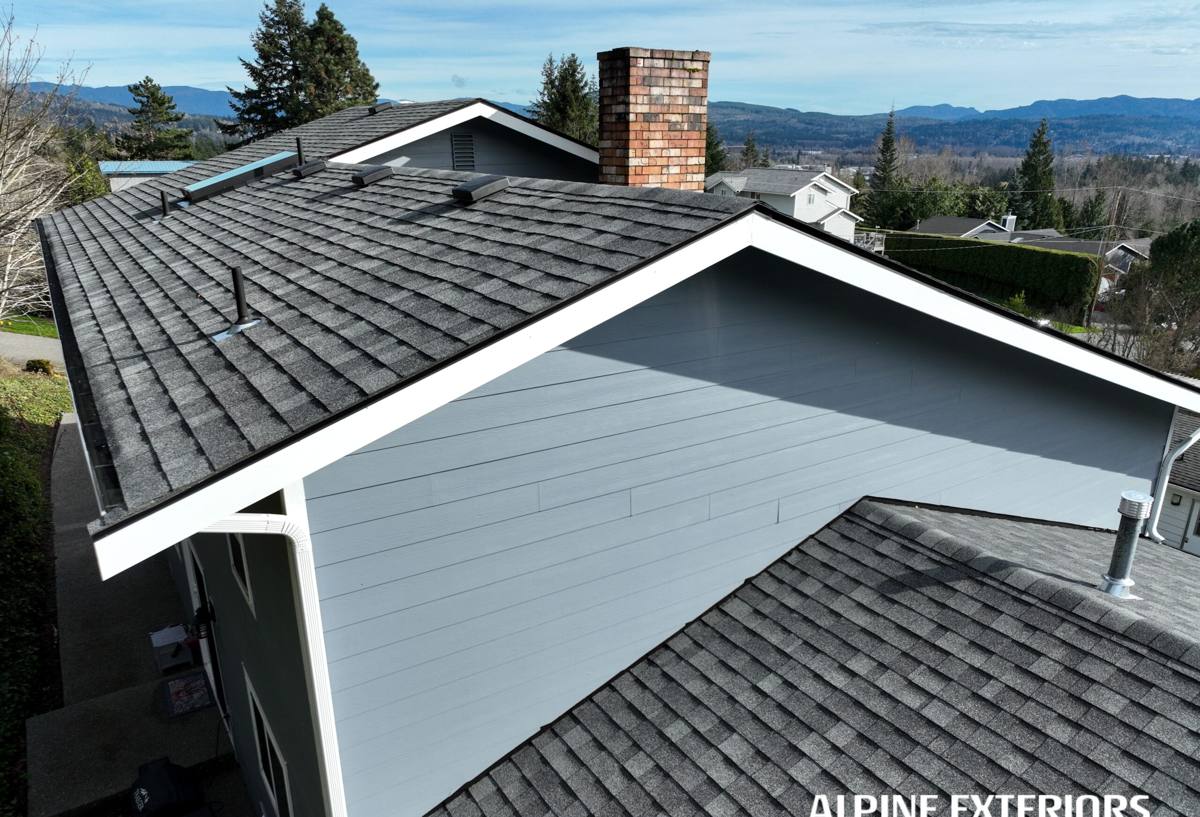
Asphalt shingles remain the most common roofing material in Anacortes, and for good reason — they're affordable, quick to install, and easy for most roofing crews to repair when something goes wrong. Architectural (laminate) shingles, in particular, have gotten better over the last decade in terms of wind rating and granule retention.
Where Shingles Struggle Locally
The two things that shorten shingle life in our area are moisture retention and moss. Shingles have a textured surface that gives moss spores something to grab onto, and once moss takes hold, it holds water against the roof deck longer than it should. Over time that trapped moisture lifts granules, and lifted granules mean faster UV breakdown underneath. Salt air doesn't attack asphalt shingles directly the way it attacks metal fasteners or flashing, but it does accelerate wear on any exposed metal components in a shingle roof — ridge vents, drip edge, and nail heads.
Realistic Lifespan
Manufacturers often quote 25-30 year ratings on architectural shingles, but that number assumes a clean, well-ventilated attic and a roof that isn't shaded most of the day. In practice, a shingle roof on a moss-prone, shaded lot in Anacortes that isn't cleaned periodically will show granule loss and moss staining well before that. A shingle roof that gets occasional moss treatment and is kept clear of debris will get much closer to its rated life.
How Metal Roofing Performs Here
Standing-seam metal and metal shingle systems have become a lot more common on new builds and re-roofs around Skagit County, largely because they handle our specific climate stresses well. Metal sheds moss almost entirely — the smooth surface and the way water runs off quickly gives spores very little to attach to. Steep-pitched metal roofs in particular stay drier and cleaner with almost no intervention.
The Salt Air Question
This is where product selection actually matters, not marketing. Not all metal roofing is created equal in a marine environment. Galvanized steel with a thin coating can corrode faster near saltwater than steel with a heavier zinc-aluminum coating (commonly sold as Galvalume) or aluminum, which doesn't rust at all. For homes within a mile or two of Fidalgo Bay or the water generally, we steer clients toward corrosion-rated coatings and away from bargain-tier steel panels, because the fastener heads and cut edges are the first places salt exposure shows up.
Noise, Expansion, and Fastener Type
Two honest tradeoffs worth knowing about metal: it expands and contracts more than shingles with temperature swings, so panel systems need to be installed with proper clip spacing to avoid oil-canning or fastener back-out over the years. And exposed-fastener metal panels (the screw-down type) will eventually need those fasteners checked or replaced, since the rubber washers under the screw heads degrade faster in UV and salt air than the panel itself. Standing-seam systems avoid this because the fasteners are hidden under the seam, which is one reason we generally recommend standing-seam over exposed-fastener panels for homes closer to the water.
Side-by-Side Comparison
| Factor | Asphalt Shingles | Metal Roofing |
|---|---|---|
| Typical lifespan (real-world, local) | 18-25 years with maintenance | 40-60+ years, coating-dependent |
| Moss resistance | Lower — textured surface holds moisture | Higher — smooth, fast water shedding |
| Salt air durability | Good for the shingle itself; watch exposed metal trim | Excellent with proper coating; weak with cheap galvanized |
| Upfront cost | Lower | Higher, often 2-3x shingle cost |
| Maintenance needs | Periodic moss treatment, gutter clearing | Minimal; occasional fastener check on screw-down panels |
| Repair complexity | Simple, widely available materials and labor | Requires a crew experienced with the specific panel system |
| Noise in heavy rain | Quieter by default | Noticeable unless solid decking/underlayment is used |
Cost Factors Worth Understanding
The sticker price gap between shingles and metal is real, and we won't pretend otherwise. But the comparison isn't just materials cost — a few things change the math:
- Roof complexity: a simple gable roof costs less to convert to metal than one with lots of valleys, dormers, and penetrations, since each detail needs custom flashing work.
- Decking condition: if your existing deck has moisture damage from years of moss or ice dams, that gets addressed regardless of which material you choose — it's not a metal-specific cost, but it's often discovered during a metal tear-off.
- Coating tier: a mid-grade Galvalume panel costs less than a premium aluminum or heavier-gauge steel system, and for waterfront-adjacent homes, that upgrade is usually worth discussing rather than skipping.
- Long-term cost per year: when you divide total cost by realistic lifespan, metal often closes much of the up-front gap, especially if you plan to stay in the home for decades.
Which Homes Tend to Favor Which Material
We don't push one material on every homeowner — the right fit depends on the specifics of the house and how the owner plans to use it.
Shingles Often Make Sense When:
- You're planning to sell within the next several years and want to match neighborhood norms.
- Budget is the primary constraint and the roof isn't heavily shaded or moss-prone.
- The roof has a complex shape where shingle flashing details are simpler and cheaper to execute well.
Metal Often Makes Sense When:
- The home is close to the water or otherwise exposed to a lot of driving rain and wind.
- The lot is shaded and has a history of moss buildup that's been a recurring maintenance headache.
- You're planning to stay long-term and want to minimize roofing work for the next few decades.
- You have a steep pitch where metal's water-shedding advantage is most pronounced.
Moss Prevention Applies to Both Materials
Regardless of which roof you choose, moss control in this climate isn't optional if you want your roof to reach its full lifespan. Zinc or copper strips near the ridge, kept-clear gutters and valleys, and trimmed-back tree cover all reduce moss pressure on shingle and metal roofs alike. The difference is how much moss can actually damage each material once it takes hold — shingles are more vulnerable to the moisture trapped underneath moss growth, while metal mostly just needs the moss removed before it stains the finish.
A Practical Checklist Before You Decide
- How many more years do you realistically plan to own this home?
- How exposed is the roof to salt air — direct waterfront, a few blocks back, or further inland?
- Does the property have heavy tree cover or a documented moss history?
- What's the roof pitch and complexity — simple gable or multiple valleys and dormers?
- Is the existing decking in good shape, or is there likely hidden moisture damage?
- Are you comfortable with occasional maintenance, or do you want the lowest-maintenance option available?
- What does your budget allow for upfront cost versus long-term cost per year?
Getting an Honest Answer for Your Specific Roof
Every one of the factors above changes depending on your lot, your roof's age, and its exposure to wind and water. The only way to give you a real recommendation instead of a generic one is to actually look at your roof. If you're weighing metal against shingles for a home in Anacortes or anywhere else in Skagit County, we're happy to walk the roof with you, point out what we see, and give you a straightforward estimate for both options — no pressure, no upsell, just the information you need to make the right call for your house.