 Anacortes Roofing
 Exterior Contractor Serving Bow, WA
Bow sits in that stretch of western Skagit County where farmland runs down toward Samish Bay, and the houses out here take a different kind of beating than homes tucked into town. You've got open exposure to weather coming off the water, big stands of fir and cedar dripping shade and debris onto roofs, and a rural setting where a small problem can sit unnoticed for a season before anyone's around to spot it. Anacortes Roofing Co works this whole corner of the county, and Bow is a regular stop for us — not a place we pass through on the way to somewhere else.
We handle roofing, siding, windows, and decks, and out here those four things are more connected than people expect. A roof that's shedding water wrong will rot the fascia and siding underneath it. A deck ledger board that's held moisture too long will telegraph into the wall assembly. We look at the whole exterior, not just the piece you called about.
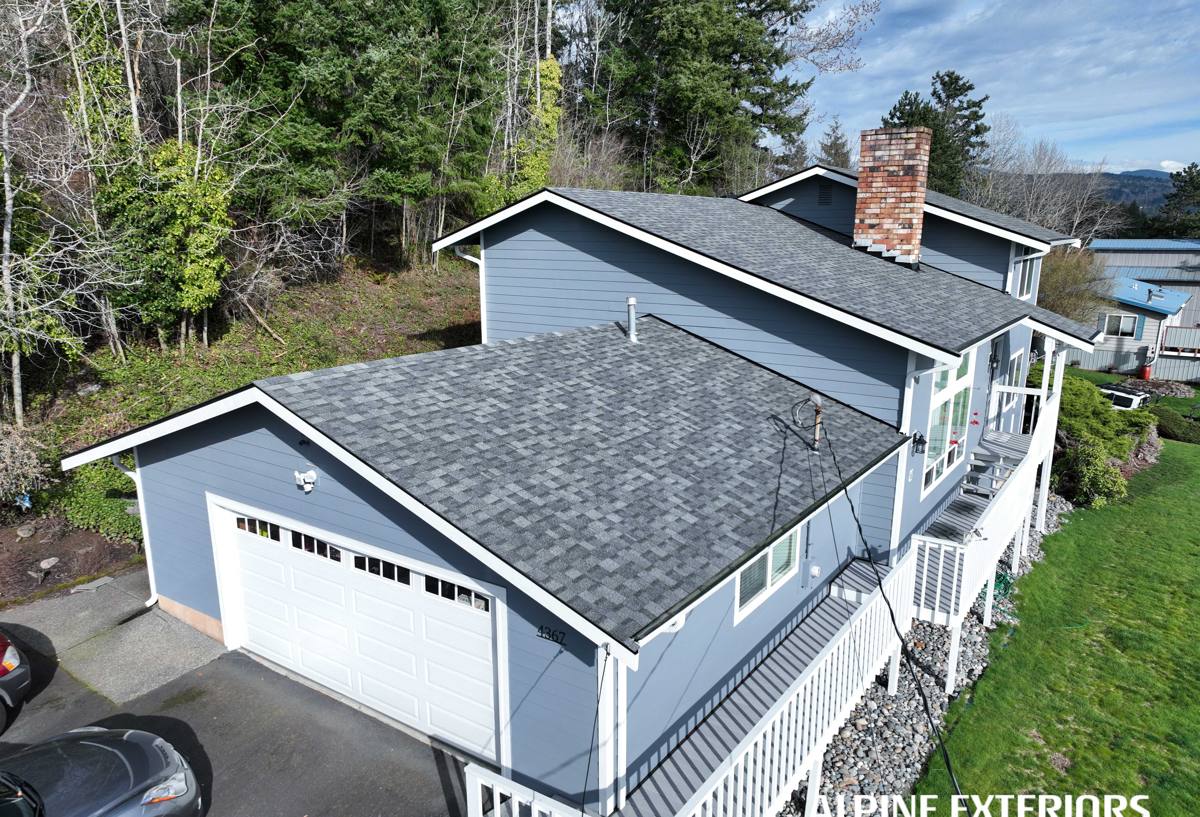
What the Local Climate Actually Does to a House
Skagit County's marine weather is mild compared to a lot of the country, and that's exactly why it's sneaky. There's rarely a single dramatic storm that breaks something. Instead it's the steady, low-grade combination of salt-laden air off the bay, long stretches of driving rain, and short, weak windows of sun that never quite dry things out. Add the tree cover common around Bow, and you get moss season that can run most of the year on north-facing slopes and shaded roof valleys.
Salt Air
Proximity to Samish Bay means airborne salt settles on exposed metal — flashing, fasteners, gutter hangers, deck hardware — faster than it would further inland. Untreated or mismatched metals corrode, and corrosion at a fastener or flashing seam is one of the most common places we find hidden leaks starting.
Driving Rain and Wind
Open, rural exposure means rain doesn't just fall here, it gets pushed sideways under laps, around window frames, and into siding seams that would stay dry in a more sheltered spot. Wind-driven rain punishes anything installed with generous tolerances instead of tight, correct technique.
Moss and Shade
Tree cover keeps roofs damp longer after every rain, and moss doesn't just look bad — its root structure lifts shingle edges and holds moisture directly against the roofing material, which shortens the life of the roof underneath it.
Roofing in Bow: Material Choices That Make Sense Here
There's no single "best" roof for this area — the right call depends on tree cover, roof pitch, budget, and how much upkeep a homeowner wants to do. What we do rule out are choices that create ongoing maintenance headaches in this specific climate, and we'll always explain the trade-off rather than just steer you toward what's easiest for us to install.
| Material | How It Handles Salt Air & Moss | Maintenance Reality |
|---|---|---|
| Architectural composition shingle | Good with algae-resistant granules; standard in the area | Periodic moss removal on shaded sections; typical 25-30 year lifespan with upkeep |
| Standing seam metal | Excellent shedding of moisture; needs correct fastener/coating spec near the bay | Low moss retention due to smooth slope; long service life if installed with marine-grade hardware |
| Cedar shake | Attractive but holds moisture in shaded, damp settings | Higher upkeep — regular treatment and moss control required to avoid premature rot |
| Synthetic/composite shingle | Resists moisture absorption well | Lower moss adhesion than wood; moderate upkeep |
For heavily shaded lots around Bow, we lean toward materials and installation details that shed water fast and don't give moss a foothold — proper ventilation, correct underlayment, and metal flashing rated for coastal exposure rather than the minimum-grade parts that show up in big-box roofing kits.
Siding: Where Rot Actually Starts
Most siding failure we find doesn't start on the flat wall — it starts at the edges: bottom courses too close to grade, window and door trim where caulking has failed, and inside corners where wind-driven rain collects. Rural Bow properties often have siding that's taken decades of that pattern with no rainscreen gap behind it, which traps moisture against the sheathing.
Fiber Cement
Handles moisture and salt exposure well and holds paint longer in this climate than most wood products, which is why it's become our default recommendation for full re-sides in this area.
Wood Siding
Still has a place for homeowners who want a specific look, but it demands a real maintenance schedule — repainting and caulk inspection on a set cycle — or it will start failing at the joints faster than most people expect out here.
Vinyl
Budget-friendly and low-maintenance, but it can become brittle over time with UV exposure and doesn't hold up to physical impact the way fiber cement does. We're upfront that it's a trade-off of cost against long-term durability, not a product we'd call wrong for every home.
Windows: Condensation, Flashing, and Coastal Air
Older single-pane and early dual-pane windows around Bow tend to show two problems: seal failure that shows up as fogging between panes, and flashing that was never detailed to handle wind-driven rain. Replacing the glass without fixing the flashing just delays the same leak from resurfacing somewhere else on the frame.
When we replace windows, we treat the flashing and integration with the siding as part of the job, not an afterthought — that's usually the difference between a window replacement that solves the problem and one that just moves it a few years down the road.
Decks: Fasteners, Ledger Boards, and Salt Corrosion
Decks facing toward the bay or sitting under heavy tree cover deal with two separate problems at once: standard steel fasteners corroding faster in salt-influenced air, and constant dampness at the ledger board connection to the house. That ledger connection is one of the most safety-critical parts of any deck, and it's also one of the most commonly under-built in older construction.
- Stainless or coated fasteners rated for coastal/marine exposure, not generic hardware
- Proper flashing tape and drainage at the ledger board connection
- Gapped decking or drainage detailing to keep joists from sitting in standing water
- Composite decking as an option where low upkeep matters more than a wood look
Why Hiring a Local Crew Actually Matters Here
Bow is rural enough that response time is a real factor — if a tarp needs to go up after a wind event, or a leak shows up during a string of storms, a crew based in Anacortes and working Skagit County daily can get there same-day or next-day instead of scheduling around a drive from Seattle or further afield. We also know which streets flood, which lots hold shade longest into spring, and which older Skagit County homes were built with details that don't match current code — all of which changes how we scope a job before we ever climb a ladder.
A crew that only works this area occasionally is guessing at conditions we deal with every week.
Keeping Ahead of the Damage: A Practical Checklist
Most of the expensive repairs we get called for started as something small that went unnoticed for a year or two. A once-a-year check, ideally after the wettest stretch of winter has passed, catches most of it early.
- Clear moss and debris from roof valleys and north-facing slopes
- Check gutters and downspouts for standing water or sagging hangers
- Look for corrosion streaks below metal flashing or fasteners
- Inspect caulking around windows and door trim for cracking or gaps
- Check deck ledger board area and fastener heads for rust or soft wood
- Watch for soft or discolored siding near grade level and inside corners
What Drives the Cost of a Project Out Here
Every property is different, but a few local factors consistently move the price of roofing, siding, window, and deck work up or down in the Bow area.
| Factor | Why It Matters Locally |
|---|---|
| Tree cover and access | Heavy shade means more moss remediation; rural lots can mean longer material staging and setup |
| Roof pitch and complexity | Multiple valleys and steep pitches take longer to properly flash and shed water |
| Existing damage found mid-job | Hidden rot behind siding or under old roofing is common in older Skagit County homes and gets addressed once uncovered |
| Material choice | Coastal-rated metal, fiber cement, and marine-grade fasteners cost more upfront but reduce maintenance and repeat repairs |
| Permitting requirements | Skagit County permitting timelines can affect project scheduling, especially for larger re-roofs or structural deck work |
What Working With Us Looks Like
We start with a walk-around, not a sales pitch — looking at the roof, siding, trim, windows, and any deck structures together, since problems in one area usually explain problems in another. From there we give a straightforward scope of work and a real number, not a lowball estimate designed to get revised upward once the crew shows up. If something doesn't need replacing yet, we'll tell you that too.
If you're in Bow and dealing with moss buildup, a leak that shows up only in heavy wind-driven rain, siding that's taking on moisture, or a deck that's showing its age, we're glad to come take a look. Reach out for a free, no-pressure estimate using the form below.