 Anacortes Roofing
 Living on Fidalgo Island: A Different Kind of Weather Load
Fidalgo Island sits where the Salish Sea, the San Juan Islands, and the mainland foothills all meet, and that geography shapes what happens to a house here. Homes near the water deal with salt-laden air that settles on every exposed surface. Homes tucked back in the trees deal with shade, damp ground, and near-constant moisture that never fully dries between rain events. Most properties on the island get some combination of both. Add in the driving rain that comes sideways off Rosario Strait and Guemes Channel during winter storms, and you have an exterior envelope that works harder than it would almost anywhere inland in Washington.
None of this means a house on Fidalgo Island is doomed to constant repairs. It means the materials, fastening methods, and maintenance schedule need to match the actual conditions rather than a generic Pacific Northwest playbook. We've built our approach around what actually shows up on roofs, siding, windows, and decks in this specific stretch of Skagit County.
What Salt Air and Moss Actually Do to a Roof
Corrosion Where You Can't See It
Salt air is hardest on metal. Fasteners, flashing, gutter hangers, and any exposed metal trim are the first things to show wear on a coastal-facing roof. Galvanized fasteners that would last decades inland can start showing rust streaks in a fraction of that time near the water. This is why fastener and flashing selection matters as much as the shingle or panel choice itself — a roof is only as good as its weakest metal component.
Moss Season Is Longer Here Than People Expect
Anacortes gets enough shade, humidity, and mild temperatures that moss and moss-adjacent growth (lichen, algae streaking) can establish itself on a roof almost year-round, not just in the classic fall-through-spring window. Moss holds moisture against roofing material, works into shingle laps and butt joints, and over time lifts shingles enough for wind-driven rain to get underneath. Left unaddressed, it shortens the life of an otherwise sound roof by years.
Wind and Driving Rain
Storms coming through the Strait don't always bring extreme wind speeds, but they bring persistent, direction-shifting rain. That kind of weather finds every weak point in flashing around chimneys, skylights, valleys, and roof-to-wall transitions. A roof that would be fine under straight-down rain can leak under driving rain if the flashing details weren't done right the first time.
Roofing Materials That Make Sense for This Island
We install and repair asphalt composition shingle, metal, and low-slope/flat roofing systems, and we're upfront about the trade-offs of each in a coastal, moss-prone environment.
| Material | Coastal Performance | Moss Resistance | Typical Lifespan |
|---|---|---|---|
| Asphalt composition shingle | Good with proper flashing and fasteners | Moderate — benefits from periodic cleaning | 20-30 years |
| Standing seam metal | Very good with coastal-rated fasteners and coatings | High — sheds moisture quickly | 40-60+ years |
| Low-slope membrane (TPO/modified bitumen) | Good when detailed correctly at edges and penetrations | Moderate — needs debris management | 20-30 years |
| Wood shake | Higher maintenance near salt air and shade | Low — retains moisture, requires diligent upkeep | Varies widely with maintenance |
We don't push wood shake on shaded, near-water lots as a default recommendation. It's a legitimate product with real character, but in a damp, shaded, salt-exposed setting it demands a maintenance commitment that most homeowners underestimate — routine treatment, careful moss control, and closer inspection intervals. If a homeowner wants that look and understands the upkeep, we'll install it correctly. Otherwise, we'll walk through options that give a similar aesthetic with less long-term burden.
Siding: Standing Up to Salt and Damp
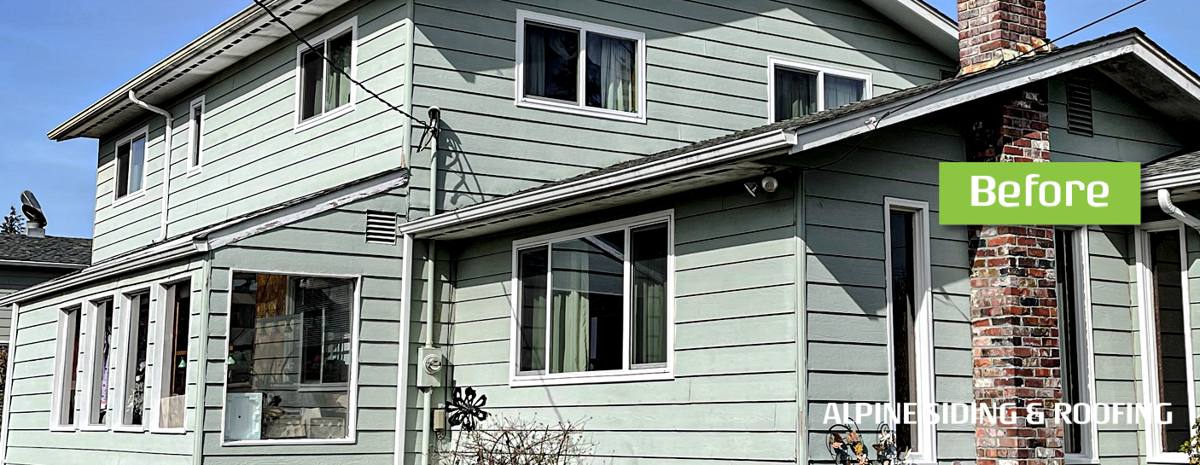
Siding on Fidalgo Island faces two enemies at once: moisture intrusion behind the cladding and surface wear from salt air on the front. We pay close attention to the water-resistive barrier and flashing details behind whatever siding material goes up, because that hidden layer matters more to long-term performance than the visible finish.
- Fiber cement: Handles moisture and salt exposure well, holds paint longer than many alternatives, and resists moisture-driven warping.
- Engineered wood siding: A reasonable middle ground on cost, but needs consistent paint/finish maintenance in damp settings to keep water out of the edges.
- Vinyl: Low maintenance and cost-effective, though color and rigidity can be affected by long-term sun and temperature swings on south- and west-facing exposures.
- Cedar and other wood siding: Attractive and traditional for this region, but requires a real maintenance schedule — regular refinishing and moisture checks — to perform well near salt air.
Whatever the material, we treat the house wrap, flashing tape, and window/door integration as the part of the job that actually determines whether the wall stays dry. A beautiful siding job over sloppy flashing work will fail from the inside out.
Windows: Where Driving Rain Finds Weak Spots
Driving rain off the water tests window installations in ways still-air rain doesn't. Most window leaks we're called out for aren't a bad window — they're a flashing or sealant detail around the window that let wind-driven water behind the frame. When we replace or install windows, we treat the flashing integration with the wall assembly as equally important as the window unit itself.
For homes closer to the water, we also talk through condensation. Salt air and cooler nighttime temperatures near the shoreline can increase condensation on interior glass surfaces, especially with older single-pane or poorly sealed units. Modern dual- or triple-pane windows with good seals cut down on this significantly, and it's often one of the more noticeable comfort improvements homeowners report after a window upgrade.
Decks: Built for Wet Ground and Shoulder-Season Use
A lot of Fidalgo Island properties have decks that see heavy use in summer and sit wet for months the rest of the year. That cycle — dry and used, then wet and idle — is hard on both wood and hardware.
Wood vs. Composite
Pressure-treated or cedar decking gives a traditional look but needs regular sealing and inspection, particularly where boards meet ledger boards or posts meet grade — those are the spots that trap moisture longest. Composite decking costs more upfront but resists moisture absorption and doesn't need refinishing, which is a real advantage for a shaded or damp lot where a wood deck would otherwise need attention every year or two.
Fasteners and Framing
As with roofing, the metal matters. We use fasteners and structural connectors rated for the moisture and salt exposure a given site actually sees, not just whatever is standard elsewhere. Ledger board flashing and proper drainage away from the house are non-negotiable details on every deck we build, since that's the single most common source of hidden rot on older decks we inspect.
Why a Local Crew Matters Here
A contractor who mostly works inland Skagit County or the I-5 corridor doesn't necessarily know which slopes on Fidalgo Island hold moss longest, which exposures take the worst of the winter storms off the Strait, or how differently a shaded lot behaves compared to an open, wind-exposed one a half-mile away. We work in Anacortes and the surrounding island communities regularly enough to recognize these patterns on sight, which shapes the material and detailing recommendations we give from the first walk-around.
Being local also means we're not guessing about permitting and inspection expectations in Skagit County, and we're not disappearing after the job — if something needs a warranty check or a follow-up look after a big storm, we're a short drive away, not a regional crew passing through.
A Practical Maintenance Checklist for Island Homes
Most exterior problems on Fidalgo Island start small and stay small if they're caught early. This is the baseline we recommend for most properties in the area:
- Inspect the roof for moss growth and lifted shingles at least once a year, more often on shaded or north-facing slopes.
- Clear gutters and downspouts before the fall rains start and again mid-winter if the property has significant tree cover.
- Check flashing around chimneys, skylights, and roof-to-wall transitions for gaps or corrosion.
- Walk the siding annually looking for cracked caulking, peeling paint, or soft spots that suggest trapped moisture.
- Inspect window seals and sills for water staining, especially on walls facing prevailing storm winds.
- Check deck ledger boards, post bases, and fasteners for rust or softness where wood stays wet longest.
- Rinse salt residue off exterior metal and glass periodically if the home is close to the shoreline.
Getting an Honest Look at Your Property
Every property on Fidalgo Island sits a little differently relative to wind, shade, and salt exposure, so a generic estimate over the phone rarely tells the full story. If you're dealing with moss buildup, a stubborn leak, aging siding, drafty windows, or a deck that's starting to show its age, we're happy to come take a direct look and give you a straightforward assessment — no pressure, no upsell, just what we actually see and what it would take to fix it right. Reach out using the form below to set up a free estimate.