 Anacortes Roofing
 Why Fidalgo Island Is Tougher on Windows Than Most Places
Fidalgo Island sits right where the Salish Sea, the tide flats, and the marine wind funnel through Skagit County all meet. That's a beautiful place to live, but it's a demanding place to own windows. Salt-laden air corrodes hardware and pits unprotected metal over time. Wind-driven rain doesn't just fall straight down here — it gets pushed sideways into wall assemblies, testing every seal and flashing detail a window has. And the long gray stretch from fall through spring keeps north-facing walls and shaded trim damp long enough for moss and algae to take hold on anything that doesn't drain and dry properly.
Windows built for a drier inland climate, or installed by a crew that's never had to think about salt exposure, tend to show their age fast on this island. Frame corners open up, seals fail early, and hardware seizes or corrodes years before it should. Custom windows done right for Fidalgo Island homes account for all of that from the start — not as an upgrade, but as the baseline.
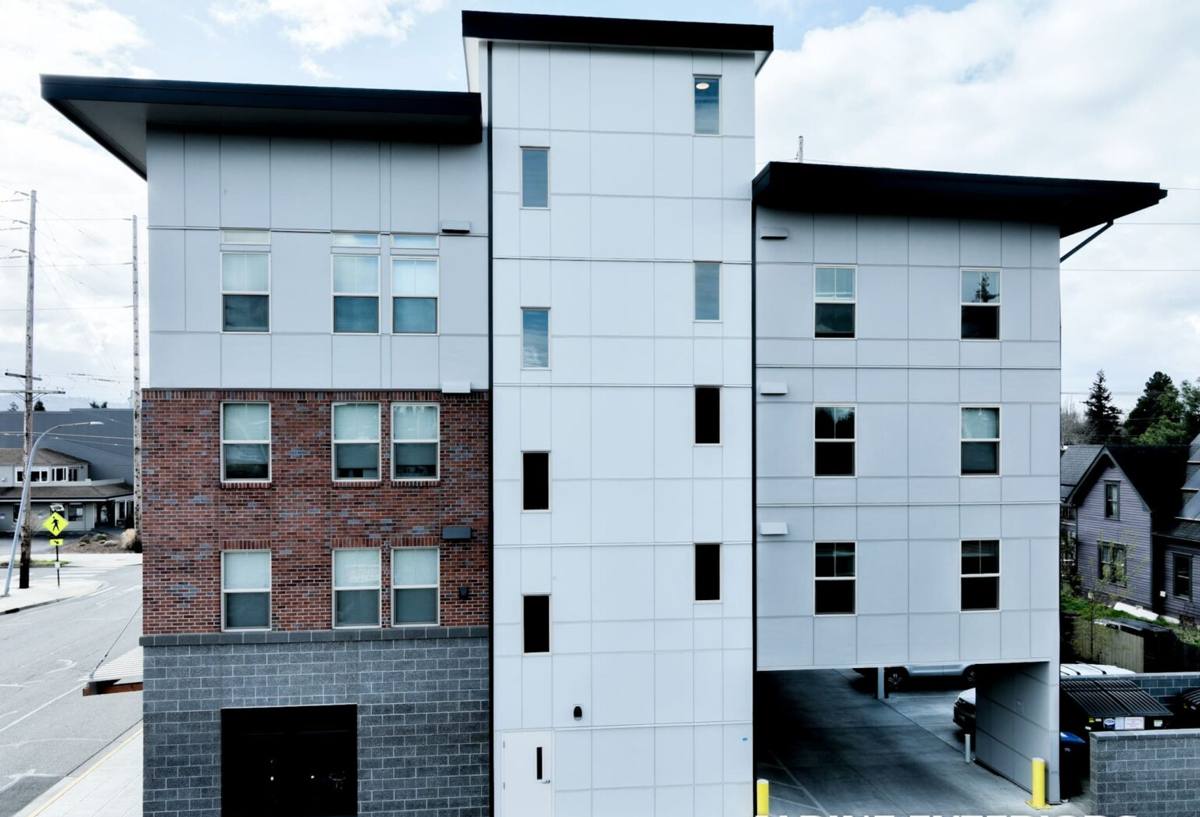
What "Custom" Actually Means for a Fidalgo Island Home
A lot of homeowners hear "custom windows" and assume it just means an unusual size. That's part of it, but on this island custom work usually involves a few things at once:
- Older homes with settled openings that are no longer perfectly square — off-the-shelf sizes don't fit without gaps
- Matching sightlines and grille patterns across additions or mismatched replacement eras
- Choosing frame material and glass package specifically for a home's exposure — a window facing prevailing wind and rain off the water needs different specs than one tucked on a sheltered side
- Coordinating trim, siding, and flashing details so water is directed out, not into the wall
Custom, in other words, isn't a marketing word here — it's what it takes to get a window that actually performs on this site, in this orientation, on this specific house.
Replacement vs. New Construction Windows
Most of our custom window work on Fidalgo Island is replacement — fitting into an existing opening without tearing into siding more than necessary. New construction windows, with their nailing fin, are typically reserved for additions or full siding tear-offs, since they require removing the exterior finish around the opening to install correctly. We'll tell you honestly which approach your project needs; using the wrong type in the wrong situation is one of the more common corner-cutting mistakes we see.
Frame Materials: What Holds Up in Salt Air and What Doesn't
Every frame material has trade-offs. On a marine-exposed island, those trade-offs matter more than they would forty miles inland. Here's how the common options compare for this specific climate.
| Material | Salt Air Performance | Moisture Behavior | Maintenance |
|---|---|---|---|
| Vinyl | Doesn't corrode; UV-stable finishes hold color well | Won't rot; seams and welds need quality fabrication | Low — occasional rinse |
| Fiberglass | Excellent; dimensionally stable in temperature swings | Very low moisture absorption | Low |
| Wood-clad | Cladding protects the exterior; end grain and joints are the risk points | Interior wood needs the cladding seal to stay intact | Moderate — watch cladding seams |
| Aluminum (uninsulated) | Prone to pitting and corrosion near salt spray over time | Poor thermal break; condensation-prone in our damp winters | Higher — finish and hardware upkeep |
We don't refuse to install any particular material — it's the homeowner's home and budget. But we're upfront when a material choice is going to fight the climate instead of working with it, especially for homes closer to open water or exposed to prevailing wind. Our standard recommendation for most Fidalgo Island homes is vinyl or fiberglass for the exterior-facing performance, with wood-clad reserved for homeowners who want a specific interior wood look and are willing to keep an eye on the cladding seams.
Glass Packages: Where Comfort and Condensation Get Decided
The glass does more work than most people expect. In our climate, the two things that matter most are heat retention through a long heating season and resistance to interior condensation during cold, damp stretches.
- Double-pane with Low-E coating and argon fill — the standard for most residential replacement here; solid performance for the price
- Triple-pane — worth considering on north- or west-facing walls that take the brunt of wind and cold, or for homeowners prioritizing quiet and consistent interior surface temperature
- Low-E coating selection — matters more than people think; the wrong coating can actually work against you on a mostly overcast site by cutting too much passive solar gain in winter
Condensation on the inside of glass is usually a sign of a home's interior humidity and ventilation, not a window defect — but a poorly performing window makes it show up sooner and worse. Good glass and a warm edge spacer buy you a real margin against that on our damp winter days.
Installation Details That Actually Determine Whether a Window Lasts Here
We'd rather spend an extra hour on flashing than have a homeowner call us in three years about water staining below a window. The installation details below are non-negotiable on our jobs, and they matter more here than in a dry climate:
- Sloped sill pan flashing so any water that gets past the window sheds outward, never sits against the framing
- Proper head flashing integrated with the house wrap in correct shingle-lap order — water always flows over the layer below it
- Backer rod and quality exterior sealant at the perimeter, sized and tooled correctly rather than just caulked over gaps
- Shimming and squaring the unit so weep holes and drainage paths in the frame actually function as designed
- Correct fastening pattern so the frame doesn't rack or bow under wind load, which can break the seal at the corners over time
Skipping any one of these is invisible on install day and expensive two or three winters later. It's also the number one reason we see early failures on windows that were otherwise decent products.
Our Process for a Fidalgo Island Custom Window Project
1. On-Site Assessment
We look at each opening individually — exposure, current flashing condition, framing squareness, and what's happening with the siding and trim around it. This is also when we flag any hidden moisture damage that needs to be addressed before new windows go in.
2. Precise Measurement and Product Selection
Every opening gets measured on its own; we don't assume uniformity even in homes where windows look identical from the street. We'll walk you through frame material, glass package, and grille or color options based on your home's exposure and your budget, not a one-size pitch.
3. Ordering and Lead Time
Custom units are manufactured to order, so lead times run longer than stock sizes. We'll give you a realistic timeline up front rather than a best-case guess.
4. Installation
Old units come out carefully to protect interior finishes and siding. New units go in with full flashing and sealant detail as described above, then get tested for smooth operation and a tight seal before we call the job done.
5. Site Cleanup and Walkthrough
We clear debris and old materials same-day where possible, then walk the job with you so you know how to operate and maintain your new windows in our climate.
Signs Your Current Windows Are Losing the Battle
Homeowners often live with a slowly failing window for years before calling anyone, mostly because the signs are gradual. Watch for these:
- Visible moss, algae, or dark staining building up on the sill or below the frame
- Fogging or moisture between panes — a sign the seal has failed and the gas fill is gone
- Drafts you can feel even when the window is fully latched
- Hardware that's stiff, corroded, or won't lock flush anymore
- Soft or discolored trim or siding immediately around the frame
- Noticeably colder rooms on windy, wet days compared to the rest of the house
Any one of these on its own isn't an emergency, but a few together usually means the window's protective seal has already given up, even if the glass still looks fine.
Living With Custom Windows in a Marine Climate
Even good windows need a small amount of upkeep here. A seasonal rinse to clear salt residue off exterior frames and hardware, keeping weep holes clear of debris and moss, and a visual check of exterior sealant every year or two will keep a well-installed window performing for decades. None of this is heavy maintenance — it's the kind of thing that takes an afternoon and saves you from a much bigger repair down the road.
Why Local Experience on Fidalgo Island Matters
A crew that mostly works inland doesn't think about salt exposure, wind-driven rain, or moss-prone shade the same way a crew that works this island every week does. We've seen how homes on Fidalgo Island age differently depending on which direction they face and how close they sit to open water, and that shapes the material and installation recommendations we give. It also means we're not learning on your project — we already know which details in Anacortes and the surrounding Skagit County waterfront areas matter most, and which shortcuts show up as problems within a couple of winters.
If you're weighing a custom window project for a home on Fidalgo Island, we're happy to take a look and give you a straight, no-pressure assessment of what your home actually needs. Use the form below to request a free estimate.