 Anacortes Roofing
 Exterior Work Built for Similk Beach's Climate
Similk Beach sits close enough to the water that homes here deal with a different set of pressures than houses further inland in Skagit County. The salt air off the bay works into metal fasteners and flashing over time. Driving rain off Puget Sound doesn't just fall straight down — wind pushes it sideways into wall assemblies, window frames, and roof edges that were never designed to handle water moving in that direction. And then there's moss season, which around here isn't really a season at all. It's most of the year. Shaded roof slopes, tree cover, and the persistent damp mean moss and algae growth start early and don't let up until the dry stretch of summer, if it comes at all.
Anacortes Roofing Co works exterior jobs across Fidalgo Island and the surrounding Skagit County communities, including Similk Beach, and we build every roof, siding job, window install, and deck around those specific conditions rather than treating this like a generic Pacific Northwest job site. A roof detail that works fine in a drier part of the state can fail here in a handful of years if it wasn't built for salt exposure and near-constant moisture.
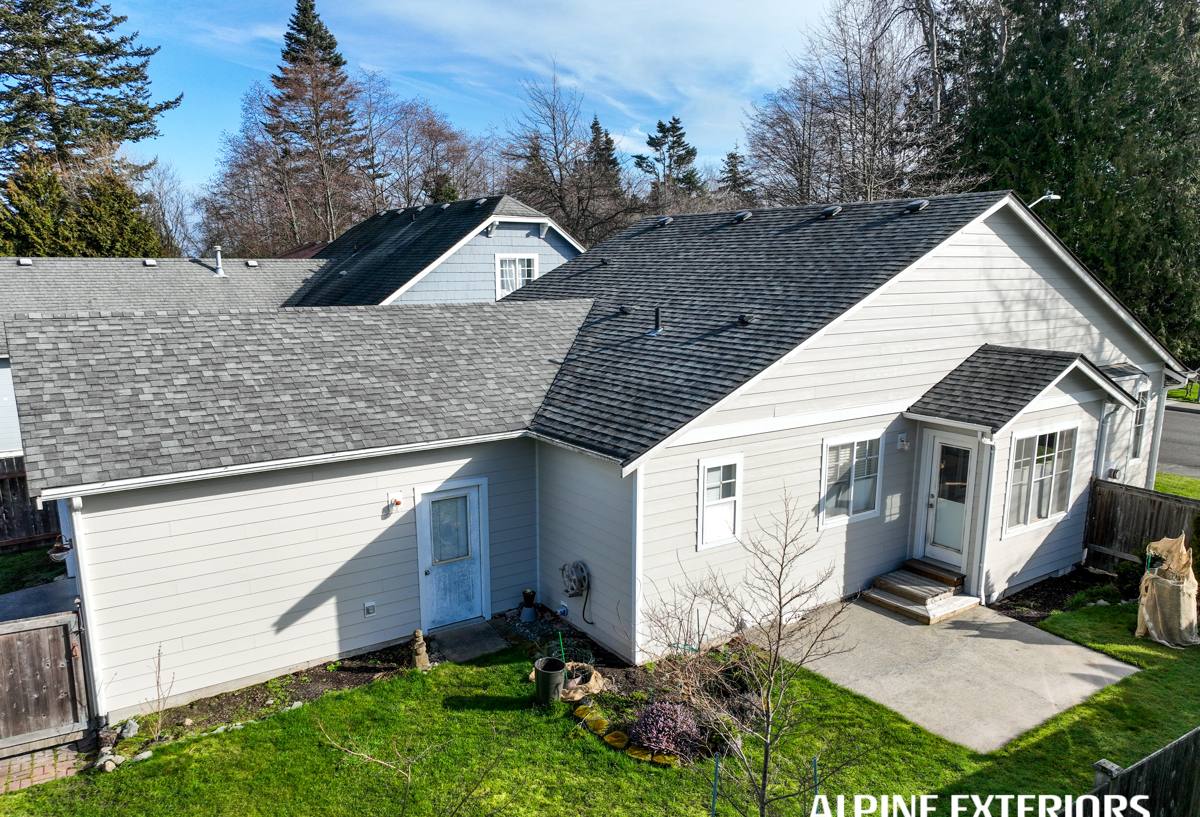
Roofing: Where Salt Air and Moss Do the Most Damage
Moss and Algae
Moss doesn't just sit on top of a roof looking bad — its root structures work under shingle tabs and hold moisture against the roof deck, which is how small moss problems turn into rot and leaks. Roofs with north-facing slopes or tree cover nearby are the most at risk. Zinc or copper strips near the ridge, proper ventilation, and periodic gentle cleaning all help, but the biggest factor is usually roof design and material choice from the start.
Salt Air and Metal Components
Flashing, fasteners, and any exposed metal roofing components take a slower but steady beating from salt-laden air near the water. We spec corrosion-resistant fasteners and flashing metals for homes in this area rather than using whatever's standard for an inland job, because the cost difference up front is small compared to what premature corrosion costs in repairs down the line.
Wind-Driven Rain
Standard shingle installation assumes rain falls mostly straight down. In areas exposed to wind off the water, rain gets pushed under shingle edges, around vents, and into valleys at angles that a minimum-code installation isn't built to handle. We pay particular attention to underlayment coverage, valley flashing, and vent flashing details on homes with more open exposure.
Siding That Can Take Salt Air and Moisture Cycling
Siding on a home near the water goes through more expansion and contraction cycling than siding further inland, because it's rarely fully dry. That cycling is hard on paint and caulk joints, and it's part of why we're careful about which siding products we recommend and how we detail the moisture barrier behind them.
Fiber cement holds up well in this kind of environment because it doesn't absorb moisture the way some engineered wood products do, and it isn't vulnerable to the corrosion issues that affect some metal siding over decades near salt water. Vinyl siding is a reasonable, lower-cost option for some homeowners, but it's worth understanding that it can become brittle over time with UV and temperature cycling, and seams need to be detailed carefully to keep wind-driven rain from getting behind panels. We'll walk through the honest trade-offs for your specific home and budget rather than pushing one product for every job.
Whatever siding material goes up, the house wrap and flashing details behind it matter as much as the siding itself. A well-installed budget siding product with correct water management will outperform a premium product installed with shortcuts at the seams, corners, and window openings.
Windows: Sealing Against Wind and Moisture, Not Just Looks
Older windows in homes near Similk Beach often show their age through fogged double-pane glass, soft spots in the surrounding trim, or drafts that show up specifically during wind events off the water. Replacement window work here isn't just about upgrading appearance or efficiency numbers — the flashing and sealant details around the window opening are what actually keep wind-driven rain out of the wall cavity.
We pay close attention to sill pan flashing and the integration between the window and the house wrap, since that's the detail that determines whether a window leak shows up as a small cosmetic issue or as hidden rot inside the wall a few years later. On a home with more direct exposure to wind and rain, we'll also talk through window orientation and any additional flashing steps worth taking on the more exposed elevations.
Signs a Window Needs Attention
- Fogging or condensation between panes on double- or triple-pane windows
- Soft, discolored, or swollen trim or sill material
- Noticeable draft during windy weather, even with the window closed and latched
- Difficulty opening, closing, or locking that wasn't there before
- Visible gaps or cracked caulk around the frame exterior
Decks Built for a Marine Environment
A deck near the water deals with everything a roof does — salt air, driving rain, near-constant moisture — plus direct sun exposure and foot traffic on top of it. Fastener corrosion is one of the most common issues we see on older decks in this area; standard fasteners that would be fine inland start to show rust streaking and weakening well ahead of schedule near the water.
For decking material, composite products have become a common choice because they don't require the same repainting and sealing schedule that wood does, and they resist moisture absorption better over time. Wood decking is still a solid choice for homeowners who prefer the look and are willing to keep up with a regular maintenance schedule of cleaning, sealing, and periodic board replacement. Either way, we use corrosion-resistant fasteners and hardware throughout, and we pay attention to ledger board flashing where the deck attaches to the house, since that's a common spot for hidden moisture damage to start.
Why a Local Crew Matters Here
Anacortes and the surrounding Skagit County communities have specific building conditions that a crew working from further away won't necessarily account for — the exposure levels vary a lot even within a small geographic area depending on how close a given home is to open water, how much tree cover it has, and which direction it faces. A local crew that works this area regularly has a feel for which details matter on which types of homes, and we're not driving hours to get here for a warranty callback or a follow-up question.
We also carry the licensing and insurance required to work in Washington State, and we're happy to walk you through that documentation before any work starts. A legitimate local contractor should never hesitate to show you proof of licensing, bonding, and insurance.
What Drives the Cost of Exterior Work Here
Every home is different, but a few factors consistently move the price of roofing, siding, window, and deck projects in this area up or down. This table covers the main ones so you know what to ask about when you're comparing estimates.
| Factor | Why It Matters |
|---|---|
| Exposure to wind and salt air | Homes closer to open water often need upgraded flashing metals and fasteners, which adds material cost but reduces long-term corrosion issues |
| Roof slope and moss history | Steeper or heavily shaded roofs may need extra prep, cleaning, or ventilation work before installation |
| Existing moisture damage | Hidden rot found once siding or roofing is removed adds repair cost that's hard to quote sight-unseen |
| Material choice | Fiber cement, composite decking, and higher-grade roofing materials cost more upfront but generally need less maintenance in this climate |
| Access and site conditions | Tree cover, steep lots, or limited equipment access can add labor time |
Homeowner Maintenance Checklist for This Climate
A little regular attention goes a long way toward avoiding expensive repairs later. Here's what we recommend keeping an eye on if you're in the Similk Beach area:
- Check roof valleys and north-facing slopes for moss buildup at least once a year
- Clear gutters and downspouts before the fall rains start
- Look at caulk lines around windows and doors annually for cracking or gaps
- Inspect deck fasteners and hardware yearly for rust or corrosion
- Watch for soft or discolored siding, especially near ground level and around window trim
- Trim back tree limbs that shade roof sections and keep them damp longer than necessary
Get an Honest Look at Your Home
If you're dealing with moss buildup, a leak that shows up during wind-driven rain, aging windows, or a deck that's starting to show its age, it's worth having someone take a direct look rather than guessing. We offer free, no-pressure estimates for homeowners in Similk Beach and the surrounding Anacortes area — use the form below to get in touch and we'll walk through what your home actually needs.