 Anacortes Roofing
 Roofing and Exterior Work for Sedro-Woolley Homes
Sedro-Woolley sits a bit inland from the salt water compared to Anacortes proper, but it shares the same weather system that defines exterior work across Skagit County: long stretches of rain from fall through spring, humid air that never fully dries out, and a moss season that seems to start earlier every year. Homes here take a slow, steady kind of wear rather than dramatic storm damage — which means problems often go unnoticed until they've been building for a while. We work on homes throughout Sedro-Woolley and the surrounding area, and we bring the same standards we use on every job in the county: honest assessments, straightforward pricing, and work that's built to handle the conditions this region actually produces, not a generic weather pattern.
Whether you're dealing with a roof that's overdue for attention, siding that's showing its age, windows that let in more draft than they should, or a deck that needs rebuilding after years of moisture exposure, the approach is the same: understand what the climate is doing to the material, then fix it in a way that holds up.
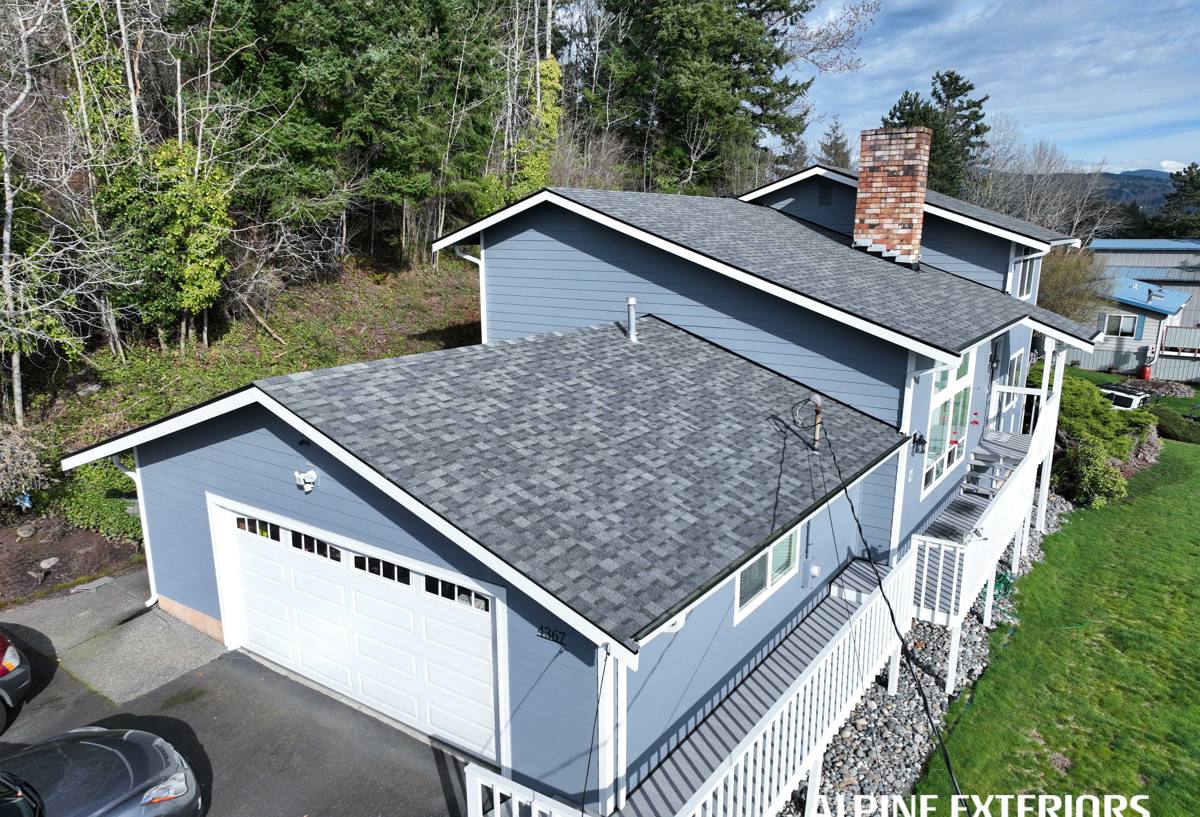
What Skagit County Weather Does to a Roof
Roofs in Sedro-Woolley face a specific combination of stresses. It's not just rainfall totals — it's how many days in a row the roof stays wet, how much shade different parts of the property get, and how much organic debris (fir needles, leaves, moss spores) collects in valleys and along eaves over the course of a year.
Moss and Organic Growth
Moss is probably the most common complaint we hear from homeowners in this area, and for good reason. Once moss establishes itself on shaded slopes or north-facing roof sections, it holds moisture against the shingle surface far longer than the surrounding air would on its own. Over time that trapped moisture works into the granule layer and, eventually, the decking underneath. Moss isn't just cosmetic — left unchecked for multiple seasons, it shortens the effective life of a roof significantly.
Prolonged Wet Periods
A single hard rain isn't usually what causes a roof failure here. It's the cumulative effect of a roof that rarely gets a chance to fully dry between rain events for months at a time. That's why flashing details, underlayment quality, and proper ventilation matter more in this climate than they would in a drier region — they're what keeps moisture from finding a way in during the stretches when everything is damp.
Wind-Driven Rain
Sedro-Woolley doesn't see the same direct exposure to Puget Sound wind that shoreline properties do, but storm systems moving through the valley still bring driving rain that can push water sideways under poorly sealed shingles, around chimney flashing, or into gaps at roof-wall intersections. These are usually the entry points we find first when we're called out for a leak.
Roof Services We Provide
- Roof inspections to identify moss buildup, granule loss, flashing failures, and ventilation issues before they become leaks
- Moss treatment and removal, done in a way that doesn't damage the shingle surface
- Roof repairs — targeted fixes for leaks, damaged flashing, or localized shingle failure
- Full roof replacement when a roof has reached the end of its practical service life
- Gutter and roof-edge maintenance guidance, since clogged gutters are one of the most common causes of edge rot we see on older homes
We size every recommendation to the actual condition of the roof, not a default sales pitch. A roof with early moss growth and a few worn spots often just needs treatment and repair. A roof with widespread granule loss, soft decking, or repeated leak points is usually past the point where repair makes financial sense, and we'll say so plainly.
Siding That Holds Up to Constant Moisture
Siding failures in this climate almost always trace back to moisture management, not the siding material failing on its own. Wood and older composite siding are especially vulnerable to water intrusion at butt joints, corner trim, and anywhere caulking has dried out and cracked. Once water gets behind the siding, it can sit there for a long time in a climate that doesn't offer much drying weather, which is how rot spreads from a small entry point into a much larger repair.
Why Installation Details Matter More Here
In a drier climate, a slightly imperfect flashing detail might never cause a problem because the siding gets enough dry time to shed occasional moisture. In Skagit County, that same detail can lead to hidden rot within a few years. This is why we pay close attention to house wrap continuity, window and door flashing integration, and proper caulking at every joint — not as an upsell, but because it's the difference between siding that lasts and siding that fails from the inside out.
Material Considerations
We install fiber cement, engineered wood, and vinyl siding, and we'll walk through the honest trade-offs of each for your specific home rather than pushing one product line. Fiber cement handles sustained moisture exposure well and holds paint longer, but it's heavier and less forgiving to install correctly — which matters in a climate where installation errors show up as problems faster than they would elsewhere. Vinyl is lower-maintenance and budget-friendly but can become brittle over time in cold snaps and shows impact damage more visibly. The right choice depends on your budget, how long you plan to stay in the home, and how much ongoing maintenance you want to take on.
Windows: Comfort, Condensation, and Energy Loss
Older single-pane or early double-pane windows are common in longer-established Sedro-Woolley neighborhoods, and they tend to show their age in a specific way here: condensation between panes, fogging that won't clear, and drafts that get noticeably worse during the wettest months. Humid outside air combined with warm indoor air during heating season is a recipe for window seals to fail faster than they would in a drier climate.
Replacement windows with intact modern seals cut down on that condensation problem substantially and reduce heating costs, since a failed window seal is essentially a slow, continuous energy leak. We also pay close attention to flashing and sealing around new window installs for the same reason we do with siding — a window installed without proper moisture management in this climate can create a hidden leak path that's worse than the problem it replaced.
Decks Built for a Wet Climate
Decks take a particular kind of abuse in Skagit County: constant damp shade from surrounding trees, standing water on horizontal surfaces after rain, and slow rot at ledger boards and post bases where water tends to collect and linger. A deck that looks structurally fine on the surface can have serious hidden damage at the connection points if it wasn't built or maintained with drainage in mind.
What We Look For
- Ledger board attachment and flashing where the deck meets the house — a common hidden rot location
- Post base condition, especially where posts sit in or near standing water after rain
- Proper gapping between deck boards to allow drainage and airflow underneath
- Railing and stair connection points, which loosen over time with repeated wet-dry cycling
Composite decking has become a popular choice for homeowners who are tired of annual staining and sealing, since it doesn't absorb moisture the way wood does. Pressure-treated wood remains a solid, lower-cost option as long as it's properly sealed and maintained on a realistic schedule. We'll walk through both options honestly based on how much upkeep you actually want to commit to.
Comparing Common Exterior Material Choices
| Material | Moisture Resistance | Maintenance Needs | Typical Lifespan Here |
|---|---|---|---|
| Fiber cement siding | High when properly installed and sealed | Periodic repainting, joint inspection | 25-40+ years |
| Vinyl siding | Good, but seams need attention | Low; occasional cleaning | 20-30 years |
| Composite decking | High; doesn't absorb water like wood | Low; periodic cleaning | 25-30+ years |
| Pressure-treated wood decking | Moderate; depends on sealing | Annual sealing/staining recommended | 10-20 years with upkeep |
| Asphalt composition shingles | Good with proper ventilation and moss control | Periodic moss treatment, gutter cleaning | 20-30 years |
A Seasonal Maintenance Checklist for Sedro-Woolley Homes
- Inspect roof valleys and shaded slopes for moss growth at least once a year, ideally before the wet season builds up
- Clear gutters and downspouts regularly — clogged gutters are one of the leading causes of fascia and edge rot in this area
- Check caulking around siding joints, window trim, and door frames annually; dried or cracked caulk is an open invitation for water
- Look at deck ledger boards and post bases for soft spots or discoloration, particularly in shaded, damp corners of the yard
- Check window seals for fogging or condensation between panes, especially heading into the colder months
- Trim back overhanging branches that keep roof sections shaded and slow to dry
Why a Local Crew Makes a Difference
Exterior work in Skagit County isn't the same job as exterior work in a drier part of the state, and it isn't the same job as coastal work right on the water either. Sedro-Woolley's mix of inland humidity, tree cover, and sustained wet seasons calls for specific attention to ventilation, drainage, and flashing details that a crew unfamiliar with the region might treat as optional. We work throughout this area regularly, which means we're not guessing at how a roof, siding system, or deck will hold up here — we're building and repairing based on what we consistently see fail and what actually lasts.
A local crew also means realistic scheduling around the weather. Roofing and siding work needs reasonably dry conditions to be done properly, and knowing the seasonal patterns here helps us plan projects for windows of weather that actually let the work go in right, rather than rushing installation during a wet stretch and compromising the result.
How We Approach Every Project
We start with an honest inspection — roof, siding, windows, or deck, depending on what you're concerned about — and explain what we find in plain terms. If something can be reasonably repaired, we'll say so. If it's past the point where repair makes sense, we'll explain why and lay out what replacement involves, including a realistic range for cost and timeline. We don't believe in scaring homeowners into bigger projects than they need, and we don't believe in patching something that's going to fail again in a year, either.
If you're noticing moss buildup, a lingering leak, drafty windows, siding that's starting to look tired, or a deck that needs a closer look, we're happy to come take a look and give you a straightforward, no-pressure estimate using the form below.