 Anacortes Roofing
 Roofing in Skyline: Built for the Skagit County Coastline
Skyline sits close enough to the water that salt air is part of daily life, not an occasional nuisance. If you've lived here more than a winter or two, you already know what that means for a roof: metal fasteners corrode faster than they would inland, algae and moss get a head start every fall, and driving rain off the Sound has a way of finding the smallest gap in flashing or underlayment. None of that is unusual for this stretch of Anacortes. It's just the baseline, and it's why roofing decisions here look a little different than they would in a drier part of the state.
We work on homes throughout Skyline and the surrounding Anacortes area, and the roofs we see tend to fall into a few predictable patterns depending on age, orientation, and how much tree cover surrounds the lot. A roof facing prevailing weather off the water ages differently than one tucked behind a stand of fir trees catching shade and dropping needles into the valleys. Knowing which pattern you're dealing with is most of the battle in diagnosing a problem correctly instead of just patching the symptom.
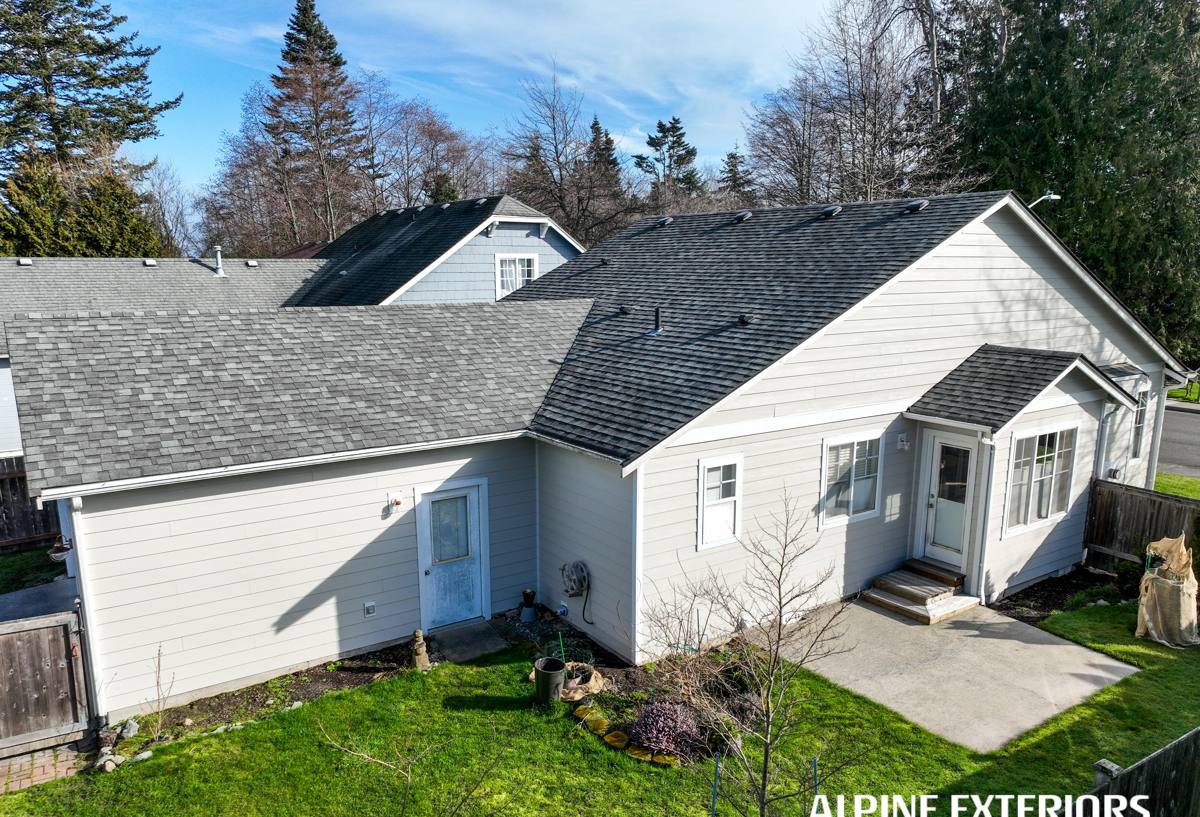
What Skagit County Weather Actually Does to a Roof
Salt Air and Metal Fatigue
Homes closer to the water see accelerated corrosion on exposed metal — flashing, fasteners, gutter hardware, and any metal roofing components. It's a slow process, but it's steady, and it's one reason we pay close attention to fastener and flashing material specs on jobs in this area rather than defaulting to whatever's cheapest. A roof that would hold up fine twenty miles inland can show early wear here if the wrong materials were used.
Driving Rain and Wind-Driven Moisture
Anacortes gets its share of storms that come in sideways off the Sound. Rain moving horizontally instead of straight down finds its way under poorly lapped shingles, around under-flashed penetrations, and through vent boots that have started to crack. This is less about total rainfall and more about wind direction — it's why proper underlayment coverage and flashing detail work matter more here than in calmer inland microclimates.
Moss, Algae, and the Long Wet Season
Western Washington's long moss season is well known, and Skagit County is no exception. Shaded roof sections, north-facing slopes, and anything near overhanging trees are the areas we watch closest. Moss doesn't just look bad — it holds moisture against the roofing material and can work its way under shingle edges over time, which shortens the life of an otherwise sound roof.
Roofing Materials: What Holds Up and What to Expect
We install and repair asphalt composition shingle roofing, metal roofing, and flat or low-slope roofing systems depending on the home. Each has real tradeoffs, and we'll walk you through them honestly rather than pushing whatever's easiest to sell.
| Material | Typical Lifespan | Coastal Considerations |
|---|---|---|
| Asphalt composition shingle | 20–30 years | Good moss resistance with proper granule coatings; needs periodic cleaning in shaded areas |
| Standing seam metal | 40–60 years | Excellent water shedding for driving rain; fastener and coating quality matter more near salt air |
| Flat / low-slope membrane | 15–25 years | Common on additions and outbuildings; seams and drains need regular inspection |
We don't push exotic or trend-driven roofing products in this market. Our standard is to recommend materials with a proven track record in this specific climate — heavy, sustained moisture and salt exposure are not forgiving of shortcuts, and a roofing system that looks fine on a spec sheet doesn't always perform the same way twenty feet from saltwater.
Common Roof Issues We Find on Skyline Homes
- Cracked or deteriorated pipe boots and vent flashing, usually the first point of a slow leak
- Moss buildup along north-facing slopes and shaded valleys
- Corroded fasteners or flashing on older metal roofing sections
- Granule loss on aging asphalt shingles from years of wind-driven rain
- Clogged or undersized gutters overwhelmed during heavy storm events
- Soft or spongy decking discovered during re-roofs, usually from long-term slow leaks
Most of these start small. A cracked pipe boot or a patch of moss doesn't threaten the structure on day one, but left alone through a few more wet seasons, it becomes a decking repair instead of a five-minute fix. Regular inspection is the cheapest insurance you can buy for a roof in this climate.
Repair, Maintenance, or Replacement — How We Approach the Decision
Not every roof issue means a full replacement, and we won't tell you it does. When we inspect a roof in Skyline, we're looking at three things: how much useful life is left in the existing materials, whether the damage is isolated or spread across the roof system, and what the underlying decking looks like once we get eyes on it.
When Repair Makes Sense
Isolated flashing failures, a handful of damaged shingles, or a moss problem caught early are usually repair situations. If the roof is otherwise sound and within its expected lifespan, there's no reason to replace it wholesale.
When Replacement Is the Honest Recommendation
Widespread granule loss, multiple past patch jobs, or a roof nearing the end of its material's realistic lifespan is a different conversation. We'll tell you plainly if we think you're better off putting money into a new roof rather than continuing to chase leaks on an old one — that's a judgment call we make based on what we actually see, not a sales target.
Beyond the Roof: Siding, Windows, and Decks
Roofing problems in this climate rarely stay isolated to the roof. Water that gets past flashing can travel down into fascia, soffits, and siding before it ever shows up as a stain on a ceiling. Because we handle siding, windows, and decks in addition to roofing, we can look at a home's full exterior envelope during an inspection rather than just the roof deck in isolation — which matters when the real source of a moisture problem turns out to be a window flashing issue or a deck ledger board rather than the roof itself.
Decks in particular take a beating from the same moss and moisture cycle that affects roofs here — ledger boards and joists in shaded, damp corners of a property deserve the same attention as a north-facing roof slope. If we're already on site for a roof estimate, it costs nothing to have us take a look.
Why a Local Crew Matters for This Kind of Work
Roofing crews unfamiliar with Skagit County conditions sometimes spec materials and fastener systems that are fine for a drier, less coastal environment but underperform here. A local crew that works Anacortes and the surrounding water-adjacent neighborhoods regularly sees how salt air, moss, and driving rain actually play out over years, not just what a manufacturer's spec sheet promises. That experience shapes real decisions — which fastener grade to use, how much flashing overlap is enough for wind-driven rain, and which roof sections need extra attention because of shade and tree cover.
It also means faster response when something goes wrong. A storm-damaged roof or a sudden leak doesn't wait for a convenient schedule, and being close by matters when you need someone out to tarp a roof or assess damage quickly.
What to Look For When Hiring a Roofing Contractor
- Proper Washington state contractor licensing and active liability insurance
- A written estimate that details materials, scope, and timeline — not just a bottom-line number
- Willingness to explain repair versus replacement reasoning rather than defaulting to the biggest job
- Experience specific to coastal or high-moisture climates, not just general roofing volume
- Clear warranty terms on both materials and workmanship, explained before you sign anything
- References or examples of similar work in the local area
Maintenance Habits That Extend a Roof's Life Here
A little regular attention goes a long way in this climate. Keeping gutters clear ahead of the fall rains, having moss treated before it spreads across shaded slopes, and getting a roof looked at after any major windstorm are simple habits that catch small problems before they become expensive ones. We're happy to talk through a maintenance schedule that fits your specific roof and property, even if you're not ready for any work right now.
If you're in Skyline or elsewhere around Anacortes and want an honest look at where your roof stands, we're glad to come take a look. There's a free, no-pressure estimate form below — reach out whenever it's convenient.