 Anacortes Roofing
 Roofing and Exterior Work for Mount Vernon Homes
Mount Vernon sits inland along the Skagit River, a short drive from our home base in Anacortes, and it's a regular part of our service area for roofing, siding, windows, and deck work. The building stock here runs from older farmhouse-style homes near downtown and the river to newer subdivisions pushing out toward the valley edges, plus a fair number of manufactured and modular homes on larger lots. That mix means no two jobs look quite the same, but the climate factors driving wear and tear are consistent across almost every property we look at.
Because Mount Vernon is set back from the open water of Fidalgo Bay and Padilla Bay, homes here see less direct salt spray than waterfront properties closer to Anacortes. What Mount Vernon does get, in full measure, is the broader Skagit County weather pattern: long stretches of driving rain off the Pacific, a river valley that holds fog and humidity longer than higher ground, and a moss and algae season that can run eight months or more on north-facing roof slopes and shaded siding. We build every recommendation around that combination rather than a generic "Pacific Northwest" checklist.
What the Local Climate Does to Roofs
The single biggest roofing issue we see in and around Mount Vernon is moss and moisture retention, not storm damage. Roofs here rarely fail from one dramatic event. They fail slowly, from moss holding water against shingles, gutters backing up during heavy rain and sending water under the roof edge, and algae staining that signals a roof surface that's staying wet longer than it should.
Common Roofing Issues We Address
- Moss buildup on shaded, north- and east-facing roof slopes, especially under overhanging trees near the river and older neighborhoods
- Gutter and downspout systems undersized or clogged for the volume of rain the valley receives
- Flashing around chimneys, skylights, and roof-to-wall transitions that has loosened or corroded over time
- Granule loss on asphalt shingle roofs from years of freeze-thaw cycling and driving rain
- Ventilation gaps that trap humid attic air, accelerating moisture damage from the underside of the roof deck
We inspect for these specific patterns rather than doing a generic walk-around, and we'll tell you honestly when a roof has years of life left with basic maintenance versus when replacement is the more cost-effective path.
Roof Replacement and Repair Options
Asphalt composition shingles remain the most common roofing material we install in Mount Vernon, largely because they perform well against moss and rain when installed with proper underlayment and ventilation, and they're the most budget-friendly option for most homeowners. Metal roofing has grown more popular here too, particularly for homeowners planning to stay long-term, since it sheds moss more readily and holds up well under sustained rain. We also work on cedar shake and tile roofs found on some of the area's older and higher-end homes, though we're upfront that cedar shake requires more consistent maintenance in a wet climate like this one.
For repairs, we focus on diagnosing the actual source of a leak rather than just patching the spot where water is showing up inside the house — in a rainy climate, water often travels along framing before it appears on a ceiling, so the visible drip and the actual entry point can be several feet apart.
Siding That Holds Up to Valley Moisture
Siding failure in Mount Vernon almost always traces back to moisture getting behind the surface rather than the surface material itself wearing out. Older wood and hardboard siding is especially vulnerable where caulking has failed, where siding meets trim or foundation, and around window and door openings that weren't properly flashed when originally installed.
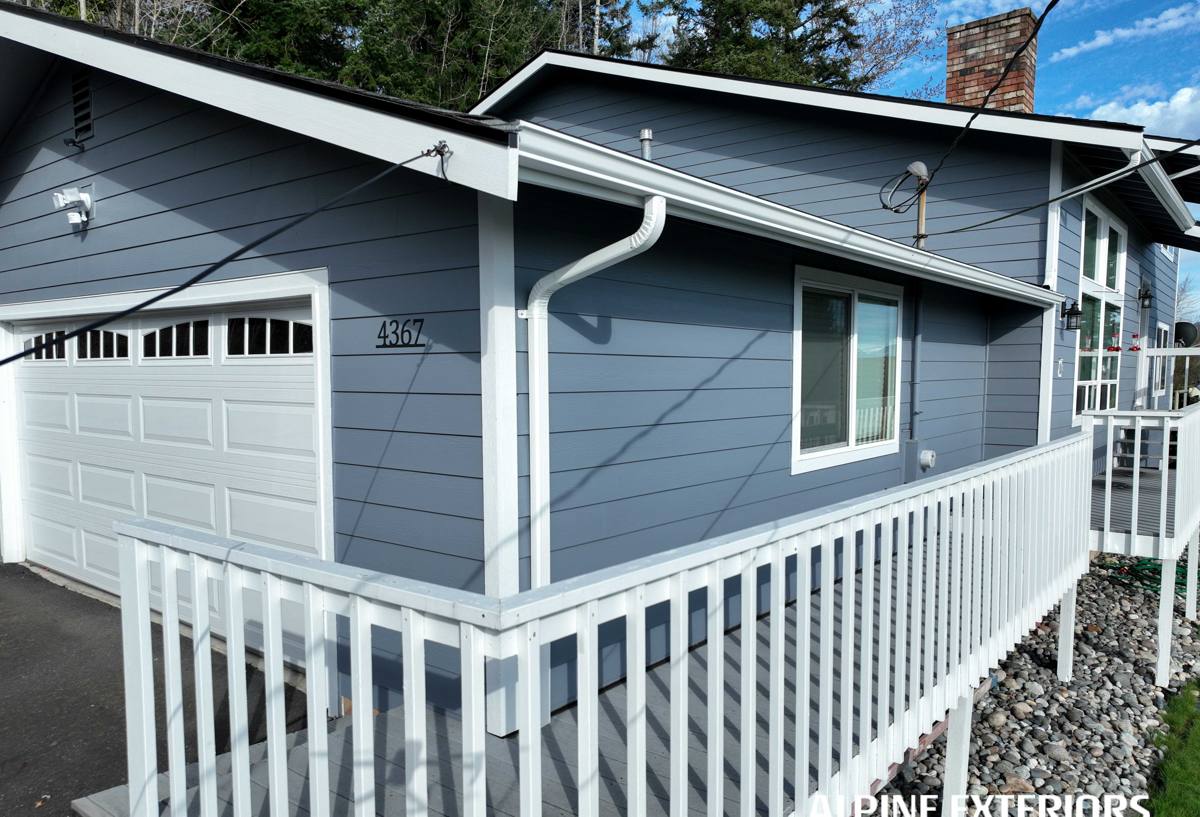
We install fiber cement siding as our standard recommendation for most Mount Vernon homes. It resists moisture absorption, doesn't feed mold or mildew the way wood siding can, and holds paint and color far longer in a climate that sees this much sustained rain. We also install vinyl siding where budget or the specific home calls for it, and we're straightforward about the trade-off: vinyl is lower cost and low-maintenance, but it doesn't perform as well as fiber cement over the long run in a persistently wet environment, and it's more prone to visible warping if installed without attention to expansion gaps.
Whatever the material, the work that actually determines how long siding lasts here is the underlying moisture barrier and flashing detail — house wrap installed correctly, proper overlap at seams, and flashing at every window, door, and roofline intersection. That's where we spend our attention, because it's also where most siding failures we're called to fix originally went wrong.
Windows: Condensation, Drafts, and Older Housing Stock
A number of homes in and around Mount Vernon still have original single-pane or early dual-pane windows, particularly in older neighborhoods near downtown. In a valley climate with this much ambient humidity, older windows tend to show two problems: condensation building up between panes (a sign the seal has failed) and drafts around frames that have shifted or lost their weatherstripping over the years.
When we replace windows, we prioritize proper flashing and sealing at the rough opening as much as the window unit itself — a high-quality window installed with a poor moisture seal will still let water into the wall cavity over time. For most homes we recommend vinyl or fiberglass-framed dual-pane windows with a low-E coating, which helps with both energy efficiency and comfort during the valley's cooler, damper months.
Decks Built for Rain, Not Just Sun
Deck work in Mount Vernon has to account for the fact that outdoor structures here spend most of the year wet, not dry. Standing water on deck boards, moisture trapped between joists and ledger boards, and inadequate flashing where a deck attaches to the house are the most common causes of the rot and structural issues we find during deck inspections.
We build and repair decks using pressure-treated framing with proper ledger flashing, and we talk through decking material options honestly: composite decking costs more upfront but resists moisture and doesn't need refinishing, while natural wood decking costs less initially but requires regular sealing and inspection to hold up through repeated wet seasons. Either can work well in this climate — the right choice depends on how much ongoing maintenance you want to take on.
Cost Factors to Expect
Every project is different, but these are the factors that most often move a Mount Vernon exterior project up or down in price. We provide a specific, written estimate after an in-person look at your home — this table is meant to help you understand what drives cost, not to substitute for that estimate.
| Project | Key Cost Drivers | Typical Price Range |
|---|---|---|
| Roof replacement | Roof size and pitch, material choice, layers of existing roofing to remove, decking condition | Varies widely by material and square footage |
| Siding replacement | Home size, siding material, extent of underlying moisture damage, trim and detail work | Varies by material and linear footage |
| Window replacement | Number of windows, frame material, window size, flashing and trim complexity | Priced per window, varies by type |
| Deck construction or repair | Deck size, decking material, framing condition, elevation and railing requirements | Varies by size and material |
We're happy to talk through rough budget ranges over the phone, but an accurate number always requires seeing the specific property first.
Why Working with a Local Skagit County Crew Matters
A crew that works Anacortes, Mount Vernon, and the surrounding Skagit County area regularly sees the same moisture patterns, the same moss cycles, and the same aging housing stock over and over. That familiarity shows up in practical ways: knowing which roof and siding details tend to fail first in this specific climate, understanding local permitting requirements, and being close enough to respond quickly if a storm causes damage that needs immediate attention.
It also means we're not experimenting with your home. The materials and installation methods we recommend are the ones we've seen hold up — or fail — on homes just like yours, in the same weather, over years of local work.
A Simple Seasonal Maintenance Checklist
Regardless of who does your exterior work, these are the maintenance basics that matter most for homes in a climate like Mount Vernon's:
- Clear gutters and downspouts at least twice a year, more often if you have overhanging trees
- Have roof moss treated or removed before it spreads across an entire slope, not after
- Check caulking and sealant around windows, doors, and siding seams annually
- Inspect deck ledger boards and framing for soft or discolored wood each spring
- Walk the roofline after major storms to check for lifted or missing shingles
- Keep vegetation trimmed back from siding and roof edges to reduce trapped moisture
Get an Honest Look at Your Home
If you're dealing with a roof that's collecting moss faster than it used to, siding that's showing moisture damage, drafty older windows, or a deck that needs attention before another wet season sets in, we're glad to take a look. We'll give you a straightforward assessment of what your home actually needs — no pressure, no upsell — and a written estimate you can take your time reviewing. Reach out using the form below to schedule a free estimate for your Mount Vernon property.