 Anacortes Roofing
 Roofing in La Conner's Marine Climate
La Conner sits right on the Swinomish Channel, close enough to the water that homes here take on a different kind of weathering than houses just a few miles inland. The combination of salt-laden air, steady winter rain, and shoulder seasons that never quite dry out creates conditions that are hard on every exterior surface, but especially on roofs. We work on homes throughout La Conner and the surrounding Skagit Valley regularly, and the patterns repeat: moss establishing in shaded, north-facing roof planes; fasteners and flashing showing early corrosion; and gutters that clog faster than homeowners expect because of the moisture and organic debris that blow in off the water and the surrounding farmland.
None of this means La Conner homes are doomed to constant roof trouble. It means the materials, detailing, and maintenance schedule need to match the actual climate the roof lives in, not a generic national standard. That's the approach we take on every job, whether it's a repair on an older downtown home or a full replacement on a newer build closer to the highway.
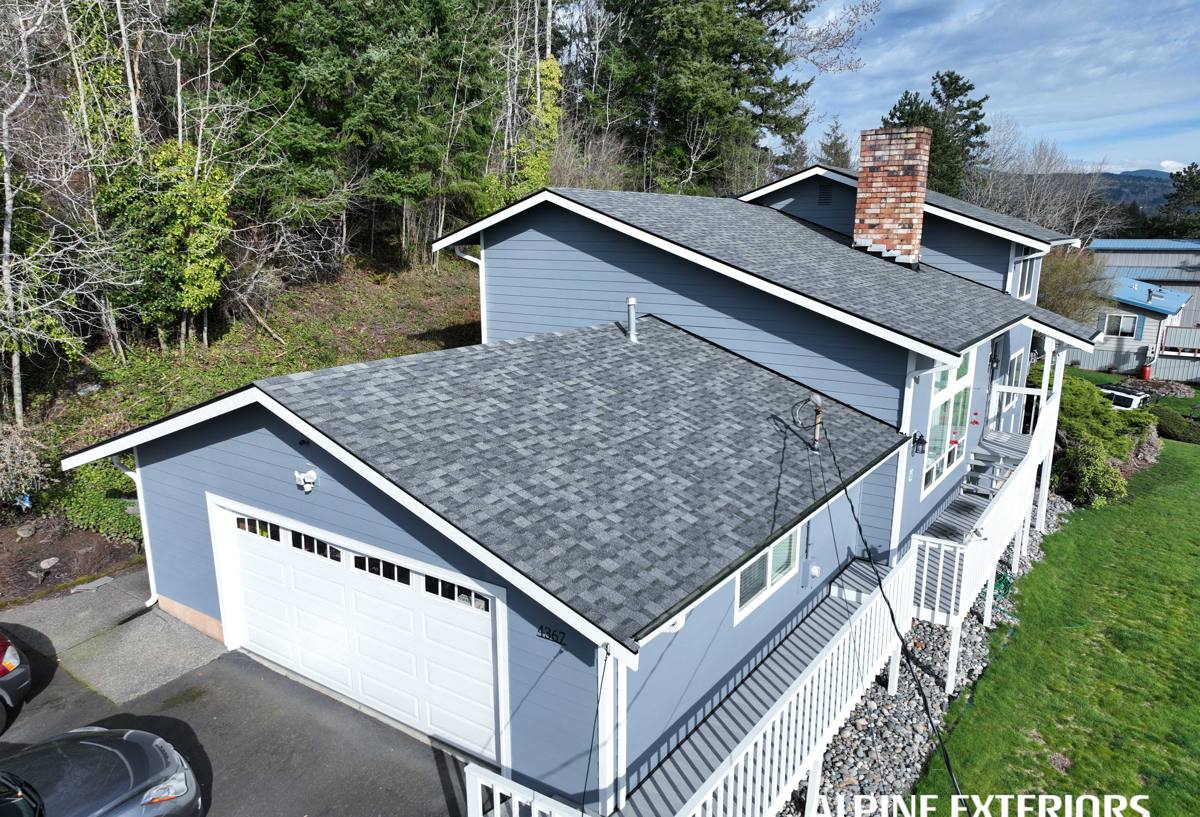
What the Local Climate Actually Does to a Roof
Moss and Organic Growth
Western Skagit County gets enough rain, humidity, and mild temperature swings to make moss and algae a near-constant issue, especially on roof sections shaded by trees or facing north. Moss holds moisture against the roofing material long after the rest of the roof has dried, which shortens the life of asphalt shingles and can work its way under shakes or shingle tabs over time. It also adds weight and can lift shingle edges, giving wind-driven rain a place to get underneath.
Salt Air and Metal Corrosion
Proximity to the Swinomish Channel and the broader Salish Sea means airborne salt is a real factor here, more so than it would be for a home the same distance from, say, the Cascade foothills. Salt air accelerates corrosion on exposed fasteners, flashing, and any metal roofing components that aren't rated for coastal exposure. This is one of the reasons material selection and hardware choice matter more here than they would in a drier, inland part of the county.
Driving Rain and Wind
Storms coming off the water often bring rain in sideways rather than straight down, which puts more stress on flashing details around chimneys, skylights, dormers, and roof-to-wall transitions than on the open field of the roof itself. Most of the leaks we get called out for in this area trace back to a flashing or transition failure, not a failure in the shingles or panels themselves.
Roofing Materials That Hold Up in the Skagit Valley
There isn't one "best" roofing material for every La Conner home — it depends on the home's age, roof pitch, budget, and how much maintenance the homeowner wants to take on. Here's how the common options compare for this specific climate.
| Material | Moss/Moisture Resistance | Typical Lifespan Here | Considerations |
|---|---|---|---|
| Architectural asphalt shingle | Good, with proper ventilation and periodic cleaning | 20-30 years | Most cost-effective; needs moss treatment on shaded slopes |
| Standing seam metal | Excellent; sheds moss and moisture well | 40-50+ years | Higher upfront cost; needs coastal-rated fasteners and coatings |
| Cedar shake | Requires diligent upkeep in this climate | 20-30 years with maintenance | Traditional look fits older La Conner homes; moss and moisture management is ongoing work |
| Synthetic/composite shingle | Very good | 30-40+ years | Mimics shake or slate appearance with less moisture sensitivity |
For historic and older homes near downtown La Conner, we often talk through how to balance the look homeowners want to preserve against materials that will actually perform in a marine environment. It's a real trade-off, and we'd rather be upfront about it than sell a product that looks right but creates maintenance headaches five years down the road.
Repair or Replace? How We Help You Decide
Not every roofing problem in La Conner means a full replacement. We assess a few key factors before making a recommendation:
| Factor | Leans Toward Repair | Leans Toward Replacement |
|---|---|---|
| Roof age | Under 15 years, isolated issue | Approaching or past material's expected lifespan |
| Extent of moss/moisture damage | Localized to one slope or valley | Widespread across multiple planes |
| Underlying decking condition | Solid, no soft spots | Soft, delaminated, or water-stained sheathing |
| Flashing condition | Mostly sound, minor fixes needed | Corroded or failing at multiple penetrations |
| Number of prior repairs | First or second repair on the roof | Repeated patch jobs on the same area |
We'll walk the roof, document what we find, and give you a straight answer about which category your situation falls into. A repair that genuinely solves the problem is a better outcome for everyone than talking someone into a replacement they don't need yet.
Beyond the Roof: Siding, Windows, and Decks in a Coastal Environment
Roofs don't fail in isolation, and in a place like La Conner the same salt air, rain, and moisture that stress a roof are working on the rest of the exterior at the same time. We handle siding, windows, and decks alongside roofing because these systems interact — a roof that's shedding water poorly will eventually show up as siding damage or rot at the fascia and trim, and a deck exposed to the same driving rain needs the same kind of moisture-conscious detailing a roof does.
Siding
Fiber cement and quality vinyl products tend to perform well against salt air and moisture cycling; wood siding can work but needs a more disciplined maintenance schedule in this climate. We look at how your current siding is holding up during any roofing visit and flag issues before they become bigger problems.
Windows
Older single-pane or aging dual-pane windows in coastal Skagit County homes often show fogging, seal failure, or drafts sooner than the same windows would inland, simply because of the added moisture load. Replacement windows with modern seals and coastal-appropriate hardware address both the comfort issue and the moisture intrusion risk at the frame.
Decks
Decks facing the water or open to prevailing weather take a beating from rain and humidity. Proper flashing where the deck meets the house, moisture-resistant fasteners, and a wood or composite decking choice suited to constant damp conditions all matter more here than in a drier climate.
Maintenance Checklist for La Conner Homeowners
A little regular attention goes a long way toward avoiding expensive surprises in this climate. We recommend homeowners keep an eye on the following, or have a crew do a seasonal check:
- Clear moss buildup on shaded or north-facing roof slopes before it spreads, using methods that don't damage the roofing surface
- Clean gutters and downspouts at least twice a year, more often if you're near mature trees
- Inspect flashing around chimneys, skylights, and roof-to-wall transitions annually for signs of lifting or corrosion
- Check attic ventilation — poor airflow traps moisture and accelerates moss growth and shingle deterioration from underneath
- Look at exposed fasteners and metal trim for early corrosion, especially on homes closest to the channel
- Walk the deck and check for soft spots, ledger board issues, or standing water after storms
- Watch for water staining on interior ceilings after heavy wind-driven rain events, which often points to a flashing issue rather than a general roof failure
Why a Local Skagit County Crew Matters
A roofing crew that works mainly in drier or more sheltered parts of the state can miss the details that matter for a home in La Conner — the moss cycle, the salt exposure, the way storms come off the water. We're based in Anacortes and work throughout Skagit County, so we're familiar with how homes in this specific area age and what tends to go wrong first. That local knowledge shapes everything from the materials we recommend to how we detail flashing and ventilation, and it means we're not learning the local climate on your project.
Being local also means we're reachable if something comes up after the job is done — a follow-up question, a storm that raises a concern, a maintenance check before winter. We'd rather build that kind of ongoing relationship than disappear after the invoice is paid.
What to Expect When You Work With Us
For any roofing, siding, window, or deck project in La Conner, our process starts with an honest, no-pressure look at your home's actual condition. We'll explain what we find in plain terms, walk through material options that make sense for your budget and the local climate, and give you a clear scope and price before any work begins. We're not interested in upselling homeowners on more than they need, and we're just as willing to recommend a targeted repair as a full replacement when that's the right call.
If you're dealing with moss buildup, a suspected leak, aging siding, drafty windows, or a deck that's showing its age, we're happy to take a look. Reach out for a free, no-pressure estimate — we'll give you a straightforward assessment and let you decide from there.