 Anacortes Roofing
 La Conner sits right on the Swinomish Channel, and that waterfront setting is a big part of the town's character — it's also exactly why siding takes more abuse here than it does a few miles inland. Homes along the channel and throughout the surrounding flats deal with a steady mix of salt-carrying air, wind-driven rain, and a damp season that runs long even by Pacific Northwest standards. A lot of La Conner's housing stock is older too, which means the siding on many of these homes was chosen and installed decades ago, under a different understanding of what this climate actually does to an exterior over time. This page is specifically about siding replacement in La Conner — what the climate demands, what a correct job looks like, and how we approach it.
Why Siding Wears Out Faster in La Conner
Three things drive most of the siding failures we see in this part of Skagit County: salt air, driving rain, and moss. None of them act alone — they compound each other, and a waterfront town like La Conner gets a fuller dose of all three than a more sheltered inland property does.
Salt Air Off the Channel
Being right on the water means fasteners, flashing, and lower-grade trim hardware are exposed to salt-laden air on a near-constant basis. That accelerates corrosion in a way that's easy to underestimate until you're pulling old siding off a wall and finding rusted nails or corroded flashing that gave up years before the siding itself failed visibly.
Driving Rain
Storms moving through this part of the Salish Sea rarely drop rain straight down — wind pushes it sideways into wall assemblies, window and door trim, and every joint where the siding wasn't lapped or sealed quite right. Over years, that sideways load is what separates a siding job that holds up for decades from one that starts letting moisture in behind the cladding within a few wet seasons.
A Long Moss Season
La Conner's mix of tree cover, shaded lots, and near-constant moisture keeps moss and algae active on siding and roofs for most of the year, not just a few winter months. Any siding material that's even slightly porous, or that holds moisture against its own surface instead of shedding it, becomes a growth surface — and a surface that stays wet longer ages faster, regardless of what it's rated for on paper.
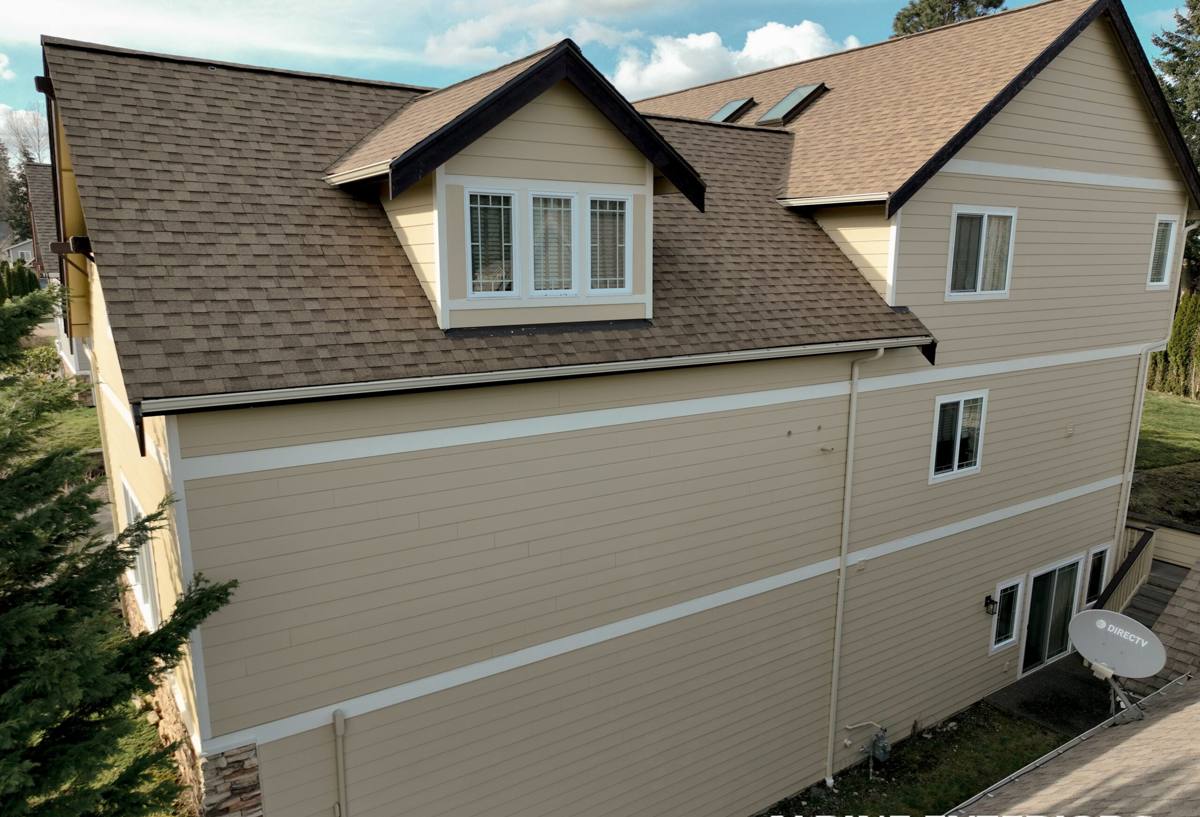
Signs a La Conner Home Needs Siding Replacement, Not Just Repair
Not every problem calls for a full tear-off. But a homeowner should know what to look for, and when patching stops making sense.
- Moss or dark staining that comes back quickly after cleaning, especially on shaded or channel-facing walls
- Soft, spongy, or visibly warped siding, particularly low on the wall or around window and door trim
- Peeling paint, chalking, or visible cupping on older wood or wood-based siding
- Cracked, buckled, or missing panels after a windstorm off the water
- Rust staining running down from fasteners, flashing, or trim hardware
- Musty smells or interior staining on walls that back up to exterior siding
- Siding original to a home built 20-plus years ago, with no documented replacement since
Any one of these is worth a professional look. Several at once, especially combined with soft sheathing underneath, usually means repair is just delaying a full replacement rather than avoiding it.
Why We Install Only James Hardie Fiber Cement
We install one siding product, on every job, everywhere we work: James Hardie fiber cement. We don't install vinyl, LP SmartSide, Cemplank, Allura, primed spruce, or cedar. That's a professional standard, not a sales position, and it's worth explaining honestly rather than just stating it.
Each of those alternatives has real strengths. Vinyl is inexpensive and low-maintenance in mild conditions. Engineered wood products install quickly and take paint well. Cedar has genuine, hard-to-fake visual character. But each also carries a trade-off that matters more on a channel-front lot than it might inland: vinyl can warp and become brittle with age and temperature swings, and its seams give wind-driven rain a place to work its way in. Wood-based products — engineered or solid — still have an organic core that depends on flawless field priming and caulking at every cut edge to keep sustained moisture out, on every job, for the life of the siding. That's a demanding standard to hold consistently, and a long wet season doesn't offer much margin for error.
Fiber cement solves the core problem differently: it isn't organic. It doesn't have a wood substrate for trapped moisture to work into, and it doesn't feed moss and mildew the way wood-based products can. James Hardie also builds its HZ product lines specifically around sustained moisture and coastal exposure — the kind of load a La Conner home actually sees — rather than a single generic formulation sold everywhere in the country. Paired with a factory-applied ColorPlus finish, cured under controlled conditions instead of painted on-site, it holds color and resists cracking longer than most field-applied finishes manage in a climate this wet.
How the Options Compare in This Climate
| Product | Real Strength | Trade-Off in a Waterfront Climate |
|---|---|---|
| Vinyl siding | Low upfront cost, low maintenance in mild climates | Can warp with age; seams and panel gaps let wind-driven rain in |
| LP SmartSide / engineered wood | Fast installation, paints well | Wood-strand core is moisture-sensitive at cut edges and fasteners |
| Primed spruce or cedar | Genuine wood appearance and character | Ongoing repainting, sealing, and moss control needed to prevent rot |
| Cemplank / Allura | Also fiber cement, competitively priced | May lack a climate-specific HZ-style line or the same finish warranty depth |
| James Hardie fiber cement | Non-combustible, climate-engineered, factory-finished | Higher upfront cost than vinyl; requires correct installation to perform to spec |
What a Correct Siding Replacement Job Involves
A siding product is only as good as the installation behind it, and that's especially true on an exposed, waterfront lot. Skipping a step doesn't usually show up as a problem in year one — it shows up two or three wet seasons later, as a callback.
- Inspection and estimate: a real look at current siding condition, signs of trapped moisture or sheathing damage, and how sun, shade, and wind exposure vary across each wall of the house.
- Tear-off and substrate check: once old siding is off, the sheathing underneath gets checked for rot or soft spots before anything new goes up. Covering damaged sheathing with new siding just hides a problem that gets worse behind the wall.
- Weather barrier and flashing detail: the house wrap and flashing at every window, door, and penetration get careful attention here — this is the step that's easiest to rush and hardest to inspect once the new siding is up.
- Installation to manufacturer spec: correct clearance from grade and roofline, manufacturer-specified fastener patterns, and joint treatment suited to that wall's actual sun, shade, and wind exposure.
- Final walkthrough: the finished job gets reviewed with the homeowner, including care and maintenance expectations specific to a channel-front property.
Working Around La Conner's Older Homes
A good share of La Conner's housing stock, including homes in and near its historic core, predates modern building envelope practices by decades. Replacing siding on a house like that isn't just a materials swap — it's usually the first real chance to correct old flashing shortcuts, add a proper weather barrier, and address sheathing damage that's been developing quietly behind the old siding for years. We treat that as part of the job, not an unexpected add-on, because on an older La Conner home it's often exactly what the project actually needs to hold up going forward.
Cost Factors for a La Conner Siding Replacement
We don't publish blanket pricing, because the real cost drivers are specific to each house — but the factors that move a project's cost up or down are consistent enough to lay out honestly.
| Factor | How It Affects Cost |
|---|---|
| Existing sheathing condition | Rot or moisture damage found during tear-off adds repair scope before new siding goes on |
| Home age and construction era | Older homes often need flashing and weather-barrier upgrades alongside the siding itself |
| Wall complexity and trim detail | More corners, gables, and window trim mean more flashing and labor time |
| Siding profile and Hardie product line | Board-and-batten or heavier trim packages run higher than standard lap siding |
| Site access | Tight lots, water-side access, or limited staging area can affect labor time |
Why a Local Crew Matters for This Job
A contractor who works this part of Skagit County regularly knows how differently a channel-facing wall ages compared to a wall tucked on the sheltered side of the same house — and adjusts flashing detail and joint treatment accordingly. That judgment comes from doing this work in this specific climate repeatedly, not from a spec sheet written for a national average. It also means someone local is reachable years down the road if a warranty question comes up, rather than chasing down a crew that's moved on to another region.
Maintaining New Siding Once It's Installed
Even correctly installed fiber cement benefits from a little seasonal attention on a waterfront lot. Keeping gutters clear ahead of the wet season keeps overflow from soaking siding and trim at the eaves. Checking shaded, channel-facing walls periodically for early moss growth and addressing it before it spreads keeps moisture from sitting against the surface for long stretches. Inspecting caulked joints at trim and penetrations every year or two catches small gaps before wind-driven rain finds them. None of it is a heavy burden, but it's real — and it's worth knowing before the siding goes up, not after.
If your La Conner home needs new siding, or you're not sure whether what you have needs repair or full replacement, we're glad to take a look and give you a straightforward, no-pressure estimate. Reach out using the form below to get started.