 Anacortes Roofing
 Roofing in Ship Harbor: A Neighborhood Shaped by the Water
Ship Harbor sits right where Anacortes meets the water — close to the ferry terminal, wrapped in marine air, and shaded in places by mature evergreens. That combination makes it one of the more demanding pockets of Skagit County for a roof to hold up in. Homes here deal with salt-laden wind off Rosario Strait and Guemes Channel, long stretches of driving rain through fall and winter, and a moss and algae season that can run most of the year in the shadier lots. None of that is unusual for the Anacortes waterfront, but it does mean a roof built for a drier, inland climate won't perform the same way out here.
We've worked on enough roofs, siding jobs, window replacements, and decks around Anacortes to know that Ship Harbor properties tend to show wear in specific, predictable places — not randomly. Understanding those patterns is what lets us recommend the right fix instead of the most expensive one.
What Salt Air and Marine Exposure Actually Do to a Roof
Salt air doesn't damage roofing the way people often assume. It's not going to eat through shingles or corrode a roof deck overnight. What it does is accelerate the aging of anything metal and anything with exposed fasteners.
Fasteners and Flashing
Nail heads, screw fasteners, and flashing seams are the first places salt-driven corrosion shows up. Over years, untreated or lower-grade fasteners can weep rust stains down a roof slope or, worse, lose holding strength at the exact spots that keep flashing tight against a chimney, skylight, or wall transition. On a home this close to the water, we lean toward corrosion-resistant fastener and flashing specs as a baseline, not an upgrade.
Metal Roofing and Trim
Metal roofing and metal trim components are popular around Anacortes for good reason — they shed water well and handle wind. Near the water, though, the finish and coating quality matter more than they would a few miles inland. A properly coated metal roof or metal flashing package can go the distance in a marine environment; a bargain-grade product often can't, and the failure shows up as chalking, pitting, or premature rust well before the rest of the roof is due for attention.
Moss, Algae, and the Long Wet Season
Anacortes as a whole deals with moss, but Ship Harbor's tree cover and proximity to the water push it further. Shaded, north-facing roof slopes that stay damp longer after a storm are prime territory for moss and algae to take hold.
Why It's More Than Cosmetic
Moss isn't just an appearance issue. As it grows, it lifts shingle edges, holds moisture against the roofing surface, and can work its way under laps and around fasteners. Left long enough, that trapped moisture is what leads to premature granule loss, soft decking, and leaks — not the moss itself, but what the moss enables underneath it.
What Actually Slows It Down
Zinc or copper strips near the ridge, good attic ventilation, and periodic gentle cleaning (never pressure washing, which strips granules and shortens shingle life) are the practical tools. Trimming back overhanging branches where it's reasonable to do so also helps, since it reduces the shade and debris load that keeps a roof damp longer than it needs to be.
Wind-Driven Rain and Where Water Actually Gets In
Rain in Skagit County rarely falls straight down for long. Storms off the Strait push rain sideways, and that changes where a roof is vulnerable. Water intrusion on a well-built roof almost never happens through the field of the shingles or panels — it happens at the details.
The Detail Work That Matters Most
- Step flashing and counterflashing where a roof meets a wall or chimney
- Valleys, where two roof planes funnel water together at volume
- Skylight and vent penetrations, especially on older installs
- Ridge caps and hip lines exposed directly to wind
- Eaves and rake edges, where wind-driven rain can be pushed up and under the roofing material
Underlayment as a Backup, Not an Afterthought
Because wind-driven rain can defeat even good flashing in a bad storm, we treat underlayment as a real second line of defense on Ship Harbor roofs, not a formality. Self-adhered underlayment at eaves, valleys, and penetrations gives a roof a second chance to shed water before it ever reaches the deck.
Choosing a Roofing Material for a Ship Harbor Home
There's no single "best" roofing material for the neighborhood — it depends on the home's exposure, roof pitch, budget, and how much upkeep an owner wants to take on. Here's how the common options generally compare for this kind of marine, moss-prone setting.
| Material | Salt Air Durability | Moss Resistance | Maintenance | Typical Lifespan |
|---|---|---|---|---|
| Architectural asphalt shingle | Good with proper fasteners/flashing | Moderate — benefits from zinc strips | Periodic cleaning, gutter checks | 25-30 years |
| Coated metal (standing seam) | Very good with quality coating | High — sheds moisture fast | Low | 40-50+ years |
| Synthetic/composite shake | Good | Moderate | Low to moderate | 30-40 years |
| Cedar shake | Fair — needs upkeep near salt air | Lower without treatment | Higher — treatment/cleaning cycle | 20-30 years with upkeep |
We're straightforward with homeowners about trade-offs like this rather than pushing one product. Cedar shake, for example, has real character and a long history in the Pacific Northwest, but in a shaded, damp, salt-exposed spot it asks for more regular maintenance to hold moisture and moss at bay than a coated metal or architectural shingle roof would. That's not a knock on the material — it's just what an honest maintenance conversation looks like for this specific location.
Beyond the Roof: Siding, Windows, and Decks in the Same Environment
The same salt air, wind, and moisture that wear on a roof work on the rest of a home's exterior too, which is why we handle siding, windows, and decks alongside roofing rather than treating them as separate problems.
Siding
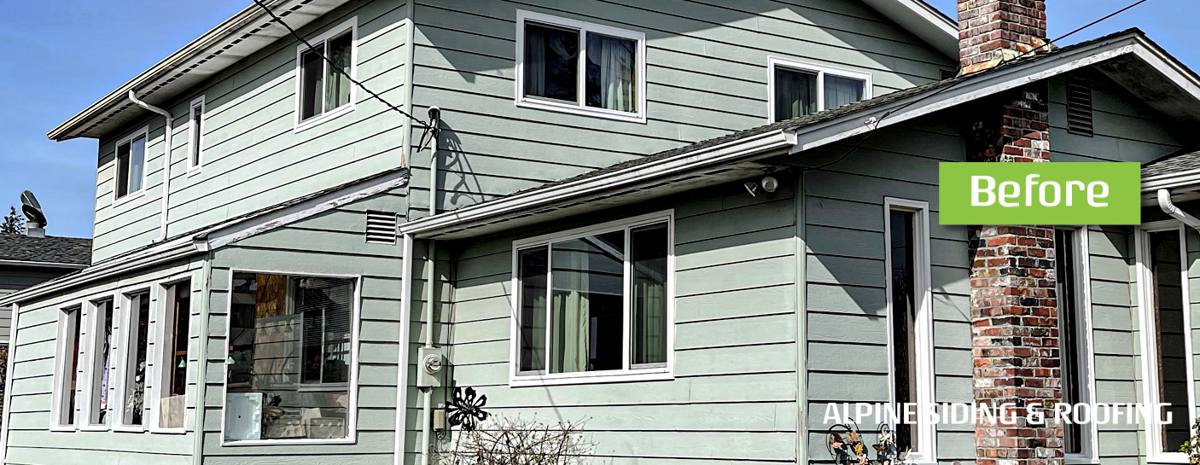
Siding on the water-facing side of a Ship Harbor home takes the brunt of wind-driven rain and salt exposure. Caulking and trim joints are usually the first things to fail, well before the siding material itself. Fiber cement and quality vinyl products tend to hold up well here with proper installation and flashing behind them; wood siding can work too, but it needs a real maintenance commitment to stay ahead of moisture.
Windows
Older single-pane or early dual-pane windows in this area often show fogging between panes (a sign the seal has failed) or drafts around the frame from settled or degraded caulking. Replacement windows with modern seals and proper flashing integration handle both the moisture and the wind load noticeably better.
Decks
Decks facing the water take direct sun, salt spray, and standing moisture in the wet months. Fastener corrosion and ledger board rot at the house connection are the two most common issues we find on older decks in this part of Anacortes — both are worth a look even if the deck surface itself still looks fine.
A Practical Maintenance Checklist for Ship Harbor Homes
- Clear gutters and downspouts at least twice a year — more often under heavy tree cover
- Check valleys and flashing points for moss buildup or granule loss after winter storms
- Look at fastener heads and metal trim for early rust or staining
- Trim back branches that keep roof sections shaded and damp longer than necessary
- Inspect caulking around windows and siding trim yearly, since it degrades faster in salt air
- Check deck ledger boards and fasteners for moisture damage or corrosion
- Have a professional inspection every few years, even with no visible problems
Why a Local Crew Makes a Difference Here
Ship Harbor isn't a generic roofing job. A crew that hasn't worked in Skagit County's marine climate before might spec the same fastener, underlayment, or ventilation package they'd use inland — and it'll likely underperform here. Working locally means we've seen how a north-facing slope under tree cover behaves differently than a south-facing slope in the open, and how a roof facing the water needs different flashing attention than one set back a few blocks. It also means we're reachable if a storm causes an issue and a homeowner needs someone who already knows the property, not a crew starting from zero.
Get a Free, No-Pressure Estimate
If you're noticing moss buildup, rust staining, a leak after the last windstorm, or you're just due for an honest look at your roof, siding, windows, or deck, we're happy to come take a look. There's no cost and no pressure — just a straightforward assessment of what your home actually needs and what it doesn't. Use the form below to request a free estimate.