 Anacortes Roofing
 Roofing and Exterior Work for March Point Homes
March Point sits out on the water, tucked between Fidalgo Bay and Padilla Bay just outside Anacortes proper. It's a different exposure than homes a few miles inland — more open wind, more direct salt spray off the bay, and a longer stretch of damp shoulder-season weather that keeps roofs and siding wet for days at a time. If you own a home out here, you already know your house works harder than one sitting in a sheltered Skagit Valley subdivision. We've built our roofing, siding, window, and deck work around exactly that kind of exposure, because it's what most of our Anacortes-area calls actually look like.
This page is about what that exposure does to a house over time, what we actually do about it, and why hiring a crew that works this specific stretch of Skagit County day in and day out tends to produce better long-term results than a one-time contractor from out of the area.
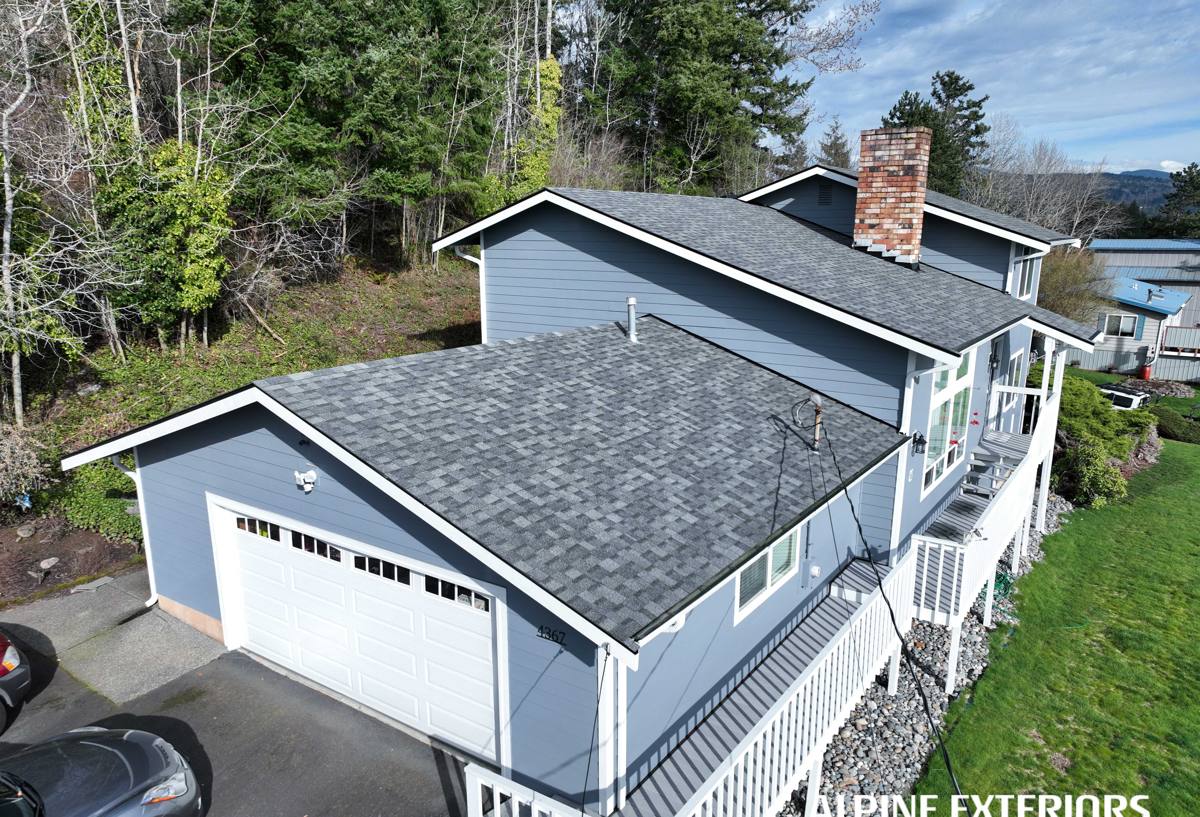
What Salt Air and Bay Wind Do to a Roof
Salt-laden air is corrosive. It doesn't destroy a roof overnight, but it accelerates the breakdown of anything metal — fasteners, flashing, gutter hardware, ridge vents — faster than the same materials would age even twenty minutes inland. On a bayfront or near-bayfront property, that means:
- Exposed roofing nails and staples corroding and losing their grip years before they should
- Galvanized flashing pitting and thinning at valleys, chimneys, and skylights
- Gutter fasteners and hangers failing early, which lets gutters sag and pull away from the fascia
- Faster breakdown of cheap or under-spec metal roofing accessories compared to marine-grade or stainless components
None of this means a roof at March Point is doomed — it means the details matter more here. Fastener grade, flashing material, and how carefully penetrations are sealed make a bigger difference on a bay-exposed roof than on a sheltered one, and it's usually the cut corners that show up first as leaks.
Moss: The Slower, Quieter Problem
Skagit County's wet, mild winters and shaded lots are close to ideal moss-growing conditions, and March Point's damp, breezy microclimate doesn't dry roofs out as quickly as a sunnier, more sheltered site would. Moss holds moisture against the roof surface, works into shingle laps and granule beds, and over a few seasons can lift shingle edges and shorten the life of an otherwise sound roof. North-facing slopes and anything shaded by trees are the areas we watch most closely on inspections out here.
Roofing Material Considerations for This Area
There's no single "best" roof for a bayfront property — it depends on budget, roof pitch, how much shade the lot gets, and how hands-on you want to be with maintenance. Here's how the common options stack up for this specific exposure:
| Material | Moisture & Moss Behavior | Salt Air Durability | Typical Lifespan Here |
|---|---|---|---|
| Asphalt composition shingle | Prone to moss in shaded areas; needs periodic cleaning | Good if flashing and fasteners are properly specified | 18–25 years, shorter in heavy shade |
| Standing seam metal | Sheds moisture fast, resists moss well on steeper pitches | Excellent with marine-grade fasteners and coatings; weak point is poor-quality hardware | 40+ years with correct install |
| Cedar shake | Attractive but holds moisture; requires the most maintenance in this climate | Fair; needs regular treatment and inspection | 20–30 years with disciplined upkeep |
| TPO / flat roofing (additions, garages) | Good if seams and drainage are done right | Good; seams are the main vulnerability over time | 15–20 years |
We'll walk you through the trade-offs for your specific roof rather than push one product — the right call usually comes down to your roof's pitch, sun exposure, and how much maintenance you actually want to keep up with.
Siding That Holds Up to Driving Rain and Salt Spray
Wind-driven rain off the bay finds weak points in siding that would never leak on a calmer inland wall — lap gaps, poorly sealed trim joints, and undersized flashing above windows and doors. On March Point homes we typically see the most wear on the water-facing and wind-facing walls, sometimes years before the rest of the house shows any sign of aging.
Fiber cement siding tends to perform well in this environment because it doesn't absorb and swell with moisture the way some wood products can, and it holds paint longer under salt exposure. Vinyl siding can work too, but it needs to be installed with enough clearance and proper flashing detail, since trapped moisture behind vinyl is a common source of hidden rot in coastal Skagit County homes. Whatever the material, the flashing and house-wrap detailing behind it matters more here than the siding itself — that's where most bay-area siding failures actually start.
Windows: Sealing Against Wind and Condensation
Two separate issues show up in windows out here. First, wind-driven rain tests seals and flashing around window openings harder than it does inland, so proper flashing tape and sill pan details aren't optional — they're what keeps water out of the wall cavity. Second, the temperature swing between damp bay air outside and a warm house inside can drive condensation on older or poorly sealed windows, which over time contributes to sill and frame rot if it's not addressed. Replacing failing windows with properly flashed, well-sealed units solves both problems at once and is one of the more cost-effective upgrades for a bayfront home.
Decks: Built for Wet Wood, Not Against It
Outdoor living space near the water is part of why people live out here, but decks take a beating from the same moisture cycle that affects the roof — wet, then dry, then wet again, week after week for most of the year. Composite decking has become the more common choice for bay-exposed properties because it doesn't require the same repainting and sealing schedule that wood does, and it handles the freeze-thaw and wet-dry cycling of this climate with less maintenance. Wood decking still has its place for homeowners who prefer the look and are willing to keep up with sealing on a regular schedule — the key either way is proper ledger flashing and joist protection, since that's where hidden rot tends to start on older decks in this area.
Why a Local Crew Matters Out Here
March Point isn't a huge neighborhood, and it doesn't get the volume of contractor traffic that denser parts of Anacortes or Mount Vernon do. That's exactly why local experience matters: a crew that regularly works this stretch of Skagit County knows which details to double up on — fastener grade, flashing overlap, moss-prone roof faces — because they've already seen what happens when those details get skipped on a bay-exposed home. An outside crew unfamiliar with the local exposure may build to a general Pacific Northwest standard, which isn't always enough for a property sitting this close to open water.
Being local also means we're not disappearing after the job wraps up. If something needs a warranty check or a follow-up inspection after a rough winter storm, we're a short drive away, not a phone number that stops answering once the invoice is paid.
Seasonal Exterior Maintenance Checklist
For homeowners who want to stay ahead of the moisture and salt exposure between professional inspections, this is a reasonable baseline for a March Point property:
- Clear moss from north-facing and shaded roof slopes before it spreads, rather than after shingles start lifting
- Check and clean gutters at least twice a year — clogged gutters back water up under the roof edge
- Inspect flashing around chimneys, skylights, and roof valleys annually for early corrosion or lifting
- Rinse salt residue off siding and windows periodically, especially on wind-facing walls
- Look for soft spots, staining, or paint failure at window sills and door thresholds
- Reseal or refinish wood decking on a regular schedule if you haven't switched to composite
- Walk the exterior after major windstorms to check for lifted shingles or loosened trim
Getting an Honest Look at Your Home
Every property on March Point sits a little differently relative to the wind and water, so the right approach for your roof, siding, windows, or deck really does depend on your specific exposure, shade, and age of materials. We'd rather walk your property and tell you honestly what needs attention now versus what can wait than push a bigger job than you need.
If you'd like a free, no-pressure estimate on your roof, siding, windows, or deck, use the form below and we'll get in touch to set up a time to take a look.