 Anacortes Roofing
 Building Decks for March Point's Marine Exposure
March Point sits out on the water at the edge of Anacortes, and that location cuts both ways. The views and the breeze are part of why people build outdoor living space here in the first place, but that same exposure is hard on a deck. Salt-laden air off the water accelerates corrosion on anything metal, wind-driven rain gets pushed sideways into ledger boards and railings, and the long gray stretch of a Skagit County winter keeps every horizontal surface damp long enough for moss and algae to take hold. A deck built to a generic spec sheet doesn't hold up out here the way it might twenty miles inland.
Building correctly for this stretch of shoreline isn't about upgrading everything to the most expensive option available. It's about knowing which parts of a deck actually take the abuse in this environment and treating those parts differently than you would on a sheltered inland lot.
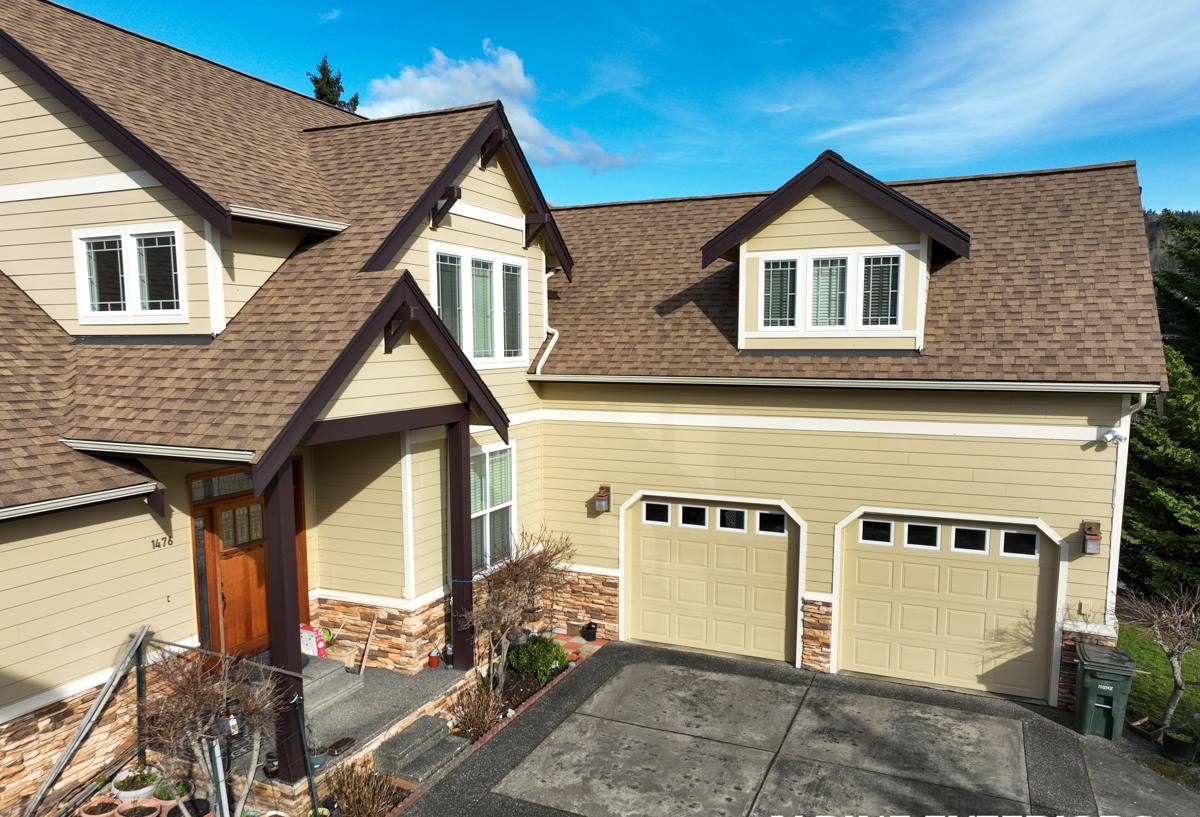
What Marine Exposure Actually Does to a Deck
Salt Air and Metal
Standard zinc-coated fasteners and hardware are rated for general outdoor use, but they weren't tested against sustained salt exposure. Over a few seasons on a waterfront lot, that coating can wear through faster than it would ten miles away, and once it does, corrosion moves quickly through the fastener. A deck is only as strong as its connections, so this is not a place to cut corners on hardware grade.
Driving Rain and Wind
Wind off the water doesn't just bring rain down — it pushes it sideways, into ledger boards, behind fascia, and under railing posts where standard flashing details assume rain falls straight down. Water that gets behind a ledger board and can't get back out is one of the more common causes of hidden rot we find when we open up an older deck.
Moss and Standing Moisture
Anacortes gets a long wet season, and a deck surface that stays shaded or doesn't drain well will grow moss just like a roof does. Beyond looking bad, moss holds moisture against the decking material and turns a walking surface slick and genuinely dangerous, especially on stairs.
Choosing a Decking Material for This Location
There's no single "best" decking material — the right call depends on budget, how much upkeep you're willing to do, and how exposed the deck is to sun, wind, and moisture. Here's how the common options actually perform in a March Point / Anacortes climate:
| Material | Moisture & Moss Behavior | Maintenance | Typical Lifespan Here |
|---|---|---|---|
| Pressure-treated fir/pine | Absorbs water readily; needs consistent sealing to resist moss and cupping | Annual cleaning and re-sealing recommended | 10–15 years with upkeep |
| Cedar | Naturally moisture- and insect-resistant, but surface still grows moss if shaded | Periodic cleaning, occasional oil or stain | 15–20 years with upkeep |
| Composite decking | Doesn't absorb water or rot, but can still grow surface algae/moss if not cleaned | Low — occasional wash, no sealing | 25+ years |
| PVC decking | Fully non-porous; best resistance to moisture and moss buildup | Lowest — soap and water cleaning | 25+ years |
We'll walk through this table with you against your actual budget and how the deck will be used — a rarely-used side deck doesn't need the same investment as a main entertaining space that catches full weather off the water.
Why We Don't Push Certain Wood Products for Waterfront Lots
Some lower-grade treated lumber looks fine on day one but is milled and rated for general framing use, not for standing up to constant marine moisture. Our standard on exposed, water-facing lots is to spec decking and framing lumber rated for ground contact or better, and to be upfront when a customer's material choice will mean a shorter service life or a heavier maintenance schedule. That's a trade-off we'd rather explain honestly than gloss over.
Framing and Fasteners: The Part You Don't See
Once decking is installed, the framing underneath is hidden — which is exactly why it's the part most worth getting right the first time. For March Point projects we build the substructure with corrosion resistance as a starting requirement, not an upgrade option:
- Stainless steel or heavy hot-dip galvanized fasteners and joist hangers, rated for the corrosive exposure this location sees
- Ledger board flashing detailed to shed wind-driven rain, not just vertical rainfall
- Joist tape or flashing membrane over the tops of joists to keep fasteners from sitting in trapped water
- Proper gapping between deck boards so water and debris pass through instead of pooling
- Post bases that hold wood posts off standing water at the base, rather than setting them directly in concrete
None of this is visible once the project is finished, which is exactly why it matters who builds it. A deck can look identical on the surface for the first two or three years whether the hardware underneath is contractor-grade or marine-rated — the difference shows up later, and it's expensive to fix after the fact.
Footings and Structural Considerations
Skagit County's building code sets minimum footing depth and sizing based on soil bearing and frost conditions, and those requirements don't change because a deck happens to be low or small. On March Point specifically, we also pay attention to soil drainage near the water — footings that sit in ground that stays saturated longer need to be set and drained correctly to avoid shifting over time. Ledger attachment to the house also gets extra attention here, since that connection carries a significant share of the deck's total load and is one of the most common failure points on older, incorrectly built decks.
Guardrails and Stairs
Any deck surface more than 30 inches above grade requires a code-compliant guardrail, and stair guardrails and handrails have their own height and spacing rules. On a wind-exposed site, we also think about railing infill choices — solid or semi-solid panels can act like a sail in sustained wind, which is worth discussing at the design stage rather than after installation.
Permits and Local Code
Most new deck construction and many deck replacements in Anacortes and unincorporated Skagit County require a building permit, along with inspections at set points during construction — typically footings, framing, and final. Waterfront and shoreline-adjacent properties can also carry additional review depending on proximity to the water and any applicable shoreline or critical areas regulations. We handle the permit application and coordinate inspections as part of the job, so you're not left figuring out Skagit County's process on your own.
How We Approach a March Point Deck Project
- On-site assessment — we look at sun and wind exposure, existing drainage, soil conditions, and how the deck ties into the house
- Material and design discussion — honest comparison of decking options, railing style, and layout against your budget
- Permit submission — we prepare and submit the plans Skagit County requires and schedule inspections
- Demolition (if replacing an existing deck) — including a check of the ledger and framing behind it for hidden rot before we build new
- Framing and structural work — footings, posts, beams, ledger, joists, all with corrosion-resistant hardware and proper flashing
- Decking, railing, and stairs — installed to the spacing and fastening details appropriate to the material chosen
- Final walkthrough and inspection sign-off
A Quick Homeowner Checklist
If you're evaluating a deck project — new build or replacement — these are the questions worth asking any contractor before you sign anything:
- What grade of fasteners and hardware are you using, and are they rated for marine/salt exposure?
- How will the ledger board be flashed against wind-driven rain?
- What's the footing depth and spacing, and does it meet current Skagit County code?
- Will you pull the permit and coordinate inspections, or is that left to me?
- What maintenance will this decking material actually need over the next 10 years?
Why a Local Crew Matters for This Job
Deck building isn't unique to March Point, but building one that holds up here is a different job than building the same deck on a sheltered inland lot. A crew that regularly works this stretch of Anacortes already knows which fastener grades hold up, which ledger details actually keep water out in a wind-driven rain, and how Skagit County's permitting and inspection process runs. That familiarity shows up in fewer surprises during the project and a deck that's still solid well past the point a lower-grade build would be showing rot or corrosion.
We also stand behind the work after the job is done. If something about the build isn't right, we're a local call away — not a company that did one job in the area and moved on.
Maintaining Your Deck Once It's Built
Whatever material you choose, a little seasonal upkeep goes a long way in this climate:
- Sweep debris off the deck regularly, especially in fall — trapped leaves hold moisture against the surface
- Rinse or wash the surface periodically to keep moss and algae from establishing, particularly in shaded areas
- Check railing posts and stair connections annually for looseness
- If you have wood decking, plan on re-sealing or staining on the schedule your material calls for — don't wait until it visibly needs it
- Keep gutters and downspouts near the deck clear so roof runoff isn't dumping extra water onto or under the structure
If you're planning a new deck or need to replace one that's showing its age, we're happy to come take a look and give you a straight, no-pressure estimate — just fill out the form below.