 Anacortes Roofing
 Roofing and Exterior Work in the Edison Area
Edison sits in the low, water-adjacent part of Skagit County, tucked between farmland and tidal sloughs not far from Samish Bay and Padilla Bay. It's a small, close-knit community, and homes here run the gamut from older farmhouses to newer builds — but almost all of them face the same combination of exposures: damp marine air moving in off the water, heavy tree cover in places, and long stretches of gray, wet weather that don't let up until late spring. That combination is hard on roofs, siding, windows, and decks in fairly predictable ways, and it's what shapes how we approach exterior work out here.
We're a Skagit County crew, and Edison is part of our regular service area alongside Anacortes and the surrounding communities. That matters more than it sounds like it should — a roof or siding system that holds up fine in a drier inland climate can fail early in a place like this if it wasn't detailed for constant moisture and salt-laden air.
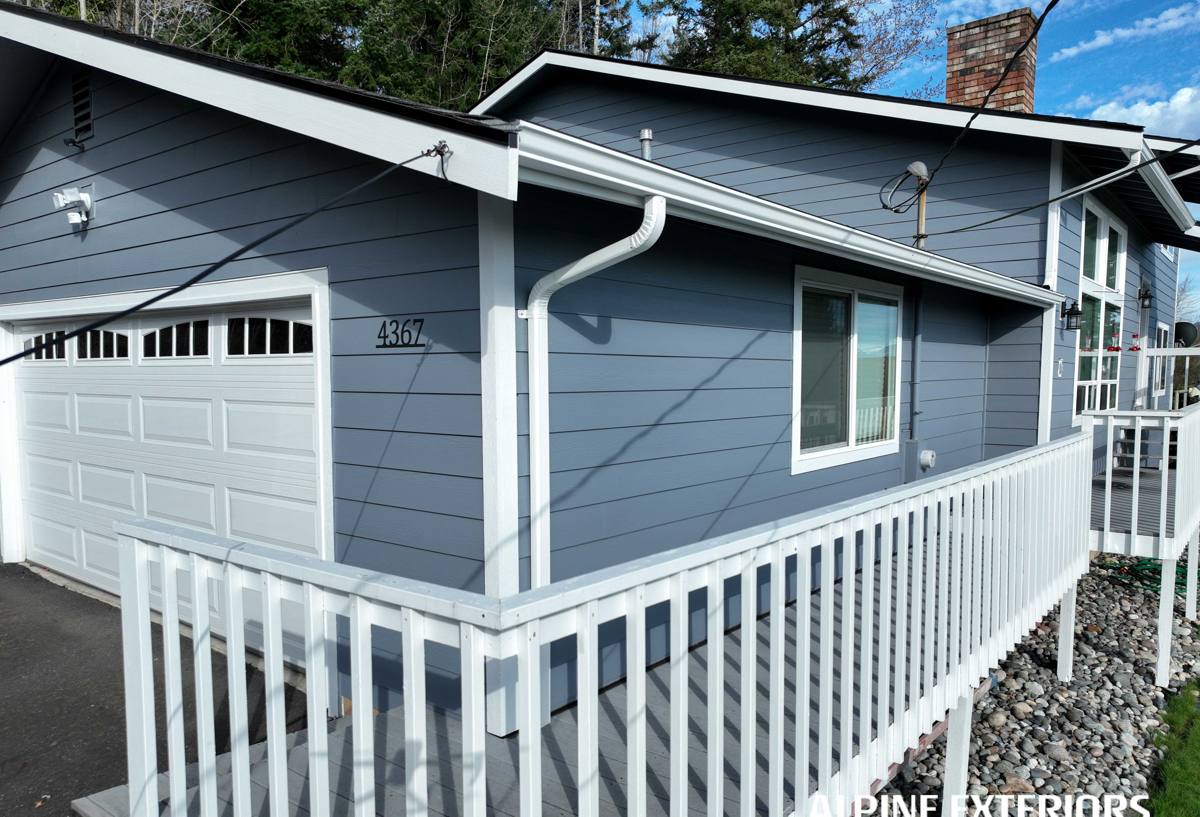
What the Local Climate Does to a Roof
Salt Air
Proximity to tidal water means a steady, low-level exposure to salt in the air. Over years, that salt content accelerates corrosion on exposed metal — flashing, fasteners, gutters, and any exposed hardware. It doesn't happen overnight, but it's a slow, cumulative process that shows up as rust streaks, pitted metal, or fastener failure well before the roofing material itself is due for replacement.
Driving Rain
Skagit County gets its share of wind-driven rain, and driving rain doesn't behave like straight-down rain. It gets pushed sideways and upward under laps, around penetrations, and into any gap that a standard installation might get away with in a calmer climate. Roof valleys, chimney flashing, skylight curbs, and low-slope transitions are the areas most likely to leak under these conditions, and they're the areas we pay the closest attention to.
Moss and Organic Growth
The long wet season, combined with shade from mature trees that are common around Edison properties, creates ideal conditions for moss, lichen, and algae to take hold on roofing material. Moss isn't just cosmetic — its root structure holds moisture against the roof surface and can lift shingle edges over time, and a heavy moss mat adds weight and traps debris that clogs drainage paths.
How These Factors Combine
None of these issues acts alone. A roof with moss buildup holds moisture longer, which extends the time salt-laden dampness sits against fasteners and flashing, which accelerates corrosion, which then opens the door for driving rain to find a way in. Understanding that chain is why we treat roof maintenance out here as connected work rather than a checklist of unrelated items.
Siding, Windows, and Decks Face the Same Climate
Roofs get most of the attention, but the same conditions that wear down a roof are working on the rest of the exterior too.
Siding
Siding in this climate needs to manage moisture at the seams, laps, and terminations, not just shed water on the flat face of the material. Poor flashing details around windows and doors are one of the most common sources of hidden moisture damage we find, often well before there's any visible sign on the exterior surface. Wood-adjacent siding materials are more vulnerable to rot in a climate this damp if the install and maintenance aren't dialed in.
Windows
Older single-pane or poorly sealed windows are a common source of both drafts and moisture intrusion around the frame. In a marine climate, condensation between panes or fogging inside a sealed unit is usually a sign the seal has failed — a fixable problem with a replacement unit, not something that improves on its own.
Decks
Decks take the most direct beating of any exterior feature — full sun exposure when it's out, full rain exposure the rest of the time, and standing moisture wherever drainage isn't planned into the structure. Ledger board connections and any wood-to-wood or wood-to-masonry contact points are where we see the earliest rot in this climate if flashing and spacing weren't handled correctly at installation.
Why a Local Crew Matters Here
Edison isn't a large market, and it doesn't need to be a specialty — but it does benefit from a crew that already knows how Skagit County's coastal-adjacent conditions behave. A few things that come with being local:
- We already know which roof and siding details tend to fail first in this specific climate, rather than learning it on your project.
- We can respond quickly for storm damage assessments or leak calls without a long drive from out of the area.
- We're familiar with the older housing stock common in this part of Skagit County and how to work with it rather than around it.
- We're accountable locally — this is our service area, not a one-off job we drove in for.
Our Process for an Edison-Area Home
Inspection First
Every job starts with a real inspection, not a quick look from the ground. For roofing, that means getting on the roof (when it's safe to do so) and checking flashing, penetrations, valleys, and the condition of the decking underneath, not just the visible shingle or panel surface. For siding, windows, and decks, it means checking behind and underneath, not just the face you can see from the yard.
Honest Scope
Not every problem needs full replacement. A lot of the leaks and damage we see out here trace back to a failed flashing detail, a clogged drainage path, or moss buildup rather than the underlying material being at the end of its life. We'll tell you which of those it is before recommending a bigger job.
Installation Detailing for This Climate
Where we do install or replace material, we pay particular attention to the details that matter most in a wet, salt-adjacent environment: proper flashing laps and sealant at penetrations, corrosion-resistant fastener choices, and drainage paths that don't rely on the material alone to keep water out.
Cleanup and Walkthrough
We finish with a cleanup and a walkthrough so you know what was done, what to watch for, and roughly when to expect the next round of maintenance.
Comparing Common Roofing Materials for This Climate
There's no single right answer for every home — slope, budget, tree coverage, and the age of the rest of the structure all factor in. Here's a general comparison of how common roofing options tend to perform under Edison's conditions:
| Material | Moss/Moisture Resistance | Salt Air Durability | Typical Maintenance |
|---|---|---|---|
| Asphalt composition shingle | Moderate — moss-resistant granule options help | Good if metal flashing is corrosion-resistant | Periodic moss treatment, gutter clearing |
| Metal roofing (standing seam) | Good — sheds moisture quickly, less moss buildup | Depends on coating; quality coatings hold up well | Low; occasional fastener and seam checks |
| Cedar shake | Poor without diligent upkeep — holds moisture | Moderate | High; regular treatment and inspection needed |
| Synthetic/composite shingle | Good — engineered to resist moisture uptake | Good | Low to moderate |
We don't push one material as universally "best" — we walk through the trade-offs in maintenance, upfront cost, and how the roof's slope and shade exposure will interact with each option before making a recommendation.
Cost Factors to Understand Before You Get a Number
Pricing on any exterior project depends on more than square footage. The factors below are what actually move a number up or down on a typical Edison-area job:
| Factor | Why It Matters |
|---|---|
| Roof pitch and access | Steep or hard-to-access roofs take longer and require more safety setup |
| Existing layer removal | Tear-off adds labor and disposal cost versus a straightforward re-cover |
| Decking condition | Rot or soft spots found underneath existing material require repair before new material goes on |
| Flashing and penetration count | More chimneys, skylights, and vents mean more detail work, which takes more time to do correctly |
| Material choice | Upfront cost and expected maintenance vary significantly by material, as shown above |
| Tree coverage and moss history | Heavier moss growth may mean added prep work or treatment before installation |
We'll walk through which of these apply to your specific property during the estimate, so the number you get reflects your home rather than a generic average.
Signs Your Roof or Exterior Needs a Look
Most exterior damage in this climate develops slowly, which is exactly why it's easy to miss until it's a bigger problem. Watch for:
- Visible moss or dark streaking on roof slopes, especially on shaded sides
- Granule buildup in gutters or downspouts (a sign of shingle wear)
- Rust staining around flashing, vents, or metal fasteners
- Soft or spongy decking felt underfoot on a deck or porch
- Condensation or fogging between window panes
- Peeling paint or discoloration on siding near window and door trim
- Water stains on interior ceilings, especially after a heavy wind-driven rain event
- Sagging gutters or standing water on any low-slope roof section
None of these alone means an emergency, but any of them is worth a professional look before the next wet season.
Maintenance That Actually Extends the Life of Your Exterior
In a climate like this, maintenance isn't optional if you want a roof, siding system, or deck to hit its expected lifespan. The basics that make the biggest difference:
- Keep gutters and downspouts clear so water has somewhere to go, especially during fall leaf drop and winter storms.
- Address moss early with appropriate treatment rather than letting it establish a heavy mat.
- Trim back tree limbs that keep roof sections shaded and damp longer than the rest of the roof.
- Reseal deck boards and check ledger connections on a regular cycle rather than waiting for visible rot.
- Have flashing and penetrations checked periodically — these fail before the field material usually does.
Get an Honest Look at Your Property
Whether you're dealing with a known leak, moss that's gotten out of hand, siding that's showing its age, or windows and a deck that could use an honest assessment, we're glad to come out and take a look. We handle roofing, siding, windows, and decks for homes throughout the Edison area and the rest of Skagit County, and we build every recommendation around what this specific climate does to a home over time — not a generic install. Reach out for a free, no-pressure estimate using the form below.