 Anacortes Roofing
 Conway's Climate Is Harder on a Roof Than It Looks
Conway sits in the lowland delta country of Skagit County, tucked between farmland, river channels, and the pull of Puget Sound just a few miles west. It's a quieter part of our service area than downtown Anacortes, but the weather doesn't treat it any gentler. Homes here deal with a mix of coastal moisture, river-bottom fog, and wind that moves across open fields with nothing to slow it down. That combination is exactly the kind of environment that wears out roofing, siding, and trim faster than homeowners expect.
We've worked on enough homes across Skagit County to see the pattern: it's rarely one dramatic storm that causes damage. It's the slow, repeated cycle of wet-dry-wet, freeze-thaw in the colder months, and moss and algae that never fully stop growing because the air rarely dries out for long. A roof or siding system that would hold up fine in a drier climate can start failing here years ahead of schedule if it wasn't built with this specific weather in mind.
What Homes in Conway Typically Face
Salt-Influenced Air
Conway isn't right on the water the way parts of Anacortes are, but it's close enough to Puget Sound and the tidal reaches of the Skagit River that salt-laden air still reaches exposed metal, fasteners, and coatings. Over time this accelerates corrosion on lower-grade flashing, nails, and hardware — the kind of slow damage that's invisible until a leak shows up.
Driving Rain and Wind-Driven Moisture
Open farmland around Conway means less wind buffering than a homeowner would get in a denser neighborhood. When storms roll through, rain often comes in at an angle rather than straight down, which pushes water into laps, seams, and joints that were only designed to shed vertical rainfall. This is one of the most common reasons we see moisture intrusion around windows, roof-wall intersections, and deck ledger boards in this area.
Fog, Humidity, and a Long Moss Season
Low-lying river delta land holds fog and humidity longer than higher ground. Combined with tree cover and shaded north-facing roof slopes common on Conway properties, that means moss, lichen, and algae have a long growing season — often close to year-round. Left unmanaged, moss holds moisture against roofing material, lifts shingle edges, and clogs gutters and valleys, which is where a lot of the "sudden" leaks homeowners call about actually start.
Seasonal Flooding and Ground Moisture
Parts of the Conway area sit in low-lying floodplain terrain near the Skagit River. While that's primarily a site-drainage and foundation concern rather than a roofing one, it does affect decks, siding lower courses, and any wood components close to grade — they see more standing moisture and splash-back than homes on higher, better-drained lots.
Roofing That Actually Holds Up Here
For most Conway homes, we lean toward roofing systems and details that specifically resist moss growth and wind-driven water rather than just meeting a minimum code spec. That means algae-resistant shingle products where asphalt is the right fit, generous ice-and-water shield coverage at eaves and valleys, and metal flashing detailed to shed water even when it's coming in sideways. On homes with more tree cover, we also pay close attention to valley design and gutter sizing, since undersized systems are a common source of backed-up water on shaded roofs.
Common Roofing Choices for the Area
| Roofing Type | How It Handles Local Conditions | Maintenance Reality |
|---|---|---|
| Architectural asphalt shingle (algae-resistant) | Good performance for the cost; algae-resistant granules slow moss/algae growth but don't eliminate the need for cleaning | Periodic moss/debris removal, especially on shaded slopes |
| Standing seam metal | Sheds wind-driven rain well, resists moss better than shingles due to smooth surface, long service life | Low; occasional fastener and sealant checks over time |
| Basic 3-tab asphalt shingle | Lower up-front cost but less wind resistance and faster granule loss in this climate | More frequent moss treatment and shorter realistic lifespan here |
| Cedar shake | Traditional look, but higher moisture-retention risk in a humid, moss-prone climate without diligent upkeep | Higher — requires regular treatment and inspection |
None of these are wrong choices in the abstract — it comes down to the roof's exposure, slope, tree cover, and how much upkeep a homeowner wants to commit to. Part of a good estimate is walking the roof and being honest about which option fits that specific house.
Siding: The First Line of Defense Against Wind and Rain
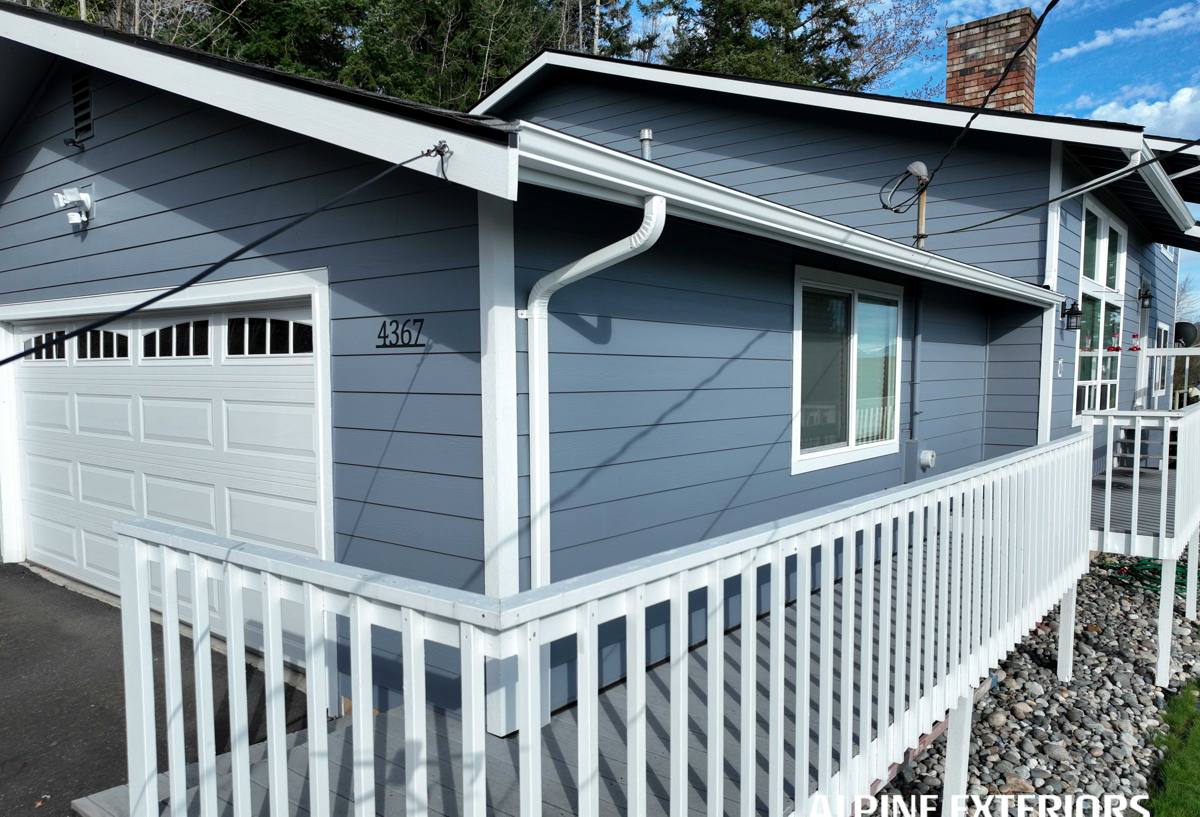
Siding on Conway homes takes a beating from the same wind-driven rain that affects roofing, just at a different angle. Board and panel siding needs tight, well-flashed seams, proper rain-screen gaps where applicable, and attention at every penetration — hose bibs, vents, light fixtures, and window trim. We see the most siding failures not from the field of the wall, but from these smaller transition points where water finds a way behind the cladding.
Fiber cement and quality engineered wood products tend to perform well here because they resist moisture absorption and hold paint longer than lower-grade materials, reducing the repainting cycle that this climate otherwise demands. Whatever the material, correct installation — flashing, fastener pattern, and clearance from grade and roof lines — matters more to long-term performance than the brand name on the product.
Siding Problem Signs Common in This Area
- Soft or dark staining near the bottom courses, especially on lower ground close to fields or drainage areas
- Paint failure or bubbling concentrated on the north or west-facing walls that see the most driving rain
- Gaps or caulking failure around window and door trim after a few freeze-thaw cycles
- Moss or green staining creeping up from grade level on shaded sides of the home
- Visible warping or separation at panel seams that weren't flashed correctly during the original install
Windows: Sealing Out Wind-Driven Moisture
Older windows in this area are a common source of hidden moisture damage, not because the glass fails, but because the flashing and sealant around the frame degrade faster in a climate this wet. Wind-driven rain pushes water toward any weak point in the perimeter seal, and once it gets behind trim or into the wall cavity, it can sit there for a long time before it shows up as a visible stain or soft spot inside.
When we replace windows in Conway, proper flashing integration with the surrounding siding is just as important as the window unit itself. A high-performance window installed with poor flashing details will leak eventually; a modest window installed correctly, with good head flashing and sill pan drainage, will usually outperform it. We also talk with homeowners about energy performance, since this area gets enough cold, damp weather that a poorly sealed window shows up on heating bills, not just in comfort.
Decks: Built for Ground Moisture and Standing Water
Decks on Conway properties, especially on lower-lying lots near the river delta, deal with more ground moisture than decks on higher, better-drained ground elsewhere in the county. Ledger board attachment, joist protection, and post-base drainage all need extra attention here. A deck built without proper flashing tape at the ledger, or without gapped decking to let water drain instead of pool, tends to show rot and fastener corrosion well before it should.
Composite decking has become a popular option for exactly these conditions — it doesn't absorb moisture the way wood does, which matters on a lot with persistent ground dampness. Wood decking is still a fine choice when it's detailed correctly and maintained on a real schedule, but it asks more of the homeowner in upkeep than composite does.
A Practical Maintenance Checklist for Conway Homes
- Clear gutters and valleys at least twice a year — more often on shaded, tree-covered lots
- Treat or remove moss on roofing before it spreads across a full slope, not after
- Inspect flashing around chimneys, vents, and roof-wall intersections annually
- Check caulking and sealant around windows and doors each fall before the wet season sets in
- Look at deck ledger boards and post bases for soft spots or staining once a year
- Keep vegetation and standing water away from siding's lower courses
Why a Local Crew Matters for a Community Like Conway
Conway doesn't get the attention that denser parts of Skagit County do, but the exterior of a home here faces real, specific conditions — salt-touched air, wind with nothing to slow it down, high humidity, and a moss season that barely takes a break. A crew that mainly works drier inland climates doesn't always know to prioritize the details that matter here: algae-resistant materials, generous flashing at every transition, and drainage details that account for a wetter ground plane. We work across Anacortes and the surrounding Skagit County communities, including areas like Conway, and we build our recommendations around what actually holds up in this specific weather, not a generic regional average.
That local familiarity also shows up in smaller, practical ways — knowing which roof slopes and tree lines tend to hold moisture longest, understanding how wind direction changes across open farmland versus more sheltered lots, and being straightforward about which products are worth the extra cost here and which ones aren't necessary for a given house.
Getting an Honest Look at Your Home
Every property in the Conway area is a little different — some sit closer to open water and wind, others deal more with tree cover and shaded moss growth, and some are more affected by ground moisture near the river delta. Rather than guessing, we'd rather walk the roof, siding, windows, or deck in question and tell you plainly what's holding up, what's starting to wear, and what actually needs attention versus what can wait. If you'd like a straightforward, no-pressure estimate for your home, the form below is the easiest way to get started.