 Anacortes Roofing
 Board & Batten Siding in Conway: Built for Where You Live
Conway sits in low-lying Skagit County river delta country, close enough to Puget Sound that salt air is part of daily weather, not an occasional visitor. Add the long wet season that defines the region and the moss growth that comes with it, and you have a set of conditions that will find every weakness in a siding job within a few winters. Board and batten siding, with its vertical panels and raised battens, is a strong architectural fit for the farmhouse and modern-farmhouse looks common on properties out this way — but the style only holds up if the material and the installation are matched to what this climate actually does to a house.
This page is about one thing: board and batten siding, installed correctly, on homes in and around Conway. Not a general siding overview, not a catalog page — what this specific product needs to do here, and how we make sure it does it.
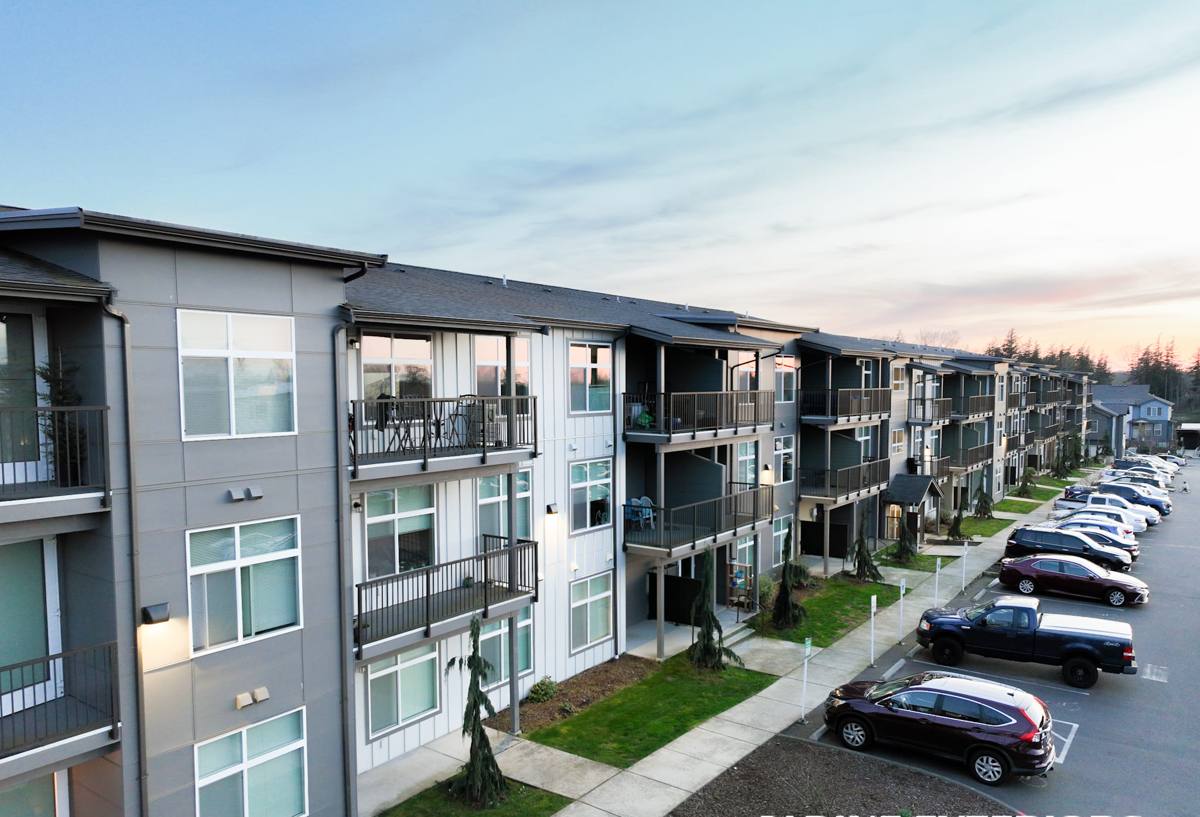
What Conway's Climate Actually Does to Siding
Three conditions matter most for board and batten siding in this part of Skagit County:
Salt Air
Proximity to the Sound means airborne salt settles on exterior surfaces year-round. Salt accelerates corrosion on exposed fasteners and metal flashing, and it degrades paint and finish coatings faster than it would inland. A siding product that isn't factory-finished to resist this will chalk, fade, and open up seams sooner than the manufacturer's brochure suggests.
Driving Rain
Storms off the Sound don't just fall straight down — wind pushes rain sideways into wall assemblies, and board and batten's vertical seams and batten laps are exactly where wind-driven water tries to get behind the cladding. The batten itself is a water-management detail as much as a design detail: get its spacing, fastening, and flashing wrong, and it becomes a channel that directs water into the wall instead of away from it.
Moss Season
Skagit County's wet season runs long, and shaded or north-facing wall sections stay damp for extended stretches. Wood-based sidings absorb that moisture and become a food source for moss and mildew. Fiber cement doesn't feed moss growth the way wood or wood composite products do, but even fiber cement needs a paint/finish system that resists staining and holds its color while damp for weeks at a time.
Why Board and Batten Specifically Suits Conway Properties
Board and batten reads as a rural, agricultural, or modern-farmhouse style — a natural fit for the open, low-density character of Conway and the surrounding Skagit valley. The strong vertical lines work well on gables, dormers, and accent walls, and it pairs cleanly with horizontal lap siding as a mixed-material approach on larger homes. Beyond the look, the profile itself sheds water differently than lap siding: water runs down the face of the board, over the batten, and off the wall, rather than working its way along a series of stacked horizontal laps. Done right, that's an advantage in a driving-rain climate. Done wrong — undersized gaps, no drainage path behind the panel, battens face-nailed directly through both layers — it traps moisture instead of shedding it.
Why We Install James Hardie Board and Batten — and Nothing Else
We install James Hardie fiber cement exclusively. We don't install vinyl, LP SmartSide, primed spruce, cedar, or other fiber cement brands, and on a coastal-adjacent site like Conway that standard matters more than usual.
- Non-combustible core: fiber cement doesn't feed a fire the way wood-based sidings can, which matters for insurance and for peace of mind on rural lots.
- HZ5 engineering: Hardie's HZ5 product line is engineered for the Pacific Northwest's freeze-thaw and moisture cycling, not a generic national spec.
- ColorPlus factory finish: a baked-on finish system that resists the fading and chalking that salt air and UV cause faster here than in drier inland climates, without the homeowner needing to repaint on a short cycle.
- Dimensional stability: fiber cement doesn't swell, cup, or absorb moisture the way wood and wood-composite battens do, so gaps and reveals stay consistent through wet Skagit winters.
- Transferable warranty: a real, manufacturer-backed warranty that carries value if the home is sold.
We've explained our reasoning on alternative products elsewhere on this site — the short version is that every other option asks a homeowner in this climate to accept a maintenance burden or a moisture vulnerability that Hardie's engineered fiber cement was specifically designed to eliminate.
What a Correct Board and Batten Installation Involves
Board and batten looks simple from the ground, but it has more failure points than lap siding if the installer is unfamiliar with the system. On a Conway install, we pay particular attention to:
Water-Resistive Barrier and Drainage
A continuous weather-resistive barrier goes on before any siding, with all penetrations, windows, and doors properly flashed and integrated into that barrier — not just caulked afterward. Behind the board panels, a drainage gap or rainscreen strategy lets any water that does get past the surface find its way back out instead of sitting against the sheathing.
Fastening Method
Battens should be fastened so they cover and protect the seam between boards without pinning both layers rigidly together in a way that stresses the material as it expands and contracts. Fastener spacing, type, and embedment depth all follow the manufacturer's published specifications — not "close enough."
Flashing at Transitions
Every horizontal transition — window heads, belly bands, roof-to-wall intersections — needs metal flashing that sheds water clear of the assembly below. This is the detail wind-driven rain exploits first if it's missing or undersized.
Gaps and Clearances
Manufacturer-specified gaps at trim, foundation lines, and abutting surfaces prevent capillary draw and give the material room to move seasonally. Siding installed tight to a deck, patio, or grade level is a near-guaranteed moisture problem within a few years, especially on low-lying lots.
Comparing Your Siding Options for a Conway Home
| Factor | James Hardie Fiber Cement | Wood / Cedar Board and Batten | Vinyl Board and Batten |
|---|---|---|---|
| Salt air resistance | Factory ColorPlus finish holds up well | Requires frequent refinishing | Can become brittle and discolor over time |
| Moisture / moss resistance | Doesn't feed moss growth; dimensionally stable | Absorbs moisture, prone to moss and rot | Sheds water but traps moisture behind panels if installed poorly |
| Fire resistance | Non-combustible core | Combustible | Can melt/deform near heat sources |
| Long-term maintenance | Occasional inspection, minimal repainting | Regular staining/sealing needed | Low maintenance but prone to cracking, fading |
| Warranty | Strong, transferable manufacturer warranty | Typically none beyond installer workmanship | Varies widely by manufacturer |
How Our Process Works for Conway Homeowners
We work throughout Skagit County, and Conway's rural layout and the mix of older farmhouses and newer construction out there means every job starts with an honest look at what's actually on the wall now, not an assumption.
- On-site assessment: we inspect existing siding, sheathing condition, and any signs of past moisture intrusion before quoting anything.
- Product and layout plan: we confirm board width, batten spacing, and reveal to match the home's style and the manufacturer's engineering specs.
- Tear-off and sheathing check: we don't cover up rot or damaged sheathing — if we find it, we address it before new siding goes on.
- Barrier and flashing installation: the weather-resistive barrier and all flashing details go in per code and manufacturer spec, before a single board is hung.
- Board and batten installation: installed to Hardie's fastening and clearance specifications, not a generic siding crew's shortcuts.
- Final inspection walkthrough: we review the finished job with the homeowner, including care and maintenance basics specific to this climate.
Why It Matters That We Already Work in This Area
A crew that mostly works drier inland areas or a different climate zone can install board and batten technically "correctly" on paper and still miss what this specific stretch of coastline does to a house over a decade. Knowing how far wind-driven rain travels up a wall on an exposed Conway lot, how quickly moss establishes on a shaded north wall near the river bottoms, and how salt exposure changes fastener and flashing choices isn't something you get from a spec sheet — it's something you learn by doing the work here, season after season.
Maintenance: What Conway Homeowners Should Actually Do
- Rinse pollen, salt residue, and organic debris off siding once or twice a year, especially after summer dry spells.
- Keep gutters clear so overflow doesn't run down the wall face near battens and seams.
- Trim back vegetation and tree cover that keeps any wall section shaded and damp longer than necessary.
- Inspect caulking at trim and penetrations annually and re-caulk before gaps open up.
- Watch for early moss or algae film on north-facing walls and address it before it spreads, rather than after.
- Have flashing and fastener condition checked periodically, particularly after severe wind events off the Sound.
What This Costs to Get Right
Board and batten siding costs vary based on home size, current wall condition, how much tear-off and sheathing repair is needed, and the specific Hardie panel and trim package chosen. Rather than quote a number that doesn't reflect your home's actual condition, we walk every property in person before giving a firm estimate — there's too much variation in older Conway homes' sheathing and framing to price accurately from a phone call alone.
If you're weighing board and batten siding for a home in Conway, we're happy to come take a look and give you a straightforward, no-pressure estimate — what your home actually needs, what it will cost, and why. Use the form below to get started.