 Anacortes Roofing
 Why March Point's Waterfront Exposure Is Hard on Siding
March Point sits out on the peninsula between Fidalgo Bay and Padilla Bay, which means most homes here get weather from more than one direction. Wind off the water drives rain sideways into wall assemblies that a more sheltered Anacortes lot never has to deal with, and that same air carries a steady dose of salt. Add in the long Pacific Northwest wet season and the shaded, damp conditions that let moss and algae take hold on north- and west-facing walls, and siding out here is working harder than the manufacturer's spec sheet usually assumes.
None of this is exotic or unusual for Skagit County. It is just persistent. A siding system that is marginal in a drier climate becomes a real problem after a few winters of driving rain and salt exposure on March Point's more open lots. That is the lens we use when we talk about what actually belongs on a home out here.
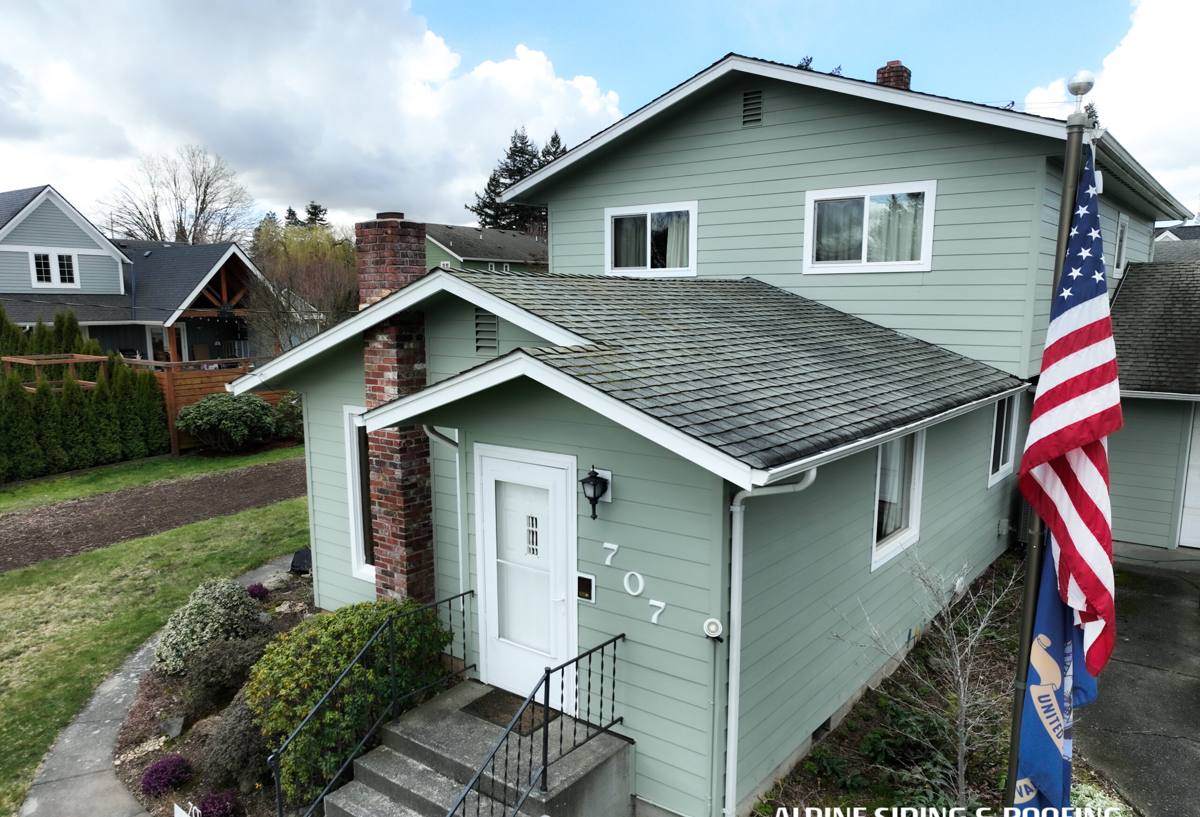
What March Point Homes Actually Need From Their Siding
Moisture Management, Not Just Moisture Resistance
Every siding material sheds some water. The difference between a system that lasts and one that fails early is what happens to the water that gets past the surface — at seams, around windows, behind trim, at the bottom edge near grade. On a peninsula lot with wind-driven rain, water finds its way behind cladding more often than homeowners expect, so the wall assembly behind the siding matters as much as the siding itself.
Salt Air Tolerance
Salt-laden air accelerates corrosion on fasteners and hardware, and it degrades some coatings and finishes faster than inland exposure would. Materials and fastener choices that are fine 15 miles inland can underperform on a March Point waterfront lot.
Standing Up to Moss and Algae Season
Shaded, north-facing walls near mature trees or close to the water stay damp longer into the season. Siding that absorbs moisture or has a finish that traps organic growth will show green and black staining years before a properly finished, moisture-stable product will.
Why We Install Only James Hardie Fiber Cement
We do not offer vinyl, LP SmartSide, cedar, or other fiber cement brands as alternatives on this job — we install James Hardie, full stop. That is a deliberate standard, not a sales pitch, and it comes down to how each of those materials behaves over years of exposure like March Point gets.
Vinyl expands and contracts with temperature swings, can warp or crack under wind-driven impacts, and its seams are a long-term weak point for water intrusion. Cedar and primed wood products are beautiful but need real maintenance — recoating, caulking, and vigilant moisture management — to avoid rot in a climate this wet. Engineered wood products like LP SmartSide use wood-strand cores that are vulnerable if the factory-applied coating is ever compromised at a cut edge or fastener point. Hardie's fiber cement composition is different: it is non-combustible, dimensionally stable across temperature and moisture swings, and does not support rot the way wood-based products can. The factory-applied ColorPlus finish is baked on and warrantied against fading and chipping, which matters on a lot getting steady sun reflection off the water plus salt air.
Hardie's HZ5 product line is engineered specifically for climates with significant moisture exposure, which describes March Point well. That, combined with a strong transferable warranty and a track record we can stand behind when we install it to spec, is why it is the only siding we put on homes.
What a Correct Siding Installation Actually Involves
Fiber cement siding is only as good as the assembly behind it. A rushed or shortcut installation can undermine even the best material, and this is where a lot of siding jobs — on any product — go wrong.
- A continuous water-resistive barrier (house wrap) installed shingle-style so every layer drains outward and down
- Correctly flashed windows, doors, and any wall penetrations, integrated with the water-resistive barrier rather than just caulked over it
- Proper clearance between the bottom edge of the siding and grade, decks, and roof lines so water can't wick up into the material
- Fastener placement and depth per manufacturer specification — over-driven or under-driven nails are one of the most common causes of early siding failure
- Correct joint treatment and gapping at butt joints and corners to allow for the material's normal expansion and contraction
- Caulking and sealant used only where the manufacturer calls for it — not as a substitute for proper flashing
Skipping any one of these doesn't usually show up as a problem in year one. It shows up in year five or six, as a stain, a soft spot, or a section that has to come off and be redone — usually costing more than doing it right the first time would have.
Our Installation Process
Assessment and Scope
We start with a walkaround of the home, checking the condition of the existing siding, sheathing, and any trim or flashing details, and noting how sun, shade, and prevailing wind hit each elevation. This tells us where the wall assembly needs the most attention, not just where the old siding is visibly failing.
Tear-Off and Sheathing Check
Old siding comes off down to the sheathing so we can actually see what is underneath. Any soft, water-damaged, or compromised sheathing gets addressed before anything new goes back on — covering over a problem is how small repairs turn into structural ones.
Water-Resistive Barrier and Flashing
A new house wrap goes on correctly lapped and sealed, followed by flashing at every window, door, and penetration. This step is the difference between siding that manages water and siding that just looks like it does.
Hardie Installation
Panels or lap siding go up per Hardie's fastening and clearance specifications, with attention to joint treatment, corner details, and the trim package. We use fasteners and details suited to a marine-air environment.
Final Inspection and Cleanup
We walk the finished job checking caulking, paint touch-up on cut edges, and overall fit, then clear the site of debris and old material.
Scheduling and Protecting the Site During Installation
Timing Around the Weather
Skagit County's wet season runs long, and fiber cement installation goes better — and lasts longer — when it's scheduled around dry stretches rather than squeezed in during the wettest months. Sheathing needs to be dry before it's covered, caulking and sealants need workable temperatures to cure properly, and crews need enough of a weather window to get a wall fully closed in before the next system rolls off the water. On a March Point lot with less shelter from wind and rain than an inland site, we build extra buffer into the schedule rather than rushing a wall closed ahead of a storm. This doesn't mean siding can only go on in July and August — it means the schedule accounts for actual conditions instead of treating March Point like a dry climate.
Site and Material Protection
Tear-off generates debris, and a peninsula lot often means less room to stage materials than a larger inland property. We protect landscaping, walkways, and windows before removal starts, and stage new material and haul away the old siding in a way that keeps the property usable throughout the project. Old siding, especially older cement board or wood products, is disposed of properly rather than left for the homeowner to deal with.
Comparing Siding Options for a March Point Home
| Material | Salt Air / Moisture Behavior | Maintenance Needed | Typical Lifespan |
|---|---|---|---|
| James Hardie Fiber Cement | Engineered for moisture exposure (HZ5 line); does not rot; factory finish resists fading | Low — occasional wash, no recoating | Decades, backed by transferable warranty |
| Vinyl | Can warp with heat/cold swings; seams are a moisture entry point | Low, but limited repair options if damaged | Variable; earlier replacement common in exposed spots |
| Cedar / Primed Wood | Attractive but absorbs moisture; vulnerable to rot without upkeep | High — regular recoating, caulking, inspection | Shorter without diligent maintenance |
| Engineered Wood (LP SmartSide) | Wood-strand core vulnerable if coating is breached at cuts/fasteners | Moderate — coating integrity must be maintained | Shorter in high-moisture exposure if compromised |
This isn't a knock on every one of these products in every setting — it's why, specifically for a peninsula lot with this much wind and moisture exposure, we've standardized on the one that holds up best without asking the homeowner to keep up with heavy maintenance.
Signs a March Point Home May Need New Siding
- Persistent green or black staining on north- or west-facing walls that pressure washing only temporarily removes
- Soft spots, bubbling, or visible warping, especially near ground level or under windows
- Paint or finish that is peeling, chalking, or fading unevenly across elevations facing the water
- Visible gaps at seams, corners, or trim where caulking has failed or pulled away
- Rising energy bills that may point to compromised insulation behind failing siding
- Cracked or missing panels after a windstorm off the bay
Why It Matters to Hire a Crew That Already Works March Point
Siding installation on a waterfront-adjacent lot isn't identical to siding installation on a sheltered inland street, even within the same zip code. A crew that has already worked on March Point homes knows to look harder at flashing details on the elevations that take the most wind-driven rain, knows which corners of a lot tend to hold onto moss longer into summer, and doesn't need to relearn those lessons on your house. That local pattern recognition shows up in fewer callbacks and a job that's built for the actual conditions of the site, not a generic spec.
We also handle roofing across Anacortes and Skagit County, which means the same crew evaluating your siding can flag related issues at the roofline, fascia, or gutter system where water problems often start — rather than treating siding as an isolated project disconnected from the rest of the building envelope.
Get a Straightforward Estimate
If your March Point home's siding is showing its age, staining faster than it should, or you're planning ahead of a repaint or repair, we're happy to take a look and give you an honest read on what it needs. The estimate is free, there's no pressure, and we'll tell you plainly whether a full replacement makes sense or a smaller repair will do. Use the form below to get started.