 Anacortes Roofing
 Ship Harbor Decks Face a Different Set of Conditions
A deck in Ship Harbor doesn't age the same way a deck fifty miles inland does. Homes in this part of Anacortes sit close enough to the water that salt air is a constant, low-grade stress on anything metal or wood-based. Add in driving rain off Rosario Strait during fall and winter storms, plus a long stretch of the year when moss and algae have every reason to take hold, and you've got a climate that's genuinely harder on outdoor structures than most manufacturers' warranty language accounts for. A deck built or repaired without those conditions in mind will show it early — soft spots at the ledger, corroded fasteners, a slick green film underfoot by January.
This page is about deck replacement specifically for Ship Harbor properties: what the local climate actually does to a deck over time, what a correct rebuild involves, and how our process works when we take one on in this area.
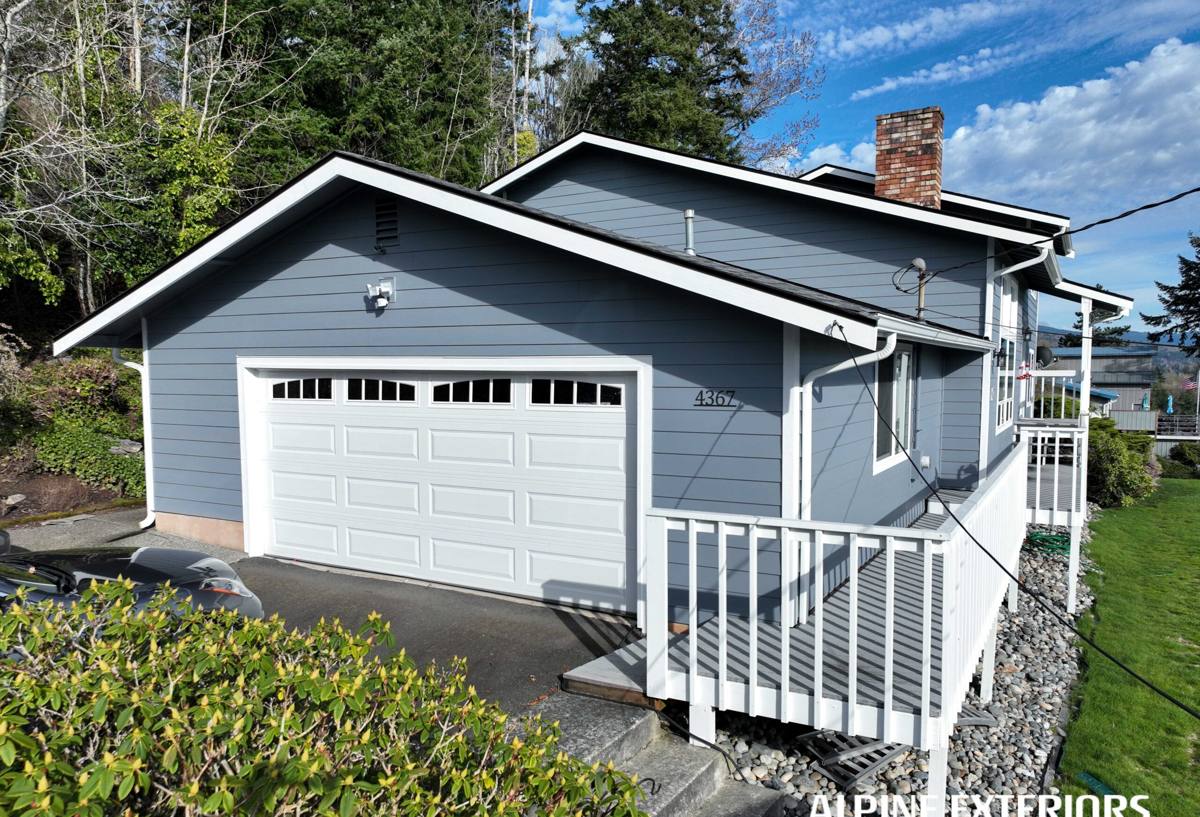
What Salt Air and Driving Rain Do to an Aging Deck
Fasteners and hardware corrode from the inside out
Salt-laden air accelerates corrosion on screws, nails, joist hangers, and post bases — often well before the wood around them shows visible damage. Standard galvanized hardware can hold up fine inland but wear thin faster this close to the water, especially where two different metals are in contact or where a fastener head sits exposed to weather. By the time rust stains start bleeding through the decking, the hardware underneath has usually been losing strength for a while.
Ledger boards and framing take the worst of the rain
The ledger board — where the deck attaches to the house — is the single most common failure point on a Pacific Northwest deck, and driving rain is the reason why. Wind-driven storms push water sideways and upward, past flashing details that would be adequate in a calmer climate. Once water gets behind the ledger or into the band joist, rot sets in where you can't see it, and it keeps spreading until someone opens the structure up.
Decking surfaces wear unevenly
Shaded sections near trees or on the north side of a house stay damp longer, so they weather, discolor, and grow moss faster than sun-exposed boards on the same deck. That uneven aging is a good early sign that a deck is nearing the end of its life even if other sections still look fine.
The Moss Problem: Why PNW Decks Need More Than a Pressure Wash
Anacortes gets a long moss season, and a deck is one of the easiest surfaces for it to colonize — flat, often shaded, and rarely bone-dry for more than a day or two at a stretch. Moss and algae aren't just cosmetic. A moss film holds moisture against the decking surface, which speeds up rot in wood and can dull or degrade the surface layer on some composite products over time. It's also a real slip hazard, especially on stairs.
Pressure washing knocks moss back temporarily, but it doesn't change the conditions that let it grow back — shade, poor airflow, and standing moisture. A deck built with proper board spacing, drainage, and airflow underneath resists moss far longer than one that's simply cleaned each spring. When we replace a deck, we're building for less moss regrowth, not just a clean surface on install day.
Choosing Materials That Actually Hold Up Here
There's no single right decking material for every Ship Harbor home — it depends on budget, sun exposure, and how much upkeep you want to do. Here's how the common options actually perform in this climate, based on their real maintenance and moisture behavior rather than marketing claims.
| Material | Coastal Climate Behavior | Maintenance |
|---|---|---|
| Pressure-treated lumber | Good moisture resistance when properly sealed; needs re-sealing to keep performing | Annual cleaning, re-seal every 2-3 years |
| Cedar | Naturally rot-resistant, ages to gray without treatment, but softer and more prone to surface wear near the water | Regular cleaning, optional staining/sealing |
| Capped composite | Strong resistance to moisture and moss staining; surface doesn't absorb water like wood | Periodic washing, no sealing or staining |
| Uncapped composite (older style) | More prone to moisture absorption and mold at the surface than capped versions | Regular cleaning; we generally don't recommend this tier in this climate |
Pressure-treated and cedar
Wood decking costs less upfront and gives you a natural look many homeowners prefer. The trade-off is ongoing maintenance — cleaning, sealing, and watching for soft spots — which matters more here than in a drier climate because the wood is rarely given a long stretch to fully dry out.
Composite decking
Capped composite boards hold up well against salt air and moss because the cap layer sheds water rather than absorbing it. They cost more upfront and install a little differently than wood — fastening method, spacing, and substructure ventilation all matter for how well they perform over time. We steer clients away from older uncapped composite products in this climate specifically because that exposed core layer behaves more like wood when it comes to moisture and mold, without wood's easy repairability.
What a Correct Deck Replacement Involves
A deck replacement is more than pulling up old boards and screwing down new ones. Done right, it addresses everything underneath the surface that actually determines how long the new deck lasts in this climate.
- Full inspection of the substructure — posts, beams, joists, and ledger — before any tear-off begins
- Ledger board reflashed with proper moisture barrier and flashing tape, not just caulk
- Corrosion-resistant fasteners and connectors sized appropriately for a coastal environment
- Post bases set to keep wood ends off grade and out of standing water
- Joist spacing and board gapping set for proper drainage and airflow underneath
- Guardrails and stair railings built to current code height and baluster spacing
- Decking material matched to the home's sun exposure and the owner's maintenance preference
Our Process From Estimate to Final Walkthrough
We keep the process straightforward and communicate what we find along the way, especially if we uncover framing damage that wasn't visible from the surface.
- Site visit and assessment — we look at the existing deck, ledger connection, and substructure to determine what's salvageable and what isn't.
- Written estimate — a clear scope of work and price range based on what the inspection turns up, including material options.
- Permitting — we handle the paperwork for jobs that require it under local code.
- Tear-off and structural repair — old decking, framing, and hardware removed; any rot or damage addressed before rebuilding.
- Framing and ledger work — new or reinforced framing, proper ledger flashing, and corrosion-resistant hardware throughout.
- Decking and railing install — surface material and rails installed to spec, with attention to drainage and spacing.
- Final walkthrough — we go over the finished deck with you before calling the job done.
Permits, Code, and Skagit County Requirements
Most deck replacements that involve structural work — new framing, a raised deck, or a ledger reattachment — require a permit under local building code, even when the footprint matches what was there before. Guardrails are generally required above a certain deck height, with minimum rail height and maximum gaps between balusters spelled out in code. Skipping this step isn't just a compliance issue; it can complicate things later if you sell the house and a buyer's inspector flags unpermitted structural work. We handle the permitting process as part of the job rather than leaving it for the homeowner to sort out.
Why a Crew That Already Works Ship Harbor Matters
A contractor who works this specific stretch of Anacortes regularly knows things a crew from outside the area has to learn on the job — how much wind-driven rain a given exposure actually takes in a winter storm, which materials hold up and which ones disappoint within a few years, and how the local permitting process actually runs. That familiarity shows up in fewer surprises during the build and a deck that's designed for the conditions it will actually face, not a generic spec sheet.
It also matters for accountability. A local crew is still around next year and the year after — reachable if a question comes up about how something was built or how to care for a new composite surface through its first moss season.
Ready to Talk About Your Deck?
If your deck in Ship Harbor is showing rot at the ledger, soft spots in the framing, or a moss problem that won't go away, we're glad to take a look. Fill out the form below for a free, no-pressure estimate — we'll assess the structure honestly and walk you through what a proper replacement would involve for your specific deck.