 Anacortes Roofing
 Window installation is one of those jobs where the product on the label and the job actually performed can be two very different things. A well-built window from a reputable manufacturer can still leak, draft, and fail early if it goes into the opening wrong — and in Bow, where homes sit exposed along the Skagit County shoreline near Samish Bay, a wrong installation gets found out faster than it would somewhere sheltered and dry. Salt-laden air, wind-driven rain, and a moss season that runs most of the year all put pressure on the details that separate a correct install from a fast one.
What Bow's Climate Actually Demands From a Window Install
A lot of manufacturer installation instructions are written for average conditions — moderate wind, occasional rain, a dry season long enough to let any minor gaps show themselves before they cause damage. Bow doesn't offer that margin. Storms coming off the water push rain sideways into wall assemblies rather than letting gravity carry it straight down, which means water finds any flashing shortcut that a calmer climate would never test. Salt air off Samish Bay and Padilla Bay accelerates corrosion on hardware, fasteners, and lower-grade frame components faster than it would inland. And the shaded, damp corners common on wooded or north-facing lots around here keep moisture sitting against sills and trim for months at a stretch, which is exactly the environment moss and algae need to take hold.
None of that means windows can't hold up here — it means the installation has to be built for these conditions specifically, not installed to a generic standard and hoped along. The window unit itself is rarely what fails first. It's almost always the transition points: the sill, the flashing laps, the seal between the frame and the wall.
Where Older Bow Homes Add Complexity
A good number of homes in and around Bow predate current window and flashing standards, which means the existing opening often has its own issues before a new window ever goes in — old caulk standing in for real flashing, missing sill pans, or trim that's been painted over rot rather than repaired. We treat the opening itself as part of the job, not just the window that goes into it.
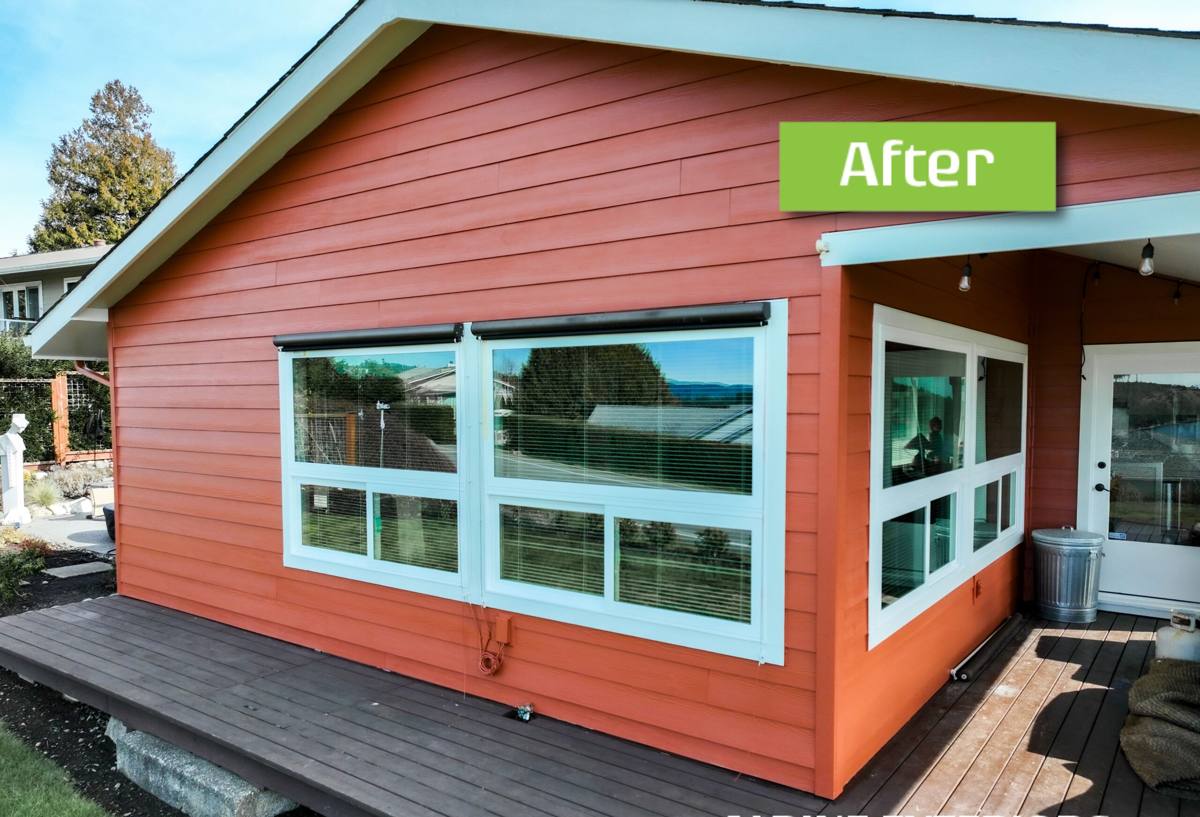
Full-Frame Replacement vs. Insert Replacement
One of the first decisions on any window installation project is whether the job is a full-frame replacement — removing the window down to the rough opening and starting over — or an insert (sometimes called pocket) replacement, where a new window unit is fit inside the existing frame. Both are legitimate approaches, but they solve different problems, and the choice affects both cost and how well the finished install performs against Bow's weather.
| Factor | Insert Replacement | Full-Frame Replacement |
|---|---|---|
| What's removed | Old sash and some hardware; existing frame stays | Entire window down to the rough opening, including old frame and trim |
| Best used when | Existing frame is sound, square, and free of rot or water damage | Frame shows rot, water intrusion, or the opening needs correction |
| Access to flashing | Limited — existing flashing largely stays in place | Full access to inspect and rebuild sill pan and flashing from scratch |
| Disruption | Faster, less exterior trim and siding disturbance | More labor and time; siding and trim around the opening are affected |
| Long-term fit for coastal exposure | Fine when the frame is genuinely sound | The stronger choice when there's any doubt about what's behind the old trim |
We won't default to the cheaper, faster option just because it's less disruptive. If we open up an insert-replacement opening and find soft wood or old water staining, we'll tell you honestly that it needs to become a full-frame job rather than sealing a known problem behind a new window.
What a Correct Installation Actually Involves
Sill Pan and Flashing First
This is the single most important detail on any window installation in a climate like this one. A sill pan creates a sloped, sealed pathway that directs any water that gets past the window itself back out of the wall rather than letting it collect and soak into the framing. Head flashing above the window and properly lapped side flashing tie into the home's weather-resistant barrier so water sheds down and out at every layer, not just at the surface caulk line. Skipping or shortcutting this step is the single most common cause of hidden window leaks, and it's invisible from the outside until the damage has already spread into the wall.
Setting, Shimming, and Insulating
A window has to be set plumb, level, and square in the opening, shimmed correctly so it isn't relying on the fasteners alone to hold its shape, and insulated around the perimeter with a material that stays flexible rather than hardening and cracking over time. A window that's slightly out of square will bind, won't seal against its own weatherstripping correctly, and puts uneven stress on the glass unit itself.
Exterior Trim and Sealant
The visible finish work — trim, casing, and exterior caulking — matters for appearance, but it's also a functional layer, not just cosmetic. On a weather-exposed property, we pay particular attention to how the bottom of the trim is detailed, since that's the spot most likely to hold moisture and eventually show the effects of a long moss season if it's not sloped and sealed correctly.
Interior Finish and Testing
Once the exterior is weathertight, interior trim and sill work are finished out, and the window is operated and checked for smooth function before we consider the job done. A window that sticks, doesn't latch cleanly, or shows daylight around the sash on install day won't get better with time.
Choosing Frame Materials and Glass for This Climate
Frame material and glass package both affect how a window performs against sustained coastal moisture and how much upkeep it asks of you afterward. We'll talk through the honest trade-offs for your specific project rather than pushing one option for every job.
- Vinyl frames — low maintenance, resist moisture well, and are a common, cost-effective choice for straightforward replacements
- Fiberglass frames — more dimensionally stable across temperature swings and generally more durable against sustained coastal exposure, at a higher price point
- Wood-clad frames — wood interior with a low-maintenance exterior cladding; can be the right call when the interior look matters most, as long as the exterior cladding and flashing are done right
- All-wood exterior frames — we're honest that these carry a real ongoing maintenance burden in an environment with this much sustained moisture and salt air, and we'll say so rather than sell around it
- Double-pane vs. triple-pane glass — triple-pane adds cost and weight for extra insulating value; whether it's worth it depends on the wall it's going into and your energy priorities, not a blanket recommendation
- Low-E coatings — worth having on nearly every window in this region, since they help hold heat inside during the long wet season without a major cost jump
A Practical Checklist Before You Commit
- Confirm whether your project should be insert or full-frame replacement, and ask why
- Ask specifically how sill pan flashing will be handled — this is the detail that matters most here
- Get the frame material and glass package trade-offs explained for your specific openings, not a generic pitch
- Ask what happens if rot or water damage is found once the old window comes out
- Confirm warranty terms for both the window unit and the installation labor — they're often separate
- Get a written, realistic timeline, especially if any units need to be special-ordered
Our Installation Process
- On-site assessment — we look at each opening, check the condition of the existing frame and trim, and identify anything that changes the scope before you commit to a plan
- Honest recommendation — insert or full-frame, and which frame material and glass package actually make sense for that window's exposure on your house
- Ordering — we give you a realistic delivery timeline rather than a best-case guess, since lead times vary by manufacturer and unit
- Removal and opening inspection — old window comes out carefully, and we check what's behind it before anything new goes in
- Installation — sill pan, flashing, setting, shimming, and insulating, built around the specific opening rather than a one-size template
- Trim, finish, and final check — exterior and interior trim completed, sealant applied, and every window operated and inspected before we call it done
What Drives the Cost
We won't quote a number without seeing the openings, but the factors that consistently move price on a window installation project are the same ones worth understanding up front.
| Factor | Why It Matters |
|---|---|
| Insert vs. full-frame | Full-frame involves more labor, more trim and siding work, and more time on site |
| Number of windows | A whole-house or multi-window project typically has better per-unit pricing than a single replacement |
| Frame material | Vinyl, fiberglass, and wood-clad units differ in upfront cost and long-term maintenance |
| Glass package | Triple-pane and specialty coatings add cost but can be worth it depending on the wall and orientation |
| Opening condition | Rot, old flashing failures, or out-of-square framing add repair work before the new window goes in |
| Size and access | Larger units or hard-to-reach openings (second story, tight clearances) take more time and equipment |
Why a Crew That Already Works Bow Matters
Manufacturer installation guidance assumes average conditions, and Bow's location on the Skagit County coastline doesn't offer average conditions. A crew that's installed windows in this specific stretch of shoreline knows which parts of the standard installation sequence are worth extra time here — how much slope a sill pan needs when a wall catches direct wind-driven rain, which trim details hold up against a moss season that barely lets up, where salt air makes a cheaper hardware package a bad trade even if it saves money up front. Those aren't decisions that show up in a sales pitch. They show up fifteen years later, in whether the window is still sealing tight or has started drafting, staining, or sticking.
We also know that Bow isn't uniform — a home tucked back from the water faces a different exposure than one sitting open to it, and the right specification for one house isn't automatically right for the one next door. We assess each property on its own terms rather than applying a single template to every job in the area.
Get a Straight Look at What Your Windows Need
Whether you're replacing a single failing window or planning a whole-house project, it's worth having someone look at the actual openings before you start comparing quotes. We offer free, no-pressure estimates for window installation in Bow and the surrounding Skagit County area — use the form below to get a time on the schedule.