 Anacortes Roofing
 La Conner Sits Right at the Water's Edge — Your Siding Should Be Built For It
La Conner sits along the Swinomish Channel in Skagit County, a few minutes from Anacortes, and that waterfront position shapes what a home's exterior has to deal with year-round. Homes here don't just get "Pacific Northwest weather" in the generic sense — they get it with the volume turned up. Salt-tinged air moves off the channel and settles on siding, trim, and fasteners. Storms roll in off the water and drive rain sideways instead of straight down. And because the air stays damp and mild for most of the year, moss and mildew get long uninterrupted stretches to take hold on anything that holds moisture. Siding that isn't built with that combination in mind tends to show it early — fading, swelling, soft spots, and streaking that show up years before they should.
We install James Hardie fiber cement siding exclusively, and this page focuses specifically on what that looks like for La Conner homes: what the local climate actually does to an exterior, what a correctly installed Hardie system involves, how our process works from first look to finished wall, and why it matters to hire a crew that already understands this particular stretch of Skagit County rather than one learning it on your project.
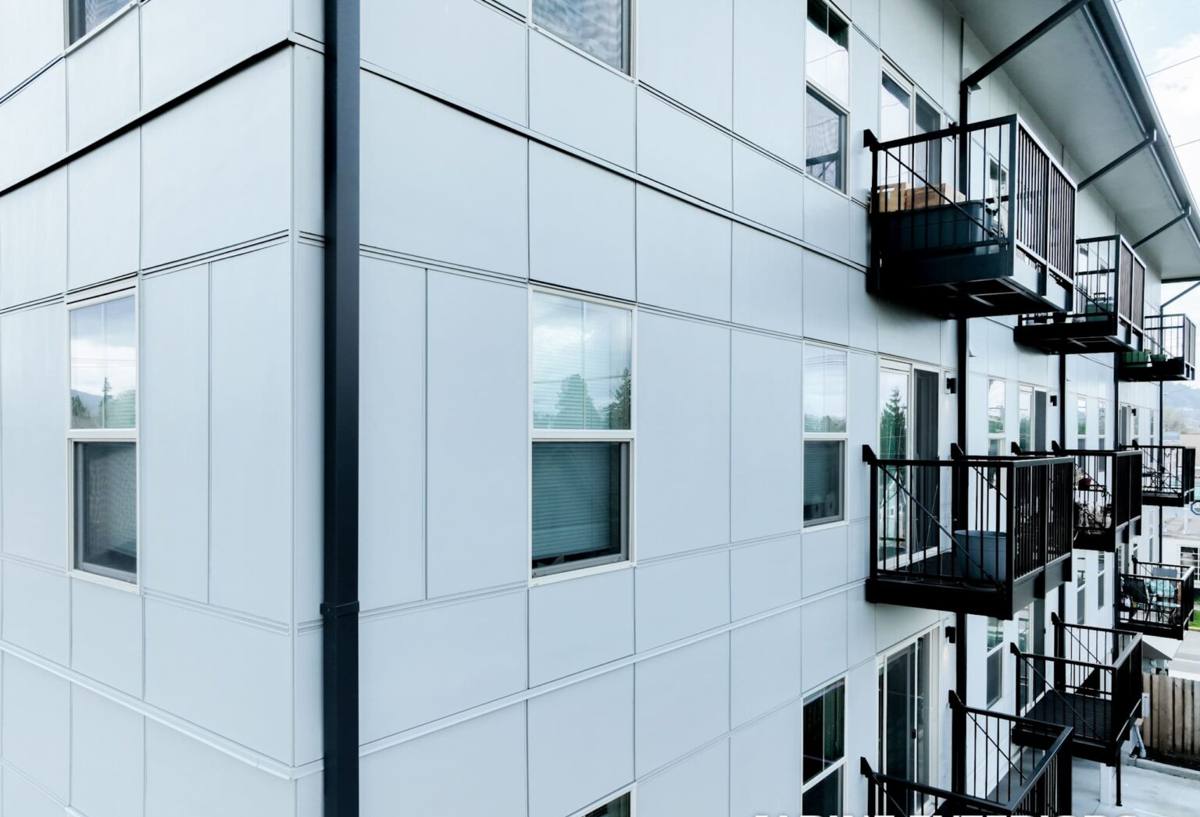
What Salt Air, Driving Rain, and Moss Actually Do to a House
Salt Air and Slow Corrosion
Homes near open or tidal water pick up airborne salt even when they're not directly on the shoreline, and that salt is corrosive to fasteners, flashing, and any exposed metal trim. Lower-grade hardware and finishes break down faster in this environment than they would twenty or thirty miles inland. It's a slow process — you won't see it in year one — but over a decade it shows up as rust streaks, failing fastener heads, and finishes that chalk and fade ahead of schedule.
Wind-Driven Rain
Open water means open wind, and wind pushes rain sideways into siding laps, window trim, and wall penetrations instead of letting it run straight down and off the surface. That's a much harder test on a wall assembly than annual rainfall totals suggest, because water is being forced into joints and seams horizontally, not just falling from above. Siding systems and flashing details designed around straight-down rain are usually the first things to leak in a place like this.
A Moss Season That Barely Ends
Mild temperatures, tree cover, and near-constant moisture add up to a moss and mildew season that can run most of the year on shaded or north-facing walls. Any siding material that's even slightly porous, or that traps moisture against the substrate behind it, becomes a growth surface over time. By the time moss or mildew is visibly obvious on a wall, moisture has often already been working on what's underneath for a while.
Why We Install James Hardie Siding Only
We made a standing decision to install James Hardie fiber cement and nothing else, and La Conner's climate is a good example of why. Vinyl siding can warp, gap, and lose its color faster under sun and salt exposure, and it isn't a material built to handle wind-driven rain well at the seams. Engineered wood products like LP SmartSide use wood-based cores that are more sensitive to sustained moisture exposure than fiber cement, which matters in a place where walls don't get long dry stretches to recover. Cedar and primed wood siding can look great going up, but they demand a maintenance schedule most homeowners underestimate — recoating, caulking, and moisture monitoring — especially in a damp, salt-air environment where finishes break down faster than the manufacturer's literature usually assumes.
James Hardie fiber cement is non-combustible, dimensionally stable, and doesn't feed moss or rot the way wood-based products can. It's engineered specifically to hold up in demanding climates, and it comes with a factory-applied finish system and a strong transferable warranty that reflect a manufacturer betting on long-term performance rather than a lower up-front cost. That's the trade-off we ask homeowners to think through, and it's why we don't offer the alternatives as an option on our jobs.
Hardie's HZ5 Product Line Is Built for This Exact Climate
James Hardie doesn't make one universal product — its HardieZone system engineers products differently depending on regional climate demands. Western Washington, including Skagit County, falls into the HZ5 zone, which is formulated to resist the moisture cycling and freeze-thaw swings common to the Pacific Northwest. That matters more on a waterfront property like a La Conner home than it does further inland, where exposure is milder.
| Consideration | Why It Matters for La Conner Homes |
|---|---|
| Moisture resistance | Engineered to resist swelling, cracking, and moisture intrusion under sustained wet conditions |
| ColorPlus factory finish | Baked-on finish resists fading and chalking better than field-applied paint exposed to salt air and UV |
| Non-combustible material | Doesn't feed moss, mildew, or rot the way wood-based siding can over time |
| Dimensional stability | Holds its shape through the area's wet winters and drier summer stretches without warping |
| Warranty structure | Strong, transferable manufacturer warranty backing the substrate and, separately, the ColorPlus finish |
None of that engineering matters, though, if the installation underneath it is wrong. A correctly specified product on a poorly installed wall will still fail early — which is why installation detail gets as much attention on our jobs as the product itself.
What a Correct Installation Involves in a Place Like This
Good Hardie installation in a high-exposure coastal climate isn't just nailing boards to a wall in the right pattern. It's a system of details that work together to keep water out and let a wall dry if moisture does get in.
- A drainage plane or rainscreen gap behind the siding so any water that gets past the surface has a path to drain and dry instead of sitting against the substrate
- Correctly lapped and sealed weather-resistant barrier under the siding, with special attention at seams, corners, and penetrations
- Properly flashed windows, doors, and any wall penetrations, since these are the points wind-driven rain finds first
- Manufacturer-specified fastening patterns and fastener types suited to salt-air exposure, not just whatever is on hand
- Correct board gaps, caulking, and clearances at trim, corners, and the bottom of the wall so the assembly can expand, contract, and shed water as designed
- Careful field-cut edge sealing, since cut edges on fiber cement need to be treated to match the factory-sealed edges elsewhere on the board
Skip any one of these steps and you can end up with a wall that looks right for a few years and then starts showing problems — trapped moisture, staining, or premature finish failure — that trace straight back to an installation shortcut rather than the product itself.
How Our Process Works, Start to Finish
We start with an on-site look at the existing siding and wall assembly, not just a measurement — checking for hidden moisture damage, evaluating what's behind the current siding, and identifying any problem areas like poorly flashed windows or past water intrusion. From there we walk through product line, texture, and color options relevant to the home and give a clear, itemized estimate before any work begins.
On install day, existing siding comes off and the wall sheathing gets inspected — this is often the point where hidden moisture damage from the old siding system gets caught and addressed before it's sealed behind a new wall. We install the weather-resistant barrier and drainage plane, then the Hardie boards themselves to manufacturer fastening and clearance specifications, followed by trim, flashing, and caulking details. We finish with a walkthrough so you can see the completed work and ask questions before we consider the job done.
Comparing Your Options as a La Conner Homeowner
Most homeowners weighing a siding replacement are comparing the same handful of materials. Here's an honest look at the trade-offs, particularly as they play out in a coastal, high-moisture climate like this one.
| Material | Upfront Cost | Performance in This Climate | Long-Term Maintenance |
|---|---|---|---|
| James Hardie fiber cement | Higher | Engineered for moisture, salt air, and moss resistance | Low — occasional washing, no recoating on ColorPlus finishes |
| Vinyl | Lowest | Can warp, gap, and fade faster under sun and salt exposure | Low effort but shorter realistic lifespan here |
| LP SmartSide (engineered wood) | Mid | Wood-based core more sensitive to sustained moisture exposure | Moderate — moisture monitoring, edge sealing matters |
| Cedar or primed wood | Mid to high | Attractive but demands the most from a damp coastal climate | High — regular recoating, caulking, and inspection |
Upfront cost is real, and we're upfront that Hardie isn't the cheapest option on the table. But when you factor in how few times you'll be redoing this job over the life of the house, the total cost of ownership usually tells a different story than the initial quote alone.
Why It Matters to Hire a Crew That Already Works This Area
La Conner and its surrounding waterfront neighborhoods have their own quirks — older homes with wall assemblies that weren't built to modern moisture standards, tight lots close to the water, and a climate that punishes shortcuts faster than it would twenty miles inland. A crew that's worked this specific area knows what to expect when the old siding comes off, understands how exposed a given wall is likely to be based on its orientation to the channel and prevailing weather, and doesn't have to learn those lessons on your house. That experience shows up in fewer surprises mid-project and in installation details that are tuned to this environment rather than a generic specification sheet.
If you're planning a siding project in or around La Conner, we're glad to take a look at your home and walk you through what we'd recommend and why. There's no pressure and no cost to get an estimate — just a straight answer about what your home needs and what it would take to do the job right.