 Anacortes Roofing
 Windows in Old Town Anacortes: Built for an Older Neighborhood and a Hard Climate
Old Town is one of Anacortes' oldest residential neighborhoods, sitting close to the water on the west side of the city in Skagit County. Homes here tend to run older than what's going up in the newer parts of town, which means a lot of original windows are still in service — wood sash units, older aluminum frames, and single-pane glass that was never built for the climate load this stretch of Washington actually delivers. Add in the same regional weather every Anacortes neighborhood contends with — salt-laden air off the water, driving rain that comes in sideways as often as it falls straight down, and a moss season that runs long here — and you've got a neighborhood where both window condition and installation quality matter more than they might in a newer subdivision farther inland.
Anacortes Roofing Co installs, repairs, and replaces windows throughout Old Town and the rest of Anacortes, alongside the roofing, siding, and deck work we're known for locally. A window is never really a standalone product — it's one component of a wall assembly that has to work with the siding, flashing, and framing around it. In an older home, that assembly usually comes with decades of prior repairs, repaints, and patch jobs layered on top of each other, and a good installer needs to understand what's actually there before the old window ever comes out.
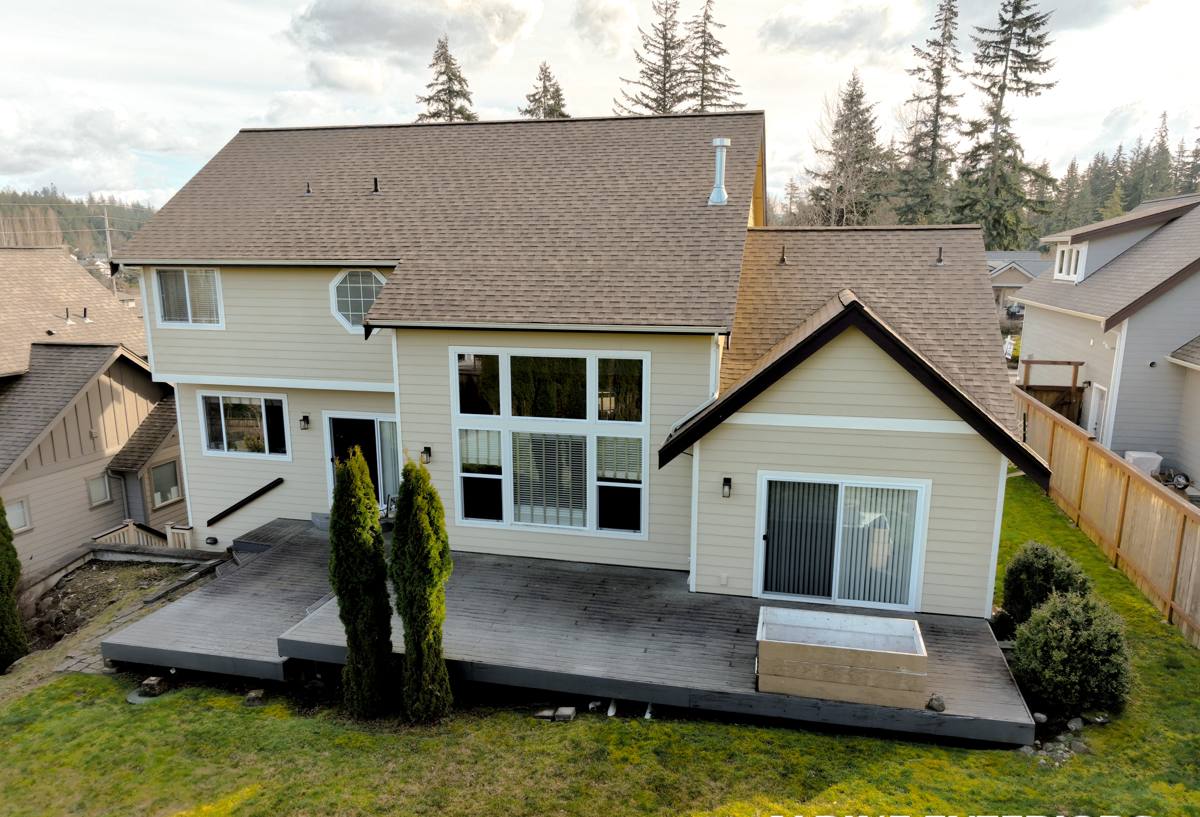
What This Climate Does to Old Town Windows
Salt Air and Hardware Corrosion
Old Town's proximity to the water means these homes catch a steady dose of salt-carrying air, and over years that accelerates corrosion on window hardware, screen frames, and lower-grade fasteners — especially on older aluminum windows and any hardware that wasn't specified for a marine environment to begin with. On original windows from decades back, this often shows up as latches and cranks that are stiff, pitted, or seized entirely, well before the glass or frame itself has actually failed.
Driving Rain and Flashing Failures
Rain moving in off the water rarely falls straight down in this part of Skagit County; wind pushes it sideways into window flashing, trim, and sills. That matters even more on an older home, because many original installations from decades ago used minimal flashing by today's standards — sometimes just building paper and caulk, with no dedicated sill pan underneath the frame at all. A window that's held up for fifty years on caulk alone isn't proof the original detail was adequate. More often it means the house has been getting lucky, or that damage has been building slowly behind the siding without anyone noticing.
Moss, Mildew, and Sill Rot
Mature trees and closer-set older lots in Old Town keep some walls and window sills shaded and damp longer than a newer, more open lot would. That extra moisture supports moss and mildew growth on trim and siding, and on original wood-framed windows it feeds slow rot at the sill and lower corners — usually well underway before it's visible from inside the house.
The Age Factor: What Older Homes Bring to a Window Project
Climate is only half the story in Old Town. The age of the housing stock changes the job itself, and it's worth planning for before a contractor ever pulls a permit or orders material.
- Original openings are often non-standard sizes, so replacement units may need to be custom-ordered rather than pulled off a standard size chart
- Single-pane glass and older wood sash construction mean much lower energy performance than anything sold today, which is usually the first difference homeowners notice once new windows go in
- Homes built before 1978 may have lead-based paint on original trim and sashes, which changes how a crew has to handle removal, containment, and disposal
- Decades of paint, caulk, and patch repairs can mask rot or framing damage that isn't visible until the old window is actually out of the wall
- Street-facing character and historic window proportions matter to a lot of Old Town homeowners, so matching sightlines and trim profile is often as important as raw performance
None of this makes a window project in Old Town harder than it needs to be. It just means the plan has to account for what's actually behind the old window, not just what the new one looks like in a catalog photo.
Choosing the Right Window for an Older Anacortes Home
There's no single right answer for every house — budget, sun exposure, and how much you value matching the home's original character all factor in. What matters is understanding the real trade-offs for a marine climate before deciding, especially on a house where the replacement window has to sit in an opening built to older dimensions.
| Frame Material | Moisture & Corrosion Behavior | Fit With Older Home Character | Realistic Lifespan Here |
|---|---|---|---|
| Vinyl | Won't rot; seams and welds can degrade if installation quality is poor | Widest range of colors and grille patterns; can look modern on a historic facade if not chosen carefully | 20-30 years |
| Fiberglass | Dimensionally stable, resists moisture and corrosion well | Takes paint well, holds slim sightlines closer to original wood sash proportions | 30-40+ years |
| Wood, painted or clad | Attractive but vulnerable to moisture at joints and sills without diligent upkeep | Closest match to original construction on a historic-character home | 15-30 years depending on upkeep |
| Aluminum | Conducts cold and can corrode over time in salt-influenced air unless well-finished | Common in older Old Town replacement windows from decades past; thin sightlines but cold to the touch | 20-30 years |
We'll walk you through which frame material actually fits your home's exposure, budget, and the look you're trying to keep or restore, rather than defaulting to whichever product is easiest to sell. A shaded, tree-covered lot and an open lot a few blocks closer to the water don't always call for the same answer, even within the same neighborhood.
Full-Frame Replacement vs. Insert Replacement in an Older Home
One of the first decisions on any window project is whether to do a full-frame replacement, which removes the old window down to the rough opening and rebuilds the flashing from scratch, or an insert replacement, which fits a new window into the existing frame. Insert replacement is faster and less invasive to surrounding trim and siding, and it can work well when the existing frame is structurally sound and reasonably well flashed. In Old Town specifically, that's a bigger "if" than in a newer home — original frames from decades back are more likely to have hidden rot, undersized or missing flashing, or framing that's shifted slightly over the decades. Full-frame replacement costs more and takes longer, but it's the honest answer whenever there's already moisture damage at the sill or jambs, or when the original installation never had proper flashing to begin with. We'll tell you which situation you're actually in once the old window is open, rather than defaulting to the cheaper option and sealing a moisture problem up behind a new one.
Installation Fundamentals We Don't Treat as Optional
Most window failures in this climate aren't failures of the window itself — they're shortcuts in the flashing and sealing details that don't show up until a wet season or two later. On every job in Old Town, that means:
- A properly pitched sill pan that sheds water outward instead of letting it pool under the frame
- Head flashing integrated with the housewrap or building paper above the window, lapped correctly so water sheds downward and outward
- Jamb flashing tied into the surrounding wall assembly rather than relying on caulk alone
- Weep holes and drainage paths left clear and functional, not sealed shut during installation
- Corrosion-resistant fasteners and hardware appropriate for a consistently damp, salt-influenced climate
- Careful handling and containment of old paint and trim material, given the age of housing stock in this neighborhood
None of these add meaningfully to the cost of a job relative to the window itself, but skipping them is exactly what turns a window that should last decades into one that's quietly leaking behind the wall within a few years.
Signs an Old Town Home Needs Window Attention
- Visible fogging or condensation between panes on any window that's been upgraded to double-pane glass
- Persistent drafts or a noticeable temperature difference near a closed window, common on original single-pane units
- Soft, discolored, or spongy trim and sill material, especially on shaded or weather-facing walls
- Difficulty opening, closing, or latching a window that used to operate smoothly
- Peeling paint or bubbling finish on original wood-framed windows
- Visible gaps, cracked caulk, or daylight around the frame from inside
- Water staining on interior wall or ceiling surfaces near a window
Any one of these is worth a professional look. Caught early, most point to a repair or resealing job. Left alone through another wet season, several of them point to water damage already working its way into the surrounding wall framing.
Repair, Reseal, or Replace? How We Help You Decide
Not every window problem in an older home calls for full replacement, and we don't default to recommending one. We look at the age and condition of the existing window, whether the draft or seal failure is isolated or spread across the house, and whether there's already moisture damage in the surrounding frame or siding. A single original window with failing glazing putty on an otherwise sound, well-flashed wall is often a straightforward repair. A house with multiple original single-pane windows, visible sill rot, or a history of past leaks is usually more honestly addressed with a broader replacement plan, phased over time if budget requires it, rather than patching one unit at a time. We'll explain what we find and why, and give you the real trade-offs instead of pushing toward whichever option is more profitable for us.
Why a Local Crew That Knows This Neighborhood Matters
A crew that works on windows across Anacortes and Skagit County through every season sees how salt air, wind-driven rain, and moss actually behave on real houses over years, not just how a product performs on a spec sheet. In a neighborhood like Old Town, that also means recognizing what an older home is likely hiding behind an original window before the first pry bar comes out — where flashing was probably skipped decades ago, which wall orientations catch the most weather off the water, and how to keep a replacement window looking right on a house with real historic character instead of just fitting whatever's cheapest into the opening. That's a different job than installing windows in a newer subdivision, and it's worth working with a crew that treats it that way.
Beyond Windows: Roofing, Siding, and Decks
Windows are our focus in Old Town, but the same climate that wears on a window wears on the rest of the exterior too. Anacortes Roofing Co also handles roofing, siding, and deck work, and on siding specifically we install James Hardie fiber cement as our standard, chosen for how it holds up against sustained moisture and moss compared to lower-cost alternatives. If a window project turns up moisture damage in the surrounding siding or trim, or a roofline detail above a window that's letting water in, we can address it as part of the same conversation instead of sending you to find a second contractor.
Get a Free, No-Pressure Estimate
If your Old Town home has original windows that are drafty, hard to operate, or showing signs of moisture damage at the sill, we're glad to take a look and give you a straightforward, honest read on what it actually needs. Reach out using the form below to schedule a free estimate — no pressure, no upsell script.