 Anacortes Roofing
 Siding Replacement for Mount Vernon Homes
Mount Vernon sits in the Skagit Valley, close enough to the salt water and the marine weather systems that move through Anacortes and the rest of Skagit County that homes here take on the same kind of long-term siding punishment: driving rain that comes in sideways off the Sound, salt-laced air that works its way into fastener heads and seams, and a moss season that can run from October into May. None of that is unusual for this part of Washington. What's unusual is how many homes still have siding that was never built or installed to handle it.
We're based in Anacortes and have been doing exterior work up and down this stretch of Skagit County long enough to know that a siding replacement here isn't just a cosmetic upgrade. It's a decision about how well the next 30-50 years of wall assembly will hold up against moisture that never fully stops. This page is about what that job actually involves for a Mount Vernon home, and why we only do it one way.
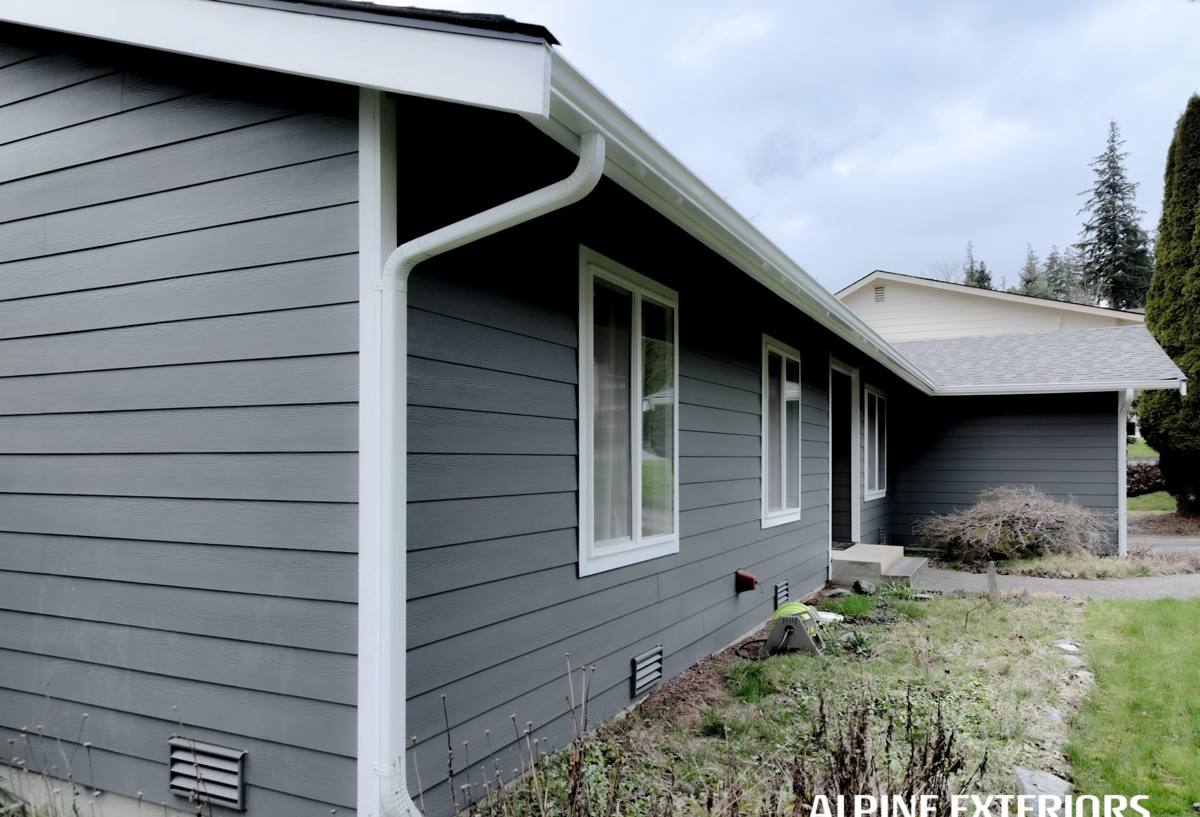
What the Skagit Valley Climate Does to Siding
Mount Vernon doesn't get hit with surf spray the way a waterfront Anacortes property might, but it sits low in a river valley that traps humidity, fog, and standing moisture for long stretches of the year. Combine that with the same driving rain and salt-tinged air that moves through the whole county, and you get a climate that's hard on anything but the right siding material.
- Driving rain: Wind-driven rain doesn't just wet a wall surface — it pushes water up under laps, into butt joints, and behind trim that isn't flashed correctly.
- Persistent moisture and fog: Low valley humidity keeps wall surfaces damp longer than they would be in a drier climate, which is exactly what mold, algae, and moss need to take hold.
- Moss and algae growth: Shaded north and east walls, especially under trees or eaves, can stay green and damp almost year-round.
- Salt air influence: Even a few miles inland from the Sound, airborne salt accelerates corrosion on fasteners, flashing, and any siding material that isn't built to resist it.
- Freeze-thaw swings: Skagit County doesn't get brutal winters, but repeated freeze-thaw cycles still stress siding that has already absorbed moisture.
Any siding product can look fine for a few years. The real test is what it looks like — and what's happening behind it — after a decade of this cycle repeating every single winter.
What Actually Fails on Mount Vernon Siding
When we inspect older siding on homes in this area, the same problems show up over and over:
Moisture Behind the Siding, Not On It
The siding surface can look mostly fine while the sheathing behind it is soft, black, or delaminating. This happens when water gets past laps or trim and has nowhere to drain or dry out — a common issue with older housewrap installs, missing flashing, or siding installed tight against trim with no gap for drainage.
Paint and Finish Breakdown
Site-applied paint on wood or fiber cement siding has a shorter service life in this climate than it does further inland. Constant damp-dry cycling breaks down paint adhesion faster, leading to peeling, cracking, and repainting on a much shorter cycle than most homeowners expect.
Warping, Buckling, and Fastener Failure
Vinyl siding expands and contracts with temperature swings and can warp or buckle over time, especially on south- and west-facing walls. Fasteners — especially lower-grade ones — corrode faster in salt-influenced air, leading to streaking and loose panels.
Moss and Algae Staining
Porous or textured siding surfaces hold onto moisture and organic growth longer, which means more frequent washing and, eventually, permanent staining that no amount of cleaning fully removes.
Why We Only Install James Hardie Fiber Cement
We don't install vinyl, LP SmartSide, Cemplank, Allura, primed spruce, or cedar. That's a deliberate standard, not a matter of what we happen to stock. Every one of those products can be installed correctly and hold up reasonably well somewhere — but Skagit County's combination of driving rain, salt air, and a long moss season is a tough environment, and after years of doing exterior work here, James Hardie fiber cement is the only siding system we're willing to put our name behind.
A few reasons that matter specifically for a Mount Vernon home:
- Non-combustible material: Fiber cement doesn't feed a fire the way wood-based or engineered wood products can.
- Engineered for this climate: James Hardie makes climate-specific product lines, and the versions specified for the Pacific Northwest are engineered around the moisture exposure this region actually sees.
- Factory-applied ColorPlus finish: Instead of relying on site-applied paint that breaks down under constant damp-dry cycling, ColorPlus finish is baked on at the factory and backed by its own finish warranty — a real advantage in a climate this hard on paint.
- Dimensional stability: Fiber cement doesn't expand, contract, warp, or buckle the way vinyl and some wood-based sidings do.
- Strong transferable warranty: A meaningful warranty only matters if the product is installed to spec — which is why installation quality is the other half of this equation.
What a Correct Installation Actually Involves
Fiber cement siding is only as good as the wall assembly underneath it. A rushed or corner-cut install can undermine even the best material, and in a climate like this, mistakes show up fast.
Tear-Off and Sheathing Inspection
We remove the old siding down to the sheathing and inspect for rot, soft spots, or hidden moisture damage before anything new goes up. Any compromised sheathing gets replaced — covering over a problem never makes it go away.
Weather-Resistive Barrier and Drainage Plane
A properly lapped and sealed weather-resistive barrier, with a drainage gap behind the siding, gives any moisture that does get past the surface a way to drain and dry out instead of sitting against the wall.
Flashing at Every Penetration
Windows, doors, hose bibs, vents, and any other penetration through the wall need correctly integrated flashing. This is where most water intrusion problems actually start, and it's the detail that gets skipped most often on lower-quality installs.
Manufacturer-Spec Fastening and Clearances
James Hardie publishes specific requirements for fastener type, spacing, and clearance from grade, decks, and roof lines. Following that spec isn't optional if you want the warranty to mean anything — it's also what keeps moisture from wicking up into the bottom edge of the siding.
Caulking and Joint Treatment
Butt joints and trim transitions need to be treated correctly, not just caulked over. Done right, this is one of the details that separates a siding job that looks good for two years from one that performs for decades.
Siding Material Comparison for This Climate
| Material | Moisture Resistance | Fire Resistance | Maintenance | Typical Lifespan |
|---|---|---|---|---|
| James Hardie Fiber Cement | Engineered for high-moisture climates | Non-combustible | Low — factory finish, occasional wash | 30-50+ years with correct install |
| Vinyl | Fair; can trap moisture behind panels | Combustible, can melt/warp | Low, but prone to fading and warping | 15-25 years |
| LP SmartSide (engineered wood) | Vulnerable at cut edges and joints if not sealed perfectly | Combustible | Moderate — finish upkeep matters | 20-30 years, install-sensitive |
| Cedar | Absorbs moisture; needs consistent refinishing | Combustible | High — regular staining/sealing | 20-40 years with diligent upkeep |
These are general performance patterns, not guarantees — any siding material can underperform if it's installed poorly, and any material can hold up reasonably well if it's installed correctly and maintained. The table reflects why, given the specific demands of this climate, we standardized on one system rather than offering all of them.
Signs a Mount Vernon Home Needs Siding Replacement
- Soft or spongy spots when you press on the siding, especially near the bottom edge or under windows
- Paint that's peeling, bubbling, or cracking faster than a normal repaint cycle would suggest
- Persistent moss or algae staining that comes back quickly after cleaning
- Visible warping, buckling, or gaps between panels
- Rust streaking around fasteners or trim
- Rising energy bills that suggest the wall assembly is no longer doing its job
- Musty smells or visible mold on interior walls that share an exterior wall with worn siding
Our Process for Mount Vernon Projects
Because we're based in Anacortes, we already have crews working this corridor of Skagit County on a regular basis, which keeps scheduling and travel time reasonable for Mount Vernon jobs. The process itself doesn't change based on location:
- On-site assessment: We look at the current siding, sheathing condition where accessible, and any trouble spots — trim, penetrations, low-clearance areas — before quoting anything.
- Straightforward estimate: You get a clear scope of work and pricing, with the reasoning behind any recommendations explained in plain terms.
- Material and color selection: We walk through James Hardie's ColorPlus options and profiles so the finished look fits the home.
- Tear-off and prep: Old siding comes off, sheathing gets inspected and repaired as needed, and the drainage plane goes in correctly.
- Installation to manufacturer spec: Fastening, clearances, flashing, and joint treatment all follow James Hardie's published requirements.
- Final walkthrough and cleanup: We review the finished work with you and clear the site of debris and old material.
Why a Local Crew Matters for This Job
Siding replacement is one of those projects where the installer matters as much as the material. A crew that's used to working further inland or in a drier climate may not think twice about a detail that's critical here — like drainage behind the siding, or fastener corrosion resistance — because it's never had to. We work this exact climate, on homes from Anacortes through the rest of Skagit County including Mount Vernon, and we build every install around the moisture and salt-air exposure this region actually produces, not a generic national spec sheet.
If your Mount Vernon home's siding is showing its age, or you just want an honest read on whether replacement makes sense yet, we're happy to come take a look. Estimates are free, and there's no pressure to move forward — just a straight assessment of where things stand and what your options are.