 Anacortes Roofing
 Why West Anacortes Is Tougher on Windows Than Most Skagit County Neighborhoods
West Anacortes sits close to the water, and that proximity changes what a window has to survive. Salt-laden air corrodes hardware and fasteners faster than it would a few miles inland. Wind-driven rain off the Sound doesn't just fall straight down — it gets pushed sideways into window flanges, sills, and trim, finding any gap in the flashing or sealant. And the long, wet, low-sun stretch of the year that Skagit County sees keeps siding, trim, and window frames damp for weeks at a time, which is exactly the environment moss and mildew need to take hold.
None of that is unique to Anacortes, but the combination of coastal exposure and Pacific Northwest rainfall means West Anacortes homes deal with it more intensely and more often than homes set back from the water. A window that's fine for a dry inland climate can fail here years earlier — not because the glass wears out, but because the frame, seals, and flashing weren't built or installed for salt air and driving rain.
What "Energy-Efficient" Actually Means in This Climate
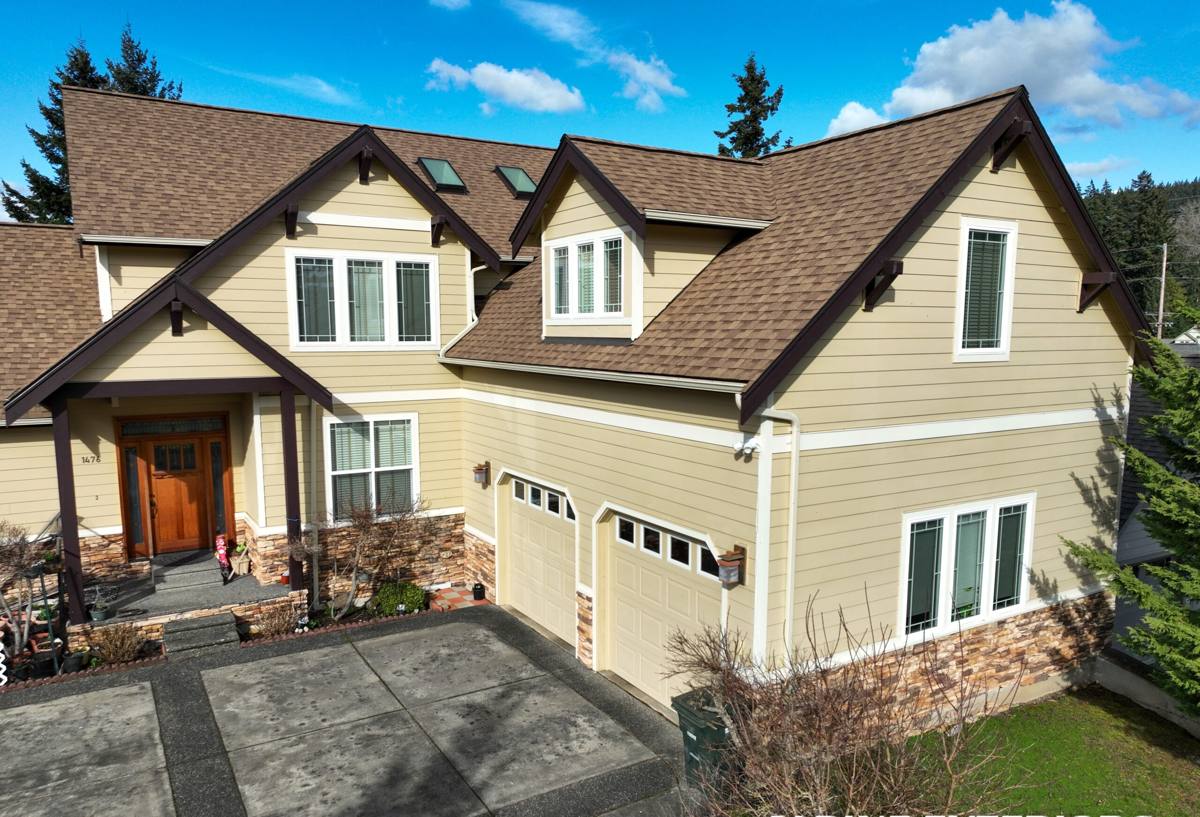
Energy efficiency gets marketed around glass ratings, but in West Anacortes the bigger factor is usually air sealing and moisture management, not just the glass package. A window with excellent U-factor numbers still leaks heat and lets in damp air if it's installed with poor flashing, gaps in the rough opening, or degraded caulking. We look at three things together:
- U-factor — how much heat passes through the window. Lower is better for our heating-dominated climate.
- Solar Heat Gain Coefficient (SHGC) — how much solar heat the glass lets in. Less critical here than in sunnier climates, but still worth matching to the home's orientation.
- Air leakage rating — often the most overlooked number, and often the one that matters most for a drafty, damp West Anacortes house.
A window that's rated well on paper but installed loose in the opening will still let cold, salty, moist air infiltrate around the frame. That's why we treat the installation — not just the product spec sheet — as part of the energy-efficiency equation.
Signs Your Current Windows Are Working Against You
Homeowners usually notice a problem long before they decide to do something about it. If any of these sound familiar, it's worth having the windows looked at:
- Visible condensation or fog between the panes of a double- or triple-pane window (a sign the seal has failed)
- Cold drafts near the window frame even when it's fully latched
- Wood trim or sills that feel soft, discolored, or stay damp longer than the surrounding wall
- Moss or dark streaking building up on the sill or exterior casing faster than on the rest of the siding
- Hardware — locks, cranks, hinges — that's stiff, corroded, or has visible rust or pitting
- A noticeable rise in heating costs without a clear explanation
- Windows that are difficult to open, close, or lock due to swelling or frame movement
Any one of these on its own might just be normal wear. Several of them together, especially on a west- or water-facing wall, usually points to a window and installation that's no longer keeping up with the exposure.
Frame Material: What Holds Up Near the Water
Frame material matters more in a salt-air environment than most homeowners expect. Here's how the common options generally compare for a West Anacortes property:
| Frame Material | Salt Air / Moisture Resistance | Maintenance | Typical Trade-Offs |
|---|---|---|---|
| Vinyl | Good — won't corrode or rot | Low | Limited color/finish options; can expand and contract with temperature swings |
| Fiberglass | Very good — dimensionally stable, resists corrosion | Low | Higher upfront cost than vinyl |
| Aluminum-clad wood | Good exterior protection if seals are well maintained | Moderate | Wood interior still needs care; cladding seams are a potential moisture entry point if not detailed properly |
| Bare wood | Poor to fair in direct coastal exposure without diligent upkeep | High | Attractive interior look, but repainting and sealant maintenance is an ongoing commitment this close to the water |
| Aluminum (uninsulated) | Fair — resists rot but conducts heat and cold readily | Low to moderate | Generally a poor fit for energy-efficiency goals in this climate |
We don't push one material on every home. A lot of it comes down to what the rest of the house's exterior is doing, what the homeowner wants to maintain, and budget. What we do steer away from is bare wood frames on west- and water-facing elevations here — not because wood windows are a bad product, but because the maintenance burden in this specific exposure is significant, and a missed recoat cycle can lead to rot faster than it would a few miles inland.
Glass Packages Worth Knowing About
Double-pane, Low-E, argon-filled glass is the standard baseline for energy efficiency in this region and is appropriate for most West Anacortes homes. Triple-pane adds another layer of insulation and a bit more sound dampening, which is worth considering on a busy street or for a home that runs cold, but it adds weight, cost, and isn't always necessary to hit a comfortable, efficient result. We'll talk through whether the upgrade makes sense for your specific home rather than defaulting to the most expensive option.
What Actually Drives the Cost of a Window Project
Two homes with the "same number of windows" can end up with very different quotes. The factors that move the number most are:
| Cost Factor | Why It Matters |
|---|---|
| Frame material and glass package | Fiberglass and triple-pane cost more upfront than vinyl and double-pane |
| Window size and configuration | Large picture windows, bay/bow units, and custom shapes cost more than standard operable windows |
| Installation type | Full-frame replacement (removing down to the rough opening) costs more than an insert replacement, but is often the right call when there's existing rot or moisture damage to address |
| Access and elevation | Second-story or hard-to-reach windows take more time and equipment |
| Existing damage | Rot found in the framing or sheathing once old windows come out adds repair cost, but it's cheaper to fix now than to trim a new window into a compromised opening |
| Trim and finish work | Matching existing interior/exterior trim profiles adds labor over a simple swap |
We give straight numbers up front and flag anything that could change once we're into the wall, rather than surprising you with it at the end.
Full-Frame Replacement vs. Insert Windows
This decision matters more here than in a drier climate. An insert replacement fits a new window into the existing frame — it's faster and less invasive, and it's a reasonable option when the existing frame is solid and dry. A full-frame replacement removes the window down to the rough opening, which lets us inspect and repair the framing, sill, and flashing underneath.
Given how much driving rain and salt air West Anacortes windows see over the years, it's common to find some degree of moisture damage around older window openings that an insert replacement would simply seal back over. We'll always tell you honestly which approach fits what we find — we're not going to sell a full-frame job where an insert will do, and we're not going to install an insert over framing that needs to be addressed.
How We Handle Flashing and Moisture Sealing
This is the part of a window installation that determines whether it holds up to driving rain, and it's also the part that's easiest for a rushed crew to shortcut. Our process on every window includes:
- Removing the old window and inspecting the rough opening, sill, and surrounding framing for hidden rot or moisture damage
- Repairing or replacing any compromised framing or sheathing before the new window goes in
- Installing a sloped sill pan to direct any water that gets past the window back outside the wall
- Applying flashing tape and housewrap integration in the correct shingle-lap order, so water is always directed downward and outward, never trapped behind the siding
- Setting the window plumb, level, and square, then securing it per the manufacturer's fastening schedule
- Sealing and insulating the gap between the frame and rough opening with the correct low-expansion foam or backer rod and sealant — not just caulk around the outside
- Finishing exterior trim and touching up siding integration so the whole assembly sheds water as one system
A window is only as good as the flashing behind it. We've seen plenty of window failures in coastal Skagit County homes that had nothing to do with the window product itself and everything to do with flashing that was skipped or done out of order.
Why Local Experience in West Anacortes Specifically Matters
A crew that mostly works drier, inland areas doesn't always think about salt-air hardware corrosion, wind-driven rain intrusion, or moss buildup on trim the way a crew that works West Anacortes homes regularly does. We know which details of an installation matter most in this exposure, what tends to go wrong on water-facing walls, and how to sequence a project around this region's wet stretches so materials aren't sitting exposed during a storm.
That local familiarity also shows up in smaller ways — knowing what condition to expect when we open up an older window opening in this neighborhood, having a realistic sense of project timelines around Skagit County's weather patterns, and understanding how West Anacortes' coastal exposure compares to other parts of the city when we're recommending materials.
Maintaining New Windows in a Salt Air, Moss-Prone Climate
Even a well-installed, energy-efficient window benefits from a little seasonal attention here:
- Rinse salt residue off exterior frames and hardware periodically, especially on water-facing elevations
- Clear moss and debris from sills and tracks before it holds moisture against the frame
- Check weep holes (the small drainage openings at the base of the frame) to make sure they're clear and draining
- Inspect exterior caulking annually and re-seal any cracked or separated joints before the wet season
- Operate hardware periodically through the year so cranks, locks, and hinges don't seize from disuse and moisture
None of this is heavy maintenance, but skipping it in this climate shortens the life of even a good window.
Let's Look at Your Windows
If your West Anacortes home has windows that are drafty, fogged, hard to operate, or just past their prime, we're glad to take a look and give you an honest read on what's going on and what it would take to fix it. There's no pressure and no obligation — just a straightforward assessment from a crew that knows this neighborhood's climate. Fill out the form below to schedule a free estimate.