 Anacortes Roofing
 Building Decks for March Point's Marine Climate
March Point sits out on the water, and that location shapes almost every decision that goes into a deck built there. The same setting that makes the area a nice place to sit outside — open water on multiple sides, steady breeze, big sky — is also what wears decks out faster than a build a few miles inland in Anacortes proper. Salt-laden air, driving rain off the water, and a moss season that runs longer than most of the country's are the three things we plan around before we ever cut a board.
A deck built without those factors in mind can look fine for a year or two and then start showing problems all at once: fasteners bleeding rust through the decking, framing that stays damp long after a storm passes, or a walking surface that turns slick with algae every winter. This page covers what a correctly built deck for March Point actually involves — materials, structure, hardware, and process — so you know what to look for whether you hire us or someone else.
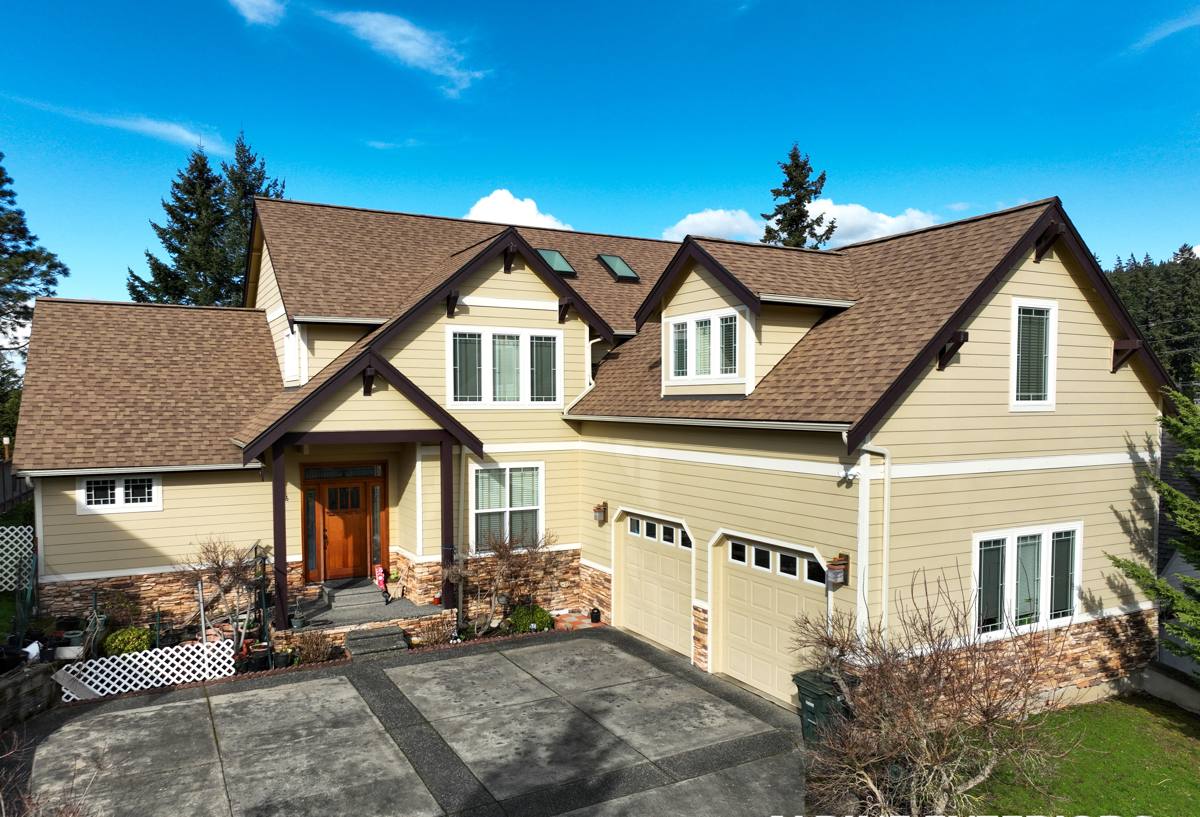
What March Point Homes Need From a Deck
Salt Air and Corrosion
Homes near open water deal with airborne salt even when they're not right on the beach. Salt accelerates corrosion on anything metal — fasteners, joist hangers, railing hardware, even the coating on some pressure-treated lumber. A deck that would hold up fine in a drier, inland part of Skagit County can develop rust streaks and weakened connections much sooner out here if the wrong hardware was used.
Moss, Algae, and Standing Water
Western Washington's wet season is long, and a peninsula location like March Point doesn't get any less rain than the rest of the region. Moss and algae need moisture and a surface to grip, and a deck with poor drainage or the wrong board spacing gives them exactly that. Beyond looking bad, a mossy deck surface is a genuine slip hazard, especially on stairs.
Wind and Water Exposure
Being surrounded by water on more than one side means more sustained wind exposure than a sheltered inland lot. That affects railing and post connections, and it's part of why we don't cut corners on structural fasteners or rely on the minimum spacing code allows when the site is exposed.
Choosing the Right Decking Material
There's no single "best" decking material — there's the right material for the site, the budget, and how much maintenance the homeowner actually wants to do. Here's how the common options compare for a marine-exposed property like March Point.
| Material | Moisture & Salt Air Performance | Maintenance | Typical Lifespan |
|---|---|---|---|
| Pressure-treated wood | Good if sealed and re-sealed on schedule; end grain and cut edges need extra attention | Annual cleaning, re-sealing every 1-2 years | 15-20 years with upkeep |
| Cedar | Naturally moisture-resistant, but still benefits from sealing near salt air | Sealing every 1-2 years, more frequent cleaning | 15-25 years with upkeep |
| Capped composite | Strong — the cap layer resists moisture and salt staining better than uncapped boards | Occasional washing, no sealing or staining | 25-30+ years, manufacturer-warrantied |
| PVC decking | Excellent moisture resistance; doesn't absorb water at all | Occasional washing | 25-30+ years, manufacturer-warrantied |
Composite and PVC cost more up front, but for a site with this much moisture and salt exposure, the lower long-term maintenance is a real factor, not just a sales pitch. That said, plenty of homeowners still prefer the look and feel of real wood and are willing to keep up with sealing — that's a legitimate choice too, as long as it's made with eyes open about the maintenance commitment.
Framing and Substructure Done Right
The decking boards are what you see, but the framing underneath is what determines whether the deck is still solid in ten years. On an exposed, wet site, we pay particular attention to:
- Ledger board flashing that actually sheds water away from the house rim joist, not just a bead of caulk
- Joist tape or a comparable protective barrier on top of every joist to stop water from sitting in the wood fibers where fasteners penetrate
- Footings sized and set to local frost and soil conditions, not just the minimum the plans call for
- Proper air gap and drainage slope so water moves off and away from the structure instead of pooling under the deck
- Ventilation underneath the deck so the substructure can actually dry out between rain events
None of this is visible once the deck is finished, which is exactly why it matters who builds it. A deck can look identical on day one whether the framing was done carefully or rushed — the difference shows up years later.
Fasteners, Hardware, and Metal Components
This is the detail that gets skipped most often, and it's the one that matters most in a salt-air environment. Standard galvanized fasteners can start showing corrosion within a few years this close to the water. Our standard for coastal and near-coastal builds is stainless steel or high-grade coated fasteners rated for the exposure, along with joist hangers and structural connectors rated for the same conditions. It costs more than the cheapest hardware on the shelf, but replacing a handful of fasteners is a lot cheaper than repairing a deck section where corroded hardware let go.
Railings, Stairs, and Slip Resistance
Railings on an exposed site take more wind load over time, so post attachment matters as much as the railing style itself. For decking surface texture, we factor in that this site will see more moss and algae pressure than a typical inland yard — proper board spacing for drainage and, where a homeowner wants it, a decking option with better wet-traction texture, especially on stairs.
Our Process, Start to Finish
Building a deck that's going to hold up on March Point isn't complicated, but it does require doing the steps in order and not skipping any of them:
- On-site assessment — we look at sun and wind exposure, existing drainage, soil, and how the deck will connect to the house.
- Design and material discussion — honest conversation about what fits the budget and the maintenance level the homeowner actually wants going forward.
- Permitting — we handle the permit application and inspections required for the jurisdiction.
- Demo and framing — old structure removed if applicable, footings set, framing built with the flashing and hardware standards above.
- Decking, railing, and finish work — surface material installed, railings set, stairs finished.
- Final walkthrough — we go over the finished deck together before calling the job done.
Permits and Code Considerations
Most new decks and significant deck rebuilds require a building permit, and requirements can include railing height, guard spacing, and footing depth depending on the deck's height off grade and its location relative to the house. Because March Point falls under Skagit County jurisdiction depending on the exact parcel, it's worth confirming which permitting authority applies to your address before work starts — we handle that confirmation and the application as part of the process rather than leaving it on the homeowner.
Maintenance Checklist for Coastal Decks
Whatever material you choose, a little seasonal upkeep goes a long way toward getting the full lifespan out of the structure. A basic yearly routine for a March Point deck should include:
- Sweeping debris out of board gaps so drainage paths stay clear
- Washing down the surface at least once a year to remove salt residue and early moss growth
- Checking railing posts and stair stringers for movement or loose connections
- Inspecting fasteners for rust staining, especially near the edges and stairs
- Re-sealing wood decking on the schedule the product calls for, typically every 1-2 years
- Clearing gutters and downspouts near the deck so roof runoff isn't dumping extra water onto the structure
Why a Crew That Already Works March Point Matters
General contracting knowledge gets you a deck that meets code. Local, site-specific knowledge is what gets you a deck that's still solid after five winters of driving rain and salt air off the water. A crew that regularly works this stretch of Skagit County already knows which hardware grade to spec without guessing, how the local permitting process runs, and what drainage and framing details actually hold up here versus what merely passes inspection on paper. That's the difference between a deck built to a generic spec sheet and one built for the site it's actually going on.
If you're planning a new deck or need to replace one that's showing its age, we're happy to come take a look and give you a straightforward, no-pressure estimate — just fill out the form below.