 Anacortes Roofing
 Why March Point Siding Wears Differently Than Inland Homes
March Point sits out on the water, and that changes what siding has to survive. Homes here take a steady dose of salt-laden air off Fidalgo Bay, wind that isn't broken up by hills or heavy tree cover the way it is further inland, and driving rain that hits siding at an angle instead of falling straight down. That combination is harder on exterior materials than typical Skagit County weather, and it shows up as faster paint breakdown, earlier caulk failure, and moisture finding its way into seams that would otherwise hold up for years.
Salt air is corrosive to exposed metal fasteners and trim flashing, and it accelerates the breakdown of lower-grade coatings. Combine that with the region's long, wet moss season and near-constant humidity swings between fall and spring, and you get siding systems that need more attention, sooner, than the same product would need in a drier or more sheltered part of the county. None of this means siding on March Point is doomed — it means the material and the installation details matter more here than almost anywhere else in the Anacortes area.
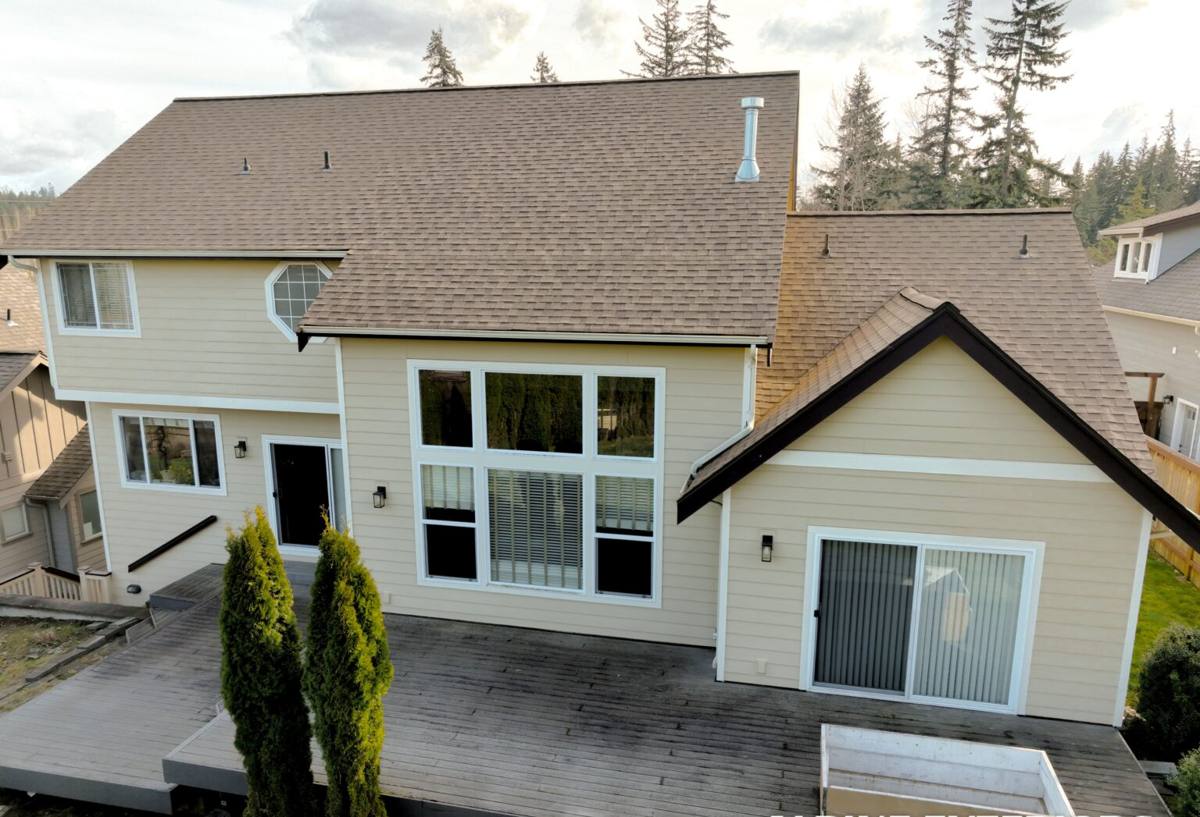
Common Siding Problems We See on March Point Homes
Most of the repair calls we get from this area fall into a handful of categories. Recognizing them early is the difference between a straightforward repair and a much bigger project.
Moisture Intrusion at Seams and Trim
Wind-driven rain finds gaps that would never be a problem in calmer weather. Butt joints, corner trim, and window and door casings are the usual entry points. Once water gets behind the siding, it doesn't dry out quickly in our climate, and that's when sheathing and framing start to suffer.
Caulk and Sealant Failure
Sun, salt, and temperature swings break down sealant faster near the water than inland. Once caulk cracks or pulls away, it's not just cosmetic — it's an open door for moisture, and it's one of the most common single causes of a repair call turning into a bigger job than it needed to be.
Moss and Algae Buildup
Anacortes' long wet season keeps siding damp for extended stretches, especially on north- and shade-facing walls. Moss and algae growth isn't just an appearance issue — trapped moisture underneath organic growth keeps the material wet longer and can accelerate rot in wood-based products.
Fastener and Trim Corrosion
Salt air attacks unprotected or under-spec fasteners faster than it does anywhere inland. Rust streaks running down from nail heads or trim screws are a visible sign that the hardware underneath is failing, even if the siding face still looks intact.
Impact and Wind Damage
Storm season brings debris, and coastal wind gusts around March Point can be stronger than what homes a few miles inland experience. Cracked panels, popped boards, or sections pulled loose at the edges are common after a hard blow.
What a Correct Siding Repair Actually Involves
A lot of siding "repairs" are really just cosmetic patches — caulk over a crack, a quick paint touch-up, a new piece nailed over the old without checking what's underneath. That approach might look fine for a season, but on a property exposed to this much salt and moisture, it usually just delays a bigger problem.
A repair done right starts by figuring out why the siding failed in the first place, not just where. That means checking the condition of the water-resistive barrier and sheathing behind the damaged section, confirming flashing at windows, doors, and trim is actually directing water outward instead of behind the wall, and matching any replacement material — thickness, profile, and finish — closely enough that it performs as one continuous system rather than a patchwork.
| Repair Step | Why It Matters on March Point |
|---|---|
| Remove damaged section fully | Cutting back only the visible crack often leaves hidden moisture damage untouched |
| Inspect sheathing and framing | Coastal humidity means hidden rot spreads faster than inland; catching it early saves money |
| Check and repair flashing | Wind-driven rain needs a real drainage path, not just a caulk line |
| Match material and profile | Mismatched replacement pieces create new seams that fail again under salt exposure |
| Seal and finish to spec | Coastal UV and salt break down lower-grade sealants faster than standard product |
Our Process for March Point Siding Repairs
We start with an on-site inspection, not a guess from photos. Because we're already familiar with how homes in this part of Anacortes take weather — which walls face the worst of the wind, where moss builds up fastest, how salt exposure differs even a few hundred yards apart depending on orientation to the water — we can usually tell within the first walk-around whether we're looking at a contained repair or something that points to a larger moisture issue.
From there, we open up the affected area enough to see the real condition of what's behind the siding. If the sheathing and framing are sound, we repair using material that matches the performance and profile of what's there. If we find hidden rot or long-term moisture damage — which isn't unusual on older homes in this area that were never built with coastal-grade materials — we'll tell you plainly what we found, show you, and give you options rather than just closing it up and hoping for the best.
We finish every repair with proper flashing and sealant detailing, because a repair that looks good but doesn't actually manage water is a repair that comes back.
What to Expect From the Visit
- A walk-around inspection of the affected area and adjacent siding, not just the one damaged spot
- An honest assessment of whether this is a repair or a sign of a bigger issue
- A look behind the siding where damage is present, not a surface-only patch
- A written estimate before any work starts — no surprise add-ons
- A repair that matches the existing siding as closely as possible
Repair or Replace? How We Help You Decide
Not every damaged section needs a full re-side, and not every "small" repair should be treated as small. The right call depends on how much of the wall is affected, how old the existing siding is, and what we find once we open things up.
| Situation | Usually Points To |
|---|---|
| Isolated crack or impact damage, sound material around it | Targeted repair |
| Repeated failures in the same wall section over a few years | Underlying moisture or flashing issue — needs investigation, not another patch |
| Rot found behind more than one repair area | Broader sheathing damage likely — repair scope may need to expand |
| Siding original to an older home, widespread wear | Repair may buy time, but replacement is often more cost-effective long-term |
| Damage limited to trim or corner boards only | Trim repair without touching the field siding |
We'll always give you our honest read on which category your situation falls into. On a property this exposed to salt and wind, we'd rather tell you a repair is temporary than sell you one and let you find out the hard way.
Why the Material Behind the Repair Matters
What we repair a home with matters as much as how we repair it. This is exactly why we install James Hardie fiber cement siding exclusively — it's a non-combustible, engineered material designed to hold up to exactly the kind of moisture and coastal exposure March Point deals with, backed by a factory-applied ColorPlus finish that resists the fading and chalking that comes from years of salt air and UV. When we're matching new material into an existing repair, using a product engineered for this climate gives the repair a real chance of outlasting the next storm season instead of just getting you through it.
We don't install vinyl, LP SmartSide, or other fiber cement alternatives — not because they don't have a place in the market, but because after years of doing repair work in coastal Skagit County, we've settled on the material and installation approach we trust to actually perform here.
Maintenance That Keeps Repairs From Piling Up
A lot of the repair calls we get could have been smaller jobs if a few maintenance basics had been kept up. None of this is complicated, but it matters more on a shoreline-exposed property than it would inland.
- Rinse moss and algae off siding surfaces before it builds up thick enough to trap moisture
- Keep gutters clear so overflow doesn't run down and pool behind trim
- Re-caulk seams and trim joints proactively rather than waiting for visible cracking
- Trim back vegetation that keeps siding shaded and damp longer than it should be
- Walk the exterior after major windstorms to catch loose or popped sections early
Why Hire a Crew That Already Works March Point
Siding repair on a coastal property isn't quite the same trade as siding repair a few miles inland. A crew that hasn't worked this stretch of Anacortes waterfront before may not recognize how much faster salt air degrades certain materials, or how the wind pattern off the bay concentrates damage on specific wall orientations. That's not a knock on general contractors — it's just a gap that shows up when the details matter this much.
We work throughout Anacortes and Skagit County, and homes on March Point are a regular part of that work. We know what a repair on this peninsula needs to hold up, and we'd rather do the job right the first time than come back next season for the same wall.
Get an Honest Look at Your Siding
If you're seeing cracked panels, failing caulk, moss buildup, or rust streaks on your March Point home, it's worth getting a professional look before the next storm season makes it worse. We offer a free, no-pressure estimate — we'll tell you plainly what we find and what your real options are. Reach out using the form below to get started.