 Anacortes Roofing
 Cap Sante's Exposure Is Different From the Rest of Anacortes
Cap Sante sits up on the bluff above the marina, catching wind and weather that homes further inland simply don't see. That elevation and open exposure toward the water means more direct wind-driven rain, more salt-laden air moving across exterior walls, and a longer stretch of damp, shaded months where moss and algae get a foothold. Siding on a Cap Sante home isn't dealing with "typical Skagit County weather" — it's dealing with a marine-edge version of it, and that changes what actually holds up over time.
We've installed and repaired siding across Anacortes long enough to know that a product or installation method that performs fine three miles inland can fail early on a home that takes wind and salt spray off the water. Cap Sante siding work has to be planned for that exposure from day one, not treated as a standard install with a nicer view.
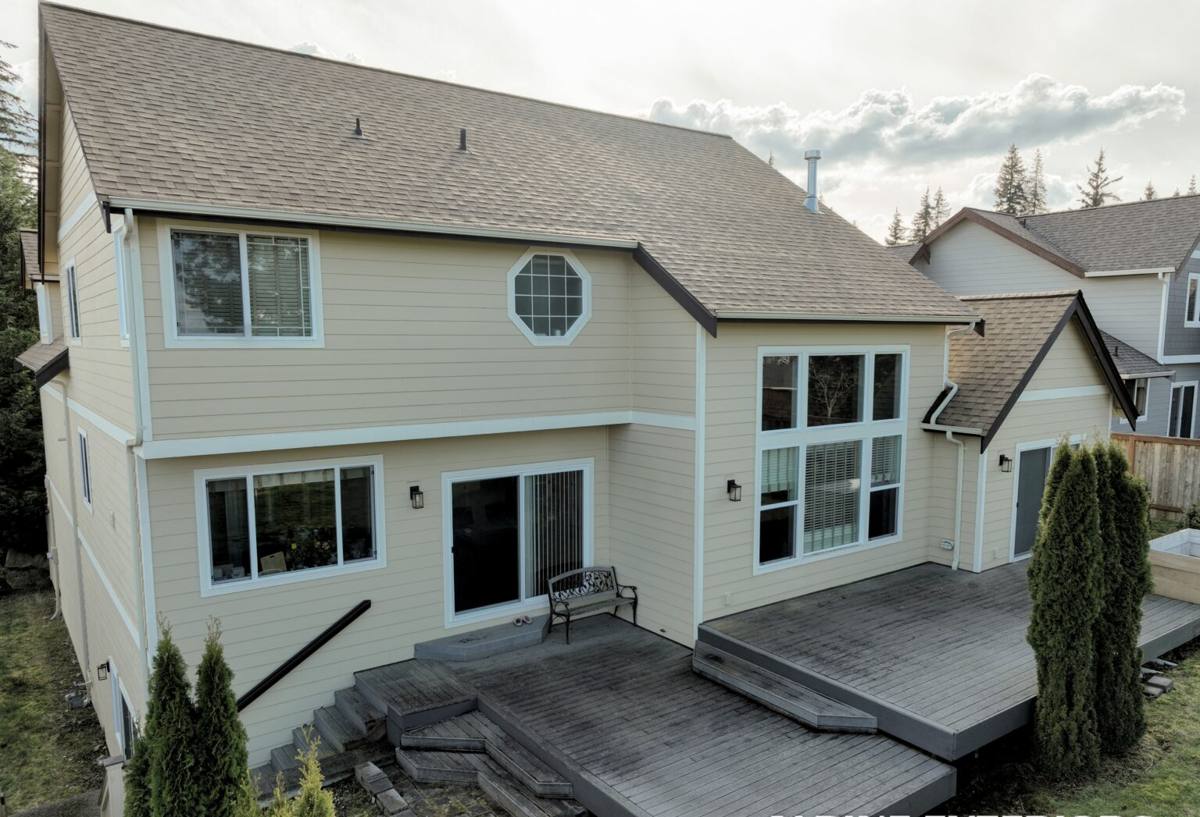
What Salt Air, Driving Rain, and Moss Actually Do to Siding
Salt Air
Airborne salt is corrosive to fasteners and hardware, and it accelerates the breakdown of paint and finish coatings that aren't formulated to resist it. Over years, a siding product with a weak factory finish will chalk, fade unevenly, and need repainting far sooner near the water than it would a few miles inland.
Wind-Driven Rain
Rain that comes in at an angle, pushed by wind off the strait, doesn't just run down a wall — it gets forced into laps, seams, and fastener penetrations that would stay dry in a calmer setting. Any weakness in flashing, caulking, or panel overlap shows up faster on an exposed elevation like Cap Sante's.
Moss and Algae
Skagit County's long wet season keeps north-facing and shaded siding damp for extended stretches, which is exactly what moss and algae need to establish. Once organic growth gets a grip on a siding surface, it holds moisture against the wall even longer, and on some materials it can work into surface texture in a way that's difficult to fully clean without damaging the finish.
None of this is unique to Cap Sante — it's Pacific Northwest coastal exposure in general. But Cap Sante's position gets a more concentrated version of it than most Anacortes neighborhoods, which is why the material and the installation details matter more here, not less.
Why We Install James Hardie Fiber Cement — and Nothing Else
We standardized on James Hardie fiber cement siding for every job we do, including here in Cap Sante, and we don't offer vinyl, LP SmartSide, primed spruce, cedar, or other fiber cement brands as alternatives. That's a deliberate professional standard, not a sales preference:
- Non-combustible core. Fiber cement doesn't burn, which matters anywhere in the wildfire-aware Pacific Northwest and simplifies insurance conversations for some homeowners.
- Climate-engineered product lines. James Hardie builds its siding in different formulations (HZ5 and HZ10) tuned to regional moisture and temperature exposure, so the product specified for a Cap Sante job is matched to what this climate actually does to a wall.
- Factory-applied ColorPlus finish. The finish is baked on at the factory under controlled conditions, which holds color and resists the fading and chalking that field-applied paint struggles with in salt air.
- Moisture behavior. Fiber cement doesn't swell, rot, or delaminate the way wood-based and some engineered wood products can when installed edges or cut ends stay damp for long periods — a real risk in a climate where things don't dry out quickly.
- Warranty backing. James Hardie's transferable warranty coverage gives homeowners real protection, and it's easier to stand behind because the product's performance in wet climates is well documented.
We're not going to tell you every other siding product is worthless — vinyl and engineered wood sidings have legitimate uses and reasonable track records in the right setting. But for the exposure a Cap Sante home deals with, we made a call: we only put our name on installations we're confident will hold up here, and that means Hardie, installed correctly, every time.
What a Correct Cap Sante Siding Installation Actually Involves
Fiber cement siding is only as good as the assembly behind it. A correct install is mostly invisible once it's done — it's in the layers you don't see.
Water-Resistive Barrier and Flashing
Every wall gets a continuous weather-resistive barrier, properly lapped so water sheds downward and outward, never into the wall cavity. Flashing at windows, doors, and any horizontal trim gets integrated with that barrier, not just caulked over the top of it — caulk is a backup, not a waterproofing plan, and it's the first thing to fail under sustained wind-driven rain.
Clearances and Fastening
James Hardie's installation instructions specify minimum clearances from grade, roofing, and decks, along with fastener spacing and placement. Skipping these to save time is exactly the kind of shortcut that causes moisture problems five or ten years down the line — long after the crew that installed it is gone.
Cut Ends and Field Touch-Up
Every field cut exposes raw fiber cement that needs to be sealed with the manufacturer-approved product before it goes on the wall. In a high-moisture, salt-air setting, this step isn't optional — an unsealed cut end is a starting point for moisture intrusion that shows up as a stain or a soft spot years later.
Correct Installation vs. Common Shortcuts
| Detail | Correct Method | Common Shortcut |
|---|---|---|
| Weather barrier | Continuous, properly lapped WRB behind all siding | Gaps or reliance on siding alone as the water barrier |
| Window and door flashing | Integrated flashing tied into the WRB | Caulk applied over trim with no flashing underneath |
| Fastener placement | Manufacturer-specified spacing and depth | Overdriven or randomly spaced fasteners |
| Cut ends | Sealed with approved sealer before installation | Left raw or sealed after the fact, if at all |
| Clearance from grade/decks | Manufacturer minimums maintained | Siding installed too close to grade or hardscape |
How Our Process Works
We keep the process straightforward, because a homeowner shouldn't have to guess what's happening to their house.
- On-site assessment. We look at the existing siding, the wall assembly where it's accessible, and the specific exposure of your home — sun, wind, and rain direction matter on a site-specific basis, even within Cap Sante.
- Product and profile selection. We walk through James Hardie's plank, panel, and shingle profiles and ColorPlus color options, and specify the HZ formulation appropriate for this climate.
- Prep and tear-off. Old siding comes off, and we inspect sheathing and framing underneath for any moisture damage that needs to be addressed before new siding goes on — covering up a problem is worse than finding it.
- Water management installation. WRB, flashing, and trim go in first, inspected before any siding closes them up.
- Siding installation. Panels or planks go on to manufacturer spec — clearances, fastening, and sealed cut ends included.
- Final walk-through. We go over the finished work with you before calling the job done.
What Affects the Cost of a Cap Sante Siding Job
| Factor | Why It Matters |
|---|---|
| Home size and wall complexity | More corners, gables, and trim detail mean more labor and material cuts |
| Existing siding removal | Tear-off and disposal of old material adds time versus a bare wall |
| Sheathing repair | Any rot or moisture damage found underneath needs to be fixed before re-siding |
| Siding profile and finish | Lap, shingle, and panel profiles, plus color and texture, vary in material cost |
| Access and site conditions | Slope, height, and proximity to neighboring structures affect setup and safety requirements |
We give real, itemized numbers after we've actually looked at your house — broad online estimates don't account for what's under your existing siding or how your walls are built, and we'd rather tell you an honest number than a convenient one.
Why a Crew That Already Works Cap Sante Matters
Siding installation isn't a one-size-fits-all trade, and Cap Sante's exposure rewards a crew that's already dealt with it. We know which elevations on this bluff tend to hold moisture longest, how wind off the water behaves against a wall compared to a sheltered lot, and where moss tends to establish first on a north or west-facing elevation. That's the kind of judgment that comes from doing the work locally and repeatedly — not from a general install checklist applied the same way everywhere in Skagit County.
It also means we're not learning on your house. The flashing and water-management details that matter most in a marine climate are the ones that are easiest to rush and hardest to fix after the fact, and a crew with local experience knows exactly where to slow down.
Signs Your Cap Sante Home May Need New Siding
- Visible warping, buckling, or gaps between siding panels or planks
- Soft spots when you press on the siding, especially near the bottom courses or under windows
- Paint that's peeling, bubbling, or chalking faster than it should
- Persistent moss or algae growth that returns quickly after cleaning
- Staining or discoloration around seams, corners, or fastener heads
- Rising energy bills that may point to a compromised weather barrier behind the siding
- Visible rot or damage at the bottom edge near grade or deck ledgers
If your home is showing any of these signs, it's worth having the siding and the wall assembly behind it looked at before small problems turn into structural repairs.
If you're in Cap Sante and thinking about new siding, we're happy to come take a look and give you a straightforward, no-pressure estimate — no obligation, just an honest read on what your home needs and what it would take to do it right.