 Anacortes Roofing
 Why Oak Harbor Siding Takes a Different Kind of Beating
Homes near Oak Harbor sit close enough to Puget Sound and the surrounding waterways that salt-laden air is a daily fact of life, not an occasional nuisance. Add Skagit County's long, wet fall-through-spring stretch and the moss and algae growth that comes with it, and you have a climate that is genuinely harder on exterior siding than most of the country ever deals with. Salt air accelerates corrosion on fasteners and trim, driving rain finds every gap in flashing and caulk, and moss holds moisture against the wall surface for months at a time. None of this is unusual for the area — it's just the tradeoff for living somewhere this beautiful, and it means siding here needs to be inspected and repaired differently than siding in a drier inland climate.
We work on homes throughout Anacortes and the surrounding Skagit County communities, and Oak Harbor properties show up on our schedule regularly because the combination of coastal exposure and older housing stock creates a steady, predictable pattern of siding problems. Understanding that pattern is the first step to fixing it right instead of just patching what's visible.
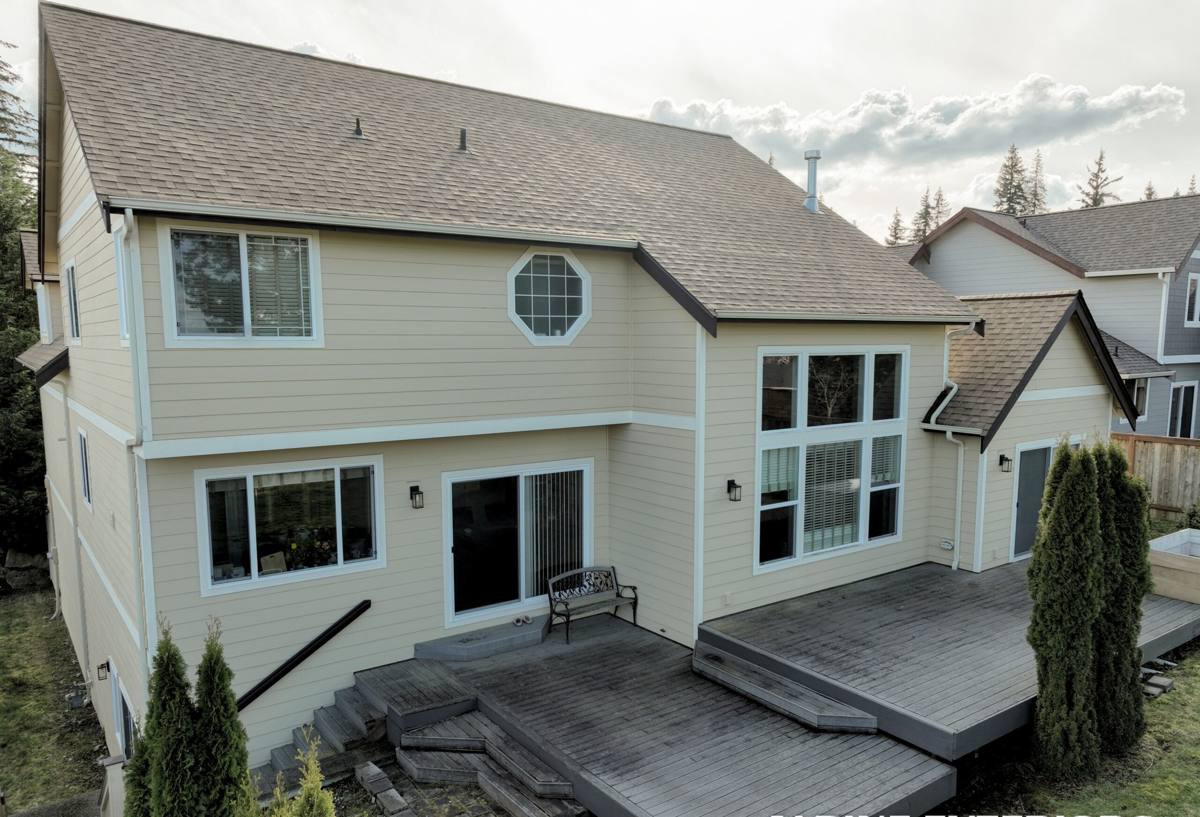
The Siding Problems We See Most Often in This Area
Moisture Intrusion Behind the Siding
The most damaging problems are rarely the ones you can see from the driveway. Water works its way behind siding through failed caulk joints, poorly flashed window and door openings, and butt joints that were never properly sealed to begin with. Once moisture gets behind the siding, it can sit against the sheathing and framing for weeks during a typical Pacific Northwest wet season, leading to rot that spreads far beyond the original entry point. By the time a soft spot or stain shows up on the outside, the damage underneath is often more extensive than it looks.
Moss and Algae Growth
Anacortes and Oak Harbor get enough shade, humidity, and rainfall to support heavy moss and algae growth on north-facing and shaded siding surfaces almost year-round. Beyond the cosmetic issue, moss holds water against the siding material, which is a real problem for wood-based products and older fiber cement that wasn't engineered for constant moisture exposure. Left untreated, moss buildup keeps siding damp long after a storm has passed, which shortens the life of paint, caulk, and the substrate itself.
Salt Air Corrosion and Fastener Failure
Homes closer to the water deal with a slower, quieter problem: salt-laden air corroding nails, staples, and metal trim pieces over time. Corroded fasteners lose their grip, which lets siding panels shift, gap, or pull away slightly from the wall — creating new entry points for water even where the siding material itself is still sound. This is one of the reasons fastener choice and installation detail matter as much as the siding product itself in this region.
Impact and Age-Related Damage
Cracked, warped, or delaminating panels are common on older homes in the area, especially where the original siding was wood, hardboard, or a lower-grade composite that wasn't built for this climate. Storm debris, general settling, and decades of wet-dry cycling all take a toll, and repairs on these materials often reveal that the underlying product was already failing before any single storm event caused visible damage.
What a Correct Siding Repair Actually Involves
A proper repair is not just about replacing the damaged piece you can see. It starts with figuring out why that piece failed, because if the cause isn't addressed, the replacement panel will fail the same way on the same timeline.
- Diagnose the source, not just the symptom. We trace water stains and soft spots back to their entry point — usually a flashing detail, caulk joint, or fastener issue — rather than just swapping the visibly damaged board.
- Open up and inspect the sheathing. Any area with suspected moisture intrusion gets checked behind the siding. If sheathing or framing has started to rot, that gets addressed before any new siding goes up.
- Correct the underlying detail. Flashing gets reinstalled or upgraded, house wrap gaps get sealed, and fastener patterns get corrected to manufacturer spec — especially important given how quickly corrosion can compromise fasteners in this climate.
- Match or upgrade the siding material. Where possible we match existing siding for a clean repair; where the existing product is a poor fit for this climate, we discuss replacing the affected section with James Hardie fiber cement instead of patching a product that's already struggling.
- Seal and finish to spec. Caulking, trim, and paint or factory finish are completed according to manufacturer installation guidelines, not shortcuts that look fine for a season and fail the next.
Repair vs. Replacement: How We Help You Decide
Not every damaged section needs full replacement, but pretending a bigger problem is a small one wastes money in the long run. Here's how we generally think through the decision with homeowners:
| Situation | Typical Approach | Why |
|---|---|---|
| Isolated crack or impact damage, sheathing dry underneath | Spot repair / panel replacement | Localized damage with no hidden moisture problem can usually be fixed cleanly without disturbing the rest of the wall |
| Recurring moisture stains in the same area | Open wall, repair sheathing, correct flashing | A repeat problem means the water is still finding a way in — patching the surface again won't stop it |
| Widespread moss, chalking, or fading across most of the home | Full-elevation or whole-house evaluation | Aging siding failing broadly is often past the point where spot repairs are cost-effective |
| Original siding is old wood, hardboard, or lower-grade composite | Discuss upgrade during repair | Repairing a product that was never well-suited to coastal exposure often means repeating the same repair again in a few years |
Why James Hardie Fiber Cement Holds Up Better Here
When a repair uncovers siding that's failing broadly rather than in one isolated spot, we talk with homeowners honestly about what's actually causing the pattern. Wood and hardboard siding absorb moisture, which is exactly the wrong trait in a place with a moss season this long. Vinyl can warp and doesn't stop moisture from tracking behind it at seams. We don't install vinyl, LP SmartSide, primed spruce, cedar, or composite alternatives like Cemplank or Allura — not because they're bad at everything, but because we've standardized on one product system we can stand behind for this specific climate: James Hardie fiber cement.
Hardie siding is non-combustible, resists moisture absorption far better than wood-based products, and comes with a factory-applied ColorPlus finish that holds color without the repainting cycle wood and hardboard siding demand. Hardie's HZ5 product line is engineered specifically for climates with significant moisture exposure, which describes Oak Harbor and the greater Anacortes area well. When a repair job turns into a conversation about partial or full replacement, Hardie is what we recommend and install — backed by a strong transferable warranty when installed to manufacturer specification.
Our Process for Oak Harbor Siding Repair Jobs
1. On-Site Assessment
We walk the exterior with you, looking at every elevation — not just the spot you called about. Given how often moisture problems show up in places other than where the visible damage is, a full walk-around catches issues before they become bigger repairs.
2. Honest Scope and Estimate
You get a clear explanation of what we found, what's causing it, and what it will take to fix — including whether a small patch is genuinely sufficient or whether the smart move is a larger repair. We don't upsell repairs that aren't needed, and we don't downplay ones that are.
3. Repair Work, Done to Spec
Work is scheduled around Skagit County's weather patterns where possible, and every repair follows manufacturer installation guidelines for flashing, fastening, and sealing — not just "good enough for now" fixes.
4. Final Walkthrough
Before we consider the job done, we walk the repaired area with you so you can see exactly what was fixed and why, and ask questions about maintenance going forward.
What Homeowners Can Do Between Professional Inspections
- Walk the exterior after major storms and look for new gaps, cracks, or panels that seem to have shifted
- Watch shaded, north-facing walls for moss buildup — it grows fastest where sunlight and airflow are limited
- Check caulk lines around windows, doors, and trim for cracking or separation, especially after a hard freeze
- Note any musty smell or soft drywall on interior walls that back up to exterior siding — that's often the first sign of hidden moisture intrusion
- Avoid pressure washing siding directly, which can force water behind panels and seams rather than just cleaning the surface
Why Local Experience in This Climate Matters
Siding repair done by a crew that doesn't regularly work in coastal Skagit County conditions tends to treat every job the same way, regardless of climate. A crew that works Oak Harbor and Anacortes regularly knows to check for salt-air fastener corrosion even when the visible damage looks purely cosmetic, knows which elevations tend to hold moss longest, and knows which older siding products in this area are chronically prone to failure versus which ones just need a straightforward patch. That local pattern recognition is what keeps a repair from turning into a callback six months later.
If you're dealing with damaged, aging, or moss-covered siding on an Oak Harbor area home, we're happy to take a look and give you a straight answer about what it needs. Reach out for a free, no-pressure estimate using the form below.