 Anacortes Roofing
 Building a Deck That Belongs in Cap Sante
Cap Sante sits up on the bluff above the marina, which means the homes there get some of the best views in Anacortes — and some of the toughest weather exposure in Skagit County. Wind comes straight off Rosario Strait and Fidalgo Bay with nothing to slow it down, salt-laden air settles on every exposed surface, and the wet season here isn't just rain, it's rain that blows sideways and never fully lets a deck dry out between storms. A deck built with generic, inland assumptions doesn't hold up the same way up here. We've built and repaired decks throughout this neighborhood long enough to know exactly where the shortcuts show up first — usually within two or three winters.
This page is about what a custom deck actually needs to hold up on a Cap Sante lot: the materials, the fasteners, the drainage details, and the build process. It's not a general "we build decks" pitch — it's specific to this site and this climate.
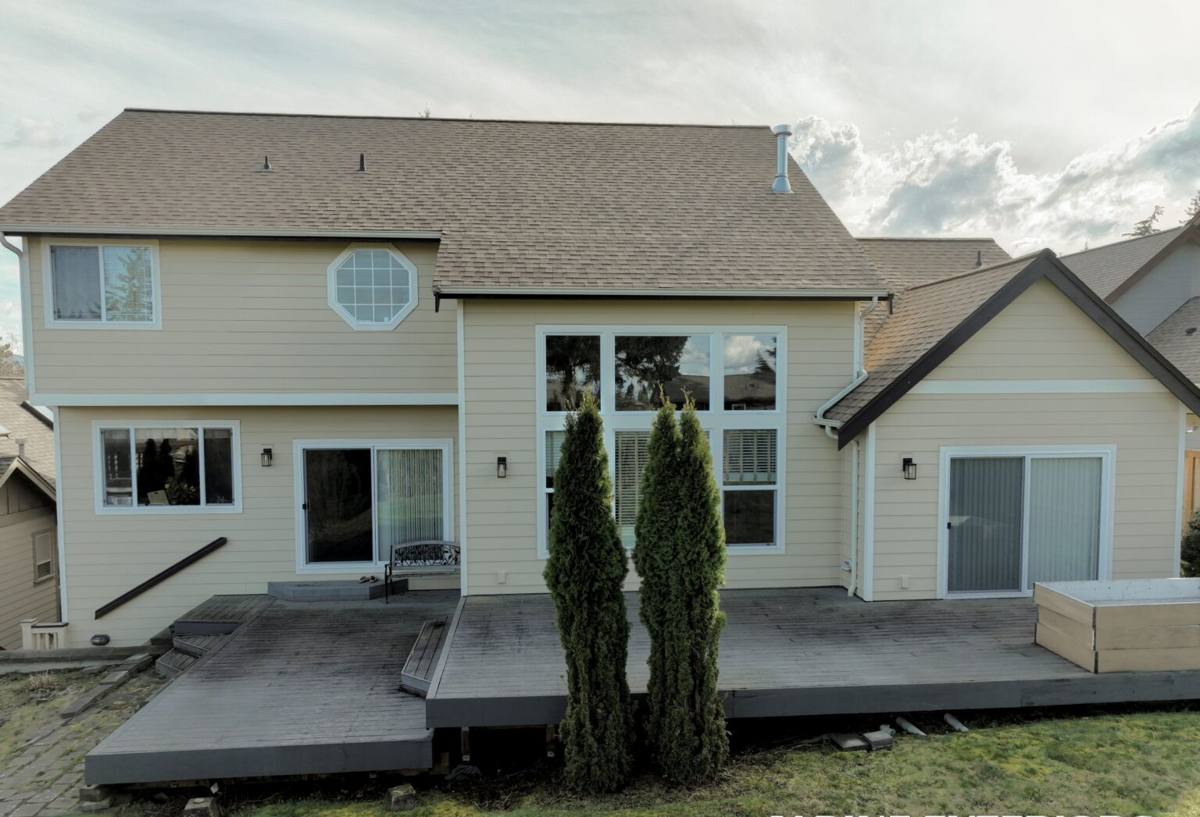
What Salt Air and Driving Rain Actually Do to a Deck
It helps to understand the failure pattern before talking about the fix. Three things wear down decks in this part of Anacortes faster than almost anywhere else in the county:
- Salt-laden air accelerates corrosion on any exposed metal — nails, screws, joist hangers, railing brackets — long before the wood or decking itself shows wear. Rust stains bleeding out around a fastener are usually the first visible sign something wasn't rated for this exposure.
- Driving, wind-blown rain gets pushed sideways under railings, around ledger boards, and into end grain and fastener holes that a straight-down rain would never reach. Standard flashing details that work fine a few miles inland can leak here.
- A long moss and algae season means any deck surface that stays shaded or doesn't drain well grows a slick green film for a good chunk of the year. That's a slip hazard on stairs and landings, and it holds moisture against the decking longer, which shortens the life of anything not built to handle it.
None of this is unique to Cap Sante specifically, but the elevation and openness of this stretch of the bluff put homes here closer to the worst of it than most other Anacortes neighborhoods that sit lower or have more tree cover breaking the wind.
Framing and Fasteners: Where Corrosion Actually Starts
Most deck failures near the water don't start with the decking boards — they start underneath, where nobody's looking. Standard galvanized fasteners and connectors are fine for most of the country, but in a marine-air environment they corrode faster than the framing lumber around them, which weakens the connection long before the wood itself is a problem.
For a deck we build in Cap Sante, that means:
- Stainless steel or heavily coated, marine-rated fasteners and joist hangers rather than standard galvanized hardware
- Ledger board flashing detailed to shed wind-driven rain, not just straight-down rain, with proper flashing tape and drainage gaps behind the ledger
- Post bases set to keep end grain off standing water, with gapping that allows airflow underneath the deck
- Fastener patterns and connector hardware matched to current wind-load requirements for an exposed bluff lot, not a sheltered inland one
This is the part of a deck build that doesn't show up in photos but determines whether you're dealing with a repair in five years or twenty-five.
Choosing Decking Material for This Site
There's no single "best" decking material for every home — it depends on how much upkeep you want to do, your budget, and how much direct weather exposure the deck actually gets. Here's how the common options stack up specifically for a wind- and salt-exposed Cap Sante lot:
| Material | How It Handles Salt Air & Moisture | Maintenance | Typical Lifespan Here |
|---|---|---|---|
| Pressure-treated wood | Needs sealing to resist moisture intrusion; end grain and fastener holes are the weak points | Re-seal or stain every 1-2 years in this climate | 10-15 years with consistent upkeep |
| Cedar | Naturally rot-resistant but still needs sealing against driving rain; can silver and check faster in wind exposure | Annual cleaning, periodic sealing | 15-20 years with upkeep |
| Capped composite | Shrugs off moisture and salt air well; the cap layer resists staining and moisture wicking | Periodic washing to keep moss/algae from taking hold | 25-30+ years |
| PVC / cellular decking | Fully synthetic, essentially immune to moisture absorption and corrosion-driven decay | Lowest upkeep of the group | 25-30+ years |
Wood costs less up front but asks more of you every year — and in a spot where the wind and rain don't let up, deferred maintenance catches up fast. Composite and PVC cost more initially but hold up with far less attention, which is a real factor if you're not planning to reseal a deck every other summer. We'll walk through the honest trade-offs for your specific layout and budget rather than pushing one material across the board.
A Note on Hidden Fasteners
Whatever decking material you choose, how it's fastened matters almost as much as what it's made of. Hidden fastener systems (clips that hold boards from the side rather than screws through the face) keep water from pooling in screw holes on the walking surface, which matters a lot in a climate where standing moisture is the enemy. Face-screwed boards are more affordable and easier to replace individually, but every exposed screw hole is a spot moisture can work its way in over time.
Design Details That Matter on an Exposed Bluff Lot
Cap Sante's elevation is exactly why the views are good and exactly why the wind and rain hit harder. A few design choices make a real difference on a lot like this:
Wind and Railings
Open picket or cable railings let wind pass through rather than loading up the structure like a sail — worth considering if your deck catches the open wind off the water. Solid or glass panel railings block more wind (nice for comfort while you're standing on the deck) but need to be engineered and fastened for that added load.
Drainage and Grading
Water needs somewhere to go, both off the deck surface and out from underneath it. On a sloped or elevated Cap Sante lot, that often means paying close attention to how the deck ties into existing grade so runoff isn't directed back toward the foundation or a lower neighboring property.
Shade, Sun, and Moss
Sections of a deck that stay shaded most of the day — under an eave, next to a tall fence, on the north side of the house — are exactly where moss and algae take hold first. Board spacing, surface texture, and drainage slope all factor into how much of a moss problem you'll actually deal with each winter.
Our Process for a Cap Sante Deck Build
Every custom deck starts with a look at your specific lot, not a standard template:
- On-site assessment — we look at wind exposure, drainage, existing grade, and how the deck will tie into the house before talking materials.
- Design and material selection — we walk through the honest trade-offs between wood, composite, and PVC for your budget and maintenance preference.
- Permitting — deck permits and inspections go through the City of Anacortes; we handle the application and coordinate inspections as part of the job.
- Framing and structural work — footings, ledger attachment, and framing built with corrosion-resistant hardware suited to marine air.
- Decking, railing, and finish work — surface material, railing system, stairs, and any lighting or fascia details installed.
- Final walkthrough — we go over the finished deck with you, including what maintenance (if any) it needs going forward.
Maintenance: What Actually Keeps a Deck Going Here
A few habits go a long way toward getting the full lifespan out of a Cap Sante deck, regardless of material:
- Rinse or sweep debris off the surface regularly — trapped leaves and needles hold moisture against the decking and feed moss growth
- Keep gutters and downspouts near the deck clear so runoff isn't dumping directly onto or under it
- Check railing brackets and visible hardware once a year for rust bleed or loosening, especially after a stormy winter
- For wood decks, don't let sealing lapse — once bare wood starts absorbing water, deterioration speeds up quickly in this climate
- Keep the gap between boards clear of debris so water and airflow can do their job underneath
Why Local Deck-Building Experience Matters Here
A contractor who mostly builds decks in sheltered, inland settings is making assumptions about wind load, flashing, and hardware that don't hold up on an exposed Cap Sante lot. Getting it right here means knowing how hard the wind actually loads a railing on this bluff, which fastener grades hold up against salt air instead of just looking fine at installation, and how City of Anacortes permitting and inspection works for deck projects specifically. That's the kind of thing you only really know by having done the work here before, not by building decks somewhere calmer and assuming the same details will carry over.
We're a Skagit County-based crew, and Cap Sante's climate is part of what we plan for on every deck we build in this neighborhood — not an afterthought we adjust for after something fails.
If you're planning a new deck or need to talk through repairing or replacing one that isn't holding up to the weather, we're happy to take a look and give you a straightforward, no-pressure estimate. Use the form below to get started.