 Anacortes Roofing
 Siding That Has to Work in March Point's Marine Climate
March Point sits right up against the water on Fidalgo Bay, which means homes here take a harder hit from the weather than houses just a few miles inland. Salt-laden air moves through constantly, wind-driven rain comes in sideways during winter storms, and the shaded, damp stretches of the year give moss and algae plenty of time to get established on anything that holds moisture. Siding here isn't just cosmetic — it's the first line of defense against a climate that never really lets up.
We install James Hardie fiber cement siding exclusively. That's not a marketing angle; it's a decision we made after years of seeing what actually holds up in Skagit County conditions and what doesn't. This page is about what that looks like specifically for a March Point home: what the climate demands, what a correct installation involves, and how we run the job from first look to final walkthrough.
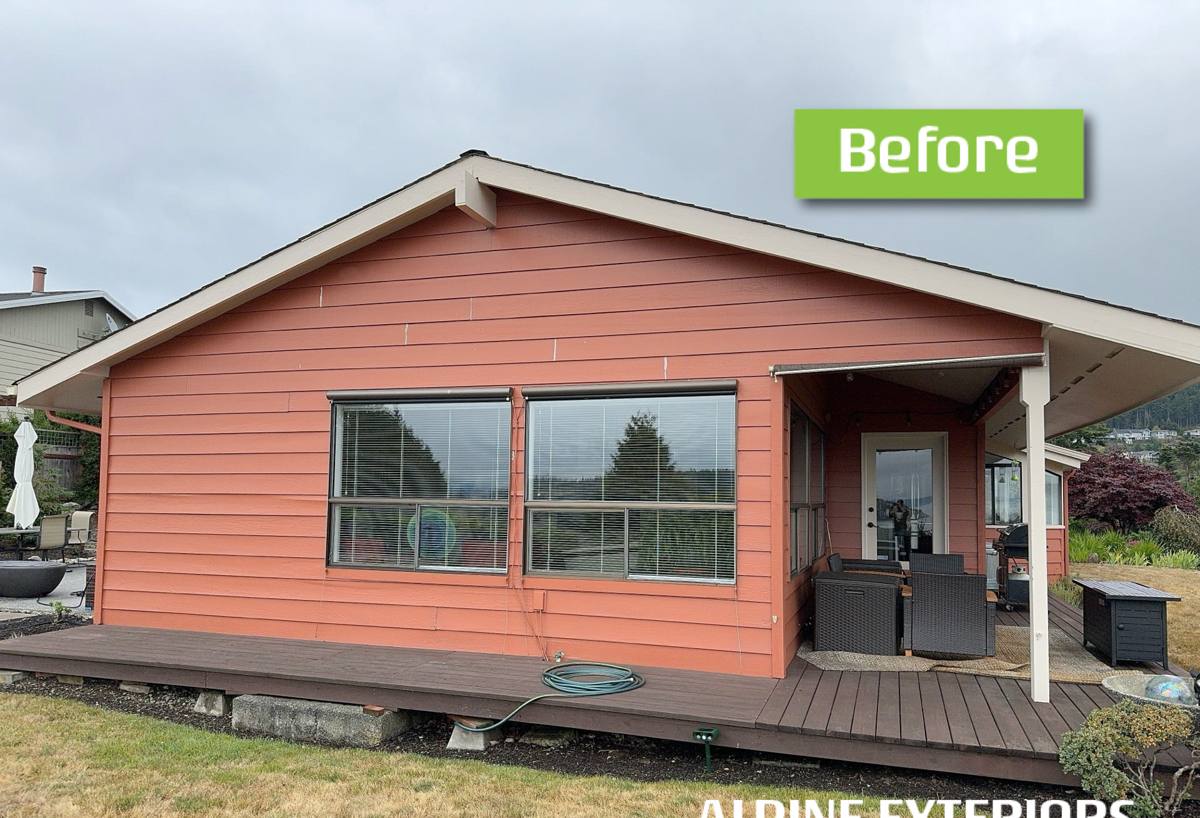
What March Point's Climate Actually Does to a House
Salt Air and Metal Fasteners
Proximity to saltwater accelerates corrosion on anything metal that isn't rated for it — fasteners, flashing, trim screws. Siding systems that rely on exposed or under-protected metal components age faster near the water than they do a few miles inland. This is one of the reasons fastener selection and flashing details matter more here than in a typical inland Skagit County job.
Driving Rain and Wind-Driven Moisture
March Point gets exposed to wind off the water, and wind-driven rain doesn't behave like a straight-down shower. It gets pushed sideways and upward into laps, seams, and penetrations that would stay dry in calmer conditions. A siding system that isn't installed with the right laps, gaps, and drainage plane behind it will eventually let that water find a way in.
Moss, Algae, and Shade
Long stretches of overcast, damp weather plus tree cover on many area lots create ideal conditions for moss and algae growth on siding surfaces, especially on north-facing walls and anywhere water sits instead of shedding. Some siding materials absorb enough moisture to feed that growth from the inside out; others just get dirty on the surface and can be cleaned.
Why We Standardized on James Hardie for Homes Like This
James Hardie fiber cement is manufactured from cement, sand, and cellulose fibers, which makes it dimensionally stable and non-combustible. It doesn't absorb water the way wood-based or wood-adjacent siding products do, and it doesn't rely on a plastic composition that can become brittle or distort with the kind of temperature swings and UV exposure we get on the water. For a home exposed to salt air, moss pressure, and constant moisture, those material properties matter more than they would in a drier, more sheltered inland setting.
Hardie's HZ5 product line is specifically engineered for climates with more moisture and temperature cycling, which fits the Anacortes and Skagit County marine environment better than the standard HZ10 formulation used in warmer, drier regions. We spec HZ5 on March Point installs for that reason.
The factory-applied ColorPlus finish is also relevant here. It's baked on under controlled conditions rather than field-applied, which gives it better adhesion and UV resistance than a job-site paint job, and it comes with its own finish warranty separate from the product warranty. On a home fighting salt exposure and moss growth, a finish that resists fading and holds up to regular washing is worth the difference.
What a Correct James Hardie Installation Involves
The product is only half the equation. Most siding failures we get called out to inspect — regardless of brand — trace back to installation shortcuts, not the material itself. On a March Point home, we pay particular attention to:
- Weather-resistive barrier and drainage plane: A continuous, correctly lapped barrier behind the siding so any moisture that gets past the cladding has a path to drain and dry out instead of sitting against the sheathing.
- Flashing at every penetration: Windows, doors, hose bibs, light fixtures, and vents all need proper flashing integrated with the barrier — this is where wind-driven rain finds its way in if it's skipped or done wrong.
- Correct fastener spacing and type: Hardie specifies fastener size, spacing, and placement by product and climate zone. Near saltwater, corrosion-resistant fasteners are non-negotiable.
- Proper clearance and gaps: Ground clearance, gaps at trim and butt joints, and clearance from roofing and decks per Hardie's published installation instructions — these gaps let the assembly drain and dry instead of wicking moisture.
- Caulking only where specified: Over-caulking traps moisture; under-caulking lets it in. Hardie's install guide is specific about where sealant belongs and where it doesn't.
Skip any one of these and you can install genuine James Hardie product and still end up with a wall assembly that fails in a marine climate. The material's durability only pays off if the installation respects it.
Our Process for a March Point Siding Job
1. On-Site Assessment
We walk the exterior, check the current siding and sheathing condition where accessible, look at drainage around the foundation, and note anything specific to the lot — shade patterns, wind exposure, existing moisture damage — that should shape the installation plan.
2. Product and Color Selection
We go over the relevant Hardie product line (typically lap or panel siding, depending on the home's design), HZ5 specification, and ColorPlus color options. We're straightforward about what fits the home and the site conditions rather than upselling profiles that don't make sense for the exposure.
3. Tear-Off and Sheathing Check
Old siding comes off and we inspect the sheathing underneath for rot or moisture damage before anything new goes up. Covering up a compromised substrate defeats the purpose of a durable siding upgrade.
4. Barrier, Flashing, and Install
Weather-resistive barrier goes on first, flashing gets integrated at every penetration, and the siding goes up to Hardie's fastening and clearance specifications for our climate zone.
5. Final Walkthrough
We go over the finished work together, confirm trim and caulking details, and make sure everything matches what was scoped at the start.
Comparing Siding Options for a March Point Home
| Factor | James Hardie Fiber Cement | Vinyl | Wood / Primed Spruce |
|---|---|---|---|
| Moisture absorption | Very low — cement-based, doesn't swell or rot | Doesn't absorb, but seams and panels can let water behind them | Absorbs moisture readily; prone to rot without diligent maintenance |
| Salt air / corrosion resistance | Strong when installed with corrosion-resistant fasteners | Plastic doesn't corrode, but fades and becomes brittle with UV and temperature cycling | No inherent resistance; finish breaks down faster near salt exposure |
| Moss and algae resistance | Surface doesn't feed growth the way absorbent materials do; cleans up well | Surface growth is common, especially on shaded walls | Can trap moisture under growth, accelerating rot |
| Fire resistance | Non-combustible | Melts and can contribute to fire spread | Combustible |
| Finish durability | Factory-baked ColorPlus finish, separate finish warranty | Color is through-body but can fade and chalk over time | Field-applied paint, needs repainting on a regular cycle |
| Maintenance | Periodic washing; no repainting cycle with ColorPlus | Low, but cracks and warping aren't repairable — panels get replaced | Regular repainting and moisture monitoring required |
What Homeowners Should Watch For Before Hiring
- Ask whether the crew installing your siding is factory-trained on Hardie's specific fastening, flashing, and clearance requirements — not just "experienced with siding in general."
- Confirm they're specifying HZ5, not the standard HZ10 formulation, for our climate zone.
- Ask how they handle weather-resistive barrier and flashing detailing at windows and penetrations — this is where most callbacks originate.
- Get clarity on whether ColorPlus factory finish is included or whether field painting is being proposed instead.
- Ask about warranty structure — both the manufacturer's product/finish warranty and what the installer stands behind on labor.
Cost Factors on a March Point Siding Project
Every home is different, so we won't quote a number without seeing the site, but the main factors that move the price on a project like this are:
- Total square footage and the complexity of the home's shape (corners, dormers, multiple stories)
- Condition of the existing sheathing once old siding comes off
- Product selection — lap width, panel style, and trim details
- Amount of flashing and detail work required around windows, doors, and roof lines
- Site access and staging conditions
We give straightforward, itemized estimates so you know what you're paying for and why, rather than a single lump number with no breakdown.
Why Local Experience in March Point Matters
A crew that already works this stretch of Skagit County knows how the wind comes off the bay, which walls take the worst of the driving rain, and where moss tends to establish first on homes with this kind of tree cover and shade. That local knowledge shapes real decisions on the job — where extra flashing attention goes, which product line makes sense for the exposure, how to sequence the work around our wetter months. It's the difference between a siding job that's technically installed to spec and one that's actually built for the specific conditions of this address.
If you're weighing a siding replacement or new construction siding for a March Point home, we're happy to walk the property with you, talk through what the site actually needs, and put together a clear, no-pressure estimate. Use the form below to get started.