 Anacortes Roofing
 March Point sits out on its own peninsula between Fidalgo Bay and Padilla Bay, and that stretch of shoreline puts real demands on a home's exterior. A vertical board and batten profile is one of the more popular looks for houses in this part of Skagit County — it reads clean and modern on newer builds, and it works well on older farmhouse-style homes that were common on the peninsula before Anacortes grew around them. But board and batten is also a style that punishes a sloppy installation faster than lap siding does, because of how many vertical seams and batten strips it puts on a wall. On an exposed site like March Point, getting that installation right matters more than it would on a sheltered inland lot.
What Driving Rain and Salt Air Do to Vertical Siding
March Point catches wind and moisture off open water from more than one direction, which means driving rain — rain pushed sideways by wind rather than falling straight down — is a regular occurrence rather than an occasional storm event. Board and batten siding has more vertical joints per square foot of wall than horizontal lap siding, and every one of those joints is a place where wind-driven water can find its way behind the cladding if the install wasn't done with that exposure in mind. Add in the salt-laden air that comes with a peninsula location, and you've got a climate that's harder on fasteners, flashing, and finish coatings than most of what a siding crew sees working strictly inland.
Skagit County's long moss season adds a slower, quieter kind of wear on top of that. Moss and algae hold moisture against a wall longer than a clean, dry surface would, and on vertical siding that moisture tends to collect at the base of each batten and along horizontal transitions like window heads and trim boards. None of this makes board and batten a bad choice for a March Point home — it just means the material and the installation details need to be matched to the site, not just picked because the look is popular.
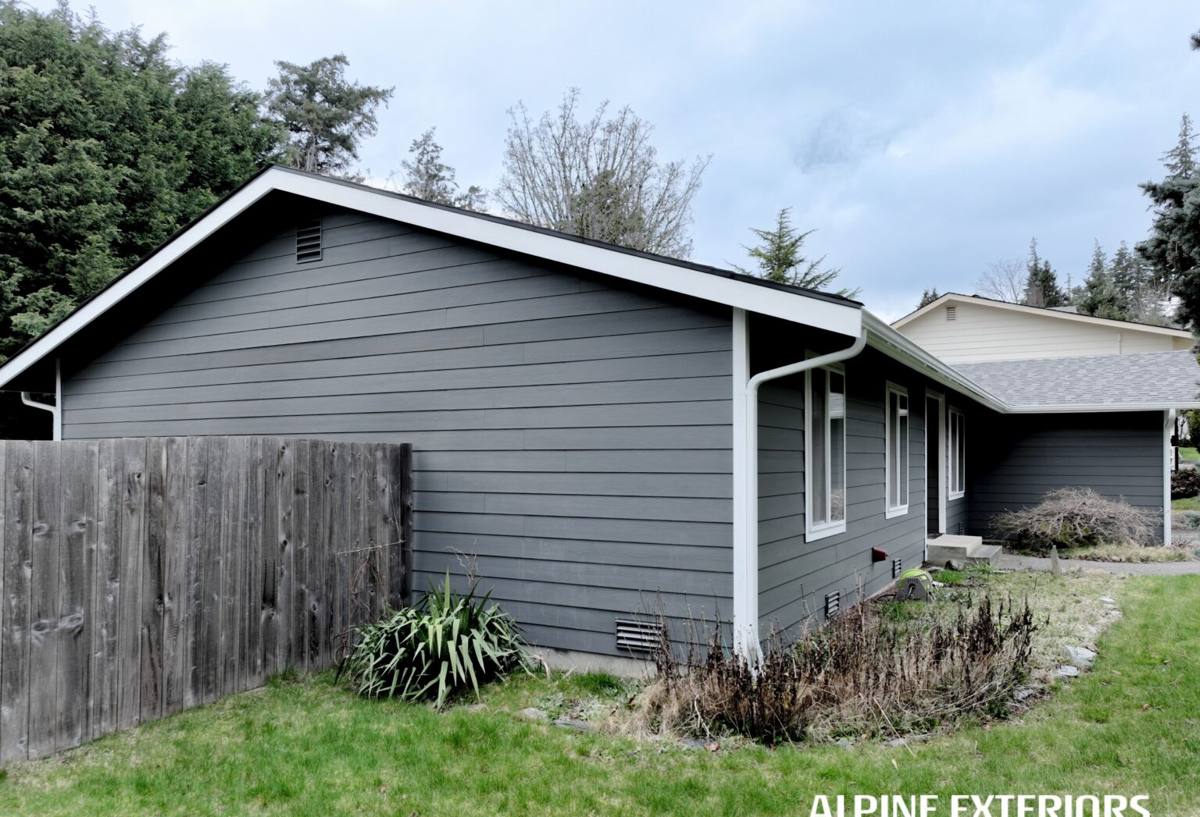
Why We Install Only James Hardie for This Profile
We install James Hardie fiber cement exclusively, and board and batten is a good example of why that matters on an exposed site. Hardie's vertical siding system pairs fiber cement panels with fiber cement battens, and both pieces are engineered to handle moisture cycling without swelling, splitting, or absorbing water the way wood-based products can. The ColorPlus factory finish is baked on under controlled conditions rather than applied in the field, which matters on a peninsula home that's going to see more weather cycles per year than a comparable house set back from the water. Hardie also builds its siding in climate-specific HZ formulations, engineered for the moisture and freeze-thaw conditions of a given region rather than a single generic spec.
Why We Don't Install Vinyl or Engineered-Wood Board and Batten
Board and batten is also sold in vinyl and engineered wood versions, and we get asked about both fairly often because they're cheaper up front. We don't install either on March Point homes. Vinyl board and batten depends entirely on the water-resistant barrier behind it, and vinyl itself can become brittle with age under sustained UV and salt exposure — a real factor on an open peninsula lot. Engineered wood products use a wood-strand core that's vulnerable if moisture gets past the coating at a cut edge, a fastener point, or a seam that wasn't sealed correctly, and a vertical profile has more of those seams than a lap profile does. These aren't universally bad products, but on a site that takes wind-driven rain from multiple directions, we don't think they hold up the way fiber cement does, and we'd rather say that plainly than sell something we don't believe in.
What a Correct Board & Batten Installation Involves
The look of board and batten is simple — vertical panels with narrow battens covering the seams — but a correct install has more going on behind that surface than most homeowners realize. Getting it wrong doesn't usually show up in year one. It shows up three or four years later, as staining, soft spots, or paint failure at the batten edges.
Rainscreen and Drainage Behind the Panels
On an exposed site like March Point, we install with a drainage gap — a rainscreen — between the back of the siding and the weather-resistant barrier. That gap lets any moisture that does get past the cladding drain and dry out instead of sitting against the wall sheathing. It's a detail that doesn't show up once the siding is up, but it's one of the biggest factors in whether a wall stays dry over the long run in a wind-driven-rain climate.
Fastening, Spacing, and Batten Layout
Fiber cement board and batten needs to be fastened according to the manufacturer's spacing and clearance specs — too tight and the panels can't move with normal expansion and contraction, too loose and they're not properly secured against wind load off open water. Batten placement needs to line up so it actually covers and protects the vertical seams beneath it, not just sit there for looks. We also pay attention to clearance at the bottom of the wall and around window and door openings, since those are the spots where a rushed install tends to fail first.
Our Process From Estimate to Finished Wall
We start with an on-site look at the specific wall or walls involved — orientation matters on March Point, since a wall facing open water takes a different weather load than one that's more sheltered by the house itself or by neighboring structures. From there we talk through what the existing siding or sheathing looks like underneath, whether the weather-resistant barrier needs to be replaced as part of the job, and what panel width and batten spacing will fit the house. We give a straight estimate before any work starts, and we don't upsell a full wall replacement if a section is doing fine and just needs targeted work.
Cost Factors for a Board & Batten Project on March Point
| Factor | What Drives the Cost |
|---|---|
| Wall exposure | Walls facing open water or prevailing wind often need extra flashing and rainscreen detailing |
| Existing sheathing condition | Rot or moisture damage behind old siding adds repair scope before new panels go up |
| Panel and batten width | Wider reveals use fewer panels; narrower, more traditional spacing uses more material and labor |
| Trim and window integration | Homes with more window and door openings need more flashing and cut-in work per square foot |
| Access and site conditions | Peninsula lots with limited staging space or steep grade can affect labor time |
Why a Crew That Already Works March Point Matters
March Point is a small area relative to Anacortes as a whole, and it doesn't see the volume of contractor traffic that busier parts of Skagit County do. That can mean homeowners end up with a crew that's never had to think about wind off two directions of open water, and who installs the same way they would on a sheltered inland lot. A crew that already works this peninsula knows which walls take the worst of the weather, has seen what a rushed board and batten job looks like a few years in, and adjusts flashing, rainscreen depth, and fastening accordingly. That's not something a brochure can show — it shows up in how the wall performs five and ten years out.
What to Check Before Hiring for This Kind of Project
- Ask whether the crew installs a rainscreen gap on exposed walls, not just panels direct to the weather barrier
- Confirm they're working from James Hardie's published fastening and spacing specs for vertical siding, not a generic approach
- Get clarity on how they handle window and door flashing integration on a board and batten wall — this is where most seam-related leaks start
- Ask about warranty coverage on both the material (manufacturer) and the labor (workmanship)
- Confirm the contractor is licensed, bonded, and insured to do exterior work in Washington
If you're considering board and batten siding for a home on March Point, we're happy to take a look and give you a straight read on what the wall actually needs — no pressure, no upsell. Reach out for a free estimate and we'll walk the property with you.