 Anacortes Roofing
 Why Roofs on March Point Take More Punishment
March Point sits out on the water, close to Fidalgo Bay and the open exposure that comes with it. That location is part of what makes it a desirable place to live — and part of what wears out a roof faster than the same roof would last a few miles inland. Salt-laden air corrodes exposed metal, wind off the water drives rain sideways under shingles and flashing that would stay dry on a more sheltered lot, and the mild, wet stretches typical of Skagit County give moss and moisture months at a time to work into small gaps before anyone notices a problem.
None of that means a March Point roof is doomed to constant repairs. It means the repair work has to account for those conditions specifically — different fasteners, more attention to flashing detail, and a real plan for moss rather than a one-time scrape. A patch that would hold up fine in a calmer, drier location can fail here within a season or two if it wasn't built with this exposure in mind.
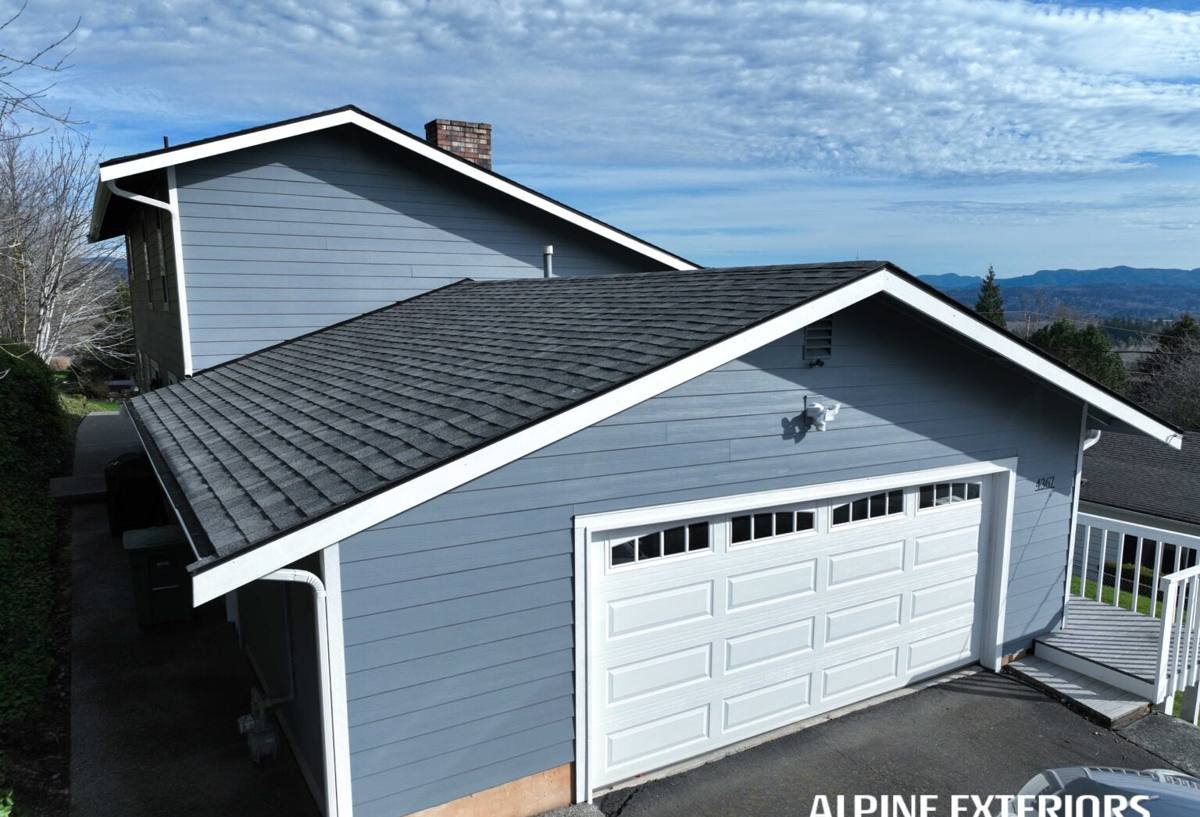
Signs Your March Point Roof Needs Attention Now
Most roof problems out here don't start as leaks. They start smaller, and by the time water is showing up on a ceiling, the underlying damage has usually been building for a while. Homeowners in this area should watch for:
- Granule buildup in gutters or at downspout outlets, a sign shingles are wearing thin
- Moss or dark streaking on north-facing slopes, especially near roof valleys
- Lifted or curling shingle edges after a windy stretch off the water
- Rust staining below metal flashing, vents, or fasteners
- Soft spots or slight sagging when walked on, which points to decking damage underneath
- Daylight visible through the roof deck from inside an attic or crawlspace
Any one of these is worth a look. Catching them early is almost always the difference between a straightforward repair and a much larger project once water has reached the decking or framing.
What a Correct Repair Actually Involves
A repair that's done right doesn't just cover the visible damage — it addresses why that spot failed in the first place. On a salt-air, high-wind property, that usually means more than swapping a few shingles.
Flashing and Fasteners That Won't Corrode
Flashing around chimneys, vents, valleys, and wall intersections is where most leaks actually originate, not in the open field of the roof. Standard galvanized fasteners and flashing hold up fine in drier, inland conditions, but salt air accelerates corrosion and can shorten their useful life noticeably. On March Point work, we favor corrosion-resistant flashing and fastener choices for this exposure, and we re-flash rather than caulk over failing metal — caulk is a temporary patch, not a repair.
Underlayment and Decking Beneath the Surface
If water has been getting past the surface layer, the underlayment and the decking underneath need to be checked, not just the shingles on top. Wet or delaminating decking won't hold fasteners properly, and a new shingle over a soft deck is a repair that's already failing. Any decking that's been compromised gets cut out and replaced before anything goes back on top of it.
Moss: The Slow Damage Nobody Notices Until It's Expensive
Moss season in this part of Skagit County runs long — mild temperatures and consistent moisture give it plenty of time to establish, especially on shaded, north-facing slopes common on wooded March Point lots. Moss itself doesn't punch holes in a roof, but it holds moisture directly against the shingle surface for extended periods, and its root structure works into shingle granules and laps over time. That slowly lifts shingle edges, opening a path for wind-driven rain to get underneath.
Treating moss correctly means removing it without damaging the shingle surface underneath — pressure washing a roof is a fast way to strip granules and shorten its life, not extend it. We remove moss by hand or with low-pressure methods, then address the conditions that let it take hold, such as overhanging branches or slopes that stay shaded and damp most of the year.
Our Repair Process, Start to Finish
We keep the process straightforward because homeowners deserve to know exactly what they're paying for and why.
- Inspection. We get on the roof, not just in the attic, and look at flashing, fasteners, decking condition, and moss or debris buildup — not just the spot where the leak showed up inside.
- Diagnosis and explanation. We explain what's actually failing and why, in plain terms, before recommending a fix.
- Written estimate. You get a clear scope of work and price before anything is scheduled.
- The repair itself. Matching materials where possible, corrosion-resistant flashing and fasteners for this exposure, and decking replacement if it's needed — not just a cosmetic patch.
- Cleanup and check. We clear debris and old materials and do a final check of the repaired area before we consider the job done.
Material and Fastener Choices for Salt-Air Exposure
Not every material performs the same way a short distance from open water. The table below outlines the trade-offs we weigh when repairing roofs on March Point specifically.
| Component | Standard Choice | Salt-Air Consideration |
|---|---|---|
| Fasteners | Galvanized | Corrosion resistance drops faster near open water; stainless or higher-grade coated fasteners hold up longer |
| Flashing metal | Standard galvanized steel | More prone to rust staining and pitting over time in this exposure; heavier-gauge or coated metals last longer |
| Sealants | General-purpose roofing caulk | Breaks down faster under UV and salt exposure; should be used sparingly and never as the primary seal |
| Underlayment | Standard felt | Synthetic, higher-moisture-resistance underlayment holds up better through long wet stretches and moss season |
None of these are automatically the right call for every roof — an older home with a tight budget may reasonably choose standard materials for a smaller repair. The point is making that choice knowingly, not by default.
Repair or Replace? Cost Factors to Weigh
Not every roof problem on March Point needs a full replacement, and not every roof can be reasonably patched. The honest answer depends on a few specific factors.
| Factor | Favors Repair | Favors Replacement |
|---|---|---|
| Age of roofing material | Well within expected service life | Near or past the manufacturer's expected lifespan |
| Extent of damage | Isolated to one area (flashing, one slope, one penetration) | Widespread granule loss or curling across multiple slopes |
| Decking condition | Solid, dry decking under the affected area | Soft or delaminating decking in multiple spots |
| Repair history | First or second repair on this roof | Repeated repairs to the same or nearby areas |
| Moss/moisture pattern | Manageable with removal and minor fixes | Chronic moss return despite prior treatment |
We'll always tell you honestly which side of that table your roof falls on. A repair that's genuinely sufficient is a better outcome for you than an upsell, and a roof that truly needs replacement isn't served well by another round of patching.
A Practical Maintenance Checklist
- Clear moss from shaded, north-facing slopes before it spreads at the start of each wet season
- Keep gutters and downspouts clear so water isn't backing up under roof edges
- Trim back branches that keep sections of roof shaded and damp
- Check attic insulation and ventilation, since poor airflow speeds up moisture and moss problems
- Have flashing around chimneys, vents, and valleys inspected every year or two, not just after a storm
- Address small leaks or lifted shingles promptly rather than waiting for a heavier rain to test them
Why a Crew That Already Works March Point Matters
A roofing crew that mainly works drier, more sheltered neighborhoods inland can do fine work and still miss what matters on a property exposed to this much salt air and wind. Fastener and flashing choices that are perfectly adequate elsewhere in Skagit County can underperform here, and moss patterns on shaded March Point lots don't behave the same way they do on an open, sunny roof across town. Working this specific area regularly means we're not guessing at how these conditions affect a repair — we're building that into the plan from the inspection forward.
That local familiarity also means a faster, more accurate diagnosis. We're not learning the quirks of this exposure on your roof for the first time; we've already accounted for them on the homes around you.
Get an Honest Look at Your Roof
If you're seeing moss buildup, a lifted shingle edge, or a stain that wasn't there last season, it's worth getting a straightforward opinion before it turns into a bigger repair. We offer free, no-pressure estimates for March Point homeowners — an honest look at what's actually going on with your roof and what it would take to fix it right. Fill out the form below to get started.