 Anacortes Roofing
 Cap Sante's Climate Is Harder on Siding Than Most Homeowners Realize
Cap Sante sits up above the marina, exposed to weather that most inland Skagit County homes never deal with. Salt-laden air comes off the water and settles on every exterior surface in the neighborhood, wind-driven rain hits siding at angles that flat-lot homes rarely see, and the long gray stretch from fall through spring keeps north- and shade-facing walls damp for weeks at a time. That combination — salt, driving rain, and a moss season that can run six months or longer — is exactly why siding that looks fine from the street can be failing underneath.
We work on homes in this neighborhood regularly, and the repair calls we get here follow a pattern that's different from what we see on the more sheltered side of Anacortes. Understanding that pattern is the first step to fixing it correctly instead of just patching the symptom.
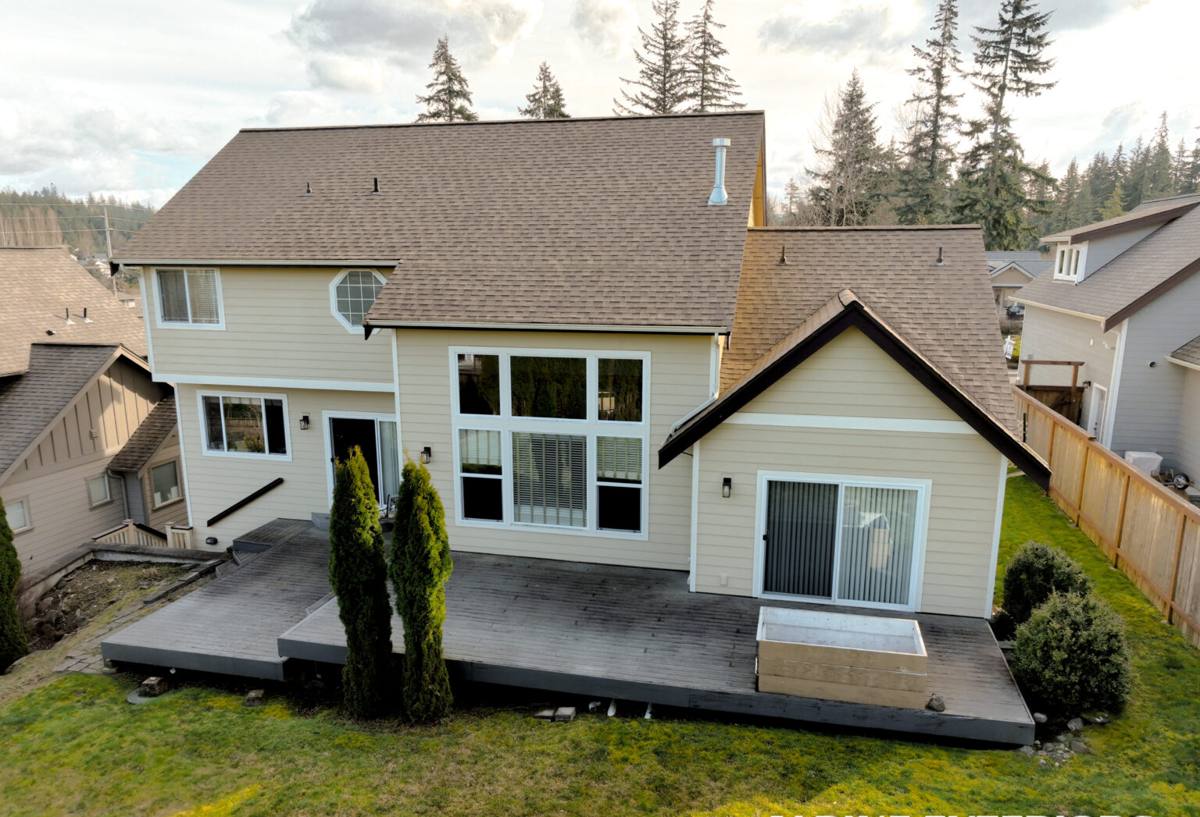
What's Actually Damaging Your Siding Up Here
Salt Air and Corrosion
Airborne salt doesn't just sit on the surface — it works into fasteners, trim joints, and any exposed metal flashing. Over years, that accelerates corrosion in nails, screws, and z-flashing, which loosens siding panels and opens small gaps for water to get behind the material. It also breaks down paint film faster than inland exposure does, which is why houses closer to the water tend to need repainting or refinishing sooner than the manufacturer's coating schedule would suggest.
Wind-Driven Rain
Rain that comes in sideways off the water finds every seam, lap joint, and penetration point a house has. On a well-built wall, that's not a problem — the water sheds off the surface and any that gets behind is caught by the drainage plane and weep path. On a wall with a compromised joint, missing caulk, or a nail that's backed out, wind-driven rain pushes moisture in far more aggressively than a straight-down rain ever would.
Moss, Mildew, and Trapped Moisture
Shaded and north-facing walls in this part of Skagit County stay damp long after the rain stops. That supports moss and mildew growth on the siding surface, and moss in particular holds water against the material instead of letting it dry. On wood-based products, that constant damp contact is where rot gets its start. On any siding, moss buildup around butt joints and trim edges traps water exactly where it shouldn't be.
Signs a Cap Sante Home Needs Siding Repair
Most siding problems don't announce themselves with an obvious hole. They show up as small details that are easy to write off until they've become bigger, more expensive problems. Walk your exterior and look for:
- Soft or spongy spots when you press on the siding, especially near the bottom courses and around windows
- Paint that's bubbling, peeling, or flaking in patches rather than evenly across a wall
- Visible gaps at butt joints, corner trim, or where siding meets window and door trim
- Streaking, dark staining, or moss growth concentrated around seams and fastener lines
- Panels that have separated slightly from the wall or that flex when pushed
- A musty smell near an exterior wall on the inside of the house
- Nail heads that have backed out or left rust streaks below them
- Caulk at trim and penetrations that's cracked, shrunk, or missing
Any one of these on its own might be minor. Several together, especially on the same wall, usually means water has been getting behind the siding for a while and the repair needs to address more than the visible surface.
What a Correct Repair Actually Involves
A siding repair that only replaces the damaged board and calls it done is a repair that's likely to fail again in the same spot. Done correctly, repair work in a marine-exposed area like this addresses the whole assembly, not just the cosmetic layer:
Diagnosing the Real Cause
Before anything gets replaced, we figure out why that section failed. A rotted board near a downspout usually points to a gutter or drainage problem, not a siding defect. Damage clustered around a window points to failed flashing or caulking above it. Fixing the siding without fixing the water source just buys a few years before the same repair is needed again.
Checking What's Behind the Siding
Once damaged panels are off, we check the house wrap or building paper, the flashing at windows, doors, and penetrations, and the sheathing underneath. If moisture has reached the sheathing, that gets addressed before any new siding goes back on — covering over compromised sheathing is how small repairs turn into bigger problems a few years down the road.
Matching Material and Fastening Correctly
Replacement pieces need to match the existing siding's profile, exposure, and finish as closely as possible, and they need to be fastened per manufacturer specification — correct nail type, spacing, and penetration depth matter more in a high-exposure location like Cap Sante than they do in a sheltered inland lot. We also pay close attention to flashing and caulking details at every joint we touch, since those are the points that fail first in wind-driven rain.
Repair vs. Replacement: How We Make the Call
Not every siding problem calls for a full re-side, and not every problem should be patched and left alone. Here's the general framework we use when we're standing in front of a Cap Sante wall:
| What We Find | Likely Cause in This Climate | Typical Approach |
|---|---|---|
| Isolated soft spots or a few damaged boards | Localized flashing failure, a gutter overflow point, or a single failed joint | Targeted repair — replace affected boards, correct the underlying moisture source, re-flash and reseal |
| Damage repeated across multiple walls | Original installation didn't account for wind-driven rain exposure, or the drainage plane has failed broadly | Larger-scale repair or a phased replacement, starting with the most exposed elevations |
| Heavy moss and staining but sound material underneath | Shade, poor airflow, and long damp seasons rather than water intrusion | Clean, treat, and address ventilation or vegetation clearance rather than replace |
| Widespread softness, delamination, or sheathing damage | Long-term water intrusion behind an aging or failing siding system | Full replacement is usually more cost-effective than chasing repairs wall by wall |
We'll always tell you honestly which category your home falls into. A repair-only recommendation from us means we genuinely believe repair is the right call, not the cheapest thing to say.
Why Repairs and Replacement Sections Are James Hardie Only
When a repair calls for new siding material — whether that's a handful of boards or a full elevation — we install James Hardie fiber cement, and only James Hardie. That's a standard we hold on every job, not just the ones close to the water, but it matters even more in a location like Cap Sante.
Fiber cement doesn't rot, and it isn't a food source for the mildew and moss that thrive in this area's long damp season. It holds up to wind-driven rain because it's dimensionally stable — it doesn't swell, cup, or warp the way wood-based and some engineered wood products can when they take on repeated moisture cycling. It's also non-combustible, which matters given how dry Skagit County summers have trended in recent years. And Hardie's ColorPlus factory finish is baked on and warrantied against fading and peeling, which holds up better against salt-air exposure than field-applied paint typically does.
We don't install LP SmartSide, vinyl, Cemplank, Allura, or primed wood siding — not because those products can't perform anywhere, but because we've made a professional call that Hardie's moisture behavior, finish durability, and installed track record are what we're willing to put our name behind on the homes we work on, especially in a marine-exposed neighborhood like this one. If your existing siding is a different brand or material, we'll still repair it fairly and honestly; when the conversation turns to full replacement, Hardie is what we'll recommend and what we install.
Our Process for a Cap Sante Repair Job
Repair work goes smoother when there's a clear process behind it. Ours looks like this:
- On-site assessment. We walk the exterior, check the areas you're concerned about, and look for related issues you may not have noticed — flashing, gutters, grading, and vegetation that's holding moisture against the wall.
- Honest diagnosis. We explain what we found, what caused it, and whether we're looking at a targeted repair or something larger. No pressure toward the bigger job if it isn't warranted.
- Written estimate. You get a clear scope and price before any work starts, including what material will be used and how the underlying moisture issue will be addressed.
- Repair execution. Damaged material comes out, the wall assembly underneath gets checked and corrected as needed, and new material goes in fastened and flashed to spec.
- Finish and cleanup. Joints, caulking, and paint or finish work are matched as closely as possible to the surrounding siding, and the site is cleaned up before we leave.
Why a Crew That Already Works This Neighborhood Matters
Cap Sante's exposure isn't uniform — a wall facing the marina takes a different beating than one tucked behind a neighboring structure, and elevation and tree cover change how much moss pressure a given wall deals with year to year. A crew that's worked on other homes in the neighborhood has already seen how these variables play out on real houses, not just in general climate data for Anacortes. That local pattern recognition is what helps us diagnose a problem correctly the first time instead of chasing the wrong cause.
It also means we're realistic about timelines and weather windows. Siding repair in a marine-exposed area needs a reasonably dry stretch to do right — rushing exterior work between rain systems is how corners get cut. Working this area regularly means we plan around that instead of being surprised by it.
Keeping Repaired Siding in Good Shape
Once a repair is done, a little upkeep goes a long way toward making sure it's the last repair that section of wall needs for a long time:
- Keep gutters and downspouts clear so water isn't overflowing onto siding below
- Trim back vegetation and branches that shade walls and slow drying
- Rinse off moss and grime buildup on shaded elevations once or twice a year
- Walk the exterior after major wind-and-rain events and note any new staining, gaps, or soft spots
- Re-caulk trim and penetration points as part of routine maintenance rather than waiting for a leak
None of that takes much time, and it's far cheaper than letting a small gap turn into a wall that needs to be opened back up.
If you're seeing any of the warning signs above on a Cap Sante home, or you just want an honest read on what your siding needs, we're glad to come take a look. Estimates are free and there's no pressure to move forward with anything — just a clear, straight answer about what we find and what it would take to fix it right. The form below is the fastest way to get started.