 Anacortes Roofing
 Why March Point Homes Need a Different Approach to Siding
March Point sits close to the water, and that proximity shapes everything about how a home's exterior ages. Homes here deal with a combination most inland Skagit County properties don't face at the same intensity: salt-laden air moving off the bay, wind-driven rain that gets pushed sideways into wall assemblies, and a moss season that stretches long into the year thanks to persistent shade, moisture, and mild temperatures. Any siding material installed on a March Point home is going to be tested by all three of these conditions at once, year after year.
This matters because a lot of siding products are engineered and tested under generic climate assumptions, not the specific combination of marine exposure and sustained damp that defines this stretch of the Anacortes area. When we talk about "correct" siding for March Point, we mean a product and an installation approach that were chosen with this exact environment in mind, not siding that happens to be popular elsewhere and gets installed here without adjustment.
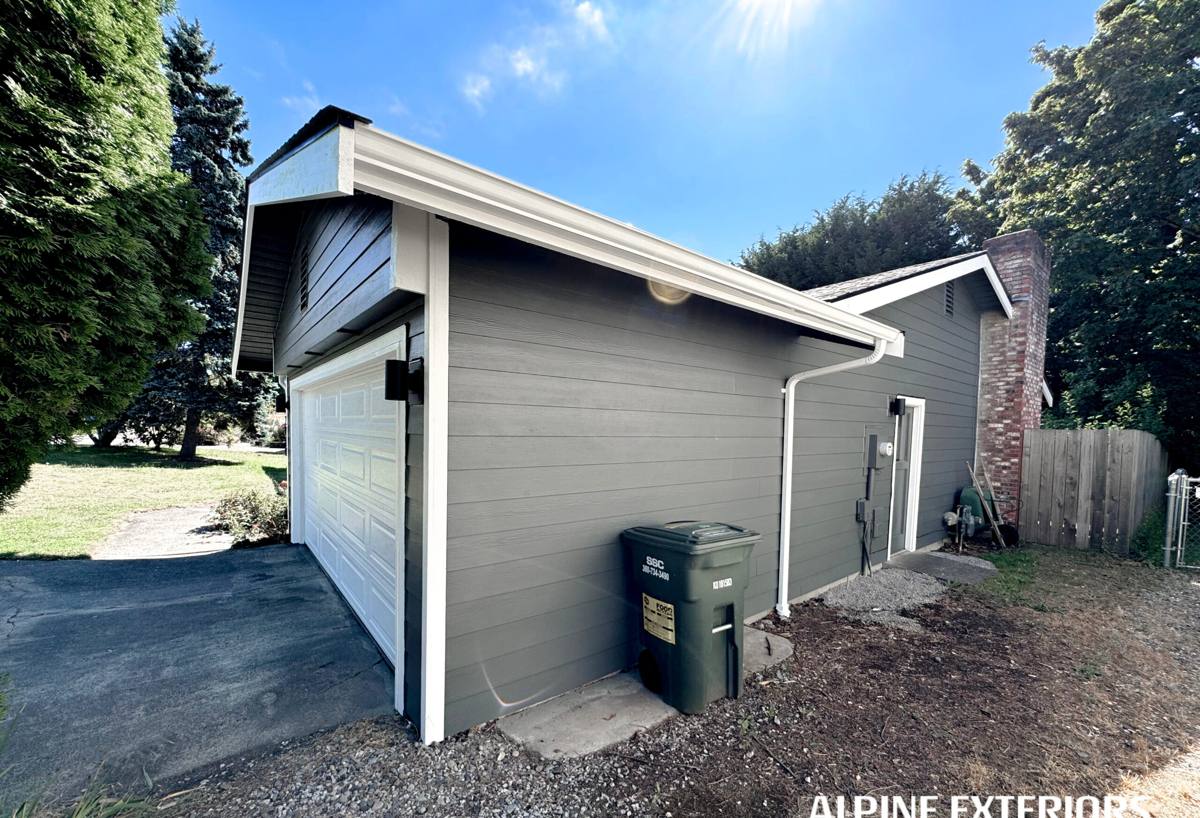
What Salt Air, Driving Rain, and Moss Actually Do to a Wall System
Salt Air
Airborne salt is corrosive to metal fasteners, flashing, and trim components, and it accelerates the breakdown of finishes that aren't formulated to resist it. Over time, salt exposure can cause premature fading, chalking, and surface degradation on siding products with weaker factory finishes, and it speeds up corrosion on any exposed hardware that wasn't specified for coastal use.
Driving Rain
Wind off the water doesn't just bring rain straight down — it pushes it horizontally into siding laps, seams, and penetrations (light fixtures, hose bibs, vents). A siding system that isn't installed with correct lap coverage, flashing, and sealant detailing will let water track behind the cladding, where it can sit against sheathing and framing long after the storm has passed.
Moss and Sustained Moisture
Shaded exposures and the general dampness of this climate mean moss and algae growth take hold fast and stay established most of the year. Moss holds moisture against a surface and, on organic or moisture-absorbent siding materials, contributes to softening, delamination, and paint failure. Even on siding that resists moisture well, a growth layer eventually needs to be dealt with — but the difference between a material that shrugs it off and one that gets damaged by it is significant.
Why This Company Installs Only James Hardie Fiber Cement
We standardized on James Hardie fiber cement siding for every home we work on, including March Point, and we don't install vinyl, LP SmartSide, Cemplank, Allura, primed spruce, or cedar. That's not a marketing position — it's a decision based on how these products perform over decades of real coastal exposure versus how they're marketed on day one.
James Hardie fiber cement is non-combustible, dimensionally stable, and manufactured with a cement-based composition that doesn't absorb and swell with moisture the way wood-based or wood-fiber products can. Hardie's ColorPlus factory finish is baked on under controlled conditions and backed by a finish warranty, which matters in an environment where UV, salt, and moisture are all working against a coating at the same time. Hardie also engineers region-specific HZ product lines — including a version formulated for the wetter Pacific Northwest climate zone — rather than shipping one formulation everywhere.
We're not going to tell you other products are worthless; plenty of them have legitimate uses in the right setting. But for a coastal Skagit County property like a March Point home, we've made the professional call that fiber cement from a manufacturer with a genuine climate-engineered product line and a strong transferable warranty is the standard we're willing to put our name behind.
What Correct Installation Involves in This Environment
Fiber cement siding is only as good as the installation behind it. In a marine-influenced climate, a few details matter more than they would somewhere drier:
- Correct water-resistive barrier and weather-resistant house wrap installed with proper lapping and taped seams, sealed before siding goes up
- Rainscreen or drainage gap detailing where appropriate, so any incidental moisture that does get behind the siding has somewhere to drain and dry
- Flashing at every window, door, and penetration, installed in the correct shingle-lap sequence so water is always directed outward and down
- Fastener selection and placement that meets Hardie's published installation instructions, using corrosion-resistant fasteners appropriate for coastal exposure
- Correct lap exposure and butt joint treatment, including factory-primed or pre-finished cut edges sealed per manufacturer specification
- Proper clearance from grade, decks, and roof lines, so siding isn't sitting in a position where it stays wet longer than it should
Skipping or rushing any one of these steps doesn't usually cause an obvious problem in year one. It shows up years later as trapped moisture, rot in the sheathing behind the siding, or premature finish failure — the kind of damage that's expensive to trace back to an installation shortcut.
Our Process for a March Point Siding Project
1. On-Site Assessment
We walk the exterior, check current siding condition, look at drainage patterns around the foundation, and identify any areas with existing moisture staining, moss buildup, or trim damage that need attention before new siding goes on.
2. Product and Color Selection
We go over Hardie's plank profiles, textures, and ColorPlus palette so you can choose a look that fits the home, with an honest conversation about which options perform best given the home's sun and wind exposure.
3. Prep and Weather Barrier Work
Old siding is removed, sheathing is inspected and repaired as needed, and a new weather-resistant barrier system is installed correctly — this stage is where most long-term performance is actually decided.
4. Installation to Manufacturer Spec
Siding, trim, and flashing go on following James Hardie's installation guidelines, with attention to fastening, lap coverage, and joint treatment throughout.
5. Final Walkthrough
We review the completed work with you, check caulking and trim details, and make sure everything meets the standard we'd put on our own homes.
Comparing Siding Materials for a Coastal Skagit County Home
| Material | Moisture Behavior | Salt Air / Coastal Fit | Why We Do or Don't Install It |
|---|---|---|---|
| James Hardie Fiber Cement | Dimensionally stable, doesn't swell or rot | ColorPlus finish and HZ lines engineered for wet, coastal-adjacent climates | Our standard install for March Point and every home we work on |
| Vinyl Siding | Doesn't absorb water, but can warp or become brittle with temperature swings and UV | Seams and panels can loosen under sustained wind-driven rain if not detailed carefully | Not installed by our crew — long-term appearance and repair concerns |
| LP SmartSide | Wood-strand based; engineered to resist moisture better than raw wood but still wood-fiber at its core | Cut edges and joints need diligent sealing to prevent moisture entry over time | Not installed by our crew — moisture sensitivity at damaged or unsealed edges |
| Cedar | Natural wood; absorbs and releases moisture, prone to movement and decay without upkeep | Needs regular refinishing to hold up against salt air and sustained dampness | Not installed by our crew — maintenance burden in this climate is significant |
| Primed Spruce | Softwood; relies entirely on paint film integrity to resist moisture | Coating failure exposes bare wood quickly in wet, shaded conditions | Not installed by our crew — high risk once the paint layer is compromised |
Why Hiring a Crew That Already Works March Point Matters
A contractor who works regularly in this specific pocket of Anacortes has already seen how homes here weather, where moss tends to establish first, which exposures take the worst of the wind-driven rain, and what installation details actually hold up under repeated marine exposure. That's different from general siding experience picked up in a drier or more inland part of Skagit County. Knowing the local conditions changes decisions on the job — where extra flashing attention goes, how much drainage capacity to build in, which trim details need reinforcing — before problems ever show up.
Maintenance Expectations After Installation
Correctly installed James Hardie fiber cement is low-maintenance, but "low-maintenance" doesn't mean "no maintenance" in a climate like this one. A reasonable expectation for a March Point home includes:
- Periodic rinsing to clear salt residue and light surface grime
- Keeping vegetation and shaded areas trimmed back to reduce moss and algae buildup on siding surfaces
- Visual checks of caulking at trim, windows, and joints every year or two, since sealant is the first line of defense and does wear over time
- Prompt attention to any gutter or drainage issues nearby, since standing water or poor runoff near the wall line undermines even well-installed siding
None of this is heavy lifting, but it's worth building into a normal home maintenance routine rather than ignoring until something looks wrong.
Ready to Talk About Your Home
If you're planning a siding project for a March Point property, we're happy to take a look, walk you through what correct installation looks like for your specific home, and give you a straightforward estimate. There's no pressure and no obligation — just a real conversation about what your home needs given where it sits.