 Anacortes Roofing
 March Point sits out on its own peninsula between Fidalgo Bay and Padilla Bay, just outside Anacortes proper, with open water on more than one side of most properties. That position means storms hit roofs here differently than they do on a sheltered lot a few miles inland — stronger gusts with nothing to break them, rain driven sideways instead of falling straight down, and a moss season that runs long through Skagit County's wet months. When a storm damages a roof on March Point, a proper repair has to account for all of that, not just patch the visible spot and move on. This page covers what storm damage roof repair actually involves for homes in this area, what we check for, and how the work gets done from the first call to the final walk-through.
What Counts as Storm Damage on a March Point Roof
Storm damage isn't always the dramatic kind. A windstorm can strip shingles off in sheets, but more often it works quietly — lifting a few tabs just enough to break the seal, bending a piece of flashing out of alignment, or driving rain up under a shingle edge that would otherwise shed water fine. On an exposed peninsula like March Point, wind gusts off open water don't have the tree cover or terrain break that a lot of inland Anacortes properties get, so roofs here tend to take a slightly harder hit from the same regional storm system than a home a few miles away.
Wind Damage and Water Damage Are Different Problems
Wind damage is mechanical — shingles torn, lifted, or missing outright; bent or dislodged flashing; damaged ridge caps or vents. It's often visible from the ground if you know where to look. Water damage from wind-driven rain is quieter and can show up without a single shingle out of place: rain forced sideways under laps and around penetrations that a straight-down rain would never reach, soaking underlayment or decking that then dries slowly, if it dries at all before the next storm. A repair that only addresses the obvious wind damage and skips checking for hidden moisture is only half a repair.
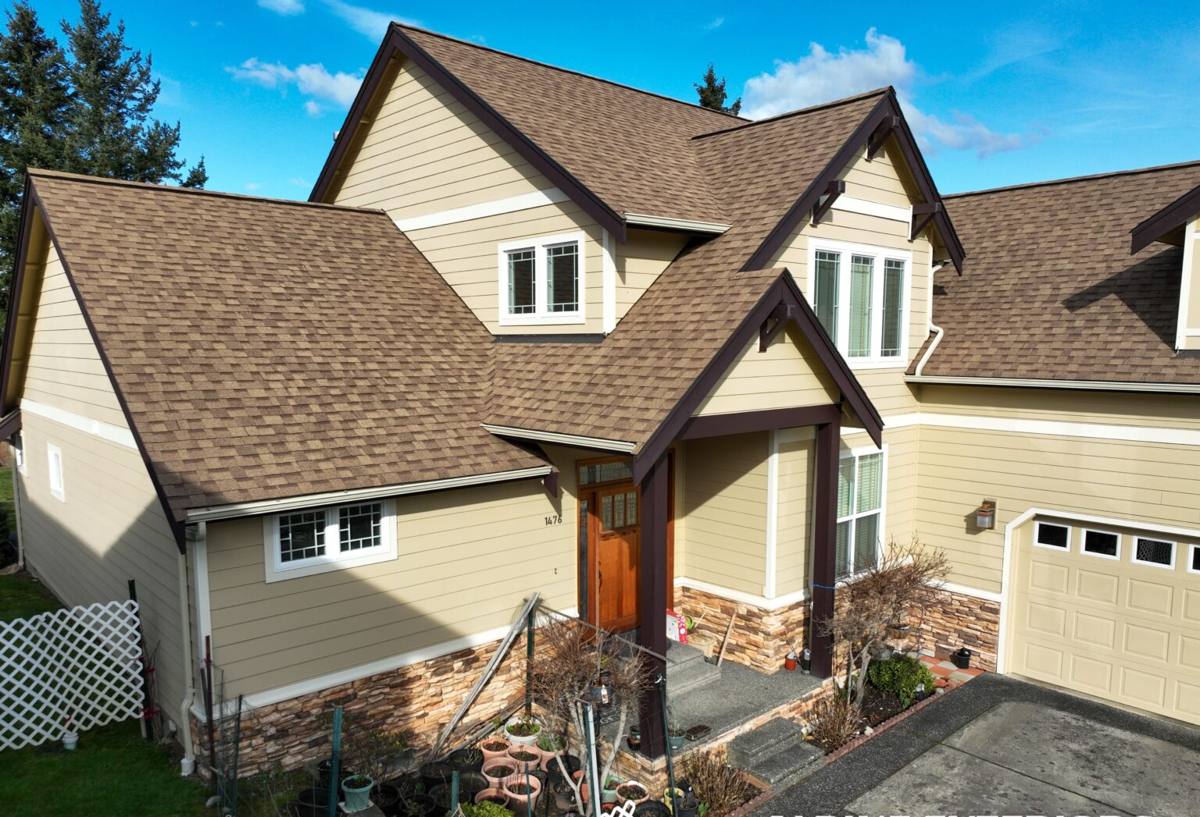
Signs Your Roof Took a Hit
Not every sign of storm damage is obvious from the driveway. After a windstorm or a stretch of heavy driving rain, it's worth checking for:
- Shingles that look lifted, curled, or are missing outright, especially on the sides that face open water
- Granules collecting in gutters or at downspout outlets — a sign of shingle wear accelerated by the storm
- Bent, lifted, or missing flashing around chimneys, vents, skylights, or roof-wall intersections
- Water stains or discoloration on ceilings or in the attic, even faint ones
- Soft spots or slight sagging when walking the attic floor near the roofline
- Moss or debris that's been dislodged, exposing bare or damaged shingle underneath
Any one of these on its own might be minor. Several together, or any sign of active water intrusion, is worth a prompt inspection rather than waiting for the next storm to make it worse.
Common Storm Damage on March Point Roofs
The type of damage we see out here tends to follow the same handful of patterns, driven by the peninsula's exposure to wind and water from more than one direction.
| Damage Type | What Causes It Here | What the Repair Typically Involves |
|---|---|---|
| Lifted or missing shingles | Sustained gusts off open water with no wind break | Removing damaged shingles, checking the surrounding field for a broken seal, replacing with matched material and proper fastening |
| Flashing failure at valleys and penetrations | Driving rain forced sideways under standard laps | Removing and re-flashing the affected area, not just caulking over the gap |
| Saturated or soft decking | Prolonged wet-dry cycling plus moss holding moisture against the surface | Cutting back to sound decking, replacing rotted sections, then reinstalling roofing over a solid base |
| Damaged ridge caps or vents | Wind uplift concentrated at the roof's highest, most exposed line | Replacing ridge components and confirming the ventilation system still functions correctly |
What a Correct Storm Damage Repair Actually Involves
An Inspection Before Any Repair Work Starts
We walk the full roof, not just the spot that's obviously damaged. A storm strong enough to cause one visible problem is usually strong enough to have stressed other areas too, and it's common to find a second issue — a loosened flashing edge, a section of granule loss — that hasn't leaked yet but will if it's left alone. We also check the attic where it's accessible, since that's often where hidden water damage shows up first, well before it reaches a ceiling anyone would notice from inside the house.
Matching Materials and Doing the Detail Work Right
A storm repair should blend into the roof, not stand out as an obvious patch. That means matching shingle profile and color as closely as the market allows, using fasteners and nailing patterns rated for the wind exposure this area actually sees, and integrating flashing properly with the surrounding material instead of relying on a bead of caulk to bridge a gap. Caulk is a short-term fix at best; it dries out and cracks faster in this climate than most homeowners expect, and a repair that depends on it is a repair that's going to need doing again.
Repair or Replace: How We Make That Call
Storm damage doesn't always mean the whole roof needs to come off, and it doesn't always mean a patch is enough either. The right call depends on a few specific factors we walk through with the homeowner before recommending anything.
| Factor | Points Toward Repair | Points Toward Replacement |
|---|---|---|
| Roof age | Roof is well within its expected service life | Roof is already near or past the end of its expected life |
| Extent of damage | Damage is localized to one area or slope | Damage is spread across multiple slopes or the whole roof |
| Decking condition | Decking underneath is still sound | Decking is soft, rotted, or damaged in multiple spots |
| Repair history | This is the first significant storm repair on this roof | The roof has needed repeated storm repairs in recent years |
We'll always start with the option that solves the actual problem for the least money, and explain the reasoning either way rather than defaulting to the bigger job.
Our Storm Damage Repair Process
- Emergency mitigation, if needed. If a roof is actively leaking, the first priority is stopping water from getting further into the house — a tarp or temporary cover buys time until a proper repair can be scheduled.
- Full inspection and documentation. We walk the roof and attic where accessible, photograph the damage, and note anything that could affect the scope, including issues unrelated to the storm that are worth flagging.
- Written scope and estimate. You get a clear explanation of what's damaged, what we recommend, and what it costs — before any work starts.
- The repair itself. Damaged material comes off, the area underneath gets checked and addressed if needed, and new material goes on matched and properly fastened.
- Final walk-through. We confirm the repair holds up to a close look and answer any remaining questions before calling the job done.
Working With an Insurance Claim
Some storm damage repairs go through a homeowner's insurance policy, and some don't — that depends on the policy and the extent of the damage, which is between you and your insurer. What we can do is document the damage honestly and thoroughly, with clear photos and a straightforward description of cause and scope, so you have what you need if you decide to file a claim. We won't pad a scope of work to chase a bigger payout, and we won't tell you a repair is storm-related if it looks like ordinary wear instead. That honesty matters more than a bigger number on paper, especially with an insurer who may send their own adjuster to look at the same roof.
Why a Crew That Already Works March Point Matters
March Point is a small area, and it doesn't get the volume of roofing attention that busier parts of Anacortes and the rest of Skagit County see. That can mean homeowners here end up with a crew that's used to sheltered, inland roofs applying the same approach to a peninsula property that takes wind and salt-laden rain from more than one direction. A crew that already works this area knows which roof slopes take the worst of a given storm track, how far moss tends to creep back after a cleaning, and which flashing details are worth the extra time versus which ones are just code minimums. That familiarity shows up in how a repair holds up through the next storm season, not just how it looks the day it's finished.
It also means faster response after a regional storm event. When a windstorm moves through Skagit County, we're often already scheduled to be in or near March Point, which shortens the gap between your call and someone actually getting eyes on the roof.
What to Expect From a Free Estimate
- A full roof walk-through, not just a look at the obviously damaged section
- Photos and a plain-English explanation of what's damaged and why
- An honest read on repair versus replacement, with the reasoning behind the recommendation
- A written estimate with no pressure to sign on the spot
If a recent storm left your March Point roof with missing shingles, a leak, or damage you're not quite sure how to assess, we're happy to take a look. Reach out for a free, no-pressure estimate — we'll give you a straight answer about what happened, what it'll take to fix it, and what it costs.