 Anacortes Roofing
 Metal Roofing for a Peninsula That Doesn't Go Easy on a Roof
March Point sits out on the water, and that changes what a roof has to deal with compared to a house a few miles inland. Homes here catch wind off Fidalgo Bay and Padilla Bay from more than one direction, salt-laden air that settles on every exposed surface, and the kind of steady, driving rain that defines a Skagit County winter. Add in the shade and dampness that let moss take hold for months at a time, and you've got a roofing environment that punishes cheap materials and sloppy installation fast.
Metal roofing has become a popular answer for homeowners in this area, and for good reason — but "metal roofing" covers a wide range of products and installation quality. This page walks through what actually matters for a metal roof going on a March Point home: what the climate demands, what a correct installation looks like, and how our process handles it.
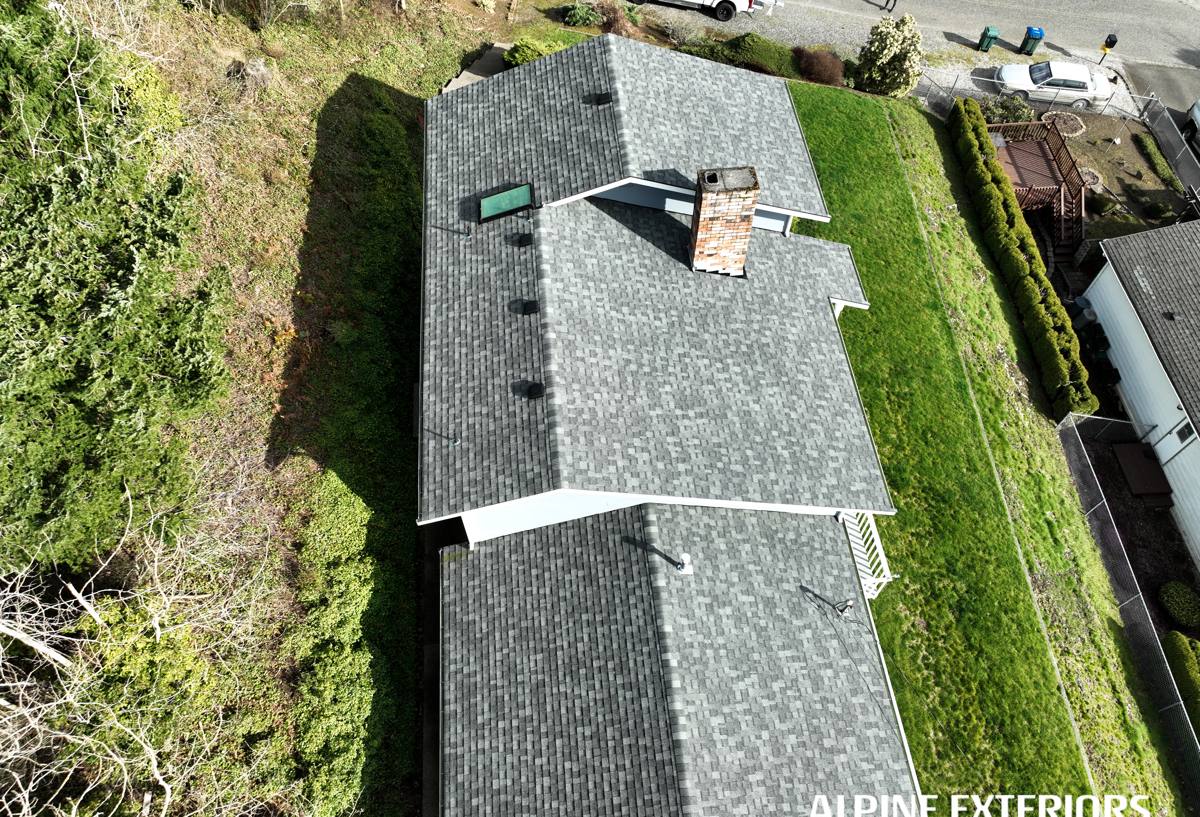
What March Point's Climate Actually Does to a Roof
Salt Air and Corrosion
Being surrounded by water on more than one side means salt-bearing air reaches these homes more consistently than it does further inland in Anacortes or elsewhere in Skagit County. Salt exposure accelerates corrosion on unprotected or poorly coated metal, degrades cheap fasteners, and can eat away at exposed cut edges over time. It's not a reason to avoid metal roofing — it's a reason to be picky about panel coatings, fastener grade, and edge treatment.
Wind Off the Water
Open water on multiple sides means fewer windbreaks and more sustained wind loading on a roof than a typical inland lot sees. Wind doesn't just test how well panels are fastened down — it drives rain sideways, up under laps, and into any gap a lazy install left behind.
Persistent Rain
Western Washington rain isn't usually violent, but it is long-lasting. A roof here spends a large share of the year wet, which means underlayment quality, flashing detail, and drainage all matter more than they would in a drier climate. Marginal work that might survive a dry summer will find its weak points during a wet Skagit County winter.
Moss and Shade
Tree cover and consistent moisture give moss a long growing season on this side of the state. Moss holds water against roofing material, works into seams and laps, and on some surfaces can lift or damage the material underneath it as it grows. Metal roofing resists moss far better than most other common roofing materials, but it isn't moss-proof on its own — panel type, slope, and shading around the house all affect how much moss pressure a given roof will actually see.
Why Metal Roofing Makes Sense Here
We don't push metal roofing on every home — it's not always the right fit for every budget or every roofline. But for the conditions March Point homes deal with, it holds real advantages:
- Moss resistance: A smooth, hard metal surface gives moss spores far less to grip and grow on than shingles or wood.
- Water shedding: Properly lapped and fastened metal sheds driving rain more effectively than materials that rely on surface absorption or granule wear resistance.
- Wind performance: Correctly fastened metal panels handle sustained coastal wind loads well, especially standing seam systems with concealed fasteners.
- Longevity: A correctly installed, correctly coated metal roof is built to outlast several cycles of composition roofing, which matters when you're weighing upfront cost against decades of exposure.
- Low maintenance burden: Less granule loss, less moss scraping, and less patching over time than materials that degrade faster in constant moisture.
What a Correct Metal Roof Install Actually Involves
The material is only part of the equation. Most metal roofing problems we get called out to inspect trace back to installation shortcuts, not the panels themselves. A correct job on a March Point home includes:
Underlayment Built for Wet Climates
A high-quality synthetic or self-adhered underlayment underneath the metal gives the roof a real second line of defense if wind-driven rain ever gets past a seam or lap — which matters a lot more here than it does in a drier region.
Corrosion-Appropriate Fasteners and Flashing
In a salt-air environment, fastener and flashing material has to match the panel material to avoid galvanic corrosion, and exposed fasteners (where the system uses them) need to be rated for coastal exposure, not generic interior-grade hardware.
Proper Panel Overlap and Sealed Penetrations
Every pipe boot, vent, and roof penetration is a potential entry point for wind-driven rain. These need to be flashed and sealed correctly the first time, not caulked over as an afterthought.
Ventilation That Matches the Roof System
Metal roofs need proper attic and roof deck ventilation to avoid trapping moisture underneath the panels, which is exactly the kind of hidden problem that shows up as rot or mold years later in a damp climate like this one.
Edge and Eave Detail
Cut edges and drip edges are where corrosion and wind uplift problems tend to start first. Clean, protected edge detailing is one of the clearest signs of a crew that knows what they're doing versus one that's cutting corners.
Standing Seam vs. Exposed-Fastener Panels
Most metal roofing decisions for a home like this come down to choosing between standing seam and exposed-fastener (corrugated or ribbed) panel systems. Both are legitimate options — the right choice depends on budget, roofline, and how much long-term maintenance you want to take on.
| Factor | Standing Seam | Exposed-Fastener |
|---|---|---|
| Fasteners | Concealed under the seam — not exposed to weather | Visible screws through the panel face |
| Wind/rain resistance | Very high; fewer penetration points | Good, but each fastener is a potential leak point over time |
| Maintenance | Minimal — no fastener seals to monitor | Fastener washers can wear and need periodic checking |
| Upfront cost | Higher | More budget-friendly |
| Best fit | Homes with heavy wind/rain exposure, longer ownership horizon | Simpler rooflines, tighter budgets, secondary structures |
For a fully exposed March Point lot, we generally recommend standing seam where the budget allows it, simply because concealed fasteners remove one of the main long-term weak points in a coastal wind environment. Exposed-fastener systems can still perform well here when installed correctly and maintained — it's a legitimate option, not a compromise, as long as expectations about upkeep are clear going in.
Our Process
- On-site inspection: We walk the roof and attic space, check current ventilation, and assess exposure direction relative to the water and prevailing wind.
- Straight assessment: We tell you honestly whether metal is the right fit for your roofline and budget — not just because it's what we're selling.
- Written estimate: Clear scope, panel and underlayment specifications, and a real timeline, not a vague ballpark.
- Tear-off and deck check: We inspect the roof deck once the old roofing is off, since moisture damage under an old roof is common in this climate and needs to be addressed before new material goes down.
- Installation: Underlayment, flashing, panels, and ventilation installed to manufacturer spec and adjusted for the wind and rain exposure specific to your lot.
- Final walkthrough: We review the finished roof with you and explain what maintenance, if any, it'll actually need going forward.
Living With a Metal Roof in This Climate
A correctly installed metal roof on a March Point home is a low-maintenance investment, but "low-maintenance" doesn't mean "zero-maintenance." A few habits go a long way toward getting the full lifespan out of the system:
- Clear overhanging branches and debris that trap moisture against the roof surface.
- Have gutters checked and cleared regularly — clogged gutters back water up under eave flashing.
- Watch for any granule-like debris or discoloration at seams, which can signal a coating issue worth having looked at early.
- After major windstorms, a quick visual check for lifted panels or damaged flashing is worth the five minutes.
- Schedule a periodic professional check-up, especially in the first few years, to catch small issues before a wet winter turns them into bigger ones.
Why It Matters That We Already Work in March Point
Roofing specs written for a generic climate don't always hold up out here. A crew that already works this specific area knows how much wind loading to plan for on an exposed lot, which fastener and flashing materials actually hold up against the salt air over years rather than months, and how local moss and rain patterns should shape ventilation and slope decisions. That's the kind of judgment that only comes from doing the work in this exact environment repeatedly, not from a spec sheet written for a roof three states away.
It also means we're not guessing at permitting, inspection expectations, or the practical realities of getting equipment and materials to a job on this stretch of Skagit County. Local familiarity shows up in small decisions throughout a project, and those small decisions are usually what separates a roof that performs for decades from one that starts causing problems in five years.
Get an Honest Look at Your Roof
If you're weighing metal roofing for a home in March Point, we're glad to come take a look, answer questions honestly, and put together a written estimate — no pressure, no sales script. Fill out the form below to get started.