 Anacortes Roofing
 Windows on March Point Take a Different Kind of Beating
March Point sits out on its own peninsula between Fidalgo Bay and Padilla Bay, which means almost every home out here gets some degree of direct water exposure — wind off open water, salt-laden air, and rain that doesn't fall straight down so much as it gets driven sideways into whatever it hits first. For windows, that's a tougher environment than a typical inland Skagit County lot. The same window that would last 25 years in a sheltered subdivision can show hardware corrosion, seal failure, or frame degradation years earlier out here if it wasn't installed with this exposure in mind.
This page is specifically about window replacement for March Point homes — not a general "why replace your windows" pitch. The climate factors, the install details that matter, and the reasons local experience counts are all specific to this stretch of Anacortes.
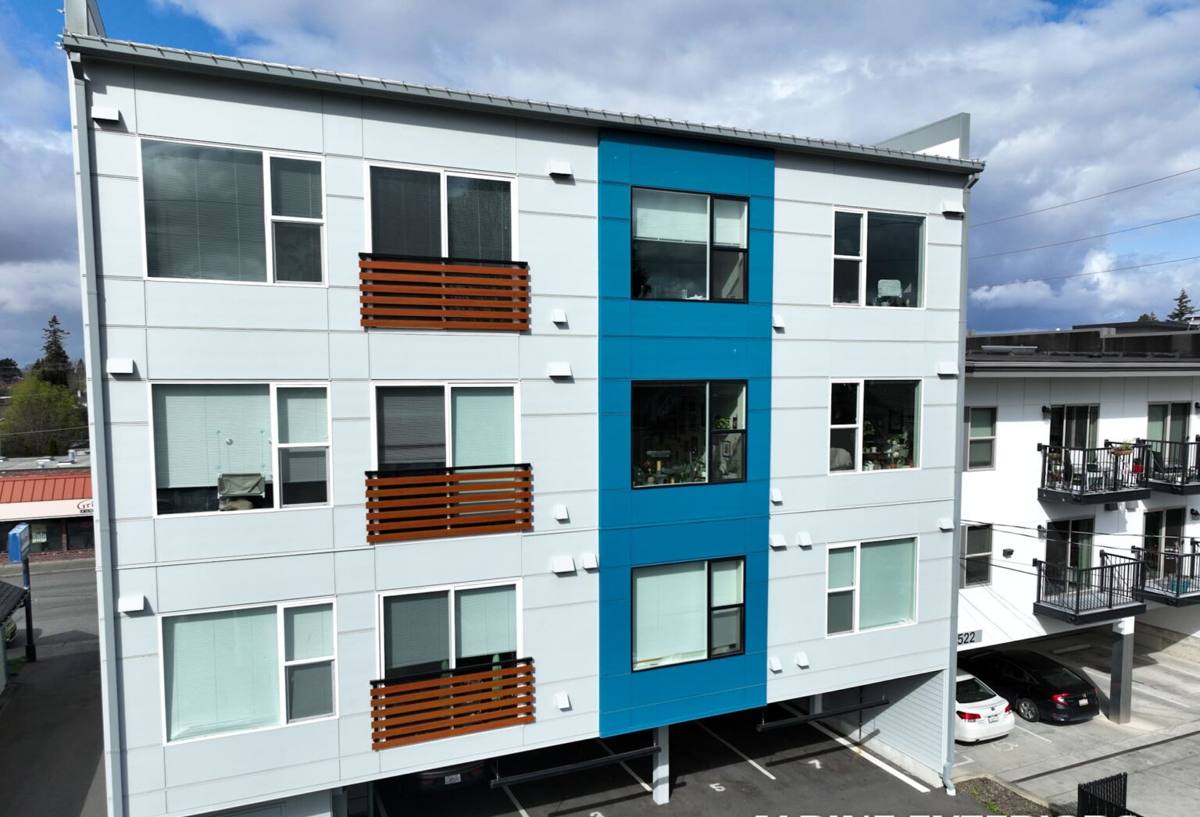
What Salt Air and Driving Rain Actually Do to a Window
Salt Air and Hardware
Salt-laden marine air is corrosive to metal, full stop. Window hardware — locks, hinges, balance mechanisms, screen frames — is often the first thing to show it. Cheaper hardware finishes pit and corrode faster; aluminum frames without a good marine-grade coating can oxidize and pit over time. This doesn't necessarily ruin the window's ability to keep weather out, but it does mean stiff locks, screens that won't slide, and hardware that looks rough well before the glass itself has a problem.
Wind-Driven Rain and Water Intrusion
Because March Point is exposed on more than one side, wind-driven rain hits window assemblies at angles a standard flashing detail doesn't always anticipate. Water doesn't just run down the face of a window — it gets pushed up under trim, into corners, and behind sealant joints that have started to fail. Most of the moisture damage we find around older windows out here isn't from the glass or the sash — it's from water getting behind the window at the flashing and trim, then sitting in the wall cavity where nobody sees it until there's a soft spot or a stain.
Condensation and Moisture Cycling
Cooler, damp marine air also means more condensation potential on the interior side of older, poorly insulated glass, especially in bathrooms, kitchens, and bedrooms with limited airflow. Constant condensation cycling degrades seals, wood sills, and paint faster than a drier inland climate would.
Signs a March Point Home Needs Window Replacement, Not Just Repair
- Fogging or a visible haze between panes of a double-pane window — the seal has failed and the gas fill (or air) has been compromised
- Locks, cranks, or balances that are stiff, corroded, or simply stopped working
- Visible gaps, drafts, or daylight around the frame when the window is closed and locked
- Soft, discolored, or spongy wood at the sill or surrounding trim
- Persistent condensation on the interior glass even with normal ventilation
- Frames that no longer sit square, making the window difficult to open or fully latch
- Paint or finish failure concentrated on one side of the house — usually the side that takes the most weather
If you're only seeing one or two of these, a repair might genuinely be the right call — we'll tell you that if it's true. Replacement makes sense when the frame or seal integrity itself has failed, not just the cosmetics.
What a Correct Installation Actually Involves
The window unit itself matters, but on an exposure like March Point, the installation detailing is what determines whether the replacement actually solves the water problem or just delays it.
Flashing and Water Management
Every opening gets flashed to shed water down and out, integrated with the existing water-resistive barrier or siding system rather than just caulked over the top of it. Sill pans are set to direct any water that does get past the outer seal back outside the wall, not into the framing. On a home taking wind-driven rain from more than one direction, this detail is not optional — it's the difference between a window that's dry in ten years and one that's causing rot in three.
Fit, Shimming, and Insulation
A window that's shimmed square and plumb, with the gap around it properly insulated (not just stuffed with fiberglass, and not left as an air gap), performs the way it's rated to. A rushed install with an out-of-square opening will leak air and eventually water regardless of how good the window itself is.
Sealant as the Last Line, Not the First
Exterior sealant should be the final detail on top of correct flashing and integration — not the primary defense. We see a lot of older installs around Anacortes where caulk was doing a job that flashing should have been doing. Caulk fails; proper flashing doesn't rely on staying intact forever.
Choosing a Frame Material for a Peninsula Exposure
There's no single "best" window material for every home — it depends on your budget, your home's style, and how much maintenance you want to take on. Here's how the common options hold up specifically against salt air and marine moisture:
| Frame Material | Salt Air / Corrosion Resistance | Maintenance | Typical Trade-Off |
|---|---|---|---|
| Vinyl | Good — won't corrode or rust; UV exposure can affect color over decades | Low | Limited color/finish options; can't be repainted easily |
| Fiberglass | Very good — dimensionally stable, resists both moisture and salt exposure well | Low to moderate | Higher upfront cost than vinyl |
| Wood-clad | Depends heavily on cladding quality and installation detailing; interior wood can be vulnerable if moisture gets behind the cladding | Moderate to high | Best appearance for some architectural styles; more sensitive to installation errors in this climate |
| Aluminum | Poor to fair unless marine-grade coated — prone to pitting and corrosion in salt air over time | Moderate | Slim sightlines, but generally our least-recommended option for direct marine exposure |
We're upfront that aluminum without marine-grade treatment is a poor match for a peninsula exposure like March Point — not because it's a bad product everywhere, but because it holds up worse than the alternatives once salt air gets into the hardware and joints over years of direct exposure.
Glass and Performance Options Worth Understanding
Most replacement windows today are double-pane with a low-emissivity (Low-E) coating and an inert gas fill (usually argon) between the panes. A few things matter more here than in a drier, calmer climate:
- Seal quality matters more where humidity and temperature swings cycle the seal repeatedly — a lower-grade seal fails faster in marine air than in a stable inland climate
- U-factor (how well the window resists heat transfer) affects both comfort and how much condensation forms on the interior glass in colder, damper months
- Air infiltration rating matters directly for wind exposure — a window rated for lower air leakage will perform better in a spot that regularly takes wind off the water
We're happy to walk through actual manufacturer specs and warranty terms during your estimate rather than throw numbers at you now — the right glass package depends on which side of the house the window is on and what it's facing.
Our Process for a March Point Window Replacement
Assessment
We look at each window individually — which direction it faces, what condition the surrounding trim and wall are in, and whether there's evidence of past water intrusion. Exposure varies a lot from one side of a house to another out here, so we don't assume every window needs the same solution.
Measuring and Ordering
Replacement windows are ordered to the exact opening once measurements are confirmed. Lead times vary by manufacturer and specific product, and we'll give you a realistic timeline rather than guess.
Install Day
Old windows come out, the opening is inspected for hidden damage (this is often when we find rot or moisture issues that weren't visible from outside), flashing and insulation are done correctly, and the new unit is set, shimmed, and sealed.
Final Check and Cleanup
Every window gets operated and checked before we consider the job done — locks, cranks, screens, and a visual check of the exterior sealant and trim work.
Why Local Experience on March Point Specifically Matters
A crew that's worked this stretch of Anacortes knows which sides of a house typically take the worst of the wind-driven rain, what kind of hidden moisture damage tends to show up when older windows come out, and which materials actually hold up here versus which ones look fine in a showroom and struggle in a few years of real marine exposure. That's not something you can fully substitute with a generic installation crew working from a standard checklist built for a different climate. Skagit County's mix of moss, salt air, and driving rain rewards contractors who've actually seen how these homes age, not just how they're built new.
What Affects Cost
We don't publish fixed pricing because it genuinely depends on the specifics of your home, but the main factors that move the number are:
- Number of windows and their sizes
- Frame material chosen (vinyl, fiberglass, wood-clad, etc.)
- Whether hidden rot or wall damage is found once old windows come out
- Whether it's a straightforward replacement into an existing opening or requires structural or siding work around it
- Glass package and performance options selected
We'll always tell you honestly if we find something during the assessment that changes the scope — no surprise add-ons buried until after the work starts.
If your windows on March Point are showing corrosion, drafts, fogging, or water staining, it's worth having them looked at before another wet season adds to the damage. We offer free, no-pressure estimates and can walk your specific home to tell you honestly what needs replacing and what doesn't — just fill out the form below to get started.