 Anacortes Roofing
 Asphalt Shingle Roofing Built for Cap Sante's Waterfront Climate
Cap Sante sits close to the water on the edge of Anacortes, which means homes here take on a different combination of weather stress than roofs a few miles inland in Skagit County. Salt-laden air off the water, driving rain that comes in sideways during winter storms, and a long, damp moss season all work on a roof at the same time. Asphalt shingles remain one of the most practical, cost-effective roofing choices for this area, but only when the materials and installation details account for what this specific location does to a roof over time. A shingle roof that would hold up fine a few miles inland can wear unevenly here if it's installed the same generic way.
This page covers what asphalt shingle roofing actually needs to succeed in Cap Sante: how the local climate affects shingles and the components around them, what a correct installation looks like, how we approach the work, and what ongoing care actually helps.
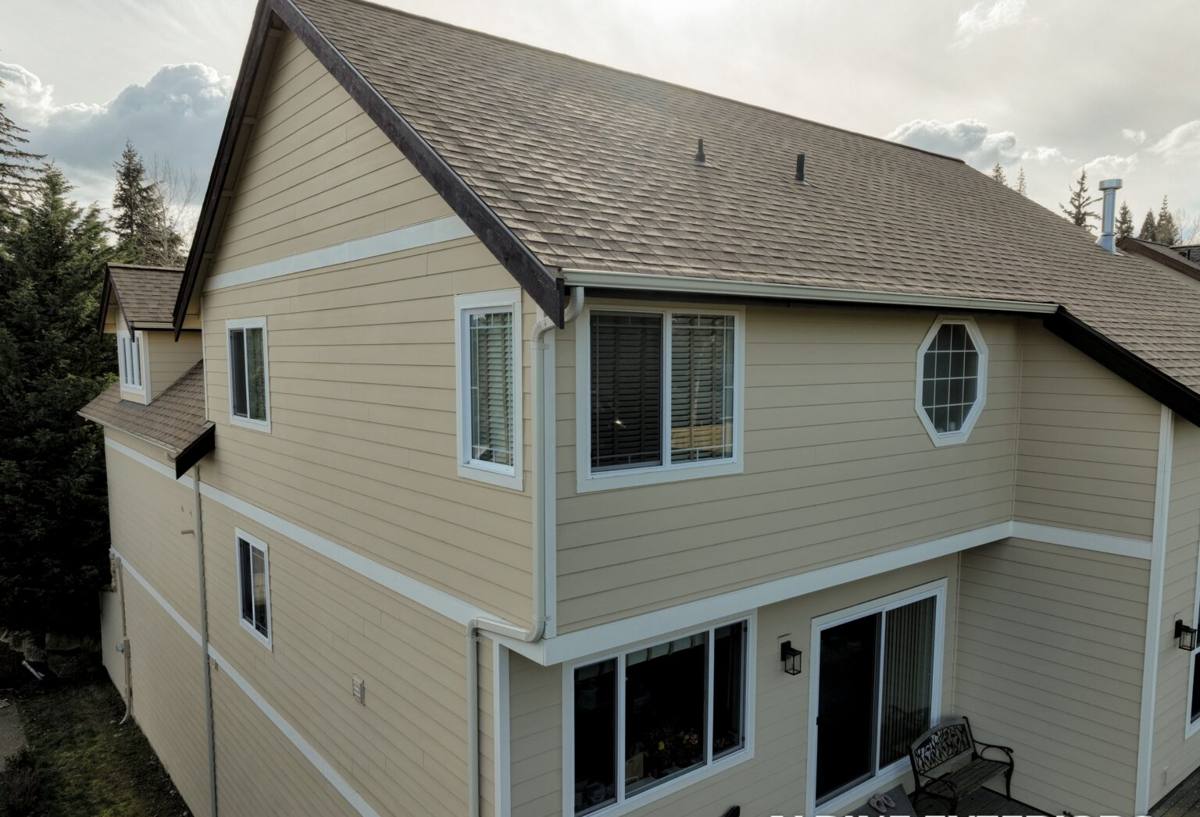
What Salt Air, Rain, and Moss Actually Do to a Shingle Roof
Salt Air and Metal Components
Asphalt shingles themselves aren't particularly vulnerable to salt air, but the metal that surrounds them is. Flashing, drip edge, nail heads, roof vents, and gutter hardware all corrode faster near the water than they do a few miles inland. Cheaper galvanized fasteners and bare metal flashing can start showing rust streaks and pitting years before the shingles around them are due for replacement. On a coastal-adjacent property like a Cap Sante home, the metal components are often the first thing to fail, not the shingles — which is why the fastener and flashing spec matters as much as the shingle brand.
Wind-Driven Rain at Eaves, Valleys, and Walls
Anacortes gets plenty of rain that falls straight down and causes no trouble at all. The rain that causes problems is the kind that comes in at an angle during a windstorm and gets pushed under shingle edges, into valleys, and behind step flashing at walls and chimneys. A roof that's watertight in a light rain can still leak during a driving winter storm if the underlayment, valley treatment, and flashing laps weren't built for wind-driven water in the first place.
Moss and Shaded, Damp Roof Sections
Between the marine humidity and the tree cover common around Cap Sante, north-facing slopes and shaded sections of roof stay damp for long stretches of the year. That's exactly the environment moss needs to establish. Moss holds moisture against the shingle surface, works its way under shingle tabs as it grows, and can lift edges enough to let water in — even before the shingles themselves are worn out. A roof's moss exposure has as much to do with its layout, shading, and slope as it does with the shingle product installed on it.
What a Correct Installation Looks Like in Cap Sante
Underlayment and Ice-and-Water Barrier
The underlayment layer beneath the shingles is what actually keeps a roof dry when wind drives rain past the shingle surface. In this climate we treat eaves, valleys, and any roof-to-wall transitions as high-risk zones and use a self-adhering ice-and-water membrane in those areas rather than relying on standard felt or synthetic underlayment alone. It's a small material upgrade in specific locations, not the whole roof, and it's one of the more meaningful differences between a roof built for this weather and one built for a drier climate.
Flashing at Every Transition
Every place a roof plane meets something else — a wall, a chimney, a skylight, another roof plane — is a place water can get in if the flashing isn't done correctly. Step flashing at walls, counterflashing at chimneys, and properly formed valley metal all matter more here because of how often wind-driven rain tests those details. We use flashing metal and fasteners rated for a marine-influenced environment rather than the cheapest galvanized option, since that's typically where premature corrosion shows up first.
Ventilation That Actually Balances
Proper intake and exhaust ventilation keeps the underside of the roof deck dry and temperature-stable, which does two things: it protects the shingles from premature aging due to trapped heat and moisture, and it reduces the damp, still conditions that help moss and algae take hold on the topside. A lot of older roofs in this area were built with exhaust vents but no matching intake at the eaves, which leaves the system unbalanced. We check and correct this as part of any full re-roof.
Choosing a Shingle for This Location
Not every asphalt shingle product handles a damp, salt-influenced, moss-prone environment the same way. The table below outlines the main tradeoffs homeowners in Cap Sante typically weigh.
| Shingle Type | Typical Lifespan | Moss/Algae Resistance | Wind Rating | Best Fit |
|---|---|---|---|---|
| 3-tab asphalt | 15-20 years | Standard, none built in | Lower | Budget-conscious re-roofs on well-ventilated, sun-exposed slopes |
| Architectural/laminate | 25-30 years | Standard, unless algae-resistant granules specified | Higher, rated for coastal wind exposure | Most Cap Sante homes; better wind and impact performance |
| Algae-resistant architectural | 25-30 years | Copper- or zinc-infused granules resist streaking and slow moss/algae growth | Higher | Shaded slopes, north-facing sections, homes with heavy tree cover |
| Impact-rated (Class 4) | 25-30 years, often better warranty terms | Varies by product; algae-resistant versions available | Higher | Homes wanting maximum durability and possible insurance credit |
For most Cap Sante roofs, we recommend at least a standard architectural shingle rated for higher wind exposure, and algae-resistant granules on any slope that stays shaded or damp for long stretches. Algae-resistant granules don't make moss growth impossible, but they measurably slow it compared to standard granules, which matters over a 25-plus year roof life in this climate.
Our Process, Start to Finish
- On-site inspection. We walk the roof and attic, note existing damage, flashing condition, ventilation setup, and any moss or moisture patterns specific to your property.
- Honest scope and estimate. You get a clear written scope — what's being replaced, what materials are specified, and why — before any work starts.
- Tear-off and deck inspection. Old roofing comes off down to the deck so we can check for soft spots or water damage that wouldn't be visible otherwise.
- Underlayment and flashing installation. Ice-and-water membrane at vulnerable zones, new flashing at every transition, and properly balanced ventilation components.
- Shingle installation. Installed to manufacturer nailing specifications and wind-rating requirements, not shortcuts that void warranty coverage.
- Final walkthrough. We review the finished roof with you, clean up the site, and go over any maintenance points specific to your property's layout.
Maintenance Cap Sante Homeowners Can Do Between Roofs
A well-installed roof still benefits from basic upkeep, especially given how much moss and moisture this area sees. A few habits go a long way:
- Keep gutters clear so water isn't backing up under the shingle edge, especially heading into fall storms.
- Trim back tree limbs that overhang the roof to cut down on shade, debris, and moss-friendly conditions.
- Look for moss or dark streaking on shaded slopes each spring and address it before it spreads or lifts shingle edges.
- After any significant windstorm, do a visual check from the ground for lifted, cracked, or missing shingles.
- Have the roof professionally inspected periodically rather than waiting for a visible leak — most roof damage starts small and stays hidden until it isn't.
What Affects the Cost of a Shingle Roof Here
| Factor | Why It Matters in Cap Sante |
|---|---|
| Roof size and pitch | Steeper or larger roofs take more material, labor, and safety setup |
| Shingle grade selected | Standard architectural vs. algae-resistant or impact-rated changes material cost |
| Number of valleys, walls, and penetrations | Each transition needs flashing work, which adds labor time regardless of shingle choice |
| Existing deck condition | Rot or soft spots found at tear-off require repair before new roofing goes on |
| Ventilation upgrades needed | Correcting unbalanced intake/exhaust adds a modest cost but protects the new roof's lifespan |
| Tree cover and access | Heavy tree cover near the roofline can add cleanup and protection work during the job |
We don't quote a roof off a square-footage number alone — the estimate reflects what we actually find on your roof and attic during the inspection, not a generic average.
Why Hiring a Crew That Already Works Cap Sante Matters
A roofing crew that regularly works in and around Anacortes and Skagit County already knows which details matter here and which don't. That means not over-specifying materials a drier inland climate doesn't need, while not skimping on the flashing, underlayment, and ventilation details that this waterfront-adjacent environment actually requires. It also means familiarity with local permitting requirements and an understanding of how homes in this area are typically laid out — roof pitches, tree cover, and wind exposure patterns that repeat across the neighborhood. That local pattern recognition is hard to replace with a crew that's only worked drier, more sheltered parts of the region.
If you're weighing a repair, a partial re-roof, or a full replacement on a Cap Sante home, we're happy to take a look and give you a straightforward, no-pressure estimate — use the form below to get started.