 Anacortes Roofing
 Asphalt Shingle Roofing Built for March Point's Coastal Exposure
March Point sits out on the water between Fidalgo Bay and Padilla Bay, which means homes here take a different kind of weathering than roofs just a few miles inland in downtown Anacortes. The salt air off the bay, the wind that comes off open water with nothing to slow it down, and the damp shoulder seasons that never quite dry out all put extra demands on a roof. Asphalt shingle roofing can hold up very well out here, but only when it's specified and installed with this exposure in mind. A roof detailed the way you'd detail one in a dry inland climate will fail early on March Point — not because the shingle is bad, but because the assembly underneath it wasn't built for what this location actually throws at it.
This page covers what asphalt shingle roofing needs to look like on a March Point home, what our crew actually does on a tear-off and re-roof out here, and how to think about products, cost, and maintenance in a marine climate. We're not going to give you generic roofing advice dressed up with the neighborhood name — everything below is specific to what this exposure does to a shingle roof over time.
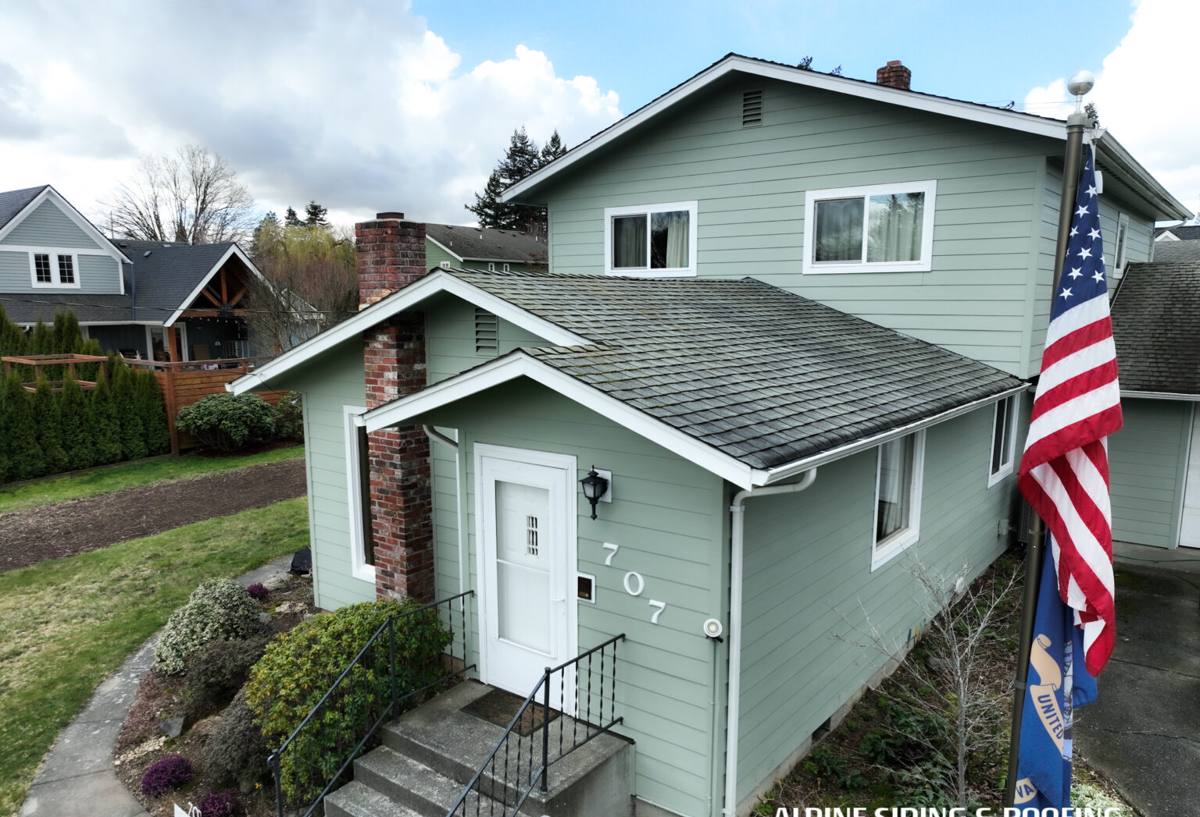
What Salt Air, Wind-Driven Rain, and Moss Actually Do to a Roof
Three things separate March Point from a typical inland Skagit County roof, and each one attacks a roof differently.
Salt Air
Airborne salt doesn't rot asphalt shingles the way it corrodes bare metal, but it accelerates the breakdown of exposed metal flashing, fasteners, and vent components faster than you'd see even a few miles inland. Cheap galvanized flashing or exposed steel fasteners will show rust streaking and pitting well ahead of schedule near open water. The fix isn't a different shingle — it's using corrosion-resistant flashing and fastener hardware everywhere metal touches the roof.
Wind-Driven Rain
Open water exposure means wind isn't gentle here, and rain doesn't just fall straight down — it gets pushed sideways and upward under shingle tabs, along ridge lines, and into any gap in the flashing detail. A roof that would be watertight in a calm rain event can leak in a March Point wind event if the underlayment, ice-and-water shield, and flashing laps weren't installed to account for wind-driven moisture working its way uphill under the shingle courses.
Moss and Algae Season
Western Washington's damp, shaded, low-sun months are long, and March Point's proximity to water keeps humidity elevated even on days that aren't actively raining. Moss gets a foothold anywhere a roof stays damp longer than it can dry — north-facing slopes, areas under tree cover, and valleys where debris collects. Left alone, moss lifts shingle edges, holds moisture against the mat, and shortens the life of the roof well before the shingles themselves would otherwise wear out.
What a Correctly Installed Shingle Roof Involves Here
A shingle roof is a system, not just a layer of shingles nailed to plywood. For March Point's exposure, every layer of that system earns its place:
- Roof deck condition — soft, delaminated, or water-stained sheathing gets replaced before anything goes back down, not covered over.
- Ice-and-water shield at eaves, valleys, and around every penetration — this is the backup layer that keeps wind-driven rain and any ice-dam moisture from reaching the deck.
- Synthetic underlayment across the full field, lapped and fastened to shed water even if a shingle tab is compromised in a wind event.
- Corrosion-resistant flashing at all valleys, walls, chimneys, and roof-to-wall transitions — chosen with salt air exposure in mind, not just cost.
- Proper nailing pattern matched to the shingle manufacturer's high-wind specification, not the minimum four-nail pattern that's fine in calmer climates.
- Balanced attic ventilation — intake at the eaves, exhaust at the ridge — so the roof deck can actually dry between wet spells instead of staying damp underneath the shingles.
Skip any one of these and the shingle itself becomes the weak point in a system that was never really finished.
Our Process on a March Point Re-Roof
1. On-Site Inspection
We walk the roof, check the attic for ventilation and moisture signs, and look at flashing details around every chimney, vent, and wall transition. We tell you honestly whether you need a full replacement or whether targeted repair makes more sense first.
2. Full Tear-Off
We remove the existing roofing down to the deck. Layering new shingles over old is a shortcut that traps moisture and voids most manufacturer warranties — we don't do it. Tear-off also lets us actually see the deck condition instead of guessing.
3. Deck Repair
Any soft, rotted, or delaminated sheathing gets cut out and replaced with matching material before anything else goes down.
4. Ice-and-Water Shield and Underlayment
We install ice-and-water shield at the vulnerable zones — eaves, valleys, penetrations — then run synthetic underlayment across the field, lapped correctly for water shedding under wind pressure.
5. Flashing
New flashing at valleys, chimneys, skylights, and wall intersections, sized and lapped for this exposure rather than reused from the old roof.
6. Shingle Installation
Shingles go down to the manufacturer's high-wind nailing spec, with attention to exposure and alignment so the finished roof both looks right and performs right.
7. Ventilation Check
We confirm intake and exhaust venting are balanced, adding or correcting vents where the existing setup is choking off airflow.
8. Cleanup and Walkthrough
Magnetic sweep for nails, full site cleanup, and a walkthrough so you understand what was done and what to expect going forward.
Choosing the Right Shingle for a March Point Roof
Not every asphalt shingle product is worth the extra cost near open water, and not every home needs the top-tier option. Here's how the common categories compare for this specific exposure:
| Shingle Type | Wind Performance | Moss/Algae Resistance | Best Fit |
|---|---|---|---|
| 3-Tab (economy) | Lower wind rating, more exposed edge per shingle | Standard only unless algae-resistant granules specified | Budget-driven projects, less wind-exposed slopes |
| Architectural / Dimensional | Higher wind rating, laminated construction resists lifting | Algae-resistant granule options widely available | Most March Point homes — the balance point of cost and durability |
| Impact-Resistant (Class 4) | High wind rating, reinforced mat | Algae-resistant options available | Homes prioritizing longevity and storm resilience over upfront cost |
For most homes on March Point, we steer people toward a laminated architectural shingle with algae-resistant granules and a documented high-wind rating. It's not the cheapest option on the shelf, but it's the one that actually matches what this exposure requires, and the cost difference over a 3-tab is modest compared to the labor cost of redoing a roof early.
Living With Moss and Algae Once the Roof Is On
No shingle is permanently moss-proof — algae-resistant granules slow growth, they don't eliminate it. What actually protects a roof long-term in this climate is a combination of the right product and basic upkeep:
- Keep overhanging branches trimmed back so shaded, damp areas of the roof get sun and airflow.
- Clear gutters and valleys of needles and debris before the wet season sets in, so water doesn't pool.
- Have moss physically removed rather than left to grow — scraping or gentle treatment, not pressure washing, which strips granules and shortens shingle life.
- Schedule a roof check every couple of years, especially after major windstorms, so small flashing or fastener issues get caught before they become deck damage.
What Affects the Cost of a March Point Re-Roof
| Cost Factor | Why It Matters |
|---|---|
| Roof size and pitch | More surface area and steeper pitches mean more material and labor time |
| Number of layers to remove | Tearing off multiple existing layers takes longer than a single-layer tear-off |
| Deck condition | Rotted or delaminated sheathing found during tear-off adds material and labor |
| Shingle tier chosen | 3-tab, architectural, and impact-resistant products carry different material costs |
| Flashing and penetration count | Chimneys, skylights, and multiple valleys each add detail work |
| Ventilation upgrades | Adding or correcting intake/exhaust venting is worth the modest added cost for roof longevity |
We give a written, itemized estimate after the on-site inspection — no vague lump-sum number pulled from a square-footage formula without ever seeing your roof.
Why a Crew That Already Works March Point Matters
A roofer who mostly works drier, inland jobs can still do competent work here, but they're making judgment calls about flashing details, underlayment coverage, and ventilation without the day-to-day feedback of seeing how roofs actually perform on this stretch of water. A crew that regularly works March Point and the broader Anacortes waterfront has already seen which details hold up to this exposure and which ones come back as callbacks. That's not a marketing point — it's the difference between a roof that's built to spec on paper and one that's built for the specific conditions it has to survive every winter.
We're also close enough to respond quickly if something comes up after a windstorm — a lifted shingle or a flashing issue is a same-area visit, not a half-day drive for a contractor based elsewhere in the county.
Signs Your March Point Roof May Need Attention
- Granules collecting in gutters or at downspout outlets in noticeably higher amounts than in past years
- Shingle tabs that look cupped, curled, or lifted, especially on wind-exposed slopes
- Moss or algae staining that keeps returning after cleaning
- Rust streaking or visible corrosion around flashing and vent stacks
- Daylight visible through the roof deck from inside the attic
- Water stains on ceilings or in the attic after a wind-driven rain event
- A roof approaching or past 20 years old, particularly if it was installed without ice-and-water shield or algae-resistant shingles
Any one of these on its own isn't necessarily an emergency, but it's worth having someone look before the next storm season.
If you're seeing any of these signs, or just want an honest read on where your roof stands, we're happy to take a look. Fill out the form below for a free, no-pressure estimate — we'll walk the roof, tell you what we find, and give you a straight answer either way.