 Anacortes Roofing
 Storm Damage Roof Repair for Oak Harbor Homes
Oak Harbor sits across the water from our home base in Anacortes, on the Skagit County side of Deception Pass — a short drive over the bridge onto Whidbey Island and into Island County. Roofs out there take a specific kind of beating: open exposure to wind off Puget Sound, driving rain that doesn't fall straight down so much as get pushed sideways into fascia and flashing, and on shaded or tree-lined lots, a moss season that runs long into the year. When a storm does real damage — missing shingles, lifted flashing, a tree limb through the field of the roof — the repair has to account for all of that, not just patch over the spot that's obviously broken.
This page is about what a correct storm damage repair looks like for a home in Oak Harbor specifically: what kinds of damage we actually see out there, how we assess and fix it, and why it matters to work with a crew that's already familiar with this stretch of the water.
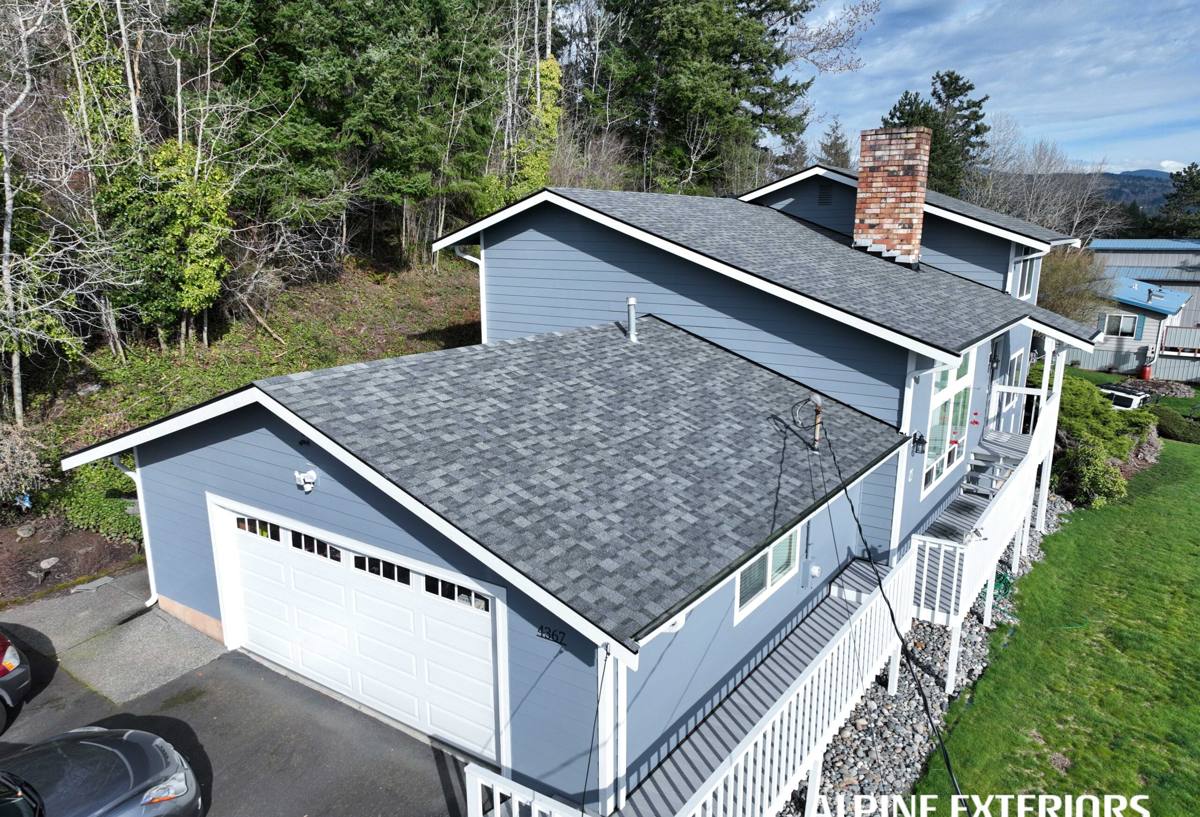
What Storm Damage Actually Looks Like on an Oak Harbor Roof
Not all storm damage is obvious from the ground, and not all of it happens all at once. Some of it is sudden and visible right after a storm; some of it builds slowly over more than one wet season before it finally shows up as a leak inside the house.
Wind and Uplift Damage
Open exposure to wind off the water is the biggest single factor for Oak Harbor roofs. Gusts get up under shingle tabs at edges and ridge lines first, working seals loose over repeated events even when no single storm looks severe enough to cause damage on its own. By the time shingles are visibly missing, the surrounding courses have usually already been compromised.
Wind-Driven Rain Intrusion
Rain being pushed sideways rather than falling straight down finds its way in through gaps a straight-down rain would never reach — under lifted shingle tabs, around slightly separated flashing, or through fastener holes that have worked loose. This kind of intrusion often shows up as a slow ceiling stain weeks after the storm that actually caused it, not right away.
Falling Debris
Wooded and tree-lined properties are common around Oak Harbor, and falling limbs or whole trees during high-wind events are one of the more dramatic forms of storm damage we get called out for. Impact damage can look minor from below — a few cracked or displaced shingles — while the deck underneath has actually been punctured or split.
Long-Term Moisture and Moss Damage
Storm damage doesn't always start with the storm. A roof that's already been holding moisture under a patch of moss, or has a flashing detail that's slowly failed over a couple of wet seasons, is far more vulnerable when a real wind event hits. What looks like sudden storm damage is sometimes an existing weak point finally giving way.
What a Correct Storm Damage Repair Involves
Repairing storm damage correctly is a sequence, not a single step. Skipping ahead to "put new shingles where the old ones were missing" is how the same section ends up damaged again after the next storm.
Getting the Roof Weathertight First
When damage is active and more weather is on the way, the first job is stopping water from getting into the house — not necessarily the permanent fix. Temporary tarping or emergency patching, done correctly, buys time to plan the actual repair properly instead of rushing it under pressure.
A Full Assessment Before Any Repair Begins
A storm rarely damages just the one spot that's visible. We check the full roof plane the damage occurred on, not only the obvious impact point, along with the decking underneath if there's any sign of penetration. Repairing just what's visible from the ground is one of the most common ways a storm repair fails early.
Matching Materials and Integrating the Repair
A patch that doesn't match the surrounding shingle profile, color, or age is a repair that will always look and perform differently than the rest of the roof. Where an exact match isn't available, we'll tell you honestly what your options are rather than installing something that doesn't tie in cleanly.
Rebuilding Flashing, Not Just Sealing It
Storm damage frequently shows up at flashing — around chimneys, valleys, and wall transitions — because those are the roof's weak points to begin with. A proper repair rebuilds and re-laps the flashing as part of the underlayment system rather than sealing a gap with caulk and calling it fixed.
Checking the Deck and Ventilation
If water got past the shingles, the decking underneath needs to be checked for rot or soft spots before anything new goes back on top. It's also worth confirming attic ventilation is doing its job, since trapped moisture compounds any storm damage that's already occurred.
Comparing Repair Scope
| Repair Type | What It Addresses | When It Makes Sense |
|---|---|---|
| Spot Patch | A small, isolated area of missing or damaged shingles with no deck damage | Minor, contained damage on a roof that's otherwise in good condition |
| Full Section Replacement | A full roof slope or section, including underlayment and flashing in that area | Damage spread across a slope, or when matching shingles closely enough for a spot patch isn't realistic |
| Full Re-Roof | The entire roof system, including deck repair where needed | Widespread damage, an aging roof already near the end of its service life, or repeated storm damage in multiple areas |
Deciding between these isn't just about the size of the visible damage. It also comes down to the roof's age, how closely available shingles will match the existing material, and whether the underlying deck and flashing are sound enough to build a lasting repair on top of.
Cost Factors Worth Understanding
| Factor | What It Affects |
|---|---|
| Extent of the affected area | Whether the job is a small patch or a full section tear-off |
| Deck condition underneath | Whether repair proceeds as planned or needs additional decking work first |
| Shingle availability and match | Whether a clean patch is realistic or a larger section needs replacing instead |
| Flashing scope | How much of the surrounding flashing system needs to be rebuilt, not just resealed |
| Roof access and pitch | Staging, safety requirements, and labor time on site |
| Insurance documentation needs | Additional time for photo documentation and a detailed written scope for your claim |
A written estimate that separates these items clearly is worth far more than a single number, especially if you're weighing the repair against a claim through your insurance company.
Working With Your Insurance Company
We're not a public adjuster and we don't negotiate your policy for you, but we do document damage thoroughly — with photos and a clear written scope of what happened and what it takes to fix it — because that's exactly what most insurers ask for when a storm claim comes in. Beyond that, decisions about your policy and your claim are between you and your insurer.
What we can tell you honestly is what we find on the roof and what a proper repair actually requires, so you're walking into that conversation with real information instead of a guess.
How Our Process Works
- Fast initial contact: After a storm, we prioritize getting eyes on active damage quickly, especially where water is actively getting in.
- In-person inspection: We get on the roof and in the attic ourselves to see the actual extent of the damage, not just the part visible from the driveway.
- Temporary protection if needed: Where the roof needs to be made weathertight right away, we'll tarp or patch it before the permanent repair is scheduled.
- Written estimate: You get an itemized scope covering the repair area, materials, flashing work, and any deck repair — documented clearly enough to hand to your insurer if needed.
- The repair itself: Work is done to manufacturer specification, matched to your existing roof as closely as realistically possible.
- Final walkthrough: We review the completed repair with you and do a full cleanup, including a magnetic sweep for stray fasteners.
Why Hiring a Crew That Already Works Oak Harbor Matters
After a storm, it's common to see unfamiliar crews going door to door in hard-hit areas offering fast repairs. Some of that work is legitimate. Some of it is a rushed patch by a company that won't be around if something goes wrong six months later. A crew that already works Oak Harbor regularly has a reason to stand behind the work long after the truck leaves, because the next job down the street depends on it.
Familiarity with this specific stretch of water matters in smaller ways too — knowing which roof orientations catch the worst of the wind, which older flashing details tend to fail first, and how long moss actually takes to become a real problem on a shaded slope here versus somewhere drier inland.
A Practical Checklist Before You Hire a Storm Repair Crew
- Do they inspect the full roof plane and attic, not just the visible damage?
- Is the estimate itemized by repair area, materials, and flashing work?
- Do they provide documentation you can actually use for an insurance claim?
- Do they carry current WA contractor licensing, liability insurance, and workers' compensation?
- Can they show real, recent work in or near Oak Harbor?
- Are they willing to explain, in plain terms, why a patch versus a larger repair is the right call for your roof?
Signs Your Oak Harbor Roof May Have Storm Damage
- Missing, cracked, or visibly lifted shingles after a wind event
- Granule loss showing up in gutters and downspouts following a storm
- New water staining on ceilings or in the attic, especially near valleys or penetrations
- Flashing that looks bent, separated, or pulled away from a chimney or wall
- Visible impact marks or a soft spot on the roof after a fallen limb
If you're seeing any of this after a storm, it's worth having the roof looked at sooner rather than later. Water that gets past the shingles doesn't wait for a convenient time to cause damage underneath.
If you'd like an honest, no-pressure look at your Oak Harbor roof after a storm, we're glad to come take a look and put together a written estimate you can compare against anything else you've received. Use the form below to request a free estimate.