 Anacortes Roofing
 Why March Point Decks Wear Out Faster Than You'd Expect
March Point sits out on open water, which is exactly what makes it a desirable place to live and exactly what makes it hard on a deck. Homes here catch wind and salt-laden air off the bay more directly than properties tucked back in town, and that combination accelerates almost every failure mode a deck can have. Salt air corrodes metal fasteners and connectors faster than inland exposure, driving rain off Puget Sound drives moisture into end grain and joints that face the weather, and the long, damp Skagit County shoulder seasons keep wood surfaces wet enough, long enough, for moss and algae to take hold and stay there for months.
None of that means a deck on March Point can't last. It means the deck has to be built and replaced with that exposure in mind from the framing up, not just resurfaced with better-looking boards on top of a structure that was never suited to the site.
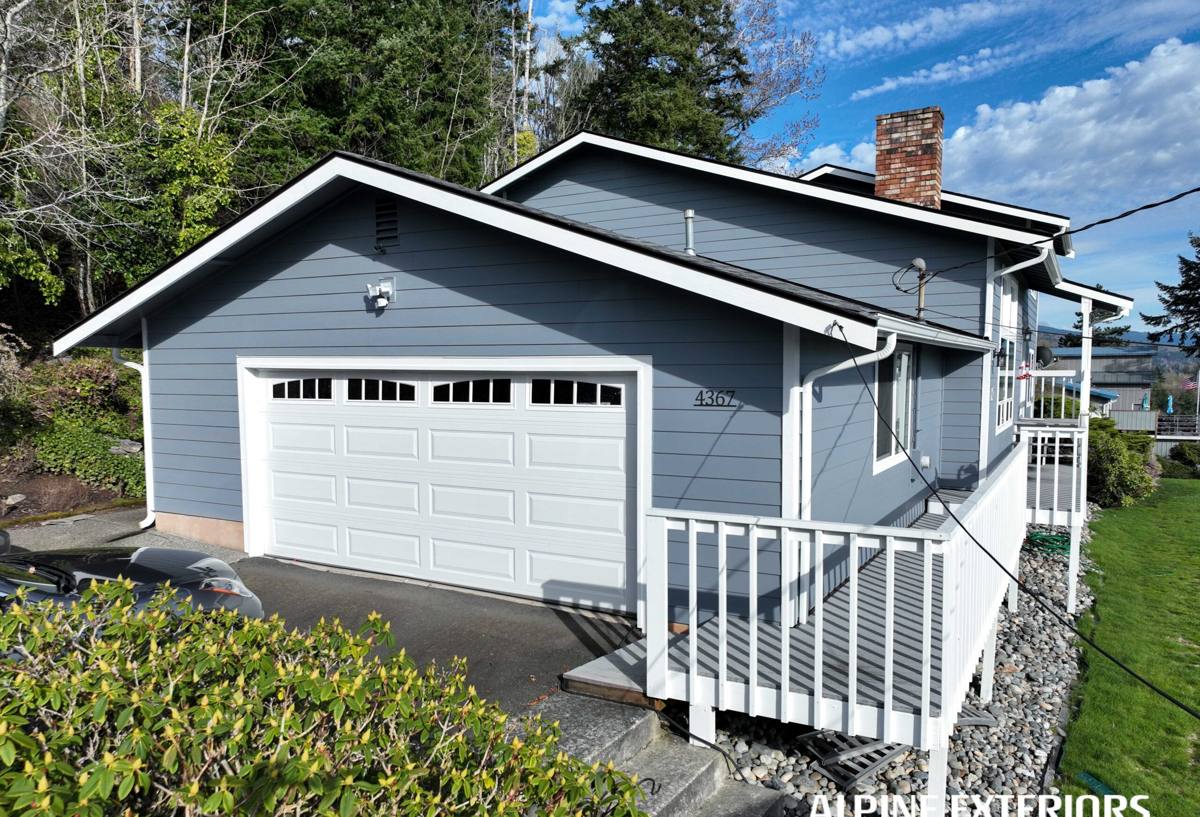
What Salt Air, Rain, and Moss Actually Do to a Deck
Salt Air and Metal Fasteners
Screws, joist hangers, and structural connectors are usually the first thing to fail on a coastal deck, often long before the decking boards themselves look bad. Standard galvanized coatings break down faster in salt-influenced air, and once corrosion starts at a fastener head or a hanger, it's happening out of sight until a board starts to feel soft or a rail starts to flex.
Driving Rain and Trapped Moisture
Rain that comes in sideways off the bay doesn't just wet the top of a deck, it drives into gaps between boards, around post bases, and behind ledger boards where the deck attaches to the house. If those areas aren't flashed and drained correctly, water sits there. Wood that stays wet for days at a time is wood that's rotting, even if the surface still looks fine.
Moss, Algae, and the Long Wet Season
Anacortes doesn't get a short, sharp rainy season and then dry out — the damp stretches on for months, and a shaded or north-facing deck can stay slick with moss and algae well into what should be dry weather. Beyond the slip hazard, moss holds moisture against the wood surface constantly, which is a big part of why decks in shaded spots on March Point often show surface rot years before a sun-exposed deck of the same age.
Signs a Repair Won't Cut It
A lot of March Point homeowners call us thinking they need a few boards swapped out, and sometimes that's true. But there are signs that point to full replacement instead of patchwork repair:
- Soft or spongy spots in multiple areas, not just one isolated board
- Visible gaps, rust staining, or movement at the ledger board where the deck meets the house
- Rusted or corroded joist hangers and structural screws, especially near the bay-facing side
- Persistent moss or algae that comes back within weeks of cleaning, even after treatment
- Railings or posts that flex or feel loose under normal weight
- A deck older than 15-20 years that has never had the substructure inspected
- Boards that are cupping, splitting, or pulling away from fasteners across large sections
One or two of these can sometimes be repaired. Several of them together, especially anything involving the ledger board or the framing underneath, usually means the deck has reached the point where replacement is the honest recommendation, not the upsell.
What a Correct Deck Replacement Actually Involves
A deck replacement that's built for March Point's exposure isn't just new boards on the old frame. It starts underneath, where the problems actually begin.
Structure First
We check the ledger board attachment, the flashing behind it, the posts, footings, and joists before anything else. On a coastal-exposed site, this is where corrosion and rot usually start, and it's the part of the deck that's most expensive and most dangerous to get wrong. If the framing is compromised, replacing the surface boards over it just hides the problem for another season or two.
Fasteners and Hardware Rated for Coastal Exposure
For a site with March Point's salt air exposure, we use stainless steel or high-grade coated fasteners and connectors rather than standard galvanized hardware. It costs more up front, but it's one of the cheapest ways to add years to a deck's life, since fastener failure is one of the most common reasons coastal decks fail early.
Flashing and Drainage
Proper ledger flashing, gapped board spacing for drainage and airflow, and attention to how water sheds off the deck rather than pooling against the house are all part of a correct build. This matters more on an exposed, rain-heavy site than it would on a sheltered inland lot.
Choosing Materials for a March Point Site
There's no single "best" decking material for every home — it depends on budget, how exposed the deck is to wind and rain, and how much maintenance you want to take on. Here's how the common options compare for a coastal Skagit County property:
| Material | Coastal Exposure Behavior | Maintenance | Typical Lifespan |
|---|---|---|---|
| Pressure-treated lumber | Good value; needs sealing to resist driving rain and moss | Annual cleaning, periodic re-sealing | 15-20 years with upkeep |
| Cedar | Naturally rot-resistant, ages gracefully but needs oiling in salt air | Regular oiling/staining to prevent graying and checking | 15-25 years with upkeep |
| Composite decking | Resists moisture and moss buildup well; won't splinter or rot | Occasional washing, no sealing or staining | 25-30+ years, manufacturer-warrantied |
Composite tends to make the most sense for exposed March Point sites where moss and constant dampness are the main problem, since it doesn't absorb water the way wood does. That said, plenty of homeowners prefer the look and feel of real wood and are willing to keep up with the maintenance — that's a legitimate choice too, as long as it's a deliberate one and not a surprise a few years in.
Our Deck Replacement Process
- On-site assessment — we look at the existing deck, the framing, the ledger attachment, and how the site is exposed to wind and rain before recommending anything.
- Honest scope and estimate — you get a clear picture of what needs replacing versus what's salvageable, and what materials fit your budget and exposure.
- Demolition and structural inspection — once old decking is off, we can see the framing clearly and confirm or adjust the plan.
- Rebuild from the ground up — footings, framing, ledger flashing, and hardware rated for the site's exposure, done before a single finish board goes down.
- Decking, railings, and finish work — installed to manufacturer spec, with attention to drainage and airflow underneath.
- Final walkthrough — we go over the finished deck with you and explain what maintenance, if any, it needs going forward.
Permits and Local Code Considerations
Deck replacement projects in Skagit County and the City of Anacortes typically require a building permit, especially when the work involves structural framing, footings, or railings above a certain height. Requirements can vary depending on the deck's size, height off grade, and whether it's attached to the house. We handle the permitting process as part of the job, so you're not the one tracking down inspections or code requirements on top of everything else.
Keeping a New Deck Ahead of the Weather
Even a well-built deck needs some upkeep on a site like March Point. A few habits go a long way toward protecting the investment:
- Sweep debris off regularly so moisture and organic matter don't sit on the surface
- Clean moss and algae as soon as it appears rather than waiting for it to spread
- Check railings and stair connections once a year for movement or looseness
- Keep gutters and downspouts near the deck clear so runoff isn't draining onto it
- For wood decks, plan on re-sealing or oiling on the schedule the product calls for, not just when it starts to look faded
Why It Matters That We Already Work on March Point
A crew that's worked on homes out on March Point knows how differently a bay-exposed deck ages compared to one three miles inland in Anacortes. That's not a small distinction — it affects what hardware we spec, how we detail the flashing, and which materials we'll actually recommend for your specific site rather than a generic answer. It also means we're not learning the local building department's requirements for the first time on your project.
If your deck is showing its age, or you're just not sure whether it needs a repair or a full replacement, we're happy to take a look and give you a straight answer. Fill out the form below for a free, no-pressure estimate — there's no obligation, and no pressure to do more work than your deck actually needs.