 Anacortes Roofing
 Guemes Island's Siding Challenge: Salt Air, Driving Rain, and a Long Moss Season
Guemes Island sits just across the water from Anacortes, a short ferry ride away, and it gets the full weather package that comes with living directly on Puget Sound. Homes here deal with salt-laden air blowing off the water, wind-driven rain that hits walls sideways instead of straight down, and shaded, tree-covered lots where moss and algae have a long growing season. Siding on Guemes Island works harder than siding a few miles inland in Skagit County, and it shows the difference within a few years if the wrong product or the wrong installation method gets used.
We've worked enough homes on the island to know the pattern: south and west-facing walls take the brunt of the driving rain, north-facing and tree-shaded walls grow moss and stay damp longer, and anything close to the shoreline sees faster wear on fasteners, trim, and paint than the same home would see set back from the water. A siding choice that ignores any one of those conditions ends up being a siding choice you regret by year seven or eight.
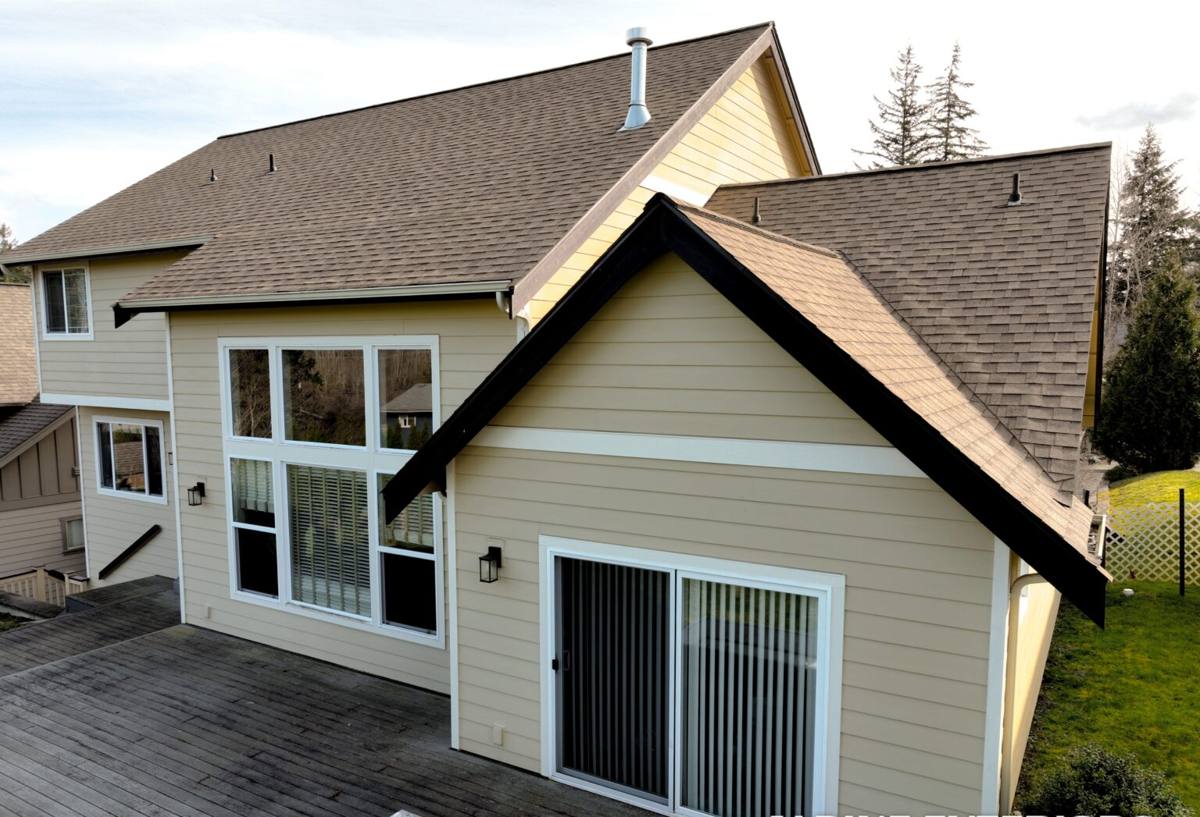
Why Fiber Cement Holds Up Where Other Sidings Struggle Here
Moisture and Rot
Fiber cement is not an organic material, so it doesn't rot, swell, or delaminate the way wood or wood-based composite siding can when it stays damp for extended stretches. On an island where a wall can stay wet for days after a good Pacific storm, that matters. Wood siding needs to dry out between rain events to avoid decay setting in at seams, butt joints, and fastener holes. Fiber cement doesn't carry that same clock.
Salt Air and Corrosion
Salt air accelerates corrosion in metal components — fasteners, flashing, and trim hardware in particular. It's less about the siding panel itself and more about everything holding it together. A correct fiber cement install on Guemes Island uses fasteners and flashing rated for coastal exposure, and the ColorPlus factory finish on James Hardie products is baked on and sealed at the plant, which holds up better against salt exposure than field-applied paint that gets thinner with each recoat.
Moss, Algae, and Mildew
Moss and algae need something to feed on. They take hold much more readily on organic or semi-organic surfaces than on cement-based ones. That doesn't mean fiber cement siding never gets a green tinge on a shaded north wall — it can, cosmetically, like anything exposed to constant damp shade — but it won't feed decay underneath the surface the way it can with wood siding, and it cleans off without touching the structural integrity of the panel.
What a Correct Fiber Cement Install Requires on Guemes Island
Fiber cement is only as good as the installation behind it. The panel is the visible part; the details underneath are what actually keep water out and hold up against the salt air. A correct install on the island includes:
- A continuous weather-resistive barrier behind the siding, lapped correctly to shed water downward at every seam
- A drainage gap (rainscreen or furring strip) so any moisture that gets behind the siding can drain and dry instead of sitting against the sheathing
- Corrosion-resistant fasteners suited to coastal exposure, driven per the manufacturer's spacing and depth specs — not just "close enough"
- Flashing at every window, door, roofline, and deck ledger penetration, installed to shed water down and out, not into the wall assembly
- Factory-cut edges and field cuts sealed per manufacturer requirements before they're closed up behind trim
- Proper clearance between the bottom of the siding and grade, roofing, decks, and patios so water and splash-back don't sit against the material
- Caulking used only where the manufacturer calls for it — over-caulking traps moisture rather than shedding it
Skip any one of these and you can still end up with moisture problems behind a product that's rated to resist them. This is the part of the job that doesn't show up in a photo but determines whether the siding performs for its full service life.
Comparing Siding Materials for Guemes Island's Climate
We only install James Hardie fiber cement, but it's a fair question why. Here's an honest look at how the common options perform under the specific conditions Guemes Island homes face — salt air, driving rain, and heavy shade-driven moss growth.
| Material | Moisture/Rot Resistance | Salt Air Performance | Moss/Algae Resistance | Ongoing Maintenance |
|---|---|---|---|---|
| James Hardie Fiber Cement | Excellent — non-organic, won't rot or delaminate | Strong; factory finish resists fading and chalking | Good; won't feed underlying decay | Occasional wash, paint touch-up on cut edges/trim over time |
| Cedar/Wood Siding | Moderate; needs consistent drying time and coating upkeep | Fair; salt air accelerates finish breakdown | Poor in shaded, damp areas without regular treatment | Regular re-staining/painting, moisture monitoring |
| Vinyl Siding | Good against rot (not organic) but can warp/crack in temperature swings | Fair; can chalk and become brittle over time | Fair; growth sits on surface, dirt/algae streaking common | Periodic washing; panels can't be spot-repainted to match |
| LP SmartSide (engineered wood) | Moderate; treated wood strand product still wood-based | Fair; seam and edge sealing is critical near salt air | Fair to poor if coating maintenance lapses | Coating and caulk maintenance is more time-sensitive than fiber cement |
Every product on that list can be installed correctly and every product can fail if it's installed poorly. What tips the scale for us, specifically for a marine, moss-prone climate like Guemes Island's, is that fiber cement gives the most margin for error over time — it doesn't depend on a homeowner staying on top of a recoating schedule to keep moisture and organic growth from becoming a structural issue.
Our Process for a Guemes Island Project
Getting Materials to the Island
Everything for the job — siding, trim, house wrap, fasteners, staging equipment — has to cross on the ferry, which means material orders get planned and staged well ahead of the first day on site. We build the schedule around getting a full, accurate material list confirmed before crossing, not making incremental supply runs mid-project.
Scheduling Around the Ferry
Crew time on Guemes Island is planned in efficient blocks rather than daily back-and-forth commutes, so the ferry schedule doesn't eat into productive work hours. That planning also means weather windows get used well — Pacific storm systems move through predictably enough that we can sequence tear-off, wrap, and siding install to minimize how long a wall sits open to the weather.
On-Site Work
Once on site, the sequence is straightforward: remove old siding, inspect and repair any sheathing damage found underneath, install the weather-resistive barrier and drainage gap, then install the Hardie panels, trim, and flashing to manufacturer spec. We walk the finished job with the homeowner before we call it done.
Cost Factors for Guemes Island Siding Projects
Every job is different, but these are the factors that most often move the price on an island project specifically:
| Factor | How It Affects Cost |
|---|---|
| Ferry and logistics planning | Material staging and crew scheduling take more coordination than a mainland Anacortes job, which factors into project timeline and bid |
| Home size and number of stories | More square footage and taller walls mean more material, labor, and staging/scaffolding |
| Condition of existing siding and sheathing | Hidden moisture or rot found during tear-off adds repair scope before new siding goes on |
| Trim and architectural detail | Corner boards, window trim, and custom details add labor time beyond flat wall panels |
| Site access | Waterfront, hillside, or heavily wooded lots can require extra staging or hand-carrying of materials |
Living With Fiber Cement Siding After Installation
Fiber cement is genuinely low-maintenance compared to wood, but "low-maintenance" isn't "no-maintenance," especially in this climate. A yearly rinse-down knocks back surface moss and salt residue before it builds up. Gutters and downspouts should stay clear so water isn't sheeting down a wall face longer than it needs to. Caulking at trim joints is worth a visual check every couple of years, and any small ding or scratch that exposes raw material underneath should get touched up before it sits exposed through a wet season. None of this is heavy work — it's closer to the upkeep you'd do on any exterior surface, just without the recoating schedule that wood and engineered wood products demand.
Why Hiring a Crew That Already Works Guemes Island Matters
A contractor who's only worked mainland Anacortes jobs will plan a Guemes Island project the same way they'd plan any other — and that's exactly where island jobs go sideways. Material orders come up short because nobody accounted for the ferry cutoff. Crew days get wasted on back-and-forth trips that could have been consolidated. Flashing and fastener choices that would be fine a few miles inland don't hold up as well against direct salt exposure. A crew that already knows the island builds the logistics into the bid up front, so there are no surprises mid-project and no shortcuts taken to make up for a plan that didn't account for where the job actually is.
If you're weighing a siding project on Guemes Island, we're happy to walk the home, talk through what your walls are actually dealing with, and put together a straightforward, no-pressure estimate — just fill out the form below.