 Anacortes Roofing
 Siding Built for March Point's Position on the Water
March Point sits out on its own peninsula between Fidalgo Bay and Padilla Bay, which means homes here take weather from more directions than a typical Anacortes lot tucked back from the shoreline. Wind off the water carries salt, the rain comes in sideways more often than not, and the tree cover and damp ground around much of the area keep siding wet longer after a storm passes. None of that is unusual for Skagit County. It's just more concentrated out here, and it shows up in siding faster than homeowners expect — chalking, soft spots at the bottom courses, paint that won't hold, trim that swells at the joints.
We work on homes throughout Anacortes, and March Point comes up often enough that we know what a house out here is dealing with by the time we get the call. This page covers what that means for a siding replacement specifically — what fails first, what a correct install looks like on this kind of site, and how we run the job.
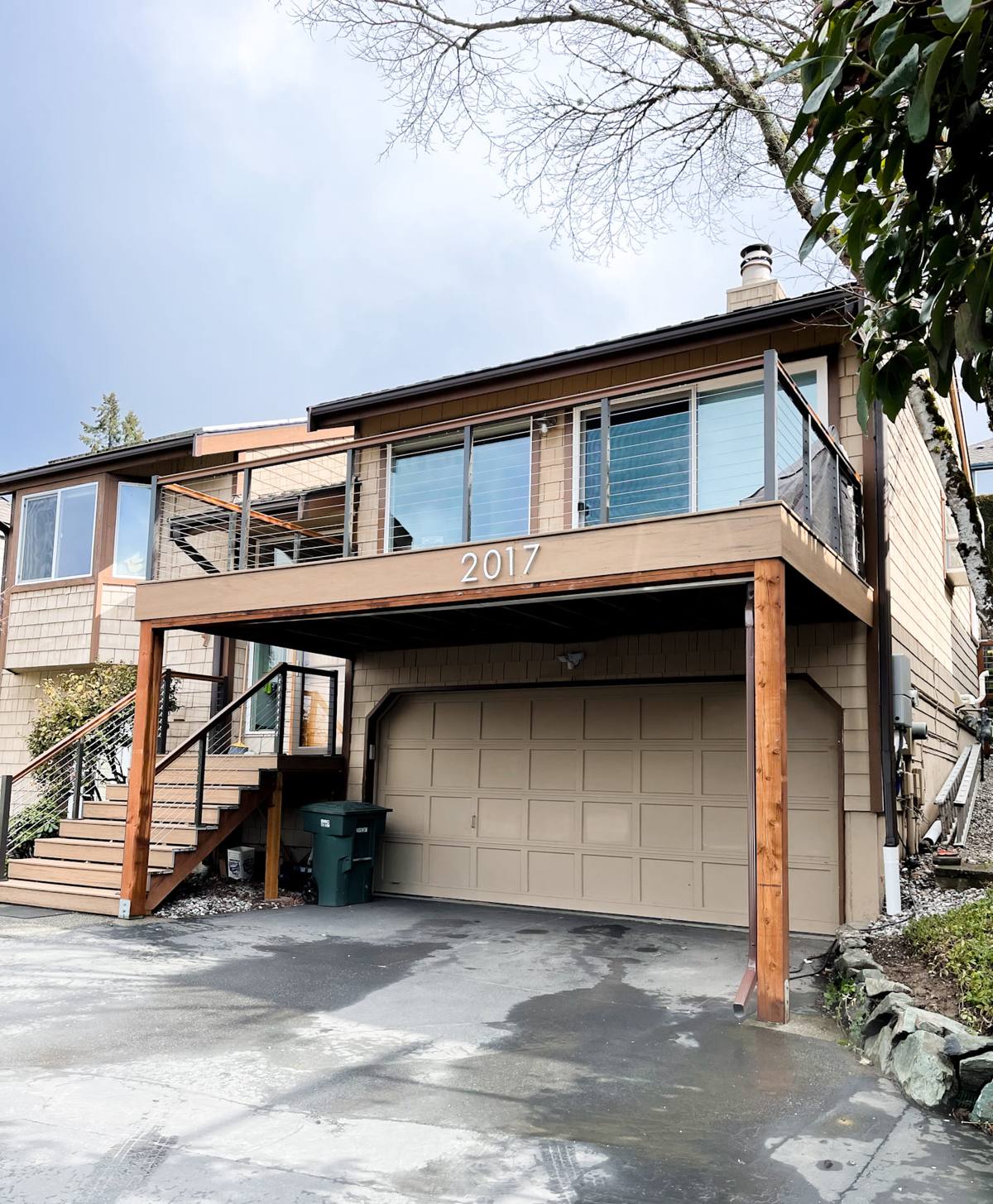
What Salt Air and Moss Actually Do to Siding
Two separate problems hit March Point siding, and they don't hit the same way.
Salt Air and Driving Rain
Airborne salt doesn't rot wood by itself, but it does two things that matter. It holds moisture against a surface longer than plain rainwater would, and it accelerates corrosion on any exposed metal — nail heads, flashing edges, hose bib fittings, anything that isn't fully protected. Driving rain off the bay adds to this by pushing water sideways into laps, seams, and butt joints that a calmer rain would never reach. On a wood or engineered wood product, that combination of constant dampness and wind-driven intrusion is what starts soft spots, especially low on the wall and around window sills.
Moss and Shade
Wherever a March Point home sits under tree cover or on a north-facing wall that doesn't get much sun, moss and algae get a long season to establish — often close to year-round in a mild Skagit County winter. Moss holds water against the siding surface the same way a wet sponge does. On a product with any organic content, that sustained dampness is a direct path to decay. On fiber cement, it's a cosmetic problem you wash off; on wood-based products, it's a structural one that keeps working even after you've cleaned the surface.
Why We Only Install James Hardie Here
We don't install vinyl, LP SmartSide, primed spruce, cedar, or other fiber cement brands, and March Point is exactly the kind of site where that standard earns its keep. James Hardie fiber cement is cement, sand, and cellulose fiber — there's no wood content for moisture to break down and no foam or vinyl substrate that can trap water against a wall. It doesn't feed moss the way wood siding can, it holds up to direct salt-air exposure without the corrosion concerns of some metal siding, and it's rated non-combustible, which matters given how many properties out here back up to trees and brush.
Hardie's HZ5 product line is engineered specifically for climates with a lot of moisture cycling — freeze-thaw isn't the main concern in Anacortes, but repeated wet-dry cycling from marine exposure is exactly the kind of stress it's built for. The factory-applied ColorPlus finish is also worth noting on a job like this: it's baked on under controlled conditions, which gives it better adhesion and fade resistance than field-applied paint, and it comes with its own finish warranty separate from the product warranty. On a house getting hit by salt air and UV reflection off the water, that finish durability is not a minor detail.
What a Correct Siding Replacement Involves
Replacing siding on a March Point home isn't just swapping old boards for new ones. The work that happens underneath the siding determines whether the new material lasts.
Tear-Off and Sheathing Check
We remove the old siding down to the sheathing and inspect it before anything new goes up. This is where we find the actual damage — soft plywood, rotted sill plates, corroded fasteners — that's usually invisible from outside. On a marine-exposure property, we pay close attention to the lower wall sections and anywhere moss or ivy has been growing against the house, since that's where sustained moisture does the most damage.
Weather-Resistive Barrier and Flashing
A correctly installed weather-resistive barrier (WRB) behind the siding is what actually keeps bulk water out of the wall assembly — the siding sheds most of it, but the WRB and flashing handle what gets past. We flash every window and door opening, every roof-to-wall intersection, and every penetration individually rather than relying on caulk alone. Caulk is a maintenance item; flashing is the actual water management system.
Fastening and Clearances
Hardie siding has specific nailing patterns and fastener requirements, and getting them wrong is one of the most common causes of early failure on fiber cement jobs done by crews that don't install it regularly. We also hold correct clearances at grade, decks, and roof lines — siding installed too close to the ground or to a horizontal surface stays wet longer and voids the manufacturer's installation requirements.
Caulking and Trim Details
Butt joints, corners, and trim-to-siding transitions get sealed with a high-quality, paintable sealant rated for exterior use, applied to manufacturer spec rather than just wherever it looks like a gap needs filling. On a house that takes driving rain from the bay, these details are where a rushed job shows up first — usually within a year or two.
Siding Options Compared for a Site Like This
| Factor | James Hardie Fiber Cement | Vinyl | Wood / Engineered Wood |
|---|---|---|---|
| Moisture and salt-air resistance | High — no organic material to break down | Doesn't absorb moisture, but seams and edges can let water behind the panel | Vulnerable — organic content is a food source for decay once wet |
| Moss and algae resistance | Won't feed growth; power-washes clean | Won't feed growth, but seams trap grime | Can feed growth if surface finish fails |
| Fire rating | Non-combustible | Combustible, can melt or deform near heat | Combustible |
| Finish durability | Factory ColorPlus finish, separately warrantied | Color molded through, but can fade and become brittle with age | Depends entirely on field-applied paint/stain maintenance |
| Typical lifespan when installed to spec | Multiple decades | 20–30 years depending on exposure | Varies widely; heavily maintenance-dependent |
This table reflects general product characteristics, not brand-specific claims about any single manufacturer's failures. The differences that matter most for March Point are moisture behavior and how each material handles sustained dampness from salt air, driving rain, and shaded, moss-prone wall sections.
Signs Your March Point Home May Need Siding Replacement Soon
- Soft or spongy siding when pressed, especially near the bottom of walls or under windows
- Paint that's peeling, bubbling, or won't hold a fresh coat
- Persistent moss or algae growth that comes back quickly after cleaning
- Visible gaps, warping, or separation at butt joints and corners
- Rust staining running down from nail heads or metal trim
- Rising energy bills that suggest the wall assembly is no longer sealing properly
- Musty smell or visible staining on interior walls that share an exterior wall
Any one of these on its own might just need a repair. Several together, especially on a wall that faces the water or sits under tree cover, usually means the siding system as a whole has reached the end of its useful life.
Cost Factors on a March Point Job
We don't quote pricing without seeing the house, but a few things consistently move the number on jobs out here:
| Factor | Why It Matters |
|---|---|
| Extent of hidden sheathing damage | Rot found during tear-off has to be repaired before new siding goes up — this is the most common source of a mid-project cost adjustment |
| Wall complexity | Dormers, bump-outs, and multiple roof-to-wall intersections all add flashing detail and labor time |
| Access and site conditions | Waterfront and sloped lots can complicate staging, scaffolding, and material delivery |
| Siding profile and trim package | Lap width, shingle-style accents, and trim board selections all affect material cost |
| Existing exterior condition | Homes with long-neglected moisture issues may need more extensive prep than a straightforward re-side |
Our Process for a March Point Siding Replacement
- On-site assessment. We walk the exterior, check problem areas you've noticed, and look for signs of moisture damage that aren't obvious from the ground.
- Written estimate. You get a clear scope of work and pricing before anything is scheduled — no surprise change orders for things we could have caught up front.
- Tear-off and sheathing inspection. Old siding comes off, sheathing gets inspected, and any repairs needed are documented and discussed with you before we proceed.
- WRB, flashing, and fastening to spec. This is the part of the job nobody sees once it's done, and it's the part that determines whether the siding lasts.
- Hardie installation and finish detail. Panels or lap siding go up to manufacturer nailing and clearance requirements, with trim, caulking, and touch-up handled to a factory-finish standard.
- Final walkthrough. We go over the finished job with you before calling it done.
Why a Crew That Already Works March Point Matters
Siding installation quality depends a lot on whether the crew understands the specific conditions of the site they're working on. A crew that mostly works inland jobs may not think twice about clearance at grade on a low-lying lot, or how much additional flashing attention a water-facing wall needs compared to a sheltered one. We work throughout Anacortes and the surrounding Skagit County area regularly enough that these details aren't an afterthought — they're built into how we scope and install every job out here from the start. That local familiarity doesn't replace a proper inspection of your specific house, but it does mean we're not guessing at what March Point homes are up against.
If your March Point home is showing signs of siding wear or you're planning ahead for a replacement, we're happy to take a look and give you a straightforward, no-pressure estimate. Use the form below to get started.