 Anacortes Roofing
 Why La Conner Decks Wear Out Faster Than Inland Ones
La Conner sits right on the Swinomish Channel, and that waterfront location is exactly what makes it beautiful and exactly what's hard on a deck. Salt-laden air moves off the water and settles on every exposed surface — fasteners, flashing, railings, the wood or composite boards themselves. Add Skagit County's long wet season, where structures can stay damp for days between dry spells, and you've got the two biggest enemies of an outdoor deck working together: corrosion and moisture intrusion.
Then there's moss. Anacortes and the surrounding Skagit County towns get enough shade, humidity, and mild temperatures for moss and algae to gain a foothold on almost any horizontal wood surface that isn't cleaned or ventilated well. On a deck, moss doesn't just look bad — it holds water against the boards, blocks airflow underneath, and accelerates rot in exactly the spots you can't see until a board gives way underfoot.
None of this means a deck in La Conner can't last. It means the build has to account for the environment from the ground up — not just the decking material, but the fasteners, the substructure, the ventilation, and the finish schedule. That's the difference between a deck that needs full replacement again in eight years and one that holds up for decades with normal upkeep.
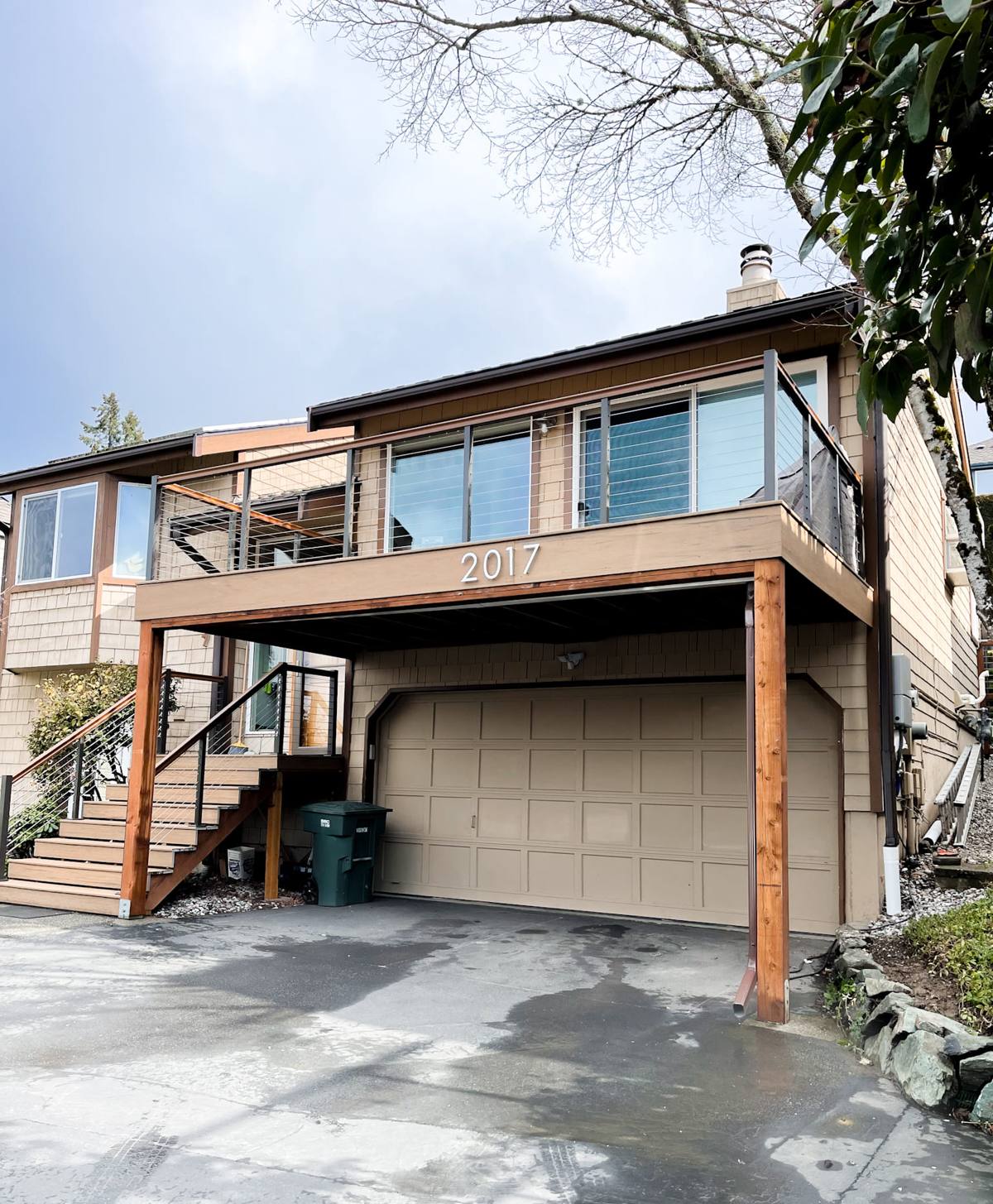
Signs Your Deck Has Reached the End of Its Life
Not every deck problem calls for full replacement — sometimes a board swap or ledger repair is enough. But there are signs that mean the structure itself is compromised and patching won't hold:
- Soft or spongy spots when you walk across the deck, especially near the house or stair landings
- Visible rot or crumbling wood at the ledger board (where the deck attaches to the house)
- Rusted, bent, or missing joist hangers and structural fasteners
- Posts that have shifted, settled, or show rot at the base where they meet grade or concrete
- Persistent moss or black staining that returns within weeks of cleaning
- Railings that flex or feel loose when pushed — a safety issue, not just cosmetic
- Gaps opening up between boards from years of wet/dry cycling
If you're seeing two or more of these, especially anything involving the ledger board or support posts, it's worth having someone look at the structure before deciding between repair and replacement. A deck that looks fine on top can still have a failing frame underneath — that's common in older La Conner properties where the substructure was built to a different standard than what's used today.
What a Correct Deck Replacement Actually Involves
The Substructure Comes First
The decking boards are the part everyone sees, but the substructure is what actually determines how long the deck lasts. A proper replacement starts with the ledger connection — the board bolted to the house framing — because that's the single most common failure point on any deck, and it's especially vulnerable in a wet, salt-air climate if it wasn't flashed correctly the first time. We check that the ledger has proper flashing that sheds water away from the house rim joist, not just a bead of caulk trying to do a flashing's job.
From there it's the footings, posts, beams, and joists. In this region, footings need to sit below frost depth and bear on undisturbed or properly compacted soil — something that matters more on older La Conner lots where original construction may not have met current code. Joist spacing, beam sizing, and post connections all get sized to the actual load the deck will carry, not just matched to whatever was there before.
Fasteners and Hardware Matter More Here Than Inland
This is where a lot of deck work quietly fails in a salt-air environment. Standard galvanized fasteners can start showing corrosion within a few years this close to the water. We use stainless steel or high-grade coated fasteners rated for coastal exposure and treated lumber contact, along with corrosion-resistant joist hangers and post bases. It costs a bit more up front. It's a fraction of the cost of tearing the deck apart again in ten years because the hardware gave out before the boards did.
Ventilation and Drainage Underneath
A deck built low to the ground or over a patio without adequate airflow traps moisture underneath, which is exactly the setup moss and rot need. Where the design allows, we build in ventilation gaps and grade the ground below to drain away from the house rather than pool under the structure. This one detail does more to prevent future moss and rot problems than any surface treatment applied after the fact.
Choosing the Right Decking Material for a Waterfront Property
There's no single "best" decking material — the right choice depends on how much maintenance you're willing to do, your budget, and how much direct weather and salt exposure the deck sees. Here's how the common options compare for a La Conner setting:
| Material | Upfront Cost | Maintenance | Moisture/Salt Behavior |
|---|---|---|---|
| Pressure-treated lumber | Lowest | Annual cleaning, refinishing every 2–3 years | Prone to graying, splintering, and moss buildup without upkeep |
| Cedar | Moderate | Regular sealing to maintain color and resist moisture | Naturally rot-resistant but still needs finish maintenance near salt air |
| Composite decking | Higher | Occasional washing, no staining or sealing | Resists rot and moss growth well; check fastener and hidden-fastener compatibility |
| PVC/capped polymer | Highest | Minimal — mostly rinsing | Fully sealed surface holds up very well against salt air and constant moisture |
For a lot of La Conner homeowners, composite or capped polymer decking makes sense specifically because it removes the yearly sealing cycle that wood demands in this climate. That said, wood decking done right — with proper fasteners, ventilation, and a realistic maintenance schedule — still performs well and remains the more affordable option. We'll walk through the honest trade-offs for your specific deck rather than push one material across the board.
Cost Factors to Expect
Every deck is different, so we won't quote a number without seeing the site, but these are the factors that actually move the price:
| Factor | Why It Matters |
|---|---|
| Size and shape | Square footage and complexity (multiple levels, angles, built-in stairs) directly drive material and labor |
| Substructure condition | If footings, posts, or framing need replacement, not just resurfacing, cost rises accordingly |
| Decking material | Pressure-treated is least expensive upfront; composite and PVC cost more but reduce long-term maintenance |
| Railing and stair requirements | Code-compliant railings, guards, and stair geometry add labor and material |
| Site access | Waterfront and hillside lots common around La Conner can add logistics for material delivery and equipment |
| Permit and inspection scope | Height above grade and proximity to shoreline can trigger additional permitting steps |
Permits and Local Considerations Around La Conner
Deck work in and around La Conner often falls under Skagit County or Town of La Conner permitting depending on the parcel, and decks built above a certain height or attached to the house typically require a permit and inspection. Properties near the shoreline or within designated shoreline management areas can also have additional setback or review requirements. We handle the permit process as part of the job so you're not stuck untangling it yourself, and we build to pass inspection the first time rather than treating the inspector as an obstacle.
Wind exposure is another local factor worth planning for. Open, waterfront lots around the channel can see stronger sustained wind than more sheltered inland properties, which affects railing bracing and how we anchor larger structures like pergolas or privacy screens attached to the deck.
Our Deck Replacement Process
- On-site assessment — We inspect the existing deck, ledger connection, footings, and framing to determine what's salvageable and what isn't, and check for any moisture damage to the house itself at the attachment point.
- Honest scope and estimate — You get a clear breakdown of what the job involves, material options with real trade-offs, and a written estimate before any work starts.
- Permitting — We pull the required permits and schedule inspections so the project stays compliant from the start.
- Demolition and disposal — Old decking, railings, and any compromised framing are removed and hauled off.
- Structural rebuild — Footings, posts, beams, and joists are installed or reinforced to current code, with corrosion-resistant hardware throughout.
- Ledger flashing and waterproofing — Proper flashing details at the house connection to keep water out of the rim joist and wall assembly, not just the deck.
- Decking, railing, and stairs — Installed per your chosen material, with attention to ventilation gaps and drainage below.
- Final walkthrough and inspection — We review the finished deck with you and coordinate the final inspection sign-off.
Keeping Your New Deck in Good Shape
A well-built deck still needs some seasonal attention in this climate, especially with the moss and moisture La Conner sees for a good part of the year. A simple routine goes a long way:
- Sweep debris and standing leaves off the deck regularly, especially in fall
- Rinse or gently power-wash surfaces once or twice a year to knock down early moss growth before it takes hold
- Check that gaps between boards stay clear so water can drain through rather than pool
- Inspect railings and stair connections annually for looseness
- For wood decking, reseal or stain on the schedule appropriate to the product — don't wait until it's visibly gray
- Keep planters and rugs off the deck surface long-term, since trapped moisture underneath accelerates rot and moss
Why It Matters to Hire a Crew That Already Works in La Conner
A contractor who mostly works drier, inland areas may build a technically sound deck that still underperforms here — wrong fastener grade for salt exposure, not enough ventilation underneath, a flashing detail that works fine in a low-moisture climate but fails after a few wet Skagit County winters. Building for this specific environment isn't guesswork once you've done it repeatedly in the same conditions: you know which details actually matter here and which corners genuinely can't be cut.
We also know the permitting path for this area and what local building officials look for at inspection, which keeps the project moving instead of stalling on avoidable paperwork issues.
Get a Straightforward Estimate
If your deck is showing its age — soft spots, rusted hardware, moss that keeps coming back — it's worth having it looked at before deciding what's needed. We offer free, no-pressure estimates for La Conner deck replacement projects, with a straight answer on what your deck actually needs and what it will take to fix it right. Fill out the form below to get started.