 Anacortes Roofing
 Windows Built for Oak Harbor's Coastal Conditions
Homes around Oak Harbor sit close enough to the water that salt air is part of daily life, not an occasional nuisance. Add in driving rain off the Strait, wide temperature swings between day and night, and a moss and mildew season that stretches most of the year in Skagit County, and you've got a climate that's genuinely hard on windows. Frames that would hold up fine fifty miles inland can fail early out here — seals break down faster, hardware corrodes, and wood trim that isn't detailed correctly starts absorbing moisture within a few seasons.
Custom windows done right for this area aren't just about picking a style you like. They're about material choices, flashing details, and installation sequencing that account for what the coastline actually does to a house over time. That's the piece a lot of window jobs skip, and it's the piece that determines whether you're happy with the investment in year one or dealing with soft trim and fogged glass by year five.
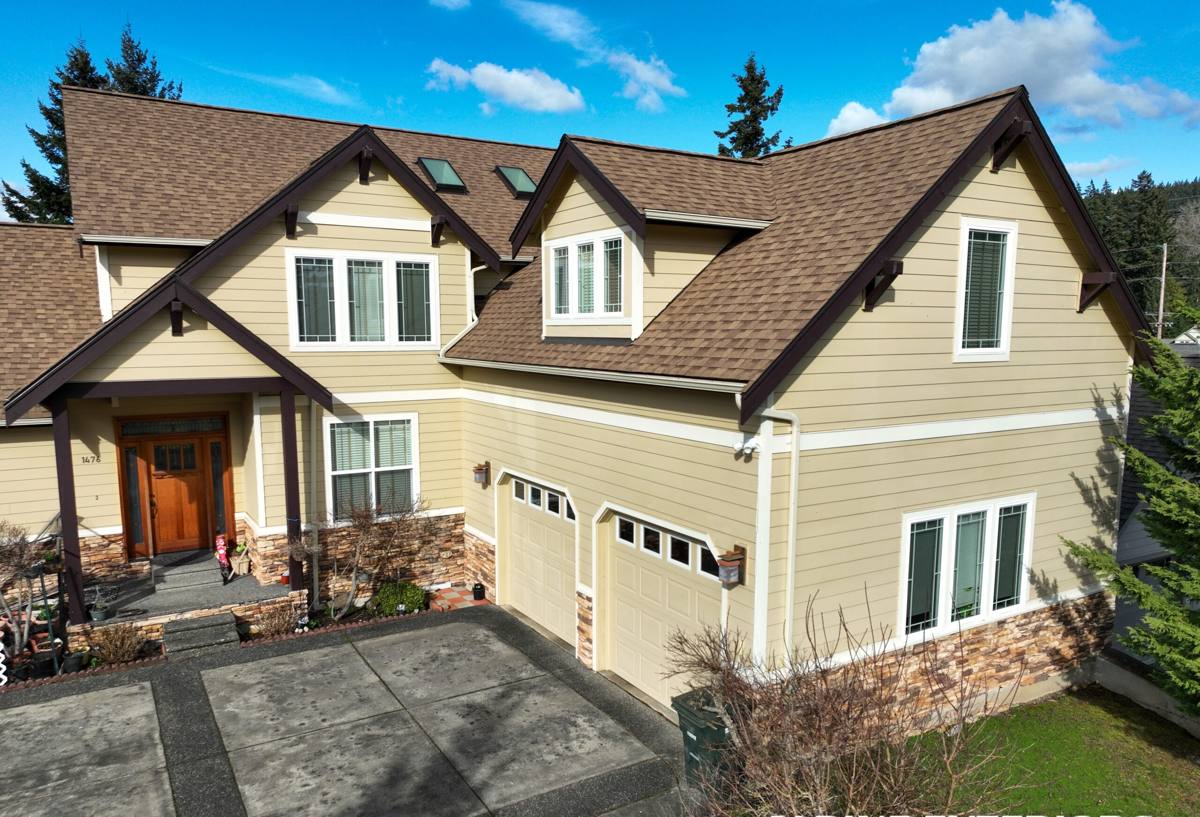
What Oak Harbor Homes Actually Need From Their Windows
Salt Air and Corrosion
Airborne salt accelerates corrosion on hardware, screws, and any exposed metal components. Cheaper hinges, cranks, and locking mechanisms can start showing rust or seizing up well before the glass or frame shows any wear. On a custom window job, we pay attention to hardware specs the same way we pay attention to the frame material — stainless or properly coated hardware costs a little more up front and saves you a service call in a few years.
Driving Rain and Water Management
Wind-driven rain doesn't fall straight down — it gets pushed sideways into wall assemblies, especially on west- and south-facing elevations that catch weather coming off the water. A window that's watertight in a lab test can still leak on a real house if the flashing, sill pan, and sealant details around it aren't done correctly. Most window failures we get called out to fix aren't actually a bad window — they're a window installed without proper flashing integration into the wall's water management system.
Moss, Mildew, and Prolonged Moisture
Skagit County's long damp season means anything organic — wood trim, unsealed sills, shaded corners of a house — stays wet longer and dries out slower than it would in a drier climate. That's exactly the environment moss and mildew need. Window materials and trim details that don't drain and dry quickly become long-term maintenance problems, not just cosmetic ones.
Choosing the Right Frame Material for This Climate
There's no single "best" window material — the right choice depends on your home's style, your budget, and how much upkeep you want to take on. Here's how the common options actually perform in a salt-air, high-moisture environment like Oak Harbor's:
| Material | Salt Air Performance | Maintenance | Notes |
|---|---|---|---|
| Vinyl | Good — won't corrode or rot | Low — occasional cleaning | Budget-friendly, solid moisture resistance, fewer custom color/finish options than other materials |
| Fiberglass | Excellent — dimensionally stable, resists corrosion | Low | Higher upfront cost, holds paint well, strong choice for coastal exposure |
| Aluminum-clad wood | Good on the exterior face if detailing is correct | Moderate | Attractive wood interior, but cladding seams and joints need careful installation to keep moisture out |
| All-wood | Poor without diligent upkeep | High | We're honest with clients about this one — beautiful, but it's a real maintenance commitment in this climate, and neglect shows up fast |
| Aluminum (uncoated) | Fair to poor — prone to pitting near salt air over time | Moderate | Better suited to drier inland areas than direct coastal exposure |
We'll talk through these trade-offs honestly based on your specific house — its orientation, how exposed it is to weather off the water, and what you're trying to get out of the windows both visually and functionally.
What "Correct" Installation Looks Like Here
The window itself is maybe half the job. The other half is everything around it — and that's where most of the long-term problems either get prevented or get built in.
- Removing old windows without damaging the surrounding framing or sheathing
- Inspecting the wall opening for existing rot, moisture damage, or prior flashing failures before anything new goes in
- Installing a proper sill pan to direct any water that gets past the window back outside, not into the wall cavity
- Integrating new flashing correctly with the home's existing weather-resistive barrier — shingled so water always sheds outward and down
- Using sealants and backer rod appropriate for the gap size and material, not just caulk smeared over a joint
- Setting the window level, plumb, and square so hardware operates smoothly and weep holes function as designed
- Confirming weep holes and drainage paths are clear and unobstructed once trim goes back on
- Finishing exterior trim with materials and details that shed water rather than trap it against the house
Skip any of these steps and you can end up with a brand-new window that still leaks, still fogs, or still lets moisture into the wall assembly — the exact problems custom windows are supposed to solve.
Our Process for Oak Harbor Projects
1. On-Site Assessment
We look at each window opening individually — orientation, exposure to prevailing weather, condition of the existing framing and trim, and any signs of past water intrusion. Custom work starts with understanding what's actually happening at each opening, not applying a one-size template to the whole house.
2. Material and Style Selection
We walk through frame material, glazing options, and style choices based on your home's architecture and your priorities — energy performance, sightlines, maintenance tolerance, and budget all factor in.
3. Precise Measurement and Ordering
Custom windows are built to the exact dimensions of your openings. We measure carefully and account for the reveal and shim space needed for proper installation, not just a rough fit.
4. Removal and Prep
Old units come out carefully, and we address anything we find in the wall opening — soft framing, failed old flashing, gaps in the weather barrier — before the new window goes in. Installing over a hidden problem just seals it in.
5. Installation and Flashing
This is where the climate-specific detailing happens: sill pans, properly shingled flashing, correct sealant application, and careful attention to how the new window ties into the home's existing water management.
6. Trim, Finish, and Walkthrough
We finish the interior and exterior trim, confirm every window operates and locks correctly, and walk the job with you before we consider it done.
What Drives Cost on a Custom Window Project
| Factor | Why It Matters |
|---|---|
| Frame material | Vinyl and fiberglass generally cost less upfront than aluminum-clad wood or all-wood units |
| Window size and configuration | Larger units, custom shapes, and multi-panel configurations cost more than standard sizes |
| Number of openings | Whole-house projects typically bring a better per-window cost than one-off replacements |
| Condition of existing framing | Rot or water damage found during removal adds repair scope before the new window can go in |
| Glazing package | Upgraded glass for energy performance or sound reduction adds cost but can be worth it depending on the room and exposure |
| Trim and finish work | Custom exterior trim details for proper water shedding take more labor than a basic trim-out |
We give straightforward, itemized estimates so you can see where the money is going and make decisions that fit your budget without guessing.
Why Hiring a Crew That Already Works This Area Matters
A contractor who mainly works drier, inland jobs may not think twice about hardware coatings, sill pan details, or how aggressively to flash a west-facing wall — because in a lot of the country, those things are optional extras rather than requirements. Around Oak Harbor and the rest of Skagit County, they're not optional. We work this coastline regularly, so the details that prevent salt corrosion, driving-rain leaks, and moss buildup aren't an afterthought — they're built into how we scope and price every job from the start.
We're also familiar with what tends to go wrong on older Oak Harbor-area homes specifically — the kind of flashing shortcuts and trim choices that were common in past decades and cause problems now. That local pattern recognition saves time during the assessment and helps us catch issues before they become part of a new installation.
Signs Your Current Windows Are Losing the Fight
- Visible condensation or fogging between panes of double- or triple-glazed units
- Hardware that's stiff, corroded, or won't lock securely anymore
- Drafts you can feel near the frame even when the window is closed and locked
- Soft or discolored trim around the window, especially on exterior-facing sides
- Visible moss or persistent mildew staining on sills or trim
- Difficulty opening or closing that wasn't there when the window was newer
Catching these early usually means a more straightforward replacement. Waiting until there's visible wall damage behind the window turns a window project into a repair project first.
Let's Talk About Your Windows
If you're weighing a custom window project for your Oak Harbor-area home, we're happy to come take a look, walk through material options honestly, and put together a clear estimate — no pressure, no upsell. Use the form below to get started.