 Anacortes Roofing
 Building Decks for La Conner's Waterfront Climate
La Conner sits close enough to the water that salt air is part of daily life, not an occasional visitor. Add Skagit County's long wet season — months of driving rain followed by a slow, mossy shoulder season where things never fully dry out — and you have a climate that is genuinely hard on outdoor structures. A deck built with generic, big-box assumptions will show it within a few years: rust bleeding from fastener heads, boards cupping, railings loosening, and a green film that keeps coming back no matter how often it's scrubbed. A deck built for this specific environment holds up because every material and connection was chosen with that environment in mind, not despite it.
We build and repair decks throughout the Anacortes area, including La Conner, and the difference between a deck that lasts and one that doesn't usually comes down to decisions made before the first board goes down — fastener grade, ledger flashing, drainage, and airflow underneath the structure.
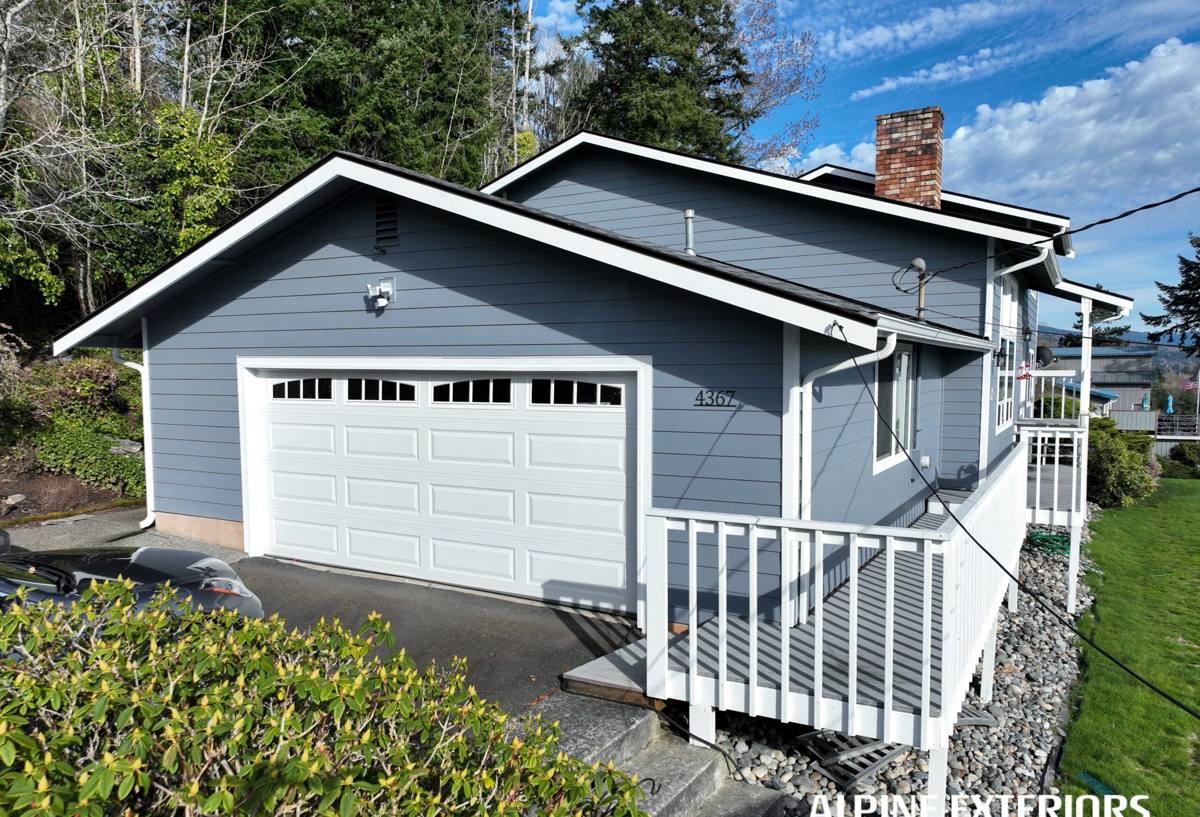
What Local Homes Actually Need From a Deck
Every deck has to hold weight and look good on day one. Out here, it also has to survive conditions that are more aggressive than most manufacturers' standard warranty language assumes. Three things drive almost every decision we make on a La Conner deck project:
Salt Air and Corrosion
Airborne salt accelerates corrosion on anything less than marine-grade or coated fasteners and hardware. Standard hot-dip galvanized hardware can start showing rust streaks within a season or two this close to the water. It's a slow failure that's easy to miss until a railing post feels loose or a fastener head snaps off during a repair.
Driving Rain and Water Management
Rain here rarely falls straight down — wind-driven rain gets up under railings, into ledger connections, and behind fascia boards. A deck that isn't detailed for that will trap water in places you can't see, and rot starts from the inside of a joist long before it shows on the surface.
Moss, Algae, and Prolonged Dampness
Long stretches of overcast, damp weather are exactly what moss and algae need to take hold. On a deck, that's not just a cosmetic problem — a moss mat on decking holds moisture against the wood or composite surface and turns any flat, low-airflow deck into a slip hazard by late fall.
Decking Material Options: Real Trade-Offs
There's no single "right" material for every La Conner deck — it depends on budget, how much upkeep you want to do, and how close you are to open water. Here's how the common options actually compare in this climate:
| Material | Salt/Moisture Behavior | Moss & Algae | Upkeep |
|---|---|---|---|
| Pressure-treated wood | Good if properly sealed and re-coated; fasteners must be rated for treated lumber | Prone to growth if not cleaned; textured grain holds spores | Annual cleaning, periodic re-staining or sealing |
| Cedar | Naturally rot-resistant but still needs sealing near salt air | Moderate; smoother surface than treated pine | Regular sealing to hold color and resist checking |
| Composite decking | Excellent — won't rot or absorb water like wood | Can still grow algae film on shaded, low-airflow areas | Periodic washing; no staining or sealing needed |
| PVC/cellular decking | Best moisture performance; fully synthetic | Least prone to sustained growth due to non-porous surface | Lowest; occasional rinse |
We're honest with clients that composite and PVC cost more up front but remove a lot of the annual maintenance burden that wood demands in this climate. That said, plenty of homeowners still prefer the look and feel of real wood and are willing to keep up with sealing — that's a legitimate choice, not a mistake, as long as it's maintained on schedule.
Structural Details That Get Skipped on Cheap Builds
Ledger Board Flashing
The ledger board — where the deck attaches to the house — is the single most common source of hidden rot on any deck, anywhere. In a wet climate like this, proper flashing that directs water away from the house sheathing isn't optional. We flash every ledger connection regardless of decking material.
Fastener and Hardware Grade
We use fasteners and structural hardware rated for the exposure they'll actually see — which, in a salt-air environment, generally means stepping up from standard galvanized to coated or stainless options in high-exposure spots like railing posts and ledger bolts. It costs more per fastener. It costs far less than replacing a railing post in five years.
Footings and Post Bases
Footings need to sit below frost depth and be sized for the soil they're set in, and post bases should keep wood off the concrete so water doesn't wick up into the post end grain. This is basic code-compliant construction, but it's also the first thing that gets shortcut on a rushed job.
Airflow Underneath
A deck built low to the ground with no ventilation underneath stays damp longer after every rain. Where grade and height allow, we build in enough clearance and, where needed, vents or gaps that let air actually move under the structure instead of trapping moisture against the framing.
Our Deck Building Process
- On-site assessment — we look at sun exposure, prevailing wind and rain direction, drainage, and how close the site is to open water, since that affects fastener and hardware recommendations.
- Design and material selection — we walk through wood, composite, and PVC options honestly, including what each one actually costs to own over time, not just to install.
- Permitting — most new decks and many substantial rebuilds require a permit; we handle that process rather than leaving it to the homeowner.
- Framing and structural work — footings, ledger flashing, joists, and hardware sized and rated for this climate.
- Decking, railing, and finish work — installed to manufacturer spacing and fastening specs, which matters for warranty coverage as much as appearance.
- Final walkthrough — we go over care and maintenance specific to whatever material you chose, so there are no surprises the first time moss season rolls around.
Living With a Deck Here: Maintenance Reality
No deck in this climate is truly maintenance-free, even the low-upkeep synthetic materials. The difference between a deck that stays solid for decades and one that needs early repairs usually comes down to a short list of seasonal habits:
- Sweep debris and standing leaves off the deck regularly — trapped organic matter holds moisture and feeds moss growth
- Rinse or wash the surface at least once or twice a year to knock back algae and moss before it establishes
- Check railing posts and stair connections annually for movement, which can signal fastener corrosion
- Reseal or re-stain wood decking on the schedule the product actually calls for, not "whenever it looks bad"
- Keep gutters and downspouts near the deck clear so runoff isn't dumping extra water onto or under the structure
- Clear vegetation that shades the deck excessively, since shaded, damp areas are where moss takes hold first
Permitting and Local Code
New decks and significant rebuilds in Skagit County and the Anacortes area typically require a building permit, with requirements tied to deck height, size, and whether it's attached to the house. Permit review also checks the structural details that matter most in this climate — footing depth, ledger attachment, and railing height and spacing. We handle the permit process as part of the job so it isn't left for the homeowner to navigate alone.
Why Hire a Crew That Already Works La Conner
A contractor who mostly builds decks in drier inland climates will default to standard fastener grades, standard flashing details, and standard maintenance advice — because that's what works where they usually build. None of that is wrong in general; it's just not matched to a site that sits in salt air with a long wet season. Crews who regularly work La Conner and the surrounding Anacortes area know which fastener grades actually hold up, which ledger details keep water out during driving rain, and which decking choices are worth the extra upfront cost versus which ones are overkill for a given site. That local pattern recognition is what keeps a deck looking and performing well ten years in, not just on the day it's finished.
If you're planning a new deck or need an honest look at whether an existing one is holding up the way it should, we're happy to come out, walk the site, and put together a free, no-pressure estimate — just fill out the form below.