 Anacortes Roofing
 Composite Decking on Guemes Island: Built for the Water, the Wind, and the Wait
Guemes Island sits close enough to Anacortes to feel like a neighborhood, but far enough out — across the ferry — that every material decision carries more weight. A deck out here doesn't just deal with Skagit County's wet winters; it deals with salt-laden air coming off the water, near-constant wind exposure, and long stretches of shade under fir and cedar canopy that keep moss and algae active for most of the year. Composite decking has become the go-to choice for island homeowners who are tired of sanding, staining, and chasing rot on wood decks that never fully dry out between storms.
This page is specifically about composite decking for Guemes Island properties — what the climate demands, what a correct installation looks like out here, and why hiring a crew that already understands ferry logistics and island conditions matters more than it might on the mainland.
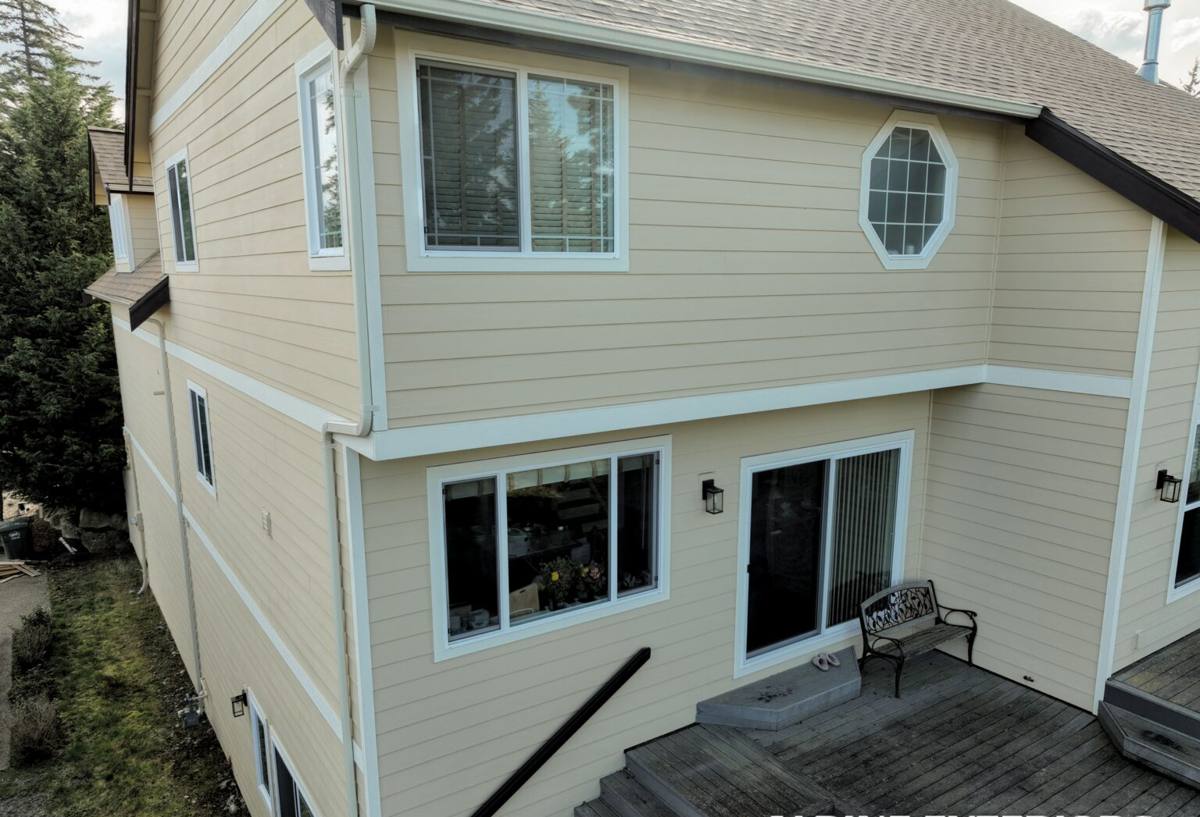
Why Guemes Island Is a Different Decking Environment Than Downtown Anacortes
Even a short hop across Guemes Channel changes the equation. Homes on the island tend to sit closer to open water, with less windbreak from buildings and traffic than you'd find in town. That means more direct salt spray reaching deck boards, fasteners, and railing hardware. Combine that with:
- Extended shade exposure from mature trees on many wooded lots, which slows drying time after rain
- Prevailing wind and driving rain that pushes moisture sideways into fascia boards, stair stringers, and ledger connections
- A long moss season that can run from fall through spring on north-facing or tree-shaded decks
- Limited access for large delivery trucks and heavy equipment, which affects how materials get staged and moved
None of this makes composite decking a bad fit for Guemes Island — quite the opposite. But it does mean the installation details matter more here than they would on a dry, open, in-town lot.
What Salt Air and Moisture Actually Do to a Deck
The wood problem
Traditional wood decking on the island faces a rough combination: salt accelerates the breakdown of exterior wood finishes, while shade and moisture keep the boards damp longer between dry spells. That's the environment where rot, cupping, and splintering take hold fastest. Homeowners end up on a yearly cycle of pressure washing, moss treatment, sanding, and re-staining just to keep a wood deck presentable — and even with diligent upkeep, structural wood components near grade or under heavy shade are the first to fail.
The composite advantage — and its limits
Composite decking doesn't absorb water the way wood does, doesn't need annual staining, and holds up better against salt exposure over time. But composite isn't maintenance-free or immune to the island's conditions. Moss and algae will still grow on the surface if a deck sits in shade and stays damp — composite gives algae a foothold just like any other outdoor surface, and it needs periodic cleaning to stay slip-resistant and look right. The framing underneath, the fasteners, and the flashing details are still exposed to the same salt air and moisture cycle as any other structure on the island. Composite decking reduces the maintenance burden dramatically; it doesn't eliminate the need for a well-built substructure.
What a Correct Composite Deck Build Looks Like Here
Substructure and framing
The composite boards get the attention in most sales conversations, but the framing underneath is what determines whether the deck lasts. On Guemes Island lots, we pay particular attention to:
- Joist protection — a proper joist tape or flashing barrier over framing lumber to keep salt-laden moisture from wicking into cut ends and fastener holes
- Ledger board flashing where the deck meets the house, since this is the single most common point of hidden water intrusion on any deck
- Post base connections kept off grade and away from standing water, especially on lots with uneven drainage
- Adequate ventilation underneath the deck so airflow can help offset the extended shade and slow drying common on wooded lots
Fasteners and hardware
Salt air is hard on hardware. We use fasteners and structural connectors rated for coastal or corrosive environments rather than standard interior-grade hardware — the cost difference is small, and the failure mode of the wrong hardware (rust streaking, weakened connections) is not something you want to discover years into ownership.
Board selection and layout
Composite board lines vary in how they handle moisture, heat expansion, and surface texture. On shaded, damp lots we lean toward boards and surface finishes that hold up well against algae growth and stay slip-resistant when wet. Board direction, expansion gaps, and hidden fastener spacing all get set according to manufacturer specs — get these wrong and you'll see buckling or gapping within a few seasons, composite or not.
Composite vs. Wood vs. PVC: An Honest Comparison for This Climate
| Factor | Wood (cedar/PT) | Composite | PVC/Capped Polymer |
|---|---|---|---|
| Upfront cost | Lowest | Mid-range | Highest |
| Maintenance in salt air | Annual staining/sealing | Periodic cleaning only | Periodic cleaning only |
| Moisture/rot resistance | Weakest, especially in shade | Strong; capped boards resist water absorption | Strongest |
| Algae/moss resistance | Poor without treatment | Good, varies by product line | Very good |
| Feel underfoot in cool/wet weather | Natural, but can feel damp | Comfortable | Can feel harder/colder |
| Typical warranty structure | N/A (material warranty only) | 25–50 year limited, varies by brand | Often longest limited warranty |
For most Guemes Island homeowners, composite hits the sweet spot between upfront cost and long-term maintenance relief, particularly on decks that get regular shade and salt exposure. PVC is worth considering on decks with heavier moisture exposure or where a lighter-colored, low-heat-gain surface matters, but it costs more and some homeowners find the look and feel less natural.
Our Process for Guemes Island Projects
1. On-site assessment
We look at sun/shade exposure, existing structure condition (if replacing a deck), drainage, and how close the site sits to open water, since that affects hardware and board recommendations.
2. Material selection
We walk through composite board options with the site conditions in mind — not just color and price, but how each line performs in shade, moisture, and salt exposure.
3. Logistics and scheduling
Ferry scheduling affects material delivery and crew timing on island jobs. We build that into the project timeline up front rather than treating it as a surprise delay — this is one of the clearest advantages of working with a crew that already does regular work on Guemes Island.
4. Framing and flashing
This is where most of the long-term durability gets decided, as covered above — proper flashing, joist protection, and corrosion-resistant hardware.
5. Decking installation
Board layout, fastening, and expansion gaps set to manufacturer spec, with attention to drainage and airflow underneath.
6. Final walkthrough
We go over basic composite maintenance — seasonal cleaning, what to watch for in shaded areas prone to moss — so the deck stays looking and performing the way it should.
Maintenance Checklist for a Composite Deck in This Climate
- Sweep debris and needles off the deck regularly, especially under trees where organic buildup feeds moss and algae
- Rinse or wash the surface a few times a year, more often in shaded or north-facing areas
- Check railing posts and stair connections annually for any looseness or corrosion at hardware points
- Keep gutters and downspouts near the deck clear so runoff isn't dumping extra water onto the structure
- Inspect ledger flashing where the deck meets the house every year or two — this is the most common hidden failure point on any deck
- Trim back vegetation that's shading the deck and slowing drying time, where practical
Why It Matters to Hire a Crew That Already Works on Guemes Island
A deck built by a crew unfamiliar with island conditions often looks fine on installation day and shows its weaknesses two or three winters later — moss taking hold faster than expected, hardware showing early corrosion, or a project that ran long because nobody planned around ferry schedules. Anacortes Roofing Co works exteriors across Skagit County, including regular trips out to Guemes Island, so the framing details, hardware choices, and scheduling around ferry logistics aren't guesswork — they're standard practice on every island job we take on.
Get a Free, No-Pressure Estimate
If you're planning a new composite deck or replacing an aging wood deck on Guemes Island, we're happy to come take a look, walk the site, and give you a straightforward estimate — no pressure, no hard sell. Use the form below to get started.