 Anacortes Roofing
 Fiber Cement Siding for La Conner Homes
La Conner sits along the Swinomish Channel a short drive south of Anacortes, and that channel-front, low-lying setting puts homes here in a slightly different exposure than a lot of the rest of Skagit County. Between the tidal water on one side and open farmland stretching out on the other, there's not much standing between a La Conner home and the weather moving through: salt-tinged air off the channel, rain that comes in on the wind more often than it falls straight down, and a damp season that keeps moss active on shaded walls for most of the year. Siding on a home like this isn't just a finish layer — it's the thing standing between that exposure and the framing underneath, and how it's built matters as much as what it's made of.
We install James Hardie fiber cement siding exclusively, and it's the material we bring to La Conner specifically because of how consistently it performs against the combination of salt, wind, and moisture this stretch of the county deals with.
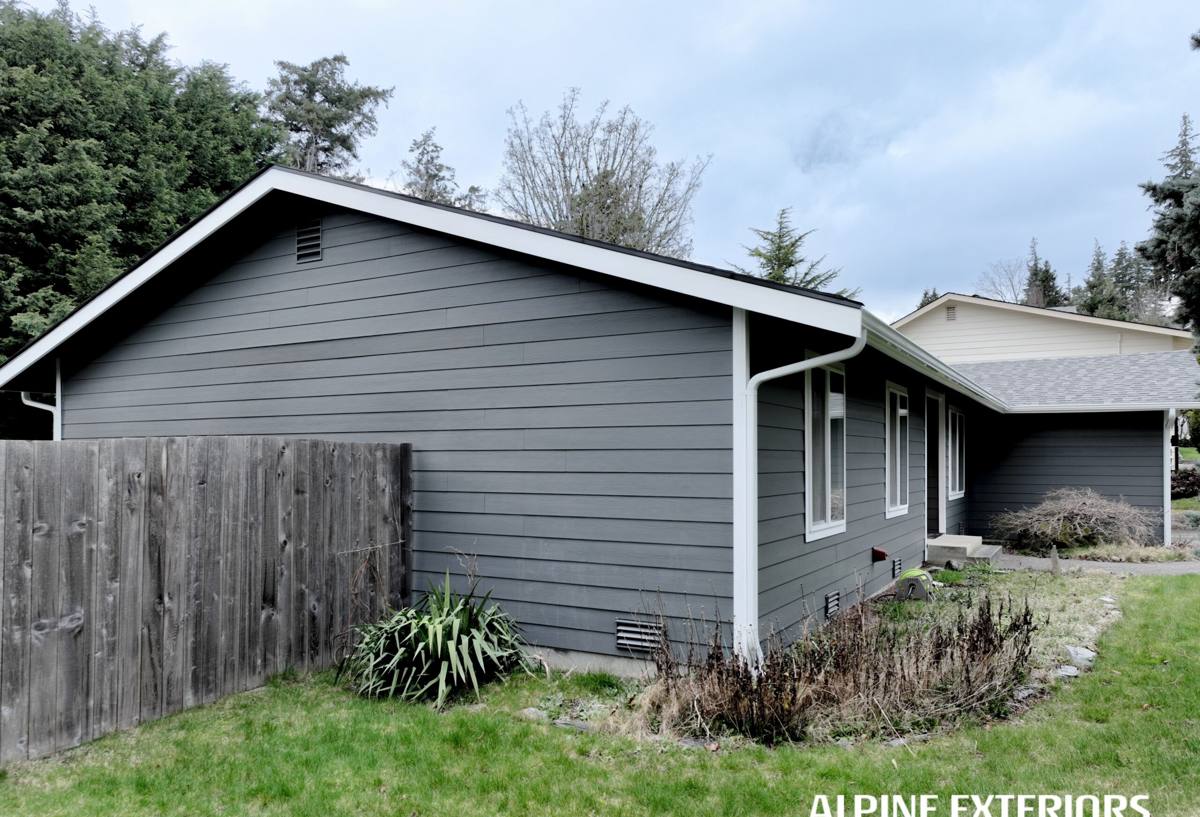
What La Conner's Climate Does to Siding
Salt Air Off the Channel
Water this close, even the brackish tidal water of the Swinomish Channel, carries salt into the air, and that salt is hard on anything metal or lightly finished. Fasteners corrode faster, cheaper paint finishes chalk and fade ahead of schedule, and any siding material that depends on a thin surface coating for protection tends to show its age early in a spot like this. It's not as harsh as a home facing directly onto open ocean, but it's a real, measurable step up from an inland Skagit Valley property a few miles away.
Driving Rain With Little Windbreak
Between the open channel and the flat farmland surrounding town, La Conner doesn't have the tree cover or terrain that breaks up wind the way some more forested parts of Skagit County do. That means rain arrives sideways more often, pushed into lap joints, trim seams, and any spot where flashing isn't doing its job. A siding system that would hold up fine somewhere more sheltered can still let water in here, because the water is coming from an angle a straight-down rain test never accounts for.
A Moss Season That Doesn't Really End
The combination of marine moisture and mild temperatures keeps moss and mildew viable on shaded and north-facing walls across most of the calendar in this part of the state. That's not just a cosmetic issue. Sustained moss growth holds water against the wall long after a dry afternoon should have let it evaporate, and that trapped moisture is exactly the condition that leads to rot in the sheathing behind older or lower-grade siding.
Why We Install Only James Hardie Fiber Cement
We used to offer a wider range of siding products. We narrowed to one system after watching, project after project, which materials actually held up to this kind of sustained coastal exposure and which ones quietly pushed maintenance problems back onto the homeowner a few years down the line. We don't install LP SmartSide, vinyl siding, Cemplank, Allura, primed spruce, or cedar. Every one of those has a legitimate place in the market, and plenty of contractors install them well. Our decision isn't a claim that they're bad products — it's a professional judgment that on homes taking this much salt, wind, and moisture, we'd rather stand behind one system completely than offer several and let price be the deciding factor.
| Material | Behavior in a Salt-Air, Wet Climate | Ongoing Maintenance | Realistic Lifespan |
|---|---|---|---|
| James Hardie fiber cement | Doesn't absorb moisture into its core; dimensionally stable | Low; factory finish resists moss, salt, and fading | 30+ years with correct installation |
| LP SmartSide (engineered wood) | Wood-based core is sensitive to moisture at cut edges and fastener holes | Moderate; edge sealing and touch-up over time | 15-25 years, climate-dependent |
| Vinyl | Can warp, gap, or fade under sustained wind and UV exposure | Low upfront, but hides moisture problems behind it | 20-30 years, variable |
| Primed spruce or cedar | Absorbs moisture readily; natural material moves with weather cycles | High; repainting and resealing on a recurring schedule | 15-25 years with consistent upkeep |
The core difference is moisture behavior. Fiber cement's cement-and-cellulose composition doesn't swell, cup, or rot the way wood-based products can, and it doesn't have vinyl's tendency to warp or gap as temperatures swing. That matters more in La Conner than in a drier, more sheltered inland town, simply because the wall assembly here spends more of the year wet.
The James Hardie System We Use Here
HardiePlank Lap Siding
HardiePlank is the workhorse of most La Conner installations — horizontal lap siding available in several widths and textures, built to shed water the way traditional wood lap siding does but without wood's moisture sensitivity. It suits both the older, more traditional homes in and around town and newer construction on the outskirts.
HZ5 Climate-Engineered Formulation
Hardie doesn't make one universal product. Its HZ5 formulation is engineered for regions with heavy, sustained moisture exposure and freeze-thaw cycling, which is a closer match to a channel-front Skagit County property than the formulations built for drier climates elsewhere in the country. We spec HZ5 for La Conner projects rather than defaulting to whatever's easiest to source.
ColorPlus Factory Finish
Rather than relying on paint applied on site, Hardie's ColorPlus boards come with a baked-on finish applied under controlled factory conditions. That finish holds color and resists salt exposure and UV far longer than field-applied paint, and it's backed by its own product warranty separate from the substrate warranty — a meaningful distinction on a home that takes as much sun and salt as this area sees.
What Correct Installation Actually Involves
Material choice is only half of what makes siding perform in this environment. The other half is installation detail, and it's the half that's easy to shortcut without a homeowner ever knowing until years later:
- House wrap or weather-resistive barrier installed and properly lapped before any siding goes up
- A drainage gap or rainscreen behind the siding so moisture that gets past the surface can dry out instead of sitting against the sheathing
- Corrosion-resistant fasteners at the manufacturer's specified spacing, sized correctly for salt-air exposure
- Proper clearance from grade, roofline, and decks so siding isn't sitting in standing water or constant splash-back
- Lapped and sealed joints at corners, windows, and trim rather than gaps covered over with caulk
- Field-cut edges primed before installation to protect the one place the factory ColorPlus finish doesn't already cover
Skip any of these and the wall can still look fine on move-out day. The consequences — staining at seams, soft spots low on the wall, paint or finish failure at trim — usually take a wet season or two to show up, which is exactly why a rushed install is easy to get away with until it's the homeowner dealing with the repair bill.
Our Process for a La Conner Siding Project
Assessment First
We start by walking the home and looking at what's actually going on behind the existing siding, not just what's visible from the curb. On a property this close to the channel, it's common to find some moisture damage in the sheathing that needs to be addressed before new siding goes up rather than sealed in behind it.
Installation to Manufacturer Spec
Every fastener pattern, flashing lap, and clearance follows James Hardie's published requirements for this climate zone, not a generic national standard pulled off an install guide meant for a drier region. That's what keeps the manufacturer's warranty valid and what actually determines how the wall performs over the next few decades.
Final Walkthrough
Once the job is done, we walk it with you, point out anything worth knowing about maintenance (there's very little with Hardie, but it's still worth a five-minute conversation), and make sure you know what a healthy wall looks like if you ever want to check it yourself.
Signs Your La Conner Home Needs New Siding
- Moss or dark staining that returns quickly after cleaning, especially on shaded or channel-facing walls
- Soft or spongy siding near the base of the wall or around window and door trim
- Rusting fasteners, corroding flashing, or a chalky, faded finish
- Cracked, warped, or missing siding sections after a windstorm
- Visible gaps at corners, seams, or window and door flashing
- Paint or caulk that's failing faster than it should, especially on walls facing the water or open fields
- Rising heating bills that may point to a wall assembly that's no longer sealing the way it used to
Cost Factors for Siding Work in La Conner
| Factor | Why It Matters |
|---|---|
| Tear-off vs. overlay | Removing old siding reveals moisture or rot damage common on older channel-front homes |
| Substrate condition | Sheathing or framing repair adds cost but prevents sealing existing damage behind new siding |
| Wall exposure | Channel-facing and unsheltered walls may call for tighter fastening and flashing detail |
| Home age and construction | Older La Conner homes can have different sheathing, framing, or trim conditions than newer builds |
| Site access | Tight lots or limited staging area near the water can add labor time |
Exact numbers depend on the specific home, which is why we walk the property in person and give a real estimate rather than a rough figure based on square footage alone.
Why Hire a Crew That Already Works in La Conner
A crew that's worked this specific stretch of Skagit County has already seen how channel exposure, open farmland wind, and a long moss season behave on real homes across a full year, not just how a spec sheet describes it. That experience shows up in small, practical decisions on install day: which elevations stay damp the longest, where the extra time on flashing detail actually pays off, and which fastening spec is worth insisting on for a property this exposed. That's the kind of judgment that doesn't show up in a brochure, and it's the difference between siding that still looks and performs the same in twenty years and siding that's showing problems at seams and trim within the first few.
If you're weighing new siding for a home in La Conner, we're glad to take a look in person, talk through what your specific walls and exposure actually need, and give you a straightforward, no-pressure estimate. There's a form below — reach out and we'll set up a time to walk the property.